

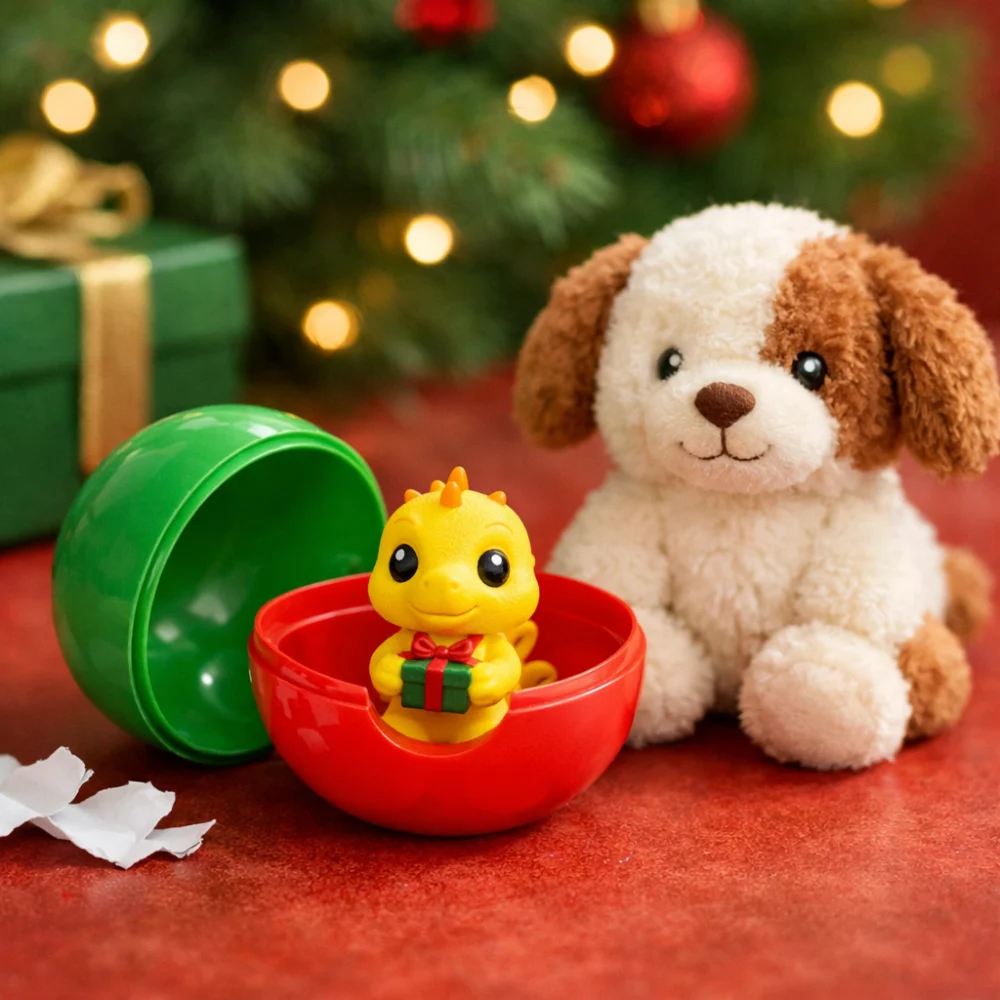
Surprise toys combine a reveal with a toy or collectable, so the buying decision is about more than the packaging. Formats can include mystery capsules, surprise plush toys, dolls or playsets with hidden contents, and toys included with another activity.
They can make an appealing gift when the recipient enjoys anticipation and discovery. If they prefer choosing a particular character or knowing exactly what they will receive, a clearly described toy may be a better fit.
Which surprise toy is right for the recipient?
Start with the recipient’s age and interests, then consider whether they will enjoy an unknown result. Check what the product description says is included, how the reveal works and what kind of play is possible afterwards. The main trade-off is novelty versus certainty: a mystery format can add excitement, but may not deliver a particular character or item. Also consider whether repeat purchases could result in duplicates.
Compare the buying factors
| Feature | What it means | Why it matters | What to check |
|---|---|---|---|
| Reveal format | How the toy or contents are concealed and discovered | The reveal is a large part of the experience, but some children may prefer to know what they are getting. | Whether the item is selected from a range, hidden within packaging, or revealed through play. |
| Contents | The toy, accessories or other items described as included | Helps set expectations and shows whether the main interest is one toy or several pieces. | The individual product description and any illustrations or stated contents. |
| Play after the reveal | What the recipient can do with the toy once opened | A reveal may be brief; ongoing play or collecting may be more important to some recipients. | Whether it is intended for imaginative play, collecting, display or another activity. |
| Age and handling guidance | The maker’s stated suitability information and warnings | Small or detachable pieces may not suit every recipient. | Age guidance, warnings and any supervision advice on the product information. |
| Repeat or collection potential | Whether the format is part of a set or has variable contents | Repeat purchases may bring variety, but can also mean receiving a duplicate. | Whether contents are random, selectable or described as a particular item. |
What to look for before choosing
The recipient’s attitude to surprises
Consider whether the child enjoys not knowing the exact result. A mystery toy can suit someone who values the reveal, while a child attached to a particular character or type of toy may be happier with a known choice. Product images may show examples rather than confirm the exact item inside, so read the description carefully.
What is included and what the toy does
Look beyond the number of surprises mentioned in a product title. Check the product information for the main toy, accessories and any other items stated as included. Then consider whether the recipient is likely to enjoy the toy beyond opening it: a collectable, plush companion, playset or interactive-style toy can offer different kinds of play.
Duplicates and collectability
Where a product has variable contents, there may be a chance of getting an item already owned. That matters more if the gift is intended to complete a collection than if the recipient enjoys the reveal itself. Check whether the listing identifies a specific item or describes a mystery selection; do not assume that different packs will contain different toys.
Packaging and the opening experience
Some surprise toys focus on opening several layers or discovering contents in stages; others may have a simpler reveal. Think about whether that experience is likely to be enjoyable for the recipient and whether the packaging will be manageable for them. Specifications vary by model, so always check the individual product page before buying.
Common surprise toy formats
- Mystery capsules and small collectables: These put the reveal and the item itself at the centre of the experience. They may suit children who enjoy collecting, but variable contents can mean duplicates.
- Surprise plush toys or dolls: These combine a concealed reveal with a soft toy or doll-focused play. Check what is actually included and whether the recipient prefers plush toys, dolls or particular characters.
- Surprise playsets: Hidden accessories or multiple discoveries can give the recipient more to explore after opening. Check the stated contents and the intended type of play rather than assuming every set includes the same features.
- Surprise items paired with another activity: Some products combine a toy reveal with an activity or consumable, such as a bath product. Check the full product information, including any relevant use or ingredient details, as well as what toy is described as included.
Choosing for different needs
For a gift, the recipient’s interests and comfort with uncertainty may matter more than how elaborate the packaging looks. For a child who already collects similar toys, consider duplicate risk and whether a specific item is guaranteed. If the toy is meant to encourage play beyond the reveal, prioritise the kind of toy and activity described rather than the number of hidden surprises.
When buying for a younger child or for a shared setting, check the stated age guidance and warnings, and consider whether small pieces could be unsuitable. For a bath-related surprise product, check that the recipient and intended use are appropriate according to its product information.
Mistakes to avoid
- Assuming the pictured toy is the one inside: Images may illustrate a range. Check whether the product identifies a specific item or leaves the contents uncertain.
- Choosing by surprise count alone: A larger number of hidden items does not necessarily mean more satisfying play. Look at what is included and what the recipient can do with it.
- Overlooking duplicate risk: A mystery format may repeat an item in a collection. Consider whether the recipient enjoys collecting regardless, or wants a particular piece.
- Ignoring age guidance: Check the product’s stated suitability and warnings instead of relying on a general impression from its appearance.
- Focusing only on the reveal: If the gift is expected to provide ongoing play, consider the toy’s described use after opening too.
Safety and suitability
Use the age guidance and warnings provided for the individual product when deciding whether it is suitable. Pay particular attention to any stated small-parts or supervision information, especially when the toy may be used around younger children. For products paired with bath or other consumable items, check the relevant product details and intended use rather than assuming every component is suitable for every recipient.
Care and storage
Care needs depend on the toy and any accompanying items. Check product information for cleaning or storage guidance, and keep packaging or small accessories in mind if the toy will be stored between play sessions. If the surprise is part of a consumable activity, check whether the activity item has its own storage or use information.
A simple buying process
- Decide whether the recipient will enjoy an unknown result or would rather choose a specific toy.
- Narrow the format to the kind of play or collectable that interests them.
- Compare the stated contents, reveal format and what the toy offers after opening.
- Consider whether variable contents or possible duplicates matter for this purchase.
- Check age guidance, warnings and any care or use details on the individual product page.
Buyer checklist
- Will the recipient enjoy a surprise, or do they prefer a known item?
- What does the product information say is included?
- What kind of play is possible after the reveal?
- Could variable contents lead to a duplicate?
- Have you checked the stated age guidance, warnings and any relevant use or care information?
Frequently asked questions
Are surprise toys suitable as gifts?
They can suit recipients who enjoy discovery and are comfortable with not knowing the exact item in advance. If the child has a strong preference for a particular character or toy, check whether the product guarantees that specific choice.
Can you tell what is inside a surprise toy?
That depends on the product. Some descriptions identify the contents, while others indicate that the result is variable or concealed; check the individual product information rather than relying on example images.
How can I reduce the chance of buying a duplicate?
First check whether the product offers a specific item or a variable selection. If the contents are random, a duplicate may be possible, so avoid assuming separate purchases will provide different items.
What should I check when buying a surprise toy for a younger child?
Read the product’s age guidance and warnings, including any information about small parts or supervision. Suitability depends on the individual toy and the child, so do not infer it from the category name alone.
Should I choose a toy with more surprises?
Not necessarily. Consider the recipient’s interest in the reveal, the stated contents and whether the toy offers play they will enjoy afterwards; the count alone does not establish how suitable it is.


