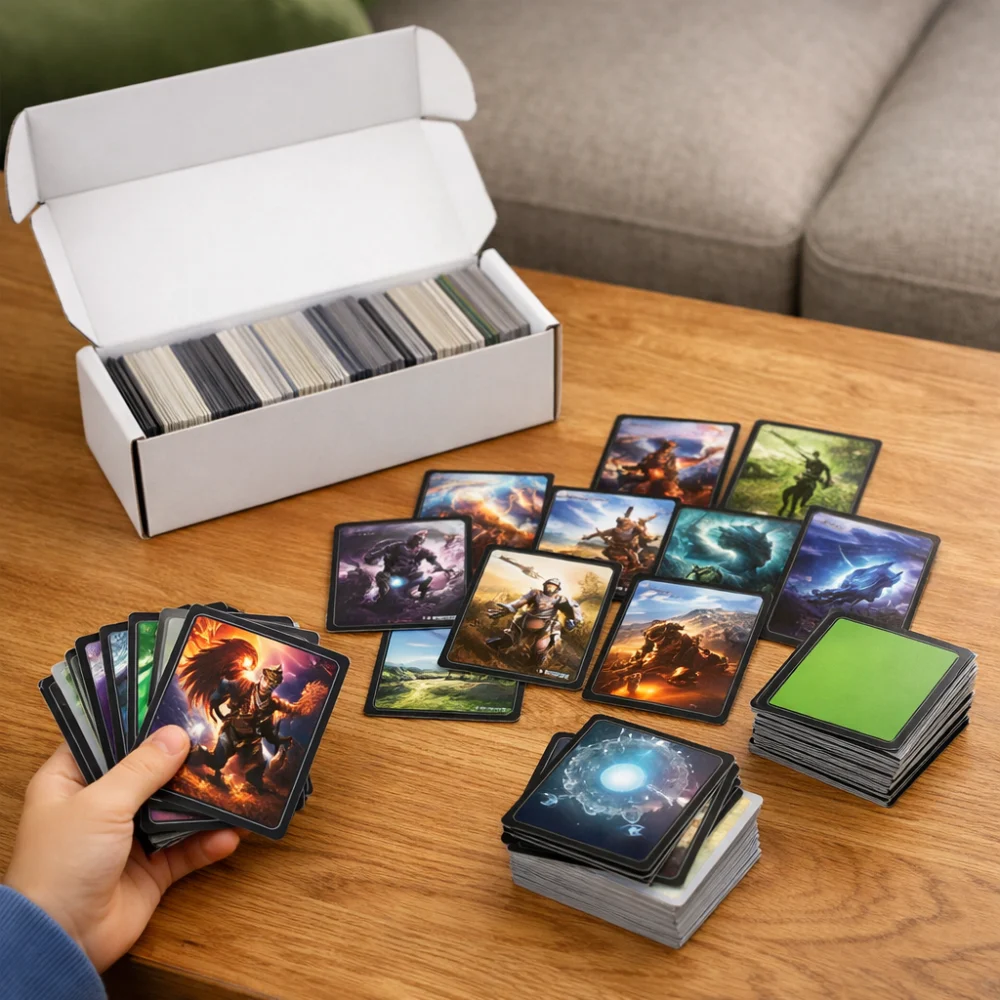
Trading cards can be bought to collect, play with, or give as a gift. The right choice depends less on the number of cards alone and more on what the recipient enjoys and what the pack or bundle actually contains.
Before choosing, check whether the cards are for a particular game or collection, whether the contents are specified or random, and whether duplicates are acceptable. Product descriptions can use similar terms while offering different kinds of packs, so read the details for the individual item.
Which trading cards should you choose?
Start with the recipient’s preferred game, characters or collection, then check that the cards are intended for that interest. A pack listing its contents may be easier to choose as a gift; a random assortment may suit someone who enjoys the surprise, but its exact contents may not be known in advance. If the cards are for play, check the stated game and any relevant compatibility information. If they are for collecting, consider the assortment, condition and whether duplicates matter.
Compare the buying factors
| Feature | What it means | Why it matters | What to check |
|---|---|---|---|
| Game or collection | The cards are associated with a particular game, series or subject. | It helps you choose something relevant to the recipient and avoid an unsuitable assortment. | Look for the named game or collection in the product information. |
| Specified or random contents | A pack may describe its contents, or leave some or all cards to chance. | Random contents can be enjoyable, but do not guarantee a particular card. | Check what is stated as included and what remains random. |
| Duplicates | An assortment may contain repeated cards, depending on its contents. | Duplicates can be useful to some players or collectors, but disappointing if variety is the priority. | Check whether the listing makes a clear claim about duplicates and what that claim covers. |
| Condition and packaging | Product details may describe whether cards are new, used, sealed or supplied with other items. | Condition and presentation can matter for a gift or collection. | Read the condition description and the complete list of included items. |
| Accessories | A bundle may include storage or other additions alongside cards. | Extras can affect how the gift is used, but should not distract from whether the cards themselves suit the recipient. | Confirm which accessories are included rather than assuming from the title or images. |
Decide what matters most
Playing or collecting
For play, focus on the intended game and check the product information for any stated compatibility details. A collection or mixed assortment may not be the right choice for someone seeking particular cards for a game. For collecting, the subject, variety, condition and presentation may matter more than whether the cards form a playable selection.
Known contents or a surprise
Fixed or clearly described contents make it easier to judge what a recipient will receive. Random packs can add an element of surprise, but the buyer should not assume they contain a particular character, rarity or card unless the individual product description says so. Treat claims such as “no duplicates” or guaranteed inclusions as specific to that listing, and read their wording carefully.
Quantity and value to the recipient
A higher card count does not automatically mean a better choice: the assortment may include cards the recipient already has or does not want. Consider whether they would prefer a smaller, clearly described selection or a larger random assortment. Specifications vary by model, so always check the individual product page before buying.
Condition and presentation
If the cards are intended for a collection or gift, check how the listing describes their condition and packaging. Do not assume that a bundle is sealed, that every card is individually protected, or that extras shown in an image are included unless the product details confirm it.
Types of trading card products
- Random assortments: May suit someone who enjoys discovering what is inside. The trade-off is less certainty about the specific cards and possible duplicates.
- Described or selected collections: Can be easier to assess when the listing identifies the contents or selection. Check exactly how much is specified rather than relying on a broad title.
- Bundles with extras: May combine cards with packaging or accessories. Confirm what is included and whether the cards, rather than the extras, suit the recipient.
Choose for the recipient’s needs
| If the cards are for… | Prioritise | Consider the trade-off |
|---|---|---|
| Playing a particular game | The stated game and any product information about suitability or compatibility. | A random or mixed assortment may not provide the cards the player wants. |
| Building a collection | The subject, variety, stated condition and whether duplicates are acceptable. | A large count may still include repeats or unwanted cards. |
| A gift for someone whose preferences are known | Their preferred game or collection and clear information about the contents. | A surprise assortment can be less predictable than a described selection. |
| A gift when preferences are uncertain | A broadly appealing subject only if it is supported by what you know about the recipient. | Do not rely on a generic card count or a product image to establish what is inside. |
Common buying mistakes
- Choosing by card count alone: Check the subject, assortment and duplicates as well as the quantity.
- Assuming every pack is for the same game: Verify the game or collection named in the product details.
- Expecting a particular card from a random pack: Only treat a card or inclusion as assured when the listing clearly says it is included.
- Reading “no duplicates” too broadly: Check whether the statement applies to the whole bundle or only a particular part of it.
- Assuming extras are included: Confirm each accessory in the stated contents instead of inferring it from a title or photograph.
Safety and suitability
Check the product’s stated age guidance and consider whether the recipient can handle the cards and any included accessories appropriately. If the product is a gift, take account of the child’s interests and the information supplied for that specific item. Do not assume that every card bundle has the same contents or suitability.
Storage and care
Cards can be kept together in a suitable storage option to make a collection easier to organise and protect. If you are considering sleeves, binders or other accessories, check that they are appropriate for the cards and are included only when the listing says so. Follow any care information supplied with the individual product.
A simple buying process
- Decide whether the cards are mainly for play, collecting or a gift.
- Identify the game, series or subject the recipient likes.
- Choose between specified contents and a random assortment, allowing for the different levels of certainty.
- Compare duplicates, condition, packaging and any included extras.
- Read the individual product information to confirm the details that matter to your choice.
Buyer checklist
- Does the game, series or subject suit the recipient?
- Are the contents specified, random, or a mixture of both?
- Are duplicates acceptable, and what does the listing say about them?
- Is the stated condition and packaging suitable for the intended use?
- Have you confirmed which accessories are included?
- Have you checked any stated age guidance and product-specific suitability information?
Trading cards FAQs
Are trading cards from different games interchangeable?
Do not assume that cards from different games or collections can be used together. Check the game named in the product information and any stated compatibility details before buying for play.
Are random card packs guaranteed to contain a particular card?
Not unless the individual product description clearly says that card is included. A random assortment should be treated as uncertain, even when its title mentions a type of card or a possible inclusion.
Will an assorted pack contain duplicates?
It may. Check whether the listing specifically addresses duplicates and read the wording to see what it applies to; do not infer that every card is unique from the word “assorted”.
What should I check when buying cards as a gift?
Start with the recipient’s preferred game or subject, then check whether the contents are clear or random. Also review the stated condition, packaging, included extras and any age guidance.
Does a bundle include the accessories shown in its images?
Not necessarily. Confirm each included item in the product description, since an image or title alone may not establish exactly what comes with the cards.