

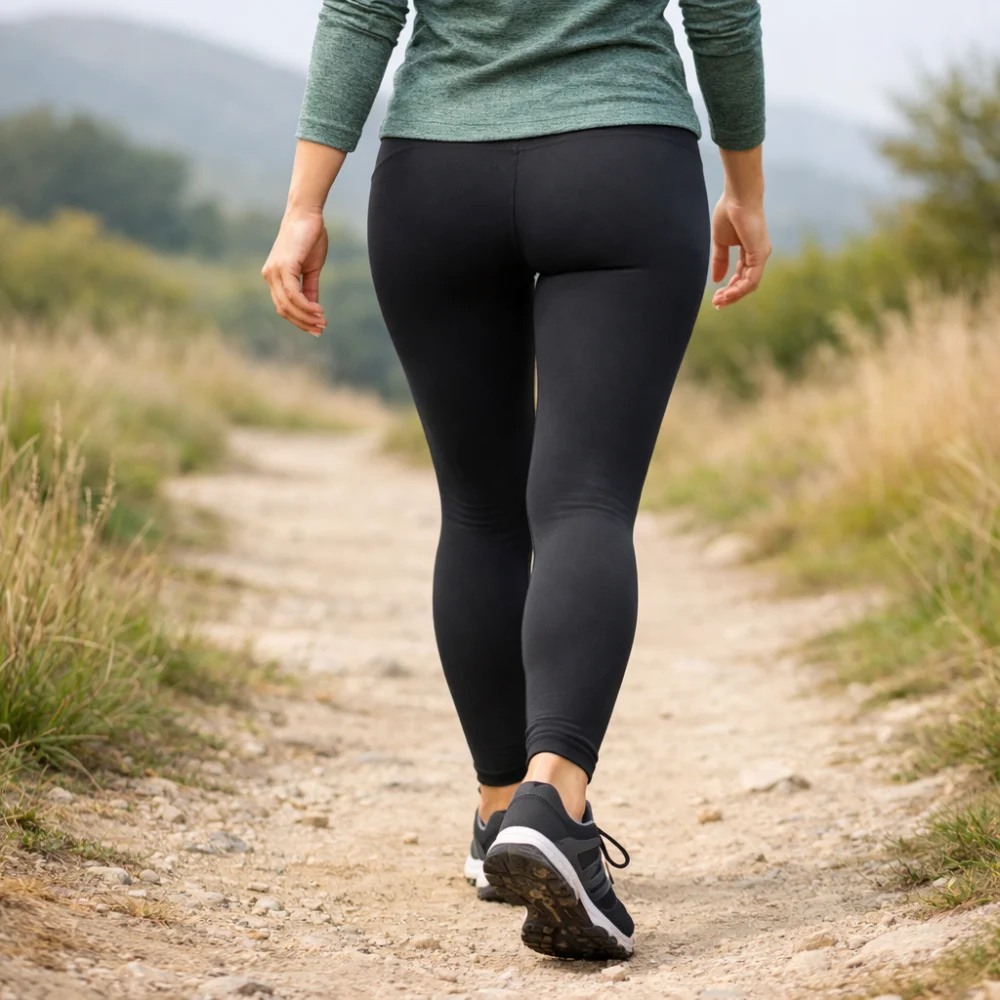
Women’s leggings can suit outdoor activities where a close-fitting, flexible layer is useful, as well as everyday wear. The right choice depends on where and when you plan to wear them, how you prefer them to fit and whether you need warmth or practical features such as pockets.
Leggings are not automatically weatherproof or warm enough for every outing. Use the individual product information to judge their intended use and decide whether you may need another layer.
What should you look for in women’s leggings?
Start with the activity and conditions, then compare fit, fabric description and coverage. For mild conditions or layering, flexibility and comfort may matter most; for colder outings, look for clear information about any warm lining and consider how the leggings will work with other clothing. The main trade-off is that a closer, lighter layer can feel less bulky, while added thickness may suit cooler conditions but feel warmer during movement.
Compare the main buying factors
| Feature | What it means | Why it matters | What to check |
|---|---|---|---|
| Fit and sizing | How closely the garment sits and the sizing information provided | Affects comfort, movement and whether the leggings work as a base layer | Size guide, fit description and any notes on stretch or intended fit |
| Fabric and stretch | The stated material and how the garment is designed to move | May influence feel, flexibility and suitability for your planned activity | Material composition and care information |
| Warmth | Whether the product description specifies a lining or thermal construction | Useful when deciding if the leggings suit cooler conditions or layering | Whether warmth or lining is explicitly described; do not infer it from appearance alone |
| Waistband and coverage | Waist height, waistband style and leg length | These affect personal comfort and how the garment layers with other clothing | Product images, sizing details and the stated cut or length |
| Pockets and other details | Any stated storage or design features | May be convenient, but details vary between products | Number, position and description of pockets, if specified |
| Care | Instructions for washing and looking after the garment | Helps you judge whether its upkeep suits your routine | The care label or product-page instructions |
Choose based on fit, fabric and conditions
Fit and sizing
Check the size guide for the specific product rather than relying on a size label alone. Consider whether you prefer a close fit, how the waistband is described and whether the stated length suits you. If you plan to wear leggings under another layer, allow for the comfort and movement you want from both garments.
Fabric and intended use
Material composition can help you understand what a garment is made from, but it does not by itself establish how it will perform outdoors. Look for a clear description of the intended use and care requirements. If you expect to walk, bend or move frequently, consider whether the product description addresses stretch and whether the fit seems appropriate for that activity.
Warmth and layering
Some leggings are described as thermal or fleece-lined, while others are not. Treat those as product-specific descriptions, not guarantees that a garment will suit every temperature. Think about how much warmth you need, how much activity you expect and whether you will wear a separate outer layer. Specifications vary by model, so always check the individual product page before buying.
Waistband, length and pockets
Waist height and leg length are matters of preference and fit, so use the product details and images to compare them. Pockets can be useful for small essentials, but check their position and description rather than assuming every pair has them or that they will suit a particular item.
Types and variations
Everyday or casual leggings may suit relaxed wear and simple outdoor use when conditions are appropriate; they may not provide the warmth or weather protection you need for a longer outing. Thermal or fleece-lined styles may be worth considering when extra warmth is a priority, but can feel too warm in milder conditions or during more active use. Some leggings are described for exercise, but that does not automatically make them suitable for every outdoor activity. Check the individual description, fit and care details.
Match leggings to your needs
- For mild-weather walks: prioritise a comfortable fit and clear information about fabric and intended use. Consider another layer if conditions may change.
- For cooler outings: look for an explicit description of a warm lining or thermal construction, then consider how it will layer with your other clothing.
- For active movement: compare fit and any stated stretch or activity guidance. A close fit may suit layering, but comfort remains individual.
- For everyday outdoor wear: focus on the cut, waistband, length and care requirements you prefer, without assuming casual leggings offer technical weather protection.
Common buying mistakes
- Assuming all leggings are suitable for outdoor weather: check what the product actually says about its intended use. A legging is not necessarily waterproof or wind-resistant.
- Choosing by warmth wording alone: consider the conditions and your activity as well as the lining description; extra warmth may not suit every outing.
- Guessing the size from another garment: compare the product’s own size guide and fit notes because sizing and cut can differ.
- Assuming a feature from a photograph or title: confirm details such as pockets, length and lining in the product information.
- Overlooking care: check the care instructions before buying, particularly if you have specific preferences for garment upkeep.
Safety and suitability
Choose leggings for the conditions and activity you have in mind, and do not treat them as protective outerwear unless the product information clearly supports that use. For cold, wet or exposed conditions, consider whether additional clothing is needed. Suitability and comfort vary by person, fit and product.
Care and storage
Follow the care instructions supplied for the individual garment, as materials and construction can differ. Store leggings clean and dry in a way that suits your available space, and check care details before choosing a product if its upkeep is important to you.
A simple buying process
- Decide when and where you expect to wear the leggings.
- Work out whether you need a light layer, extra warmth or a garment for layering.
- Compare fit, size guidance, length and waistband details.
- Check any stated fabric, pockets, intended use and care instructions.
- Review the individual product information and consider whether another layer is needed for your conditions.
Buyer checklist
- Does the stated use suit the activity and conditions you have in mind?
- Have you checked the product’s own size guide and fit description?
- Is warmth or lining explicitly described if you need it?
- Have you confirmed the length, waistband and any pocket details that matter to you?
- Do the care instructions suit your preferences?
- Will you need an additional layer for the weather?
Frequently asked questions
Are women’s leggings suitable for walking outdoors?
They can suit some walks, depending on the garment, conditions and personal preference. Check the product’s stated use and consider whether you need extra warmth or an outer layer.
Are all women’s leggings thermal?
No. Warmth or a fleece lining should be treated as a product-specific feature. Check the individual description rather than assuming it from the category name or appearance.
Can leggings replace waterproof trousers?
Do not assume that they can. Leggings are not necessarily waterproof, so check product information carefully and consider suitable outerwear when rain protection matters.
How should women’s leggings fit?
That depends on comfort, intended use and personal preference. Use the product’s sizing information and fit description, and consider whether you plan to wear them alone or as a layer.
What should I check if I want leggings with pockets?
Confirm that pockets are explicitly listed and check their position and description. Do not assume that a photograph or general category label establishes pocket details.
How do I care for outdoor leggings?
Follow the care instructions for the specific garment. Material and construction can vary, so a single care approach should not be assumed for every pair.


