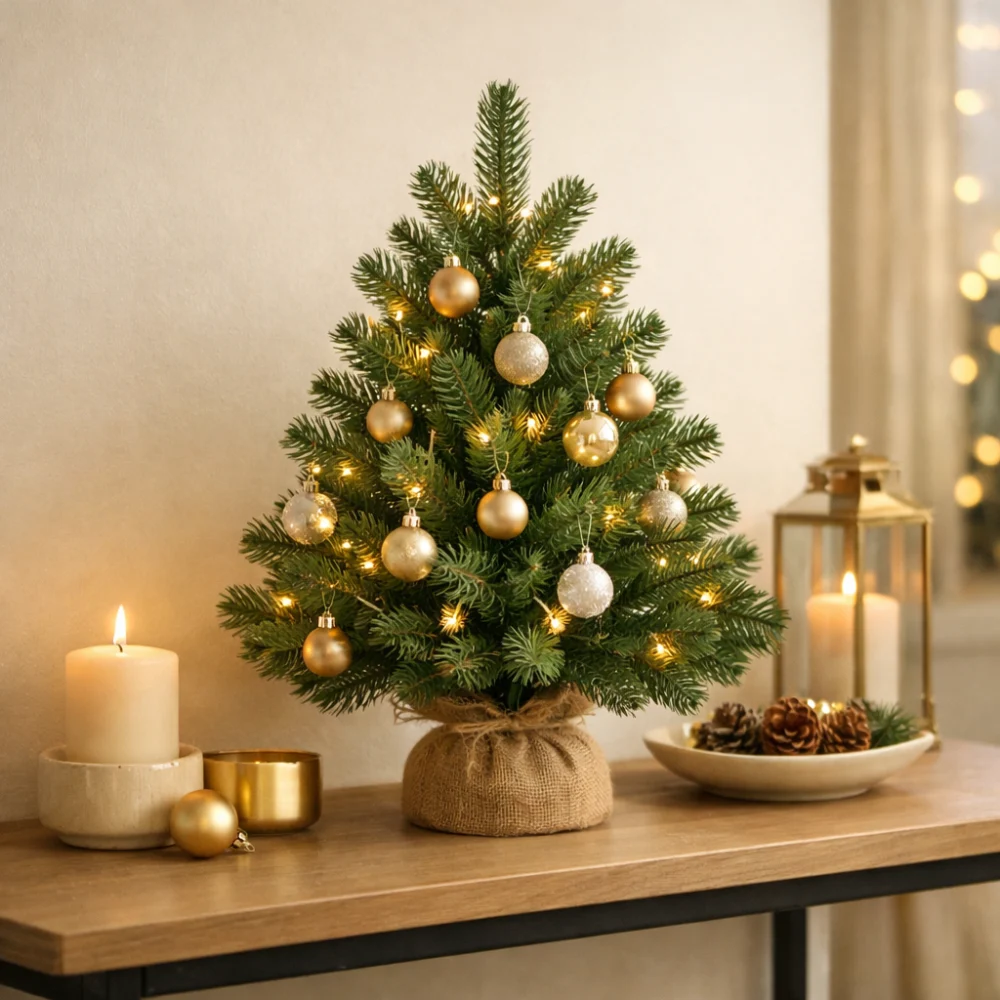
A tabletop Christmas tree can bring a festive focal point to a desk, shelf, side table or other compact space. The right choice depends on the surface available, the look you want and whether you prefer a simple tree or one with decoration or lighting.
Use this guide to compare the details that affect fit and everyday convenience. Product designs vary, so check the information for the individual tree rather than assuming that every small tree has the same base, finish or power arrangement.
What should you look for in a tabletop Christmas tree?
Start with the space where the tree will stand: check both the available height and the usable surface area for its base. Then choose a shape and finish that suit the setting, and decide whether built-in lighting or decoration would be useful. A more elaborate tree may need less additional decorating, while a simpler one gives you more freedom to style it yourself.
Compare the details that affect your choice
| Feature | What it means | Why it matters | What to check |
|---|---|---|---|
| Overall size | The tree’s height and the space its base occupies. | It needs to fit the intended surface without crowding nearby objects or shelves. | Look for stated dimensions and compare them with the available height and surface area. |
| Shape and finish | The tree’s outline and visual treatment, such as a traditional green look or a frosted appearance. | These determine how prominent the tree looks and how well it suits the room’s existing decorations. | Review product images and descriptions for the actual finish and shape. |
| Decoration | Whether the tree is plain or supplied with decorative details. | A decorated style can provide a ready-made look; a plainer one allows more personal choice. | Check what is included and whether pictured decorations are part of the product. |
| Lighting | Whether lighting is included, and how it is powered or controlled. | Built-in lights may reduce the need to add a separate light set, but power arrangements affect placement. | Check the product details for the power source, any controls and what is included. |
| Base and support | The way the tree is held upright and the space the base takes up. | A base that suits the surface can make positioning easier and reduce wobbling on an unsuitable spot. | Review the base description, dimensions and any stated placement guidance. |
| Storage | How the tree is likely to be put away between festive seasons. | A compact design may be easier to store, while attached details could affect how it packs away. | Check whether the product information explains assembly, folding or storage requirements. |
Choosing the right size and style
Measure the space where the tree will sit, allowing for its base as well as its highest point. A tree that fits beneath a shelf may still need enough room around it to avoid brushing nearby objects. Consider whether it will be viewed from one side or several, since the shape and arrangement of branches can affect how it looks from different angles.
Finish can change the character of a small tree. A green tree may suit a familiar festive look, while a frosted or white design can create a different effect. Images can help you compare appearance, but check the written description too, especially if colour or finish is important to your scheme.
Lighting is a practical choice as well as a decorative one. If lights are included, check the stated power source and whether any components needed for use are supplied. If you plan to add lights separately, make sure the tree’s size and design can accommodate the kind you have in mind.
Specifications vary by model, so always check the individual product page before buying.
Compare proportions before choosing: consider the tree’s height, base footprint and the surface it will occupy together, rather than judging by height alone.
Types and design variations
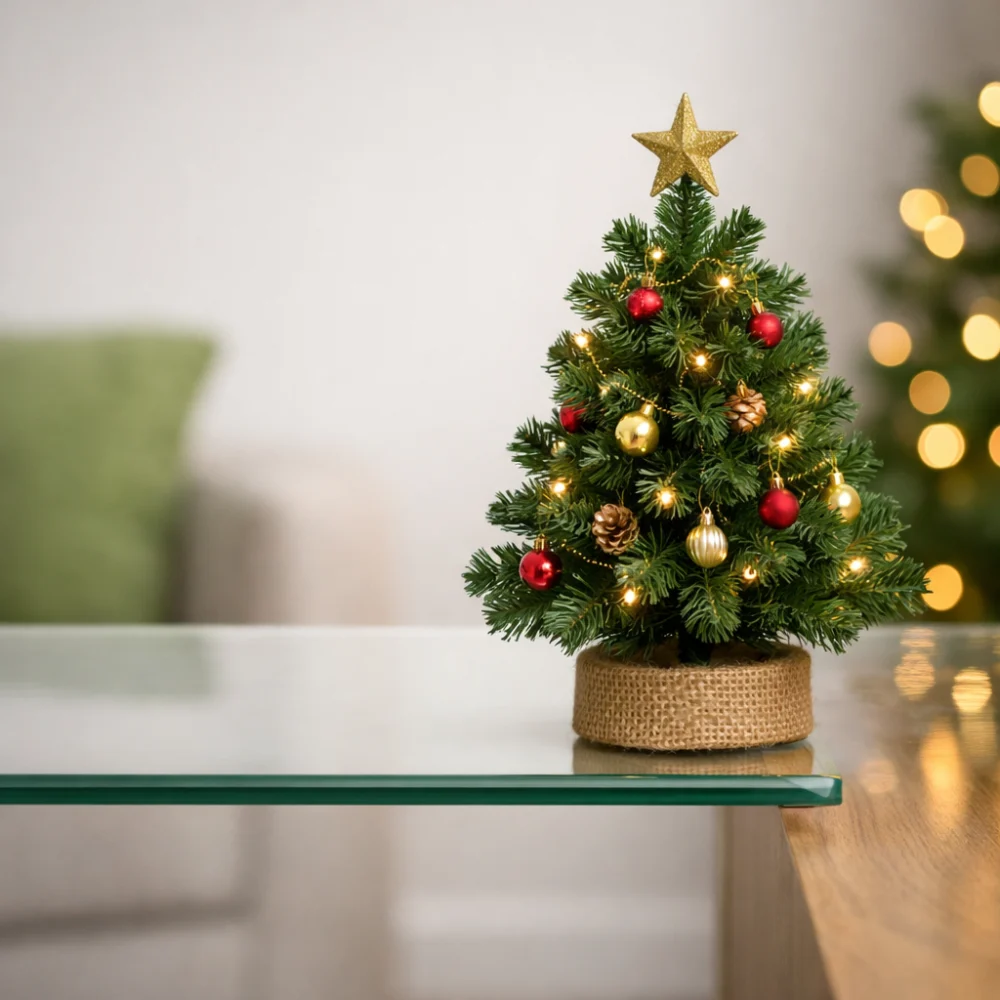
Tabletop trees range from simple miniature evergreen designs to more decorative or stylised trees. A plain tree may suit someone who wants to choose their own ornaments, while a tree supplied with decorations can offer a more finished appearance with less styling. Check which items are actually included, since a product image may show additional decorative pieces.
Some designs have a frosted or snowy look, and twig-style trees can create a more open silhouette than a dense, traditional shape. These are visual choices rather than a measure of quality; compare the product images and description with the look you want. Trees with integrated lighting may reduce the need for a separate light set, but make power and placement checks before deciding.
Match the tree to the space and occasion
- For a desk or small side table: prioritise a compact base and a height that leaves room around the tree for everyday use.
- For a shelf or mantel: check the full height, including any topper, and consider whether the tree will be visible from the front or from multiple directions.
- For a ready-decorated display: look for clear details of the included ornaments and lighting; do not assume every item pictured is included.
- For a flexible decorating project: a simpler design may leave more room to add decorations of your choice, subject to the tree’s size and construction.
Common buying mistakes
- Checking height but not footprint: a tree can be short enough for a shelf yet have a base that takes up too much room. Compare both dimensions with the intended surface.
- Assuming the picture shows everything included: staged images may include separate decorations. Use the product description to confirm what comes with the tree.
- Overlooking the power arrangement: a lit design may need a particular power source or access to a suitable nearby supply. Check the product details before settling on its position.
- Choosing a finish from a small image alone: colours and textures can be hard to judge on screen. Read the description and consider whether the finish fits the room’s existing decorations.
- Forgetting where it will be stored: consider the tree’s shape and any attached details before buying, especially if storage space is limited.
Safety and suitability
Check that the tree is intended for the location where you plan to use it, and place it on a surface that suits its base. If it includes lighting, follow the product information for its power source and intended use. Keep the tree away from places where it could be knocked or obstruct normal use of the surface.
Care and storage
Care needs depend on the tree’s materials, finish and any attached lighting or decorations. Check the product information for cleaning and storage guidance rather than applying a method that could damage the finish or components. If the tree has removable or separately packed parts, note how they fit together so they can be kept safely between seasons.
A simple buying process
- Choose the surface and measure its usable height and area.
- Decide whether you want a traditional, frosted, twig-style or other visual design.
- Choose between a plain tree and one with included decoration or lighting.
- Compare the base, dimensions, power details and storage information.
- Read the individual product details to confirm suitability and what is included.
Buyer checklist
- Will the tree and its base fit the intended surface?
- Does the shape and finish suit the setting?
- Are decorations or lights included, and what exactly comes with the tree?
- Have you checked the lighting power source and placement requirements, if applicable?
- Does the product information cover its intended location and care?
- Can you store the tree in a way that suits its shape and components?
Frequently asked questions
How do I know whether a tabletop tree will fit?
Measure the available surface and the vertical space above it, then compare both with the stated product dimensions. Allow for the base and any topper or branches that extend beyond the central body of the tree.
Are tabletop Christmas trees always pre-lit?
No. Some designs include lighting and others may not. Check the individual product description to confirm whether lights are included and how they are powered.
Do decorations shown in product images come with the tree?
Not necessarily. Images may show a styled display, so check the list of included items in the product details before buying.
Is a frosted tree different from a traditional green tree?
Frosted and green describe different visual finishes. The best choice depends on the look you want; compare the product description and images for the particular design.
What should I consider if the tree will sit on a shelf?
Check the tree’s overall height and base footprint against the shelf space. Also consider whether the shelf location gives enough room for the tree and any lighting power arrangement.
How should I store a tabletop Christmas tree?
Follow any care and storage guidance supplied with the individual tree. Before buying, consider whether its shape and any attached details will suit the storage space you have.