

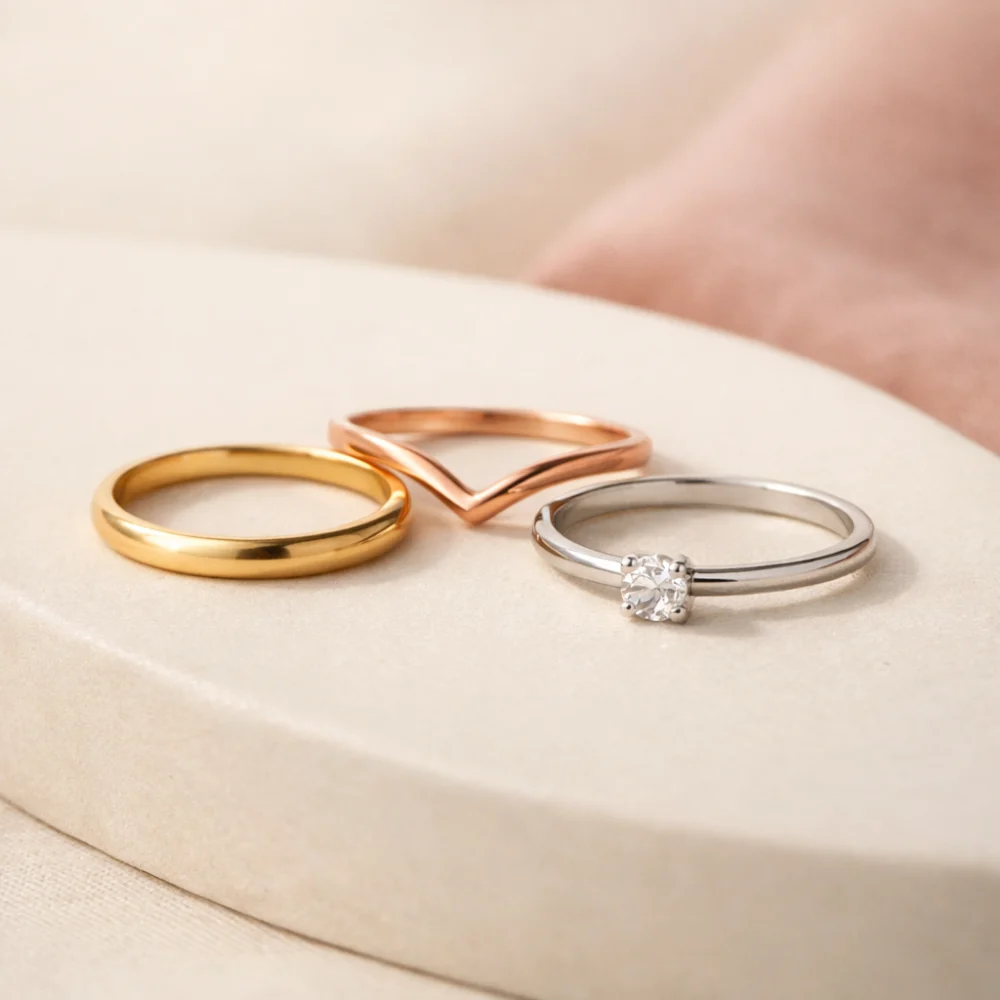
Choosing a women’s ring is about balancing appearance with fit and everyday practicality. Whether you are buying for yourself or selecting a gift, the most useful starting points are the wearer’s preferred style, the correct size and how the ring is likely to be worn.
Rings can differ in shape, metal description, finish and decorative details. A design that looks right may not suit daily wear or may be difficult to size as a gift, so check the details of each individual item rather than relying on the product title alone.
Which women’s ring should you choose?
Start with the wearer’s usual style and the finger the ring is intended for. For a gift, confirm the size if possible; if it is unknown, consider whether a clearly described adjustable design is an acceptable alternative. Then compare the stated material, finish and any stones or decorative features against the wearer’s preferences and intended use. The main trade-off is often between a subtle design that may be easier to wear regularly and a more distinctive ring that makes a stronger style statement.
Compare the main buying factors
| Feature | What it means | Why it matters | What to check |
|---|---|---|---|
| Size and fit | The size or adjustment options stated for the ring. | A ring that is too tight or loose may be uncomfortable or unsuitable for the intended finger. | Size system, stated size, and any limits or instructions for an adjustable design. |
| Material and finish | The metal or base material and any described surface finish or plating. | These affect the look and may influence how the ring suits the wearer’s preferences and routine. | Exact material wording, finish, and care guidance in the product information. |
| Shape and profile | The band’s width, outline and decorative form. | A slim, shaped or more prominent design can feel and look different on the hand. | Any stated dimensions and clear views of the ring from different angles. |
| Stones and decoration | Whether the ring has stones, motifs or other details. | Decoration changes the overall style and may call for more careful handling. | What the stones or decorative elements are described as, and how they are secured or cared for if stated. |
| Wear and care | Any product-specific guidance for wearing, cleaning or storing the ring. | Care needs can differ by material, finish and design. | Instructions and any stated limitations for the particular ring. |
What to consider before choosing
Get the size as close as you can
Ring size depends on the finger, not just the person: the same wearer may need a different fit on another finger. If you are buying for yourself, check the size for the intended finger and use the sizing guidance relevant to the specific product. If buying a gift, a ring the recipient already wears on that same finger may offer a useful reference, but do not assume its size will suit a different finger.
For a surprise gift, avoid guessing from a ring worn on another finger. If the size cannot be confirmed, check whether the product information describes an adjustable or stretch design and whether its fit is suitable for the recipient. Do not assume every adjustable ring can be resized without affecting its appearance or construction.
Read material and finish descriptions carefully
Look for the exact material and finish stated on the product page. Terms such as plated, silver-tone or sterling silver describe different things; do not treat a colour description as proof of the underlying material. If the wearer has a known sensitivity or a strong preference, confirm that the stated materials meet their needs rather than relying on a general label.
Match the design to how it will be worn
A simple band may suit someone who prefers a quieter look, while a stone-set, shaped or motif ring can be a more noticeable choice. A raised or detailed design may catch on clothing more readily than a low-profile band, so consider the wearer’s routine and preference. Check product images and any listed measurements for a clearer sense of scale; do not infer dimensions from a photograph alone.
Consider decorative details
Stones and other embellishments can make a ring more distinctive, but they also add details to check. Confirm how the product describes the stones and setting, and look for care guidance. Avoid assuming that a stone is a particular type, or that a decorative feature is suitable for every kind of wear, unless the product information says so.
Specifications vary by model, so always check the individual product page before buying.
Common ring styles and variations
- Band rings: A straightforward choice for someone who favours a simpler outline. Check the band’s stated width and shape, as these can change its appearance and feel.
- Stone or crystal rings: These draw attention to their decorative detail and may suit a more dressed-up look. Check the product’s description of the stones and any care notes.
- Shaped and motif rings: Designs such as curved, floral or symbolic forms can feel more individual. Their outline may affect how they sit beside other rings, so consider whether the wearer likes to stack jewellery.
- Adjustable or stretch designs: These may be worth considering when a fixed size is uncertain, but adjustment is not a substitute for checking the stated fit and construction. Follow any product-specific guidance.
Choose for the wearer’s needs
| Priority | What to look for | Main trade-off |
|---|---|---|
| Everyday simplicity | A profile and decoration level the wearer is comfortable wearing regularly. | A subtler design may be less of a statement than a more elaborate ring. |
| A gift with an unknown size | First try to confirm the intended finger and size; consider a described adjustable design only if appropriate. | Guessing can lead to a poor fit, and adjustable styles may not match the recipient’s preferred look. |
| A distinctive occasion style | Stones, motifs or a more prominent shape that suit the recipient’s taste. | More prominent decoration may need more consideration for routine wear and care. |
| Material preference or sensitivity | Clear product information about the ring’s material and finish. | A colour or finish name alone may not answer questions about the underlying material. |
Mistakes and misunderstandings to avoid
- Choosing a size by guesswork: Check the intended finger and the product’s sizing system. A size that fits one finger may not suit another.
- Assuming a finish tells you the base material: Read the full material description, especially if the wearer has specific preferences or sensitivities.
- Relying on a product photo for scale: Look for stated measurements and use the images to understand shape, not to estimate exact size.
- Assuming every ring suits everyday wear: Consider the profile, decoration and any care guidance in relation to the wearer’s routine.
- Treating adjustable as universally fitting: Check what the product page says about fit and adjustment rather than assuming it will suit every finger.
Suitability and care
Choose a ring whose stated materials and design suit the wearer. If there is a known metal sensitivity, check the exact material information and seek clarification where it is insufficient. For a gift, a clear understanding of size and preferences is more useful than assuming one style or material will suit everyone.
Care can vary with the ring’s material, finish and decorative details. Follow the product-specific care guidance, and store the ring in a way that avoids unnecessary contact with other jewellery. Do not assume that cleaning methods or exposure limits are the same for every ring.
A practical buying process
- Decide who will wear the ring, which finger it is for and whether it is intended for regular or occasional wear.
- Choose a broad style, such as a simple band, a stone-set design or a shaped motif, based on the wearer’s taste.
- Confirm the size or check the stated fit of any adjustable or stretch option.
- Compare the described material, finish, profile and decorative details.
- Read the individual product information for measurements, care guidance and any details that matter to the wearer.
Buyer checklist
- Have I confirmed the intended finger and the relevant ring size?
- Have I checked the exact material and finish, rather than relying on colour wording?
- Does the shape and level of decoration suit the wearer’s preferences?
- Have I checked measurements and product-specific care information?
- If buying as a gift, is the fit known, or is an adjustable design clearly described?
Frequently asked questions
How can I choose a ring size as a gift?
If possible, confirm the recipient’s size for the specific finger the ring is intended for. A ring they already wear on that finger may help as a reference, but avoid assuming a different finger will be the same size. If you cannot confirm it, check whether an adjustable design is described and whether its style would suit them.
Are adjustable rings a safe choice when I do not know the size?
They can be an option, but the term does not guarantee a fit for every wearer. Check the product page for any stated fit or adjustment details and consider whether the design matches the recipient’s taste.
Does a gold or silver colour tell me what a ring is made from?
No. Colour and finish descriptions do not, by themselves, identify the underlying material. Check the full material information if it matters to the wearer.
What should I check if the wearer has sensitive skin?
Look for the exact materials stated for the ring, including any described finish, and do not rely on a broad colour or style label. If the product information does not answer the wearer’s specific concern, seek clarification before choosing.
Can I tell how large a ring will look from its photograph?
Photographs can help show the design, but perspective and image scale can be misleading. Use any stated measurements alongside the images to judge the ring’s proportions.
How should a ring be cleaned and stored?
Follow the care guidance supplied for that particular ring, as materials and decorative details can differ. When storing it, avoid unnecessary contact with other jewellery that could mark or catch on it.


