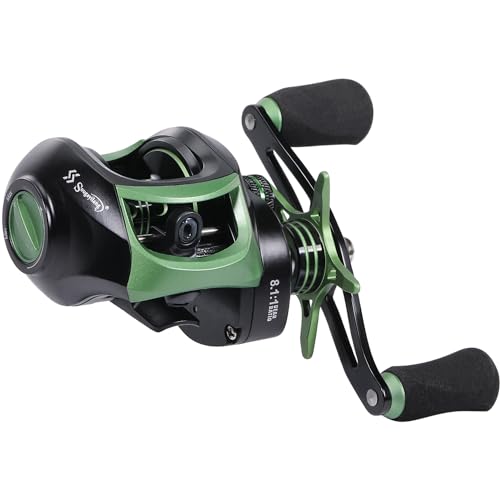
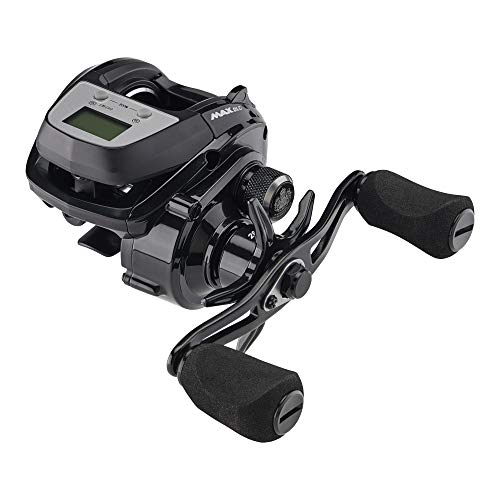
Baitcasting reels are designed for anglers who want greater casting control, direct lure contact and a compact reel setup for suitable lure and predator fishing. They are suitable for regular anglers and experienced fishers, while beginners can use them if they are prepared to practise casting and setup.
The right baitcasting reel depends on your rod, lure weight, line type, target species, braking system, spool control, retrieve side, gear ratio, drag, line capacity and whether you are fishing freshwater, saltwater or mixed conditions. A light baitcaster for perch lures has a very different job from a stronger reel used for pike, larger lures or heavier cover.
Baitcasting reels are fishing reels that sit on top of a baitcasting rod and release line from a rotating spool during the cast. They are commonly used for lure fishing, predator fishing and some specialist casting methods.
Unlike a fixed spool reel, the spool on a baitcaster turns as the lure travels through the air. This can give the angler more control, but it also means setup and thumb control are important.
Baitcasting reels are often used with lures such as plugs, crankbaits, jerkbaits, soft plastics, spinnerbaits, jigs and other artificial lures where suitable. They should always be matched to the rod, line, lure weight and fish being targeted.
What Are Baitcasting Reels Used For?
Baitcasting reels are mainly used for casting and retrieving lures with control and accuracy. They are popular with predator anglers because they can handle repeated casting, controlled retrieves and accurate placement around features.
They can be useful for perch, pike, zander, bass and other lure fishing situations where allowed and suitable. The exact setup depends on the species, venue rules and tackle strength required.
Baitcasters can also be useful when fishing near cover, structure, boats, bankside features or tight casting areas. With practice, they allow controlled casting and quick lure engagement after the lure lands.
How To Choose The Right Baitcasting Reel
Start by matching the reel to a baitcasting rod. Baitcasting reels are not intended for standard spinning rods, so the rod and reel should be designed to work together.
Next, think about lure weight. Smaller lures usually need a lighter baitcasting setup with a suitable spool and braking system. Larger lures need a reel with enough strength, line capacity and control for the job.
Line choice matters too. Many anglers use braid on baitcasting reels because of its sensitivity and low stretch, often with a suitable leader. Others may use monofilament or fluorocarbon depending on the method, species and venue rules.
Key Features To Compare
When comparing baitcasting reels, look at reel size, braking system, spool tension, gear ratio, drag strength where listed, line capacity, handle side, frame style, weight, grip comfort and freshwater or saltwater suitability where listed.
Braking systems help control spool speed during the cast. Spool tension also affects how freely the lure pulls line from the reel. Both need to be adjusted properly for the lure weight and casting conditions.
Retrieve side is important. Some baitcasting reels are left hand retrieve and others are right hand retrieve. Always check the product details before buying so the reel suits your preferred hand position.
Low Profile And Round Baitcasting Reels
Low profile baitcasting reels are compact and sit close to the rod. They are popular for lure fishing because they can feel comfortable in the hand during repeated casting.
Round baitcasting reels usually have a larger, more traditional shape. They may suit heavier lure work, larger line capacity or certain predator and specialist fishing styles depending on the product.
The trade off is comfort versus capacity. A low profile reel may feel easier for active lure fishing, while a round reel may suit heavier setups where more line or stronger construction is useful.
Baitcasting Reels Compared With Fixed Spool Reels
Fixed spool reels are often easier for beginners because they are more familiar and usually more forgiving during casting. They suit many types of coarse, lure, feeder and sea fishing.
Baitcasting reels can offer excellent control once set up correctly, especially for accurate lure casting. However, they usually take more practice because the spool must be controlled during the cast.
The trade off is simplicity versus casting control. A fixed spool reel may be easier to start with, while a baitcaster can feel more precise once the angler is confident.
Baitcasting Reels Compared With Multiplier Reels
Baitcasting reels and multiplier reels both use rotating spools, but they are often used in different styles of fishing. Baitcasting reels are commonly used for lure fishing and predator fishing with suitable baitcasting rods.
Multiplier reels are often associated with sea fishing, boat fishing and heavier casting setups, although the terms can overlap depending on product design.
The main point is to choose by intended use. A compact lure baitcaster should not be treated the same as a heavier sea fishing multiplier.
Beginner, Regular Angler And Experienced Angler Guidance
Beginners can use baitcasting reels, but they should expect a learning curve. It is worth starting with heavier, easier casting lures and practising in open space before fishing tight swims.
Regular lure anglers may find baitcasters useful for accuracy, lure control and repeated casting. Choosing the right reel for lure weight and target species makes a big difference.
Experienced anglers often fine tune braking, spool tension, line choice, leader length, retrieve speed and casting technique. Small setup changes can improve distance, control and confidence.
Braking Systems And Spool Control
Baitcasting reels use braking systems to help control spool speed during a cast. Depending on the model, this may be magnetic, centrifugal, digital or another system.
Brakes should be adjusted to suit lure weight, wind and casting style. Too little brake can cause overrun, while too much brake can reduce casting distance.
Thumb control is also important. Many baitcaster users lightly control the spool with the thumb during the cast and stop the spool as the lure lands.
Avoiding Backlashes And Overruns
A backlash happens when the spool turns faster than the lure pulls line from the reel, causing loops and tangles. It is one of the most common issues when learning to use a baitcaster.
To reduce backlashes, start with sensible brake settings, match the lure weight to the rod and reel, avoid casting too hard and use smooth casting movements. Practise with a lure weight that loads the rod properly.
Wind can make overruns more likely, especially when casting light lures. Adjust the braking system and cast with more control when conditions are difficult.
Gear Ratio And Retrieve Speed
Gear ratio affects how quickly the reel retrieves line with each handle turn. A faster retrieve can be useful for picking up slack line, working certain lures or fishing efficiently around features.
A slower retrieve may suit some deep running lures, larger lures or more controlled presentations where power and steady winding matter.
The right gear ratio depends on the lures you use and how you like to fish. If you use several lure types, an all round retrieve speed may be the most practical choice.
Drag, Line Capacity And Target Species
The drag system helps control fish by allowing line to leave the reel under pressure. It should be smooth and adjustable enough for the fish and line being used.
Line capacity matters because larger fish, longer casts and thicker line require more spool space. A small baitcaster may suit light lure fishing, while bigger predator work may need more capacity.
Target species should guide the setup. Perch and small lure fishing need a different reel, line and rod combination from pike, zander, bass or heavier predator fishing.
Line Choice For Baitcasting Reels
Braid is popular on baitcasting reels because it offers sensitivity and low stretch. It can help anglers feel lure movement, bottom contact and bites more clearly.
Monofilament can be more forgiving because it has stretch, which may help some anglers while learning. Fluorocarbon may be used as main line or leader material in certain situations, depending on the method and product.
Line diameter and spool loading are important. Very thin line can dig into itself under pressure, while line that is too thick may reduce casting performance or limit capacity.
Leaders, Traces And Lure Connections
Leaders are often used with baitcasting reels, especially when fishing braid main line. A leader can add abrasion resistance, lower visibility or bite protection depending on the species and venue.
For pike and other toothy fish, a suitable bite resistant trace is normally important. Ordinary line may be cut by sharp teeth.
Snaps, swivels and clips should match the lure, line and fish. Bulky connectors can affect lure action, while weak connectors can fail during casting or when playing fish.
Rod Compatibility And Lure Weight
Baitcasting reels should be used with baitcasting rods. These rods are designed with the correct guides, reel seat and casting layout for a reel mounted on top.
Lure weight should match both the rod and reel. A reel designed for heavier lures may not cast very light lures easily, while a light baitcaster may not suit large predator lures.
Always check product details for intended lure ranges, line suitability and fishing style. A balanced setup is easier to cast and more enjoyable to use.
Freshwater And Saltwater Use
Many baitcasting reels are used in freshwater for perch, pike, zander and general predator fishing. Freshwater reels still need cleaning and care after rain, mud, weed or heavy use.
Some baitcasting reels may be suitable for saltwater use where listed. Saltwater can be hard on bearings, frames, handles and internal parts, so product suitability and maintenance are important.
Do not assume every baitcaster is suitable for sea fishing. Check the product details before using one around saltwater.
Care, Cleaning And Maintenance
Baitcasting reels should be kept clean, dry and checked regularly. Lure fishing often involves repeated casting, so dirt, grit and poor line lay can quickly become frustrating.
After use, wipe the reel down and check the spool, handle, drag, thumb bar, level wind and line guide. If the reel feels rough, noisy or stiff, deal with the issue before the next session.
Use reel lubricants and cleaners only where suitable and in line with the product and reel guidance. Too much oil or grease can cause problems, especially around braking systems or drag parts.
Useful Accessories To Consider
Useful accessories for baitcasting reels include braided line, monofilament, fluorocarbon leaders, traces, lure clips, snaps, swivels, lure boxes, line cutters, pliers, forceps, reel oil, reel cases and suitable baitcasting rods.
For predator fishing, landing nets, unhooking mats, long forceps and strong pliers may also be important. Fish care should be planned before fishing, especially when targeting pike or larger predators.
The best baitcasting setup is one where the reel, rod, line, lure, leader and fish handling equipment all suit the same method.
Why Buy Baitcasting Reels From YPC?
At YPC, we understand active lifestyles and the need for practical products that work in real use. Baitcasting reels should be chosen carefully because reel size, braking, retrieve side, line capacity and rod compatibility all affect how well the setup performs.
Browse the Baitcasting Reels category at YPC to compare available options, check the details that suit your lure fishing style and choose a reel that matches the waters and species you plan to target.
Baitcasting Reels FAQs
What is a baitcasting reel?
A baitcasting reel is a fishing reel with a rotating spool that sits on top of a baitcasting rod. It is commonly used for lure fishing and predator fishing.
It offers good casting control once set up correctly, but it usually takes more practice than a fixed spool reel.
Are baitcasting reels suitable for beginners?
Baitcasting reels can be suitable for beginners who are willing to practise. They are less forgiving than fixed spool reels because the spool must be controlled during the cast.
A beginner should start with sensible brake settings and easy casting lure weights.
What are baitcasting reels used for?
Baitcasting reels are mainly used for casting and retrieving lures. They are popular for predator fishing, including perch, pike, zander and other lure fishing situations where suitable.
They can be useful when accurate casting and lure control are important.
What is the difference between a baitcasting reel and a fixed spool reel?
A fixed spool reel releases line from a stationary spool, while a baitcasting reel releases line from a rotating spool. Fixed spool reels are usually easier to learn.
Baitcasting reels can offer more casting control once the angler is confident with setup and thumb control.
What is the difference between a baitcasting reel and a multiplier reel?
Both use rotating spools, but baitcasting reels are commonly used for lure fishing with baitcasting rods. Multiplier reels are often used for sea fishing, boat fishing or heavier casting styles.
The terms can overlap, so check the product’s intended use before buying.
What is a low profile baitcasting reel?
A low profile baitcasting reel is a compact reel that sits close to the rod. It is popular for lure fishing because it can feel comfortable for repeated casting.
It may suit perch, pike, zander and general lure fishing depending on size and specification.
What is a round baitcasting reel?
A round baitcasting reel has a larger, more traditional rounded body. It may offer more line capacity or suit heavier lure work depending on the model.
It can be useful where a larger, stronger setup is needed.
What does the braking system do on a baitcaster?
The braking system helps control spool speed during the cast. It reduces the chance of the spool overrunning and creating a backlash.
Brakes should be adjusted to suit lure weight, wind and casting style.
What is spool tension on a baitcasting reel?
Spool tension controls how freely the spool starts and turns. It helps match the reel to the lure weight and casting conditions.
Too loose may cause overruns, while too tight can reduce casting distance.
What is backlash on a baitcasting reel?
Backlash is a tangle caused when the spool spins faster than the lure pulls line from the reel. It can create loops and knots on the spool.
Correct brake settings, smooth casting and thumb control can help reduce it.
How do I avoid backlash on a baitcaster?
Start with higher brake settings, use a suitable lure weight, cast smoothly and stop the spool with your thumb as the lure lands. Avoid trying to cast too hard while learning.
Adjust settings gradually as your control improves.
What line should I use on a baitcasting reel?
Braid is popular for sensitivity and low stretch, while monofilament can be more forgiving for some anglers. Fluorocarbon may also be used in certain setups.
Choose line that suits the reel, lure weight, target species and venue rules.
Can I use braid on a baitcasting reel?
Yes, many anglers use braid on baitcasting reels. It can provide good lure feel and bite detection.
Make sure it is spooled correctly and consider using a suitable leader where needed.
Can I use monofilament on a baitcasting reel?
Yes, monofilament can be used on baitcasting reels. It may be more forgiving than braid because it has stretch.
It can be a practical choice for anglers learning baitcaster casting.
Can I use fluorocarbon on a baitcasting reel?
Fluorocarbon can be used in some baitcasting setups, but it can be stiffer than mono and may need careful spooling and handling.
Some anglers prefer using fluorocarbon as a leader rather than main line.
What gear ratio should I choose?
Gear ratio depends on the lures and retrieve style you use. Faster ratios help pick up slack line quickly, while slower ratios can suit more controlled retrieves or larger lures.
An all round ratio may be practical if you use several lure types.
Should I choose left hand or right hand retrieve?
Choose the retrieve side that feels natural. Some baitcasting reels are left hand retrieve and others are right hand retrieve, so always check before buying.
The handle side should suit how you cast, hold the rod and retrieve line.
Can I use a baitcasting reel on a spinning rod?
No, baitcasting reels should be used with baitcasting rods. Spinning rods and baitcasting rods are designed differently.
Using the wrong rod type can make casting awkward and may not support the reel correctly.
Are baitcasting reels good for pike fishing?
Baitcasting reels can be good for pike fishing when matched with a suitable rod, line, leaders and lures. Pike have sharp teeth, so a suitable bite resistant trace is normally important.
Use proper unhooking tools and fish care equipment.
What should I check before buying a baitcasting reel?
Check reel size, braking system, spool tension, retrieve side, gear ratio, drag, line capacity, rod compatibility, lure weight suitability and freshwater or saltwater use where listed.
The right baitcasting reel should match your rod, line, lures and target species.
Heading outdoors this winter? Take a look at our Outdoor Clothing.
Manage Consent
To provide the best experiences, we use technologies like cookies to store and/or access device information. Consenting to these technologies will allow us to process data such as browsing behaviour or unique IDs on this site. Not consenting or withdrawing consent, may adversely affect certain features and functions.
Functional
Always active
The technical storage or access is strictly necessary for the legitimate purpose of enabling the use of a specific service explicitly requested by the subscriber or user, or for the sole purpose of carrying out the transmission of a communication over an electronic communications network.
Preferences
The technical storage or access is necessary for the legitimate purpose of storing preferences that are not requested by the subscriber or user.
Statistics
The technical storage or access that is used exclusively for statistical purposes.The technical storage or access that is used exclusively for anonymous statistical purposes. Without a subpoena, voluntary compliance on the part of your Internet Service Provider, or additional records from a third party, information stored or retrieved for this purpose alone cannot usually be used to identify you.
Marketing
The technical storage or access is required to create user profiles to send advertising, or to track the user on a website or across several websites for similar marketing purposes.