
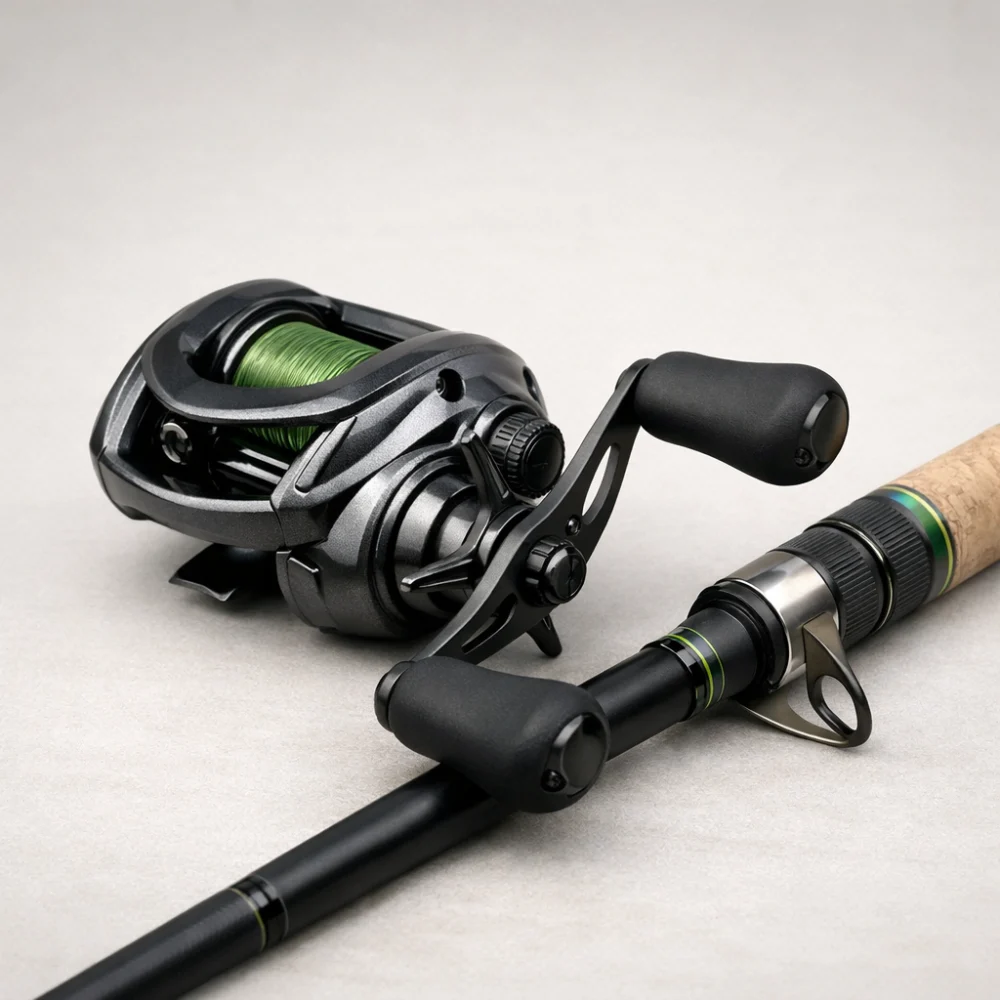
Baitcasting reels are chosen by anglers who want greater control over lure presentation, line handling and retrieve feel than many general-purpose reels provide. They are commonly used where accuracy, lure control and a more direct connection to the lure matter more than absolute simplicity.
If you are comparing your first baitcaster with an upgrade, the main decision is not just price. It is how comfortably the reel matches your rod, the style of fishing you do and how much control you want over casting and retrieve.
Because baitcasting reels vary widely in design and setup, it helps to look first at how they feel in the hand and how they are intended to be used. Specifications vary by model, so always check the individual product page before buying.
What should you look for in a baitcasting reel?
The most useful starting point is to match the reel to your casting style, target species and experience level. A compact, easy-to-control reel can be a better choice for many anglers than a larger or faster model, even if both are in the same category. The main trade-off is usually between casting control, retrieve speed, line capacity and how much tuning you are willing to do.
| Feature | What It Means | Why It Matters | What To Check |
|---|---|---|---|
| Retrieve speed | How quickly the spool turns when you wind. | Affects lure pickup, line recovery and how fast you can work a lure. | Compare the stated gear ratio and think about whether you prefer faster or more controlled winding. |
| Retrieve hand | Whether the reel is set up for left- or right-hand use. | Comfort matters because you will cast, hold and wind repeatedly. | Check the retrieve side and make sure it suits your dominant hand and fishing habit. |
| Brake or control system | The mechanism that helps manage spool speed during casting. | Can affect ease of use and how forgiving the reel feels. | Look for the type of control system described on the product page and choose one that matches your experience level. |
| Line capacity | How much line the spool can hold. | Important if you fish with heavier line or need more reserve. | Check whether the stated capacity suits your line choice and typical fishing distance. |
| Reel size and profile | The physical shape and overall size of the reel. | Influences balance, comfort and how the reel sits on the rod. | Consider weight, body shape and whether you prefer a low-profile or round style. |
| Drag and control feel | The resistance applied as line is pulled from the reel. | Useful for managing fish and keeping pressure consistent. | Compare the drag description and avoid assuming one model will feel the same as another. |
Key decision criteria explained
Retrieve speed and gear ratio
Retrieve speed affects how quickly you pick up line and work a lure. Faster reels can be useful when you need quick line recovery or a brisk presentation, while slower ratios can feel steadier and easier to control. The right choice depends on the style of fishing you do, not on speed alone.
Retrieve side and comfort
Many anglers have a strong preference for left- or right-hand retrieve. Comfort matters because baitcasting often involves repeated casts and short, controlled retrieves. If the reel feels awkward in the hand, it can be tiring even if the specification looks suitable on paper.
Braking and spool control
Control systems are important because they help manage how the spool behaves during a cast. A more forgiving setup can be useful for newer baitcaster users, while experienced anglers may prefer a reel that offers more direct tuning. The trade-off is usually between ease of use and how much fine control you want.
Reel shape and rod balance
Low-profile and round baitcasting reels are often chosen for different reasons, but the most important point is how the reel balances with your rod and feels during use. A well-balanced setup can make casting and repeated retrieves more comfortable. Do not judge by appearance alone; what matters is how the reel sits in your hand and on the rod.
Line capacity and intended use
Line capacity becomes more important if you use thicker line or need more reserve for your style of fishing. If you do not need extra capacity, a larger reel may add unnecessary bulk. Check the capacity information against the line you expect to use rather than assuming one size is universally better.
Common baitcasting reel types and variants
Within baitcasting reels, the most practical distinctions are usually between low-profile reels and round reels, plus differences in retrieve speed and control systems.
- Low-profile reels often suit anglers who want a compact feel and easy handling.
- Round reels may appeal if you prefer a different grip shape or a more traditional profile.
- Faster-retrieve models suit anglers who want quick line pickup and faster lure work.
- More controlled, steadier models may suit those who value a calmer retrieve and simpler handling.
These are broad buying distinctions rather than fixed performance categories. The best choice depends on how the reel feels, how you plan to fish and whether you want easier handling or more specialised control.
Which baitcasting reel suits different buyers?
| Buyer need | What to prioritise | Why it helps |
|---|---|---|
| First-time baitcaster user | Simple control, comfortable handling and a forgiving setup. | Helps reduce the learning curve and makes the reel easier to manage. |
| Angler upgrading from a basic reel | Better balance, smoother feel and more precise control. | Improves day-to-day use without forcing a change in fishing style. |
| Angler focused on lure work | Retrieve feel, control and comfort over long sessions. | Supports repeated casting and consistent presentation. |
| Buyer replacing a worn reel | Match the new reel to the rod, line use and hand preference. | Makes replacement simpler and avoids an awkward setup. |
| Gift buyer | A broadly suitable profile and a clear understanding of left- or right-hand preference. | Reduces the risk of buying a reel that feels wrong to the recipient. |
Common mistakes and misunderstandings
- Choosing by speed alone: a faster ratio is not always the best option. Consider how you actually fish and whether control matters more than retrieve rate.
- Ignoring retrieve hand: the wrong side can make the reel uncomfortable even if everything else looks suitable.
- Assuming all baitcasters feel alike: body shape, balance and control systems can change the experience a great deal.
- Overlooking line capacity: if your line choice is heavier than expected, capacity may matter more than you first think.
- Buying without considering rod pairing: the reel should feel balanced with the rod, not just look right on its own.
Safety and suitability caveats
Baitcasting reels are a fishing tool, so the main buying caveats are about suitability rather than risk. Check that the reel matches your intended fishing style, line choice and retrieve preference, and do not assume a model is appropriate for every rod or technique. If you are unsure about compatibility, the individual product page is the safest place to confirm the details that matter to you.
Maintenance, storage and lifespan considerations
General care can affect how long a reel feels smooth and usable. After fishing, it is sensible to think about cleaning, drying and storing the reel carefully, especially if it has been exposed to wet or dirty conditions. Moving parts and control systems may need occasional attention, but the exact requirements vary by model.
If you want a reel that stays pleasant to use, consider how easy it will be to wipe down, store and keep in good condition between outings. A model that suits your habits is often a better buy than one with features you are unlikely to use.
How to compare baitcasting reels efficiently
- Start with your fishing style and decide what matters most: control, comfort, speed or general versatility.
- Choose the basic reel type and profile that feels most suitable in the hand.
- Compare retrieve hand, retrieve speed, line capacity and control system.
- Think about the trade-offs rather than chasing the longest feature list.
- Check the individual product page carefully before you buy.
Summary buyer decision checklist
- Does the retrieve hand suit you?
- Is the retrieve speed appropriate for how you fish?
- Does the reel shape and size feel comfortable?
- Will the line capacity suit your line choice?
- Does the control system match your experience level?
- Will the reel balance well with your rod?
- Have you checked the individual product page for model-specific details?
Frequently asked questions
What is a baitcasting reel used for?
A baitcasting reel is used for controlled casting and retrieve, especially where accuracy and lure handling matter. It gives the angler a more direct feel than many simpler reel types, but it may also require more attention to setup and use.
Are baitcasting reels difficult to use?
They can take some getting used to, especially if you are new to the style. A forgiving control system and a comfortable setup can make the learning process easier, so it is worth choosing with your experience level in mind.
Should I choose left-hand or right-hand retrieve?
Choose the side that feels most natural for the way you fish. Comfort is important because it affects how smoothly you cast, wind and manage the rod over time.
Is a faster gear ratio always better?
No. Faster is useful in some situations, but a more moderate retrieve can feel easier to manage and better suited to other styles of fishing. Think about the way you work lures rather than assuming speed is always the priority.
What is the difference between low-profile and round baitcasting reels?
Low-profile reels usually offer a compact feel, while round reels have a different body shape that may suit other preferences. The main question is which profile feels more balanced and comfortable for your hand and rod.
Do I need a large line capacity?
Not always. Line capacity matters more if you use heavier line or need extra reserve, but a larger reel is not automatically a better choice. Match the capacity to your actual fishing needs.
Can I use any baitcasting reel on any rod?
Not safely as a buying assumption. The reel needs to suit the rod in terms of balance, fit and intended use, so check the product details and your rod setup before deciding.
What should I check before buying a baitcasting reel online?
Check retrieve hand, retrieve speed, line capacity, control system and general size or profile. It also helps to confirm that the reel suits the kind of fishing you do and how comfortable you want it to feel.

