Walking Pole Accessories
Walking Pole Accessories for Maintenance, Grip and Different Terrain
Walking Pole Accessories can help you maintain, adapt and transport compatible trekking and hiking poles for different routes and surfaces. From replacing worn contact points to fitting larger baskets for softer ground, the right accessories can extend the useful life of your poles and make them more practical for changing walking conditions.
The category may include replacement pole tips, rubber feet, road tips, trekking baskets, mud and snow baskets, wrist straps, pole clips, storage bags, tip protectors and other compatible replacement parts. When comparing accessories, check dimensions, fitting type, thread size, pole diameter, intended terrain and compatibility with your specific make and model. Similar-looking parts are not necessarily interchangeable.
Inspect accessories regularly for wear, cracking, loose fittings or damage, particularly components that contact the ground. Explore Walking Pole Accessories at YPC to compare replacement and additional components for trekking poles, folding poles and other compatible walking pole systems.
- Walking Pole Accessories
OVNSHVN Replacement Trekking Pole Quiver Bag for Folding Poles
Original price was: £14.01.£9.00Current price is: £9.00. *View On Amazon* - Walking Pole Accessories
Chris.W Portable Trekking Pole Carrying Bag with Zipper, Black
£9.98 *View On Amazon* - Walking Pole Accessories
Chris.W Portable Trekking Pole Carrying Bag with Zipper, Green
£10.01 *View On Amazon* - Walking Pole Accessories
Agatige Oxford Cloth Hiking Pole Carrying Bag, Drawstring Storage Pouch, 17 x 70cm
£7.99 *View On Amazon* - Walking Pole Accessories
Gravity BG DBLS 331 Carry Bag for Distance Poles, Black
£37.60 *View On Amazon* - Walking Pole Accessories
Zghhc Hiking Walking Stick Carry Bag Trekking Pole Bag
£7.47 *View On Amazon* - Walking Pole Accessories
Agatige Oxford Cloth Hiking Pole Carry Bag, 11.5 x 70cm
£7.72 *View On Amazon* - Walking Pole Accessories
Danuosie Trekking Poles Carry Bag, Waterproof Lightweight Hiking Poles Storage Bag
£19.97 *View On Amazon* - Walking Pole Accessories
Portable Trekking Pole Carrying Bag for Walking Stick, Black (17cm x 70cm)
£10.26 *View On Amazon* - Walking Pole Accessories
Portable Trekking Poles Carry Bag, 30 Inch Blue
Original price was: £12.59.£8.19Current price is: £8.19. *View On Amazon* - Walking Pole Accessories
M METERXITY 2 Pack Trekking Pole Mud Baskets, 13mm, Black
£4.89 *View On Amazon* - Walking Pole Accessories
ZONADAH Pack of 4 Walking Stick Tips Replacement Rubber Feet
£9.99 *View On Amazon* - Walking Pole Accessories
Leki Pole Attachment, Schwarz-Neongelb, Standard Size
£19.69 *View On Amazon* - Walking Pole Accessories
Herreicher Mud Baskets for Trekking Poles, 12-Pack, 11mm
£5.38 *View On Amazon* - Walking Pole Accessories
M METERXITY 2 Pack Trekking Pole Mud Baskets, 13mm, Black
£4.59 *View On Amazon* - Walking Pole Accessories
Trekking Poles Mud Baskets, Hiking Tips, Rubber Tips Protectors
£3.09 *View On Amazon* - Walking Pole Accessories
ZONADAH Pack of 4 Trekking Pole Snow Baskets Replacement Tips
£8.99 *View On Amazon* - Walking Pole Accessories
Trekking Pole Snow Baskets, 5 Pack Mud Baskets for Walking Poles
Original price was: £7.67.£6.98Current price is: £6.98. *View On Amazon* - Walking Pole Accessories
Pair of Large 90mm Diameter Snow Baskets for Trekking, Hiking and Walking Poles
Original price was: £4.65.£3.95Current price is: £3.95. *View On Amazon*




How to Choose Walking Pole Accessories
Walking Pole Accessories allow compatible trekking and hiking poles to be maintained, adapted to different surfaces and carried more conveniently. Although a walking pole may appear to be a relatively simple item, components such as tips, baskets, straps and locking parts can experience considerable wear during regular outdoor use.
Replacing a worn rubber tip, fitting a larger basket for boggy ground or using a storage bag for transport can be more practical than replacing an otherwise serviceable pole. The important consideration is compatibility. Walking pole fittings are not universally standardised, and two accessories that look almost identical may use different diameters, threads or attachment systems.
Before buying any replacement or additional component, check:
- Walking pole make and model
- Shaft diameter where relevant
- Tip diameter
- Internal fitting dimensions
- Thread type and size
- Basket attachment method
- Strap attachment system
- Whether the accessory is designed for one pole or a pair
- Intended terrain or surface
- Manufacturer compatibility information
Never force an accessory onto a pole if it does not fit correctly. A poorly fitting component may become detached while walking or interfere with the operation of the pole.
Main Types of Walking Pole Accessories
Accessories range from small consumable parts such as rubber tips to carrying and storage products. The accessories you need will depend on the type of poles you own and the terrain you regularly walk across.
Replacement Walking Pole Tips
The lower tip of a walking pole experiences repeated contact with the ground and can eventually wear.
Replacement tip assemblies may include:
- Hard metal points
- Carbide-style tips
- Steel tips
- Plastic tip housings
- Complete lower-tip assemblies
Some tips are designed to screw into a compatible pole, while others are bonded, pressed or fitted onto the shaft using another system.
Replacing the permanent tip can be more involved than replacing a removable rubber cover. Check whether the manufacturer considers the tip a user-replaceable component.
Do not attempt to remove a permanently fitted tip by force unless suitable instructions are available.
Rubber Walking Pole Tips
Rubber tips, sometimes called rubber ferrules or tip protectors, fit over the hard point at the bottom of compatible Walking Poles.
They are commonly used when walking on:
- Tarmac
- Pavement
- Concrete paths
- Indoor flooring
- Firm surfaced trails
Depending on their design, they can help:
- Reduce clicking noise
- Protect hard surfaces
- Cover exposed metal points during transport
- Alter the way the pole contacts firm ground
Rubber tips gradually wear down and should be regarded as replaceable items.
Check them regularly, particularly if a significant part of your walking takes place on roads or pavements.
Rounded Rubber Tips
Rounded rubber tips usually have a relatively compact footprint and may be suitable for general hard-surface walking.
They can be convenient where the same poles frequently move between:
- Pavement
- Paths
- Indoor areas
- Outdoor trails
Check that the internal opening grips the original pole tip securely.
Flat Rubber Tips
Flat-bottomed tips provide a broader contact surface.
Their suitability depends on:
- Pole angle
- Walking technique
- Surface
- Tip design
A flat tip should sit securely without rotating excessively on the pole.
Angled Rubber Tips
Angled rubber tips are often associated with Nordic walking or active road walking.
The contact face is shaped to meet the ground when the pole is planted at an angle behind the walker.
Correct orientation matters. If the angled surface faces the wrong direction, it may not contact the ground as intended.
Check whether the product is suitable for:
- Trekking poles
- Nordic walking poles
- A particular manufacturer
- A particular tip diameter
Do not assume that all angled road tips fit all Nordic poles.
Nordic Walking Paws
Nordic walking paws are rubber attachments designed specifically for the angled pole plant used in Nordic walking.
They may:
- Push onto the original tip
- Screw into a fitting
- Lock into a proprietary system
Some are shaped differently for left and right poles.
When fitting a Nordic paw, check:
- Direction of travel
- Correct orientation
- Secure attachment
- Whether left and right pieces differ
A paw that turns around during use may indicate incorrect sizing or excessive wear.
Choosing the Correct Rubber Tip Size
A rubber tip must fit closely enough to remain secure without requiring excessive force.
Important dimensions may include:
- Internal diameter
- External diameter
- Tip depth
- Shape of the original metal point
- Diameter of the lower plastic housing
Do not choose purely from the external appearance.
If an original tip cover is available, compare its dimensions with the replacement.
Where a manufacturer states compatible models, use this information rather than relying only on measurements.
Signs a Rubber Tip Is Too Loose
A loose tip may:
- Rotate excessively
- Fall off
- Remain stuck on the ground
- Move when the pole is planted
- Make the pole feel unstable
Do not attempt to compensate for an incorrect fit with improvised adhesives unless the pole manufacturer specifically recommends this.
Signs a Rubber Tip Is Too Tight
A tip may be too small if:
- It cannot be fitted without excessive force
- The rubber begins splitting during installation
- It cannot seat fully over the original pole point
- Removal requires potentially damaging tools
Forcing an undersized rubber attachment may damage either the accessory or the pole.
When to Replace Rubber Walking Pole Tips
Rubber tips can wear surprisingly quickly on abrasive surfaces.
Replace them when you notice:
- Smooth tread
- Reduced grip
- Uneven wear
- Cracks
- Splits
- Holes
- A loose fit
- Exposed metal through the rubber
- Material becoming hard or brittle
Do not wait until the hard pole tip has completely worn through the rubber.
A damaged cover may separate without warning.
Hard Walking Pole Tips
Hard metal tips are generally intended for outdoor terrain where they can make contact with soil, gravel or certain rock surfaces.
Replacement hard tips may be useful when the original component becomes worn or damaged.
Carbide-Style Tips
Carbide-style tips are commonly found on trekking poles because the material is hard and wear resistant.
They may provide traction on:
- Compacted earth
- Loose trails
- Some rock surfaces
- Mud
However, they can also:
- Mark wooden surfaces
- Scratch flooring
- Produce noise on pavement
- Slip on some smooth surfaces
Use an appropriate rubber cover where required.
Steel Walking Pole Tips
Some poles use hardened steel tips.
These should be inspected for:
- Excessive rounding
- Rust
- Looseness
- Cracks around the holder
Surface rust and structural corrosion are different issues. If the tip or surrounding assembly has become significantly weakened, replacement may be necessary.
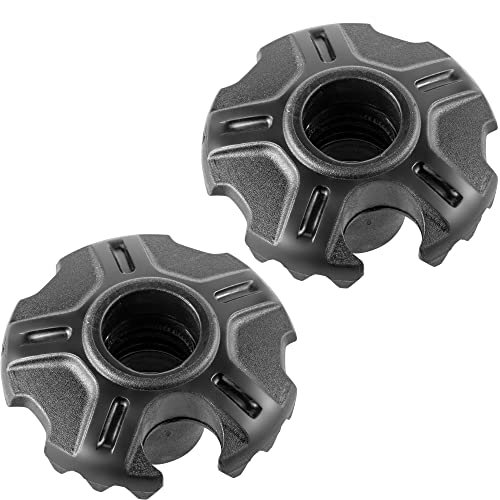
Walking Pole Baskets
Walking pole baskets are discs or shaped components fitted above the tip.
Their main purpose is to stop the pole sinking too deeply into soft ground or disappearing into gaps.
Several basket sizes are available for different conditions.
Trekking Baskets
Standard trekking baskets are relatively compact.
They can be useful on:
- Ordinary trails
- Loose soil
- Moderate mud
- Gravel
- Rocky paths
They may also reduce the chance of the pole shaft dropping deeply between stones.
Small baskets create less obstruction than large snow baskets and are therefore suitable for general walking.
Mud Baskets
Mud baskets are generally wider than standard trekking baskets.
They can help prevent poles sinking deeply into:
- Mud
- Peat
- Boggy ground
- Soft tracks
- Wet moorland
The softer the ground, the more useful a broader basket may become.
Large baskets can catch on:
- Heather
- Roots
- Rocks
- Dense vegetation
Choose a size appropriate to the conditions rather than automatically fitting the largest available option.
Snow Baskets
Snow baskets are designed for softer snow conditions.
Their larger surface area helps reduce how deeply a pole penetrates.
They may be useful on appropriate winter walking routes, but should not be treated as specialist mountaineering safety equipment.
Walking poles fitted with snow baskets do not replace:
- Ice axes
- Crampons
- Suitable winter footwear
- Appropriate training
- Winter navigation skills
Where terrain becomes technical, specialist equipment may be required.
Extra-Large Baskets
Some products provide particularly wide baskets for deep snow or very soft terrain.
Check whether the pole is designed to accept the additional forces created by a larger basket.
Oversized baskets may feel cumbersome on normal paths.
Small Performance Baskets
Some lightweight poles use small baskets intended to minimise weight and reduce snagging.
They may be suitable for:
- Dry trails
- Fast walking
- Firm ground
- Lightweight hiking
Their small size may offer less resistance in mud or soft ground.
Walking Pole Basket Compatibility
Basket fittings vary considerably.
Common attachment methods may include:
- Screw threads
- Push-fit systems
- Clip fittings
- Proprietary locking systems
Before ordering replacements, check:
- Pole manufacturer
- Pole model
- Thread diameter
- Thread direction
- Existing basket fitting
- Lower shaft dimensions
Do not force a basket onto the wrong thread.
Cross-threading can damage both the basket and the pole.
Right-Hand and Left-Hand Threads
Most threaded products use conventional thread directions, but this should not be assumed.
Check the original fitting before turning a replacement with force.
If the basket stops abruptly after only part of a turn, remove it and inspect the threads.
When to Replace Walking Pole Baskets
Replace a basket if it becomes:
- Cracked
- Split
- Loose
- Distorted
- Missing sections
- Unable to remain threaded
- Detached from its central fitting
A damaged basket can catch on vegetation or detach during use.
Carry a spare where losing a basket would significantly affect a longer route.
Replacement Wrist Straps
Wrist straps are subjected to repeated loading, perspiration, moisture and abrasion.
Depending on the pole design, replacement straps may be available separately.
Standard Trekking Pole Straps
Standard straps often use a simple adjustable webbing loop.
Compatibility may depend on:
- Strap width
- Attachment point
- Handle slot
- Adjustment buckle
- Retaining pin
Some straps can be threaded through the handle by the user. Others are permanently integrated.
Padded Wrist Straps
Padded straps can provide additional comfort over prolonged use.
Check whether padding increases bulk around the hand and whether the strap remains adjustable enough for:
- Bare hands
- Thin gloves
- Winter gloves
Nordic Walking Straps
Nordic walking straps are often more complex.
They may use:
- Glove-style hand loops
- Thumb openings
- Adjustable hook-and-loop sections
- Quick-release clips
- Manufacturer-specific connections
These straps form an important part of Nordic walking technique.
A replacement should match the original attachment system.
Do not assume that a visually similar strap will lock securely into a different manufacturer’s handle.
Left and Right Wrist Straps
Some straps are shaped specifically for the left or right hand.
Look for:
- L and R markings
- Different buckle positions
- Asymmetrical shaping
Installing them on the wrong poles can affect comfort and release operation.
When to Replace Walking Pole Straps
Inspect straps regularly for:
- Fraying
- Torn stitching
- Cracked buckles
- Broken clips
- Stretched material
- Damaged quick-release fittings
- Excessive wear around the handle
A badly worn strap may break when pressure is applied.
If the strap is integral to the handle and cannot be replaced safely, check whether the entire handle or pole requires servicing.
Walking Pole Clips
Pole clips hold two collapsed poles together.
They can make storage and transport more convenient by preventing the poles separating inside:
- Cars
- Cupboards
- Luggage
- Backpacks
Clips may be designed for:
- One specific shaft diameter
- Two different diameters
- Folding pole sections
- Telescopic poles
Measure the shaft where the clip will attach.
A clip that is too loose may fall off, while an excessively tight one can scratch or compress the pole surface.
Walking Pole Storage Bags
Storage bags help contain poles when they are dirty or not being used.
They can be useful for:
- Car travel
- Public transport
- Holidays
- Home storage
- Carrying muddy poles
- Protecting other luggage from hard tips
Check:
- Bag length
- Width
- Closure system
- Carrying handles
- Whether the poles must be folded or collapsed first
Measure the actual collapsed pole length.
A bag described as suitable for Walking Poles may still be too short for a particular model.
Carry Bags for Folding Walking Poles
Folding poles often collapse to a much shorter length than conventional telescopic poles.
A compact pouch can help:
- Keep sections together
- Prevent cords tangling
- Protect luggage
- Contain mud
Allow poles to dry before leaving them in a sealed pouch for extended periods.
Tip Protectors for Storage
Rubber tip protectors are useful during transport even if they are not used while walking.
They can prevent hard tips from:
- Puncturing bags
- Scratching vehicle interiors
- Marking floors
- Catching clothing
Check that protectors remain firmly attached.
A loose cover can fall off inside luggage and leave the hard tip exposed.
Walking Pole Locking Components
Some manufacturers offer replacement:
- Lever clamps
- Tension screws
- Expander mechanisms
- Locking nuts
- Push buttons
These are generally more model-specific than tips or baskets.
Use only components confirmed as compatible.
A locking mechanism is a structural part of the pole. An incorrect replacement may allow the shaft to collapse unexpectedly.
Replacement Lever Locks
A lever-lock assembly may include:
- Lever
- Clamp
- Tension screw
- Nut
- Bush
Check the shaft diameter carefully.
Do not improvise a replacement from an unrelated pole unless compatibility is confirmed.
Replacement Twist-Lock Components
Twist locks usually depend on an internal expander or friction assembly.
The replacement part must match:
- Internal shaft diameter
- Thread
- Expansion mechanism
- Section length
If the locking system cannot be repaired correctly, replacing the pole may be safer.
Replacement Pole Sections
Some higher-serviceability pole systems may offer individual shaft sections.
These can be useful after damage to one portion of an otherwise functional pole.
Check:
- Exact pole model
- Section position
- Diameter
- Material
- Length
- Locking mechanism
Do not mix sections from unrelated models simply because they appear to fit.
A mismatched section may not provide the required overlap or locking strength.
Walking Pole Handle Accessories
Some products include accessories for handles or grips.
These may include:
- Replacement grips
- Grip extensions
- Wrist strap fittings
- Protective covers
Handle replacement can require adhesives or specialist fitting, depending on the design.
Follow manufacturer guidance rather than cutting an old handle from the shaft without instructions.
Replacement Cork Grips
Cork grips can wear, chip or become heavily soiled.
Where replacement grips are available, check:
- Internal bore diameter
- Grip length
- Shaft taper
- Adhesive requirements
Cork can vary in composition, with some products using cork blends rather than solid natural cork.
Replacement Foam Grips
Foam grips may compress or become damaged through prolonged use.
Replacement requires the correct internal dimensions.
Do not use household adhesive unless it is confirmed as suitable for both the grip and shaft material.
Walking Pole Extension Accessories
Some products may include extension pieces or adapters.
These should only be used where the pole manufacturer specifically supports them.
Adding an unsupported extension can:
- Change leverage
- Reduce shaft overlap
- Affect locking
- Increase flex
- Exceed the safe pole length
Never create an improvised extension for a Walking Pole.
Camera and Equipment Mount Adapters
Some trekking poles include threaded handles that can accept compatible camera or accessory mounts.
Where available, adapters may convert the pole for use with:
- Small cameras
- Action cameras
- Compatible accessories
Check the maximum supported equipment weight.
A Walking Pole should not automatically be treated as a full photographic monopod.
Ensure any device is secured before releasing your hand from it.
Walking Pole Accessories for Different Terrain
Different surfaces place different demands on poles.
Accessories for Pavements and Tarmac
Useful options may include:
- Rubber tips
- Angled road feet
- Nordic walking paws
These can reduce noise and cover hard metal points.
Inspect them regularly because pavement can wear rubber quickly.
Accessories for Woodland Trails
Small trekking baskets can help prevent poles entering:
- Root gaps
- Soft soil
- Leaf-covered holes
Avoid oversized baskets that catch repeatedly on undergrowth.
Accessories for Muddy Paths
Mud baskets can help prevent excessive sinking.
After use:
- Remove built-up mud
- Check basket threads
- Clean the pole tip
- Allow components to dry
Dried mud around a removable basket can make it difficult to remove later.
Accessories for Moorland
Wider baskets may be useful on soft peat and boggy ground.
A basket does not make unstable ground safe.
Do not rely on a pole to determine the depth or strength of bog.
Accessories for Rocky Trails
Small baskets are generally less likely to snag between rocks.
Check hard tips for wear.
Avoid inserting a pole deeply between stones, as the shaft can become trapped while you continue moving.
Accessories for Snow
Larger snow baskets may reduce sinking in suitable conditions.
Winter terrain can require additional equipment beyond Walking Poles.
Select routes and equipment according to your training and experience.
Choosing Accessories for Trekking Poles
General trekking poles may accept a relatively broad range of accessories.
Useful items can include:
- Rubber tips
- Trekking baskets
- Mud baskets
- Snow baskets
- Replacement straps
- Pole clips
- Carry bags
Compatibility remains model-specific.
Check whether baskets are:
- Threaded
- Push fit
- Proprietary
and whether rubber tips match the lower pole dimensions.
Choosing Accessories for Folding Poles
Folding poles can require specialised parts because of their compact construction.
Accessories may include:
- Storage clips
- Compact carry bags
- Replacement rubber tips
- Model-specific baskets
Replacement shaft joints and internal cords may require manufacturer servicing.
Do not dismantle the internal tension system unless instructions are provided.
Choosing Accessories for Telescopic Poles
Telescopic poles may benefit from:
- Replacement lever components
- Twist-lock expanders
- Rubber feet
- Baskets
- Storage bags
Keep dirt away from the sliding shaft sections.
An accessory that traps grit around the lower shaft should be cleaned regularly.
Choosing Accessories for Carbon Fibre Poles
Take care when fitting tight accessories to carbon fibre shafts.
Do not:
- Clamp excessively
- Crush the shaft
- Drill holes
- Force tight clips
- Use incompatible fittings
Carbon fibre can be damaged by concentrated pressure.
Use accessories intended for the relevant pole diameter.
Choosing Accessories for Aluminium Poles
Aluminium shafts may tolerate a wide range of external clips and fittings where compatible, but they can still be:
- Scratched
- Dent
- Crushed
- Corroded
Avoid overtightening clamps.
Inspect the shaft underneath accessories periodically.
Choosing Walking Pole Accessories for Travel
Travellers may find several accessories useful.
Consider:
- Tip protectors
- Storage bags
- Pole clips
- Compact replacement tips
- Spare rubber feet
Before flying, check current airline and airport security requirements for Walking Poles.
Pointed poles may need to travel in checked baggage depending on the journey and operator.
A storage bag can prevent tips damaging other luggage.
Choosing Spare Accessories for Long-Distance Walking
During a multi-day walk, small components can become lost far from a convenient replacement source.
Useful spares may include:
- One or two rubber tips
- A compatible basket
- A small pole clip
- Manufacturer-supported locking parts where practical
Do not carry unnecessary equipment, but consider which failure would make the pole difficult to use.
Store small components in a zipped pouch so they do not disappear inside the backpack.
Matching Accessories to Pole Diameter
Diameter is one of the most important compatibility measurements.
It may be relevant to:
- Rubber tips
- Clips
- Baskets
- Replacement ferrules
- Locking components
- Grip replacements
Use accurate measurements where no manufacturer compatibility list is provided.
Do not assume the diameter is the same along the entire pole.
A telescopic shaft usually has several sections of different widths.
Measuring a Walking Pole for Accessories
Where appropriate, measure the component that the accessory will actually fit.
For example:
Measuring for a Pole Clip
Measure the outside diameter of the shaft where the clip will sit.
Measuring for a Rubber Tip
Follow the accessory manufacturer’s measurement instructions. Depending on the design, the relevant measurement may be:
- Metal tip diameter
- Plastic tip housing diameter
- Internal rubber opening
Measuring for a Basket
The key measurement may be:
- Thread diameter
- Shaft diameter
- Push-fit collar size
Measurements alone do not guarantee compatibility if the fitting shape or thread differs.
Universal Walking Pole Accessories
Some accessories are marketed as universal.
This usually means they are intended to fit a wide range of products, not literally every Walking Pole.
Check the stated:
- Diameter range
- Fitting system
- Compatible models
- Thread dimensions
A universal rubber tip may fit many conventional trekking poles but not a specialist Nordic or folding design.
Manufacturer-Specific Accessories
Proprietary accessories are designed around a particular manufacturer’s pole system.
Advantages can include:
- More predictable fit
- Matching attachment system
- Correct dimensions
The limitation is that they may not work with other brands.
When an exact replacement is available, it is often preferable to an approximate alternative.
Fitting Rubber Walking Pole Tips
A typical push-fit rubber tip may be installed by:
- Cleaning the original hard tip.
- Removing dirt and grit.
- Checking the rubber accessory for damage.
- Aligning it with the pole.
- Pressing it on evenly.
- Confirming it is fully seated.
- Pulling gently to check retention.
Do not use excessive force.
If it cannot be fitted by hand with reasonable pressure, check the sizing.
Removing Rubber Tips
Rubber tips can become tightly seated after prolonged use.
To remove:
- Hold the pole securely.
- Twist the rubber gently where appropriate.
- Pull it straight from the tip.
- Avoid bending the lower shaft.
Do not use sharp tools close to the pole shaft unless recommended.
Pliers can damage rubber and scratch or crush the underlying pole.
Fitting Walking Pole Baskets
For screw-on baskets:
- Clean the thread.
- Check for damage.
- Align the basket carefully.
- Start the thread by hand.
- Turn without forcing.
- Seat it to the recommended position.
If resistance appears immediately, stop.
The basket may be:
- Cross-threaded
- Wrongly sized
- Using a different thread
For push-fit baskets, follow the manufacturer’s instructions regarding orientation and seating depth.
Removing Walking Pole Baskets
Dried mud can make baskets difficult to remove.
Clean the area first.
Do not apply extreme twisting force to a thin pole shaft.
If the basket is seized, follow the manufacturer’s maintenance instructions.
Fitting Replacement Wrist Straps
Strap installation varies widely.
Possible systems include:
- Threading through a handle slot
- Retaining pins
- Screws
- Quick-release clips
- Proprietary plugs
Make sure the strap cannot pull free under moderate hand pressure before using the pole outdoors.
Where straps are marked left and right, fit them to the correct handles.
Checking Accessories Before Every Walk
A quick inspection can identify many potential problems.
Check:
- Rubber tips are present and secure
- Baskets are tight
- Straps are undamaged
- Pole clips have been removed before use where necessary
- Permanent tips are secure
- Locks operate normally
- No accessory obstructs telescopic sections
Test the poles before relying on them on a steep descent.
Walking Pole Tip Wear
Hard tips also wear over time.
A new tip may have a relatively defined point, while a heavily worn one can become rounded.
Wear rate depends on:
- Surface
- User technique
- Pole angle
- Frequency of use
- Material
If replacement assemblies are available, follow the manufacturer instructions.
Do not grind or sharpen a pole tip unless the manufacturer specifically allows this.
Cleaning Rubber Tips
Remove dirt from tread and grooves.
A simple rinse or damp cloth may be sufficient, depending on the product.
Dry them before storage.
Inspect for small splits that may enlarge during the next walk.
Cleaning Walking Pole Baskets
Mud can collect around basket fittings.
After dirty walks:
- Rinse or brush off loose mud where suitable.
- Clean around the thread or attachment.
- Check for cracking.
- Dry before storage.
Do not store baskets coated in wet mud for prolonged periods.
Cleaning Wrist Straps
Straps collect:
- Sweat
- Rain
- Mud
- Sunscreen
- Skin oils
Follow the manufacturer’s washing instructions.
Some straps may be hand washable, while others should only be wiped.
Allow them to dry naturally.
Do not expose them to intense heat unless permitted.
Cleaning Storage Bags
A carry bag can quickly become muddy if poles are stored straight after a walk.
Empty it regularly and remove grit.
Clean according to the bag material.
Allow both the poles and the bag to dry before long-term storage.
Maintaining Replacement Lock Parts
Any replacement lock should be treated as a functional component rather than a cosmetic accessory.
After installation:
- Test the pole under moderate downward pressure
- Confirm sections do not slip
- Check screws remain secure
- Inspect for movement
Do not use a repaired pole if the locking system remains unreliable.
Storing Walking Pole Accessories
Keep spare accessories together in a labelled container or pouch.
Small components such as baskets and tips are easy to misplace.
Store them:
- Clean
- Dry
- Away from direct sunlight
- Away from extreme heat
- Out of reach of children and pets
Rubber components can deteriorate over time, particularly when exposed to heat, oils or sunlight.
Keeping Spare Accessories in a Backpack
If carrying spares outdoors:
- Use a zipped pouch
- Separate sharp parts
- Keep small pieces together
- Avoid loose metal items beside electronics
A small transparent bag or organiser can make parts easier to identify.
Safety When Using Replacement Accessories
Accessories affect how the pole interacts with the ground.
Poorly fitted parts can create a fall risk.
Do not use an accessory if it:
- Moves unexpectedly
- Falls off repeatedly
- Prevents the pole standing at the intended angle
- Cracks under light pressure
- Interferes with the locking mechanism
- Causes a basket to rotate freely
- Makes the pole noticeably unstable
Replace it with a correctly fitting component.
Rubber Tip Grip and Surface Conditions
Rubber tips can provide useful contact on many hard surfaces, but they do not guarantee grip.
Their performance can vary on:
- Wet paving
- Smooth stone
- Algae-covered surfaces
- Ice
- Metal grilles
- Painted surfaces
Use careful foot placement and do not rely completely on the pole.
A worn smooth rubber tip may provide significantly less traction than a fresh one.
Metal Tip Safety
Hard tips can be sharp.
During transport:
- Use tip protectors
- Collapse poles
- Keep them secure
- Avoid carrying poles horizontally
Do not leave an uncovered pole where someone could step onto or fall against the tip.
Baskets and Trip Hazards
Large baskets can catch on:
- Heather
- Grass
- Roots
- Rocks
- Fencing
If a basket catches, avoid continuing forward while pulling forcefully.
Stop and free the pole.
The larger the basket, the more space it occupies around the tip.
Wrist Strap Safety
Replacement straps must not only fit the handle, they must also fit the user’s hand.
A strap that is too small can:
- Restrict movement
- Compress the wrist
- Make quick release difficult
One that is too large may not provide useful support.
Adjust the strap according to the pole instructions.
Children and Walking Pole Accessories
Small accessories can present hazards to children.
Products such as:
- Rubber tips
- Basket fittings
- Screws
- Clips
- Replacement lock components
may be small enough to swallow.
Store spare components securely.
Children using Walking Poles should not be allowed to remove or play with accessories while walking.
An adult should check that all components are correctly fitted before use.
Pets and Walking Pole Accessories
Dogs may chew:
- Rubber tips
- Foam grips
- Straps
- Carry bags
Keep accessories away from pets.
A chewed rubber tip may appear usable but could split while walking.
Replace damaged components.
Small plastic or rubber accessories may also present a swallowing risk.
Accessibility and Mobility Considerations
Walking Pole Accessories in this category are generally intended for recreational trekking poles.
They should not automatically be used to modify medical:
- Walking sticks
- Crutches
- Mobility poles
- Rehabilitation equipment
Medical mobility products may require specific ferrules, load ratings and approved components.
Use replacements designed for the exact aid.
Fire and Heat Considerations
Most accessories are not significant fire hazards during normal use, but materials such as:
- Rubber
- Foam
- Plastics
- Synthetic straps
can be damaged by high temperatures.
Keep poles and accessories away from:
- Open fires
- Camping stoves
- Radiators
- Vehicle exhausts
- Direct prolonged heat
Heat may soften rubber or plastic and affect fit.
Using Accessories in Cold Weather
Cold temperatures can make some plastics and rubber materials stiffer.
Before setting out in winter, check:
- Rubber tips remain secure
- Plastic baskets are not cracked
- Clips flex normally
- Locking parts operate freely
Do not force a brittle component.
Replacement Parts and Structural Safety
Replacing a small wear item such as a rubber foot is different from repairing structural damage.
Accessories should not be used to conceal or compensate for:
- Cracked carbon shafts
- Severely bent aluminium
- Broken folding joints
- Split handles
- Failed structural locks
If the pole itself is damaged, determine whether a manufacturer-approved repair is available.
Replacing the rubber tip on a structurally unsafe pole does not make it safe to use.
Common Walking Pole Accessory Problems
My Rubber Tip Keeps Falling Off
The tip may be:
- Too large
- Worn
- Stretched
- Incorrect for the pole
Compare the dimensions with the original accessory.
Do not continue replacing a loose tip without checking whether the underlying pole point is damaged.
My Rubber Tip Is Stuck
Rubber can grip tightly after prolonged use.
Try gently twisting it by hand while supporting the lower pole.
Avoid crushing the shaft with pliers.
My Basket Will Not Screw On
Stop before using additional force.
Possible causes include:
- Wrong thread
- Cross-threading
- Dirt
- Damaged threads
- Incorrect basket model
Compare the replacement with the original.
My Basket Keeps Coming Loose
Check that it is:
- Fully fitted
- Correctly threaded
- Undamaged
- Compatible
A basket that repeatedly loosens may have worn threads.
My Basket Broke on a Walk
Remove loose parts so they do not catch on terrain.
The pole may still be usable on firm ground depending on its design, but it may sink more deeply on mud or snow.
Replace the basket with a compatible part before the next route where it is needed.
My New Wrist Strap Does Not Fit
Check:
- Left and right orientation
- Attachment fitting
- Strap width
- Handle compatibility
Do not modify the handle by drilling or cutting unless supported by the manufacturer.
The Pole Clip Is Too Tight
Do not force it.
A clip that is too small may scratch, crush or crack the shaft.
Choose the correct diameter.
The Pole Clip Keeps Falling Off
The clip may be oversized or intended for a different part of the shaft.
Check the specified diameter range.
Replacement Tips Wear Quickly
Wear depends heavily on surface.
Tarmac and concrete can wear rubber much faster than softer trails.
Carry spare rubber tips if you regularly complete long road sections.
New Accessories Make the Pole Feel Different
Changing:
- Basket size
- Tip style
- Rubber shape
can alter pole swing and ground contact.
Try the new setup on easy terrain before relying on it on a demanding route.
Rubber Tips Versus Bare Metal Tips
Rubber Tips
May be more suitable for:
- Pavement
- Tarmac
- Indoor floors
- Hard surfaced paths
They can reduce noise and protect the hard tip.
Bare Metal Tips
May be more suitable for:
- Soil
- Gravel
- Mud
- Many natural trails
Neither provides reliable grip on every surface.
Change the setup according to terrain.
Trekking Baskets Versus Mud Baskets
Trekking Baskets
Usually:
- Smaller
- Lighter
- Less likely to snag
- Suitable for general trails
Mud Baskets
Usually:
- Wider
- Better suited to soft ground
- More resistant to sinking
- More likely to catch vegetation
Choose based on the route rather than simply leaving large baskets fitted throughout the year.
Mud Baskets Versus Snow Baskets
Snow baskets are generally larger than mud baskets.
They are intended for greater flotation in soft snow.
Mud baskets provide a compromise for wet ground without the bulk of a full snow basket.
Check the manufacturer’s description because sizes and terminology vary.
Original Accessories Versus Universal Replacements
Manufacturer-Specific Accessories
Potential advantages include:
- Known compatibility
- Matching fitting
- Appropriate dimensions
Universal Accessories
Potential advantages include:
- Wider availability
- Ability to fit several pole brands
- Useful where original parts are unavailable
The word universal should never replace checking the stated dimensions.
Replacement Versus Repair
A worn accessory is often straightforward to replace.
Examples include:
- Rubber tips
- Baskets
- Straps
- Pole clips
Structural repairs require greater caution.
Examples include:
- Broken shafts
- Lock failures
- Damaged folding mechanisms
Use manufacturer-supported repairs where available.
Building a Small Walking Pole Spares Kit
For regular hikers, a compact spares kit could include compatible:
- Rubber tips
- One spare trekking basket
- Pole clip
- Small cleaning cloth
The ideal contents depend on the pole.
There is little value in carrying parts that cannot be fitted in the field.
Store the kit in a clearly marked pouch.
Accessories for Everyday Countryside Walking
For ordinary countryside routes, useful accessories may include:
- Standard trekking baskets
- Rubber tips for road sections
- Pole clips
- Storage bag
This provides flexibility when routes move between trails and hard surfaces.
Accessories for Hill Walking
Hill walkers may consider:
- Mud baskets
- Spare rubber tips
- Standard trekking baskets
- Replacement straps
- Carrying clips
If poles are frequently stowed for scrambling, a secure backpack attachment system may also be useful.
Accessories for Long-Distance Hiking
Long-distance users may prioritise items that are likely to wear or become lost.
These can include:
- Spare rubber feet
- Compatible baskets
- Replacement strap where practical
Weight is still important, so carry only useful spares.
Accessories for Winter Walking
Suitable accessories may include:
- Snow baskets
- Compatible hard tips
- Storage protectors
Winter terrain should be assessed independently of the pole accessories.
A larger basket does not make exposed or icy terrain suitable for an inexperienced walker.
Accessories for Nordic Walking
Nordic Walking Poles may require more specialised components.
These can include:
- Angled road paws
- Quick-release straps
- Left and right hand loops
- Pole-specific replacement tips
Because technique depends partly on the strap and tip design, correct compatibility is especially important.
Cleaning Accessories After Coastal Walks
Salt and sand can affect pole components.
After coastal use:
- Wipe away sand
- Clean tips
- Remove salt residue where suitable
- Dry metal components
- Check threaded baskets
Salt left around metal fittings can encourage corrosion.
Cleaning Accessories After Muddy Walks
Mud can harden around:
- Basket threads
- Rubber feet
- Tip housings
- Lower shaft sections
Clean the components before it dries completely where practical.
Do not collapse dirty telescopic sections if this will drag grit into the shaft.
Cleaning Accessories After Snow
Snow can leave moisture around:
- Tips
- Baskets
- Metal fittings
Allow everything to dry thoroughly before storage.
If roads have been treated with salt, clean residue from lower pole sections.
Environmental Considerations
Replacing worn Walking Pole Accessories can extend the service life of otherwise usable equipment.
Rather than discarding an entire pole because a rubber tip or basket has worn out, a compatible replacement may restore normal use.
However, this principle should not override safety.
Do not continue using a structurally damaged pole simply because replacement accessories are available.
When disposing of accessories:
- Separate materials where possible
- Check local recycling requirements
- Keep small plastic and rubber parts out of the environment
- Do not leave worn tips or baskets on trails
Rubber, mixed plastics, metal fittings and composite materials may require different disposal routes.
Responsible Use on Walking Routes
Walking pole tips can affect trail surfaces.
Use rubber covers where appropriate on:
- Indoor flooring
- Historic paving
- Sensitive stonework
- Wooden boardwalks
Avoid dragging hard tips unnecessarily.
Do not discard broken accessories outdoors.
Carry damaged components home for suitable disposal.
Useful Related Products
Products often used alongside Walking Pole Accessories may include:
- Walking Poles
- Trekking Poles
- Nordic Walking Poles
- Folding Walking Poles
- Hiking Backpacks
- Walking Boots
- Walking Shoes
- Gaiters
- Waterproof Clothing
- Hiking Accessories
- Backpack Accessories
- Outdoor Storage Bags
When buying accessories, identify the exact pole first so that dimensions and fittings can be checked accurately.
Why Buy Walking Pole Accessories from YPC?
At YPC, we understand active lifestyles and the need for practical products that work in real use.
Our Walking Pole Accessories category helps customers compare replacement tips, rubber feet, trekking baskets, mud and snow baskets, wrist straps, clips, storage bags and other compatible components. Review dimensions, attachment methods, materials and pole compatibility to find accessories suited to maintaining or adapting your existing Walking Poles.
Frequently Asked Questions
Do Walking Pole Accessories fit every brand of pole?
No. Tips, baskets, straps, clips and replacement components can differ in diameter, thread and attachment method. Check the dimensions, make, model and manufacturer compatibility information before ordering.
When should I replace rubber walking pole tips?
Replace rubber tips when the tread becomes smooth, the material splits, a hole develops or the tip begins fitting loosely. Regular walkers who use poles on pavement and tarmac may need to check them more frequently because abrasive surfaces can accelerate wear.
What is the difference between trekking, mud and snow baskets?
Trekking baskets are relatively small and suit general trails, mud baskets provide greater resistance on soft or boggy ground, and snow baskets are wider to reduce sinking in soft snow. The basket must also use a fitting compatible with your poles.
Can I replace a damaged walking pole wrist strap?
Some poles have replaceable straps, while others use straps integrated into the handle or a manufacturer-specific connection. Check the pole model and attachment system before purchasing a replacement.
Are walking pole rubber tips better than metal tips?
They serve different purposes. Rubber tips can reduce noise and protect hard surfaces such as pavement, while exposed hard tips may provide more suitable contact on soil, gravel and many natural trails, so the appropriate choice depends on the surface.
 Getting ready for Summer? View our Home and Garden Products

Heading outdoors this winter? Take a look at our Outdoor Clothing.