

Walking Poles
Walking Poles for Hiking, Hill Walking and Outdoor Trails
Walking Poles can provide additional stability, rhythm and confidence when tackling countryside paths, hills, woodland trails and longer hiking routes. Used individually or as a pair, they give extra points of contact with the ground and can be particularly useful on uneven surfaces, steep climbs, descents and softer terrain.
The category may include trekking poles, telescopic poles, folding walking poles, fixed-length designs and lightweight poles for different styles of outdoor walking. When comparing options, consider the available length or adjustment range, shaft material, handle shape, wrist straps, locking mechanism, packed size, weight and the type of terrain you expect to encounter.
Correct sizing and secure adjustment are important, particularly with collapsible designs. Walking poles intended for hiking should not automatically be treated as medical mobility aids. Explore Walking Poles at YPC to compare practical options for countryside walks, hill routes, trekking and longer outdoor adventures.
- Walking Poles
aiGear Walking Stick 8 Tubes Grey Aluminium with 3 Multifunctional Tools
£50.28 *View On Amazon* - Walking Poles
Leki Spin Shark SL Nordic Walking Poles – White/Smoke Green/Dark Anthracite
£106.41 *View On Amazon* - Walking Poles
Trail Telescopic Walking Poles, 2 Pack, Adjustable 65-135 cm, Teal
£17.99 *View On Amazon* - Walking Poles
Trekrite Womens Adjustable Anti Shock Hiking Stick Walking Pole – Purple
£14.95 *View On Amazon* - Walking Poles
Goutime Aluminium Trekking Poles Adjustable 48.4″ (123cm)
Original price was: £19.99.£17.99Current price is: £17.99. *View On Amazon*


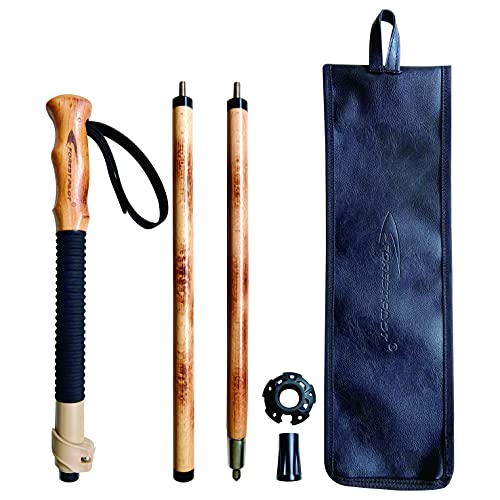
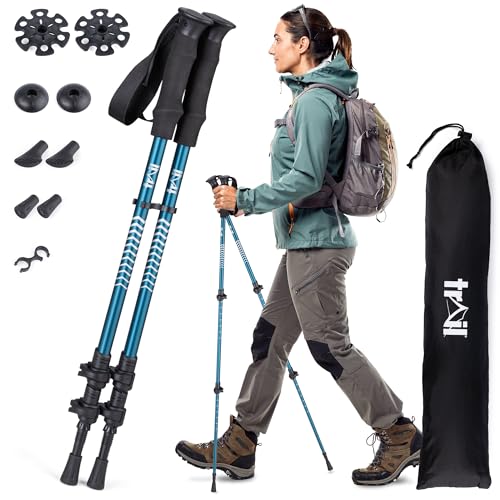


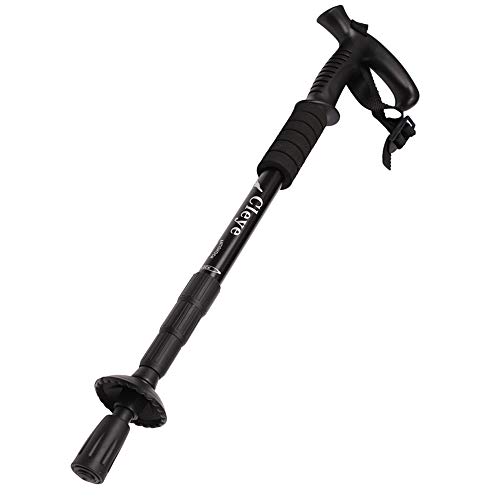


How to Choose Walking Poles
Walking Poles are used by walkers and hikers to provide additional points of contact with the ground. They can help with balance, establish a steady walking rhythm and provide useful support when travelling over steep, loose, muddy or uneven terrain.
For some people, poles become a regular part of almost every walk. Others carry them on a backpack and bring them out only for steep descents, boggy sections or difficult terrain. There is no single pole design that is right for every user.
A person walking predominantly on well-maintained paths may prioritise low weight and compact storage. A hill walker might prefer secure adjustment, strong shafts and extended handles for changing gradients. Someone travelling regularly may place greater importance on folding length.
When comparing Walking Poles, consider:
- Pole length
- Adjustment range
- Fixed or adjustable construction
- Folded or collapsed size
- Shaft material
- Weight
- Handle shape
- Grip material
- Wrist strap design
- Locking mechanism
- Tip construction
- Basket compatibility
- Intended terrain
- Whether the product contains one pole or a pair
The most feature-rich model is not necessarily the right choice. A pole should first fit the user, feel comfortable and suit the type of walking it will actually be used for.
Main Types of Walking Poles
Walking Poles are available in several constructions. The main differences concern how they adjust, how small they pack and the style of walking for which they are intended.
Trekking Poles
Trekking poles are commonly used for hiking, hill walking, backpacking and long-distance routes. They are usually used as a pair, although individual poles are also available.
They may include:
- Adjustable shafts
- Cork, foam or rubber handles
- Wrist straps
- Hard ground tips
- Removable rubber covers
- Small trekking baskets
- Larger optional baskets
- Lever or twist locking mechanisms
Trekking poles are designed primarily for stability and movement across varied outdoor terrain.
They can be useful on:
- Hill paths
- Woodland trails
- Moorland
- Muddy tracks
- Loose gravel
- Rocky routes
- Long ascents
- Extended descents
Their versatility makes them a common choice for general Walking and Hiking use.
Telescopic Walking Poles
Telescopic poles consist of sections that slide inside one another. They can be extended for use and shortened when being stored or attached to a backpack.
One of their main advantages is adjustment.
A single model may suit several walking situations because the length can be altered to accommodate:
- User height
- Flat terrain
- Ascents
- Descents
- Side slopes
- Different users
Telescopic poles commonly use either lever locks or twist locks to secure each section.
Check the collapsed length as well as the usable adjustment range. Two poles with similar walking lengths can have very different storage dimensions.
Folding Walking Poles
Folding poles separate into several connected sections that fold alongside one another.
The sections may be joined internally using:
- Cord
- Cable
- Elasticated material
- Mechanical connectors
Their main advantage is usually compact packed size.
They can suit walkers who:
- Travel frequently
- Carry poles inside luggage
- Use smaller backpacks
- Want poles available only for occasional difficult sections
- Prefer a compact emergency or spare pair
Some folding designs include a short telescopic section so the final length can still be adjusted.
Check how the pole locks into its fully assembled position and ensure every section is seated correctly before use.
Fixed-Length Walking Poles
Fixed-length poles have no telescopic adjustment.
This makes correct sizing especially important.
Potential advantages may include:
- Fewer mechanical parts
- Simple construction
- Consistent length
- Potentially low weight
The main limitation is that they cannot usually be shortened for storage or altered for significantly different users.
Fixed-length poles may suit someone who already knows their preferred size and does not need frequent adjustment.
Compact Walking Poles
Some Walking Poles are specifically designed around portability.
They may use:
- Short folding sections
- Lightweight shafts
- Slim handles
- Minimal baskets
These can be useful for travel and daypacks.
However, compact dimensions should not be the only buying consideration. Check that the assembled pole remains suitable for your height and intended terrain.
Lightweight Walking Poles
Lightweight poles reduce the amount of mass moved with every stride.
This can become noticeable during long-distance walking because the poles may be lifted thousands of times during a single day.
Lightweight designs may particularly appeal to:
- Long-distance hikers
- Fast walkers
- Backpackers
- Travellers
- Users who carry poles for only part of a route
Weight should still be considered alongside durability, shaft construction, handle comfort and locking reliability.
Single Walking Poles
Not every product contains two poles.
Some Walking Poles are sold individually and are intended for users who prefer one additional contact point with the ground.
A single pole can be useful for occasional support on:
- Uneven paths
- Mud
- Moderate descents
- Stream edges
- Rough ground
A pair can provide more symmetrical movement and additional stability on both sides.
Always check the product quantity before ordering.
Walking Poles Versus Traditional Walking Sticks
Walking Poles and traditional walking sticks can look similar but may be intended for different uses.
Walking Poles are generally designed for active outdoor movement. They often feature lightweight shafts, wrist straps and replaceable tips.
A traditional walking stick may have:
- A shaped handle
- A single fixed shaft
- A larger rubber ferrule
- A design intended primarily for casual support
Neither product should automatically be assumed to be suitable as a medical mobility aid.
If substantial weight-bearing support is required due to injury, rehabilitation, balance difficulties or a health condition, a purpose-designed mobility product may be more appropriate.
Choosing the Correct Walking Pole Length
Pole length is one of the most important buying considerations.
As a general starting point for trekking, many walkers adjust their poles so that the elbow forms approximately a right angle when standing upright on level ground with the pole tip touching the floor.
This is a general guide rather than a universal rule.
Appropriate length can depend on:
- User height
- Arm proportions
- Handle design
- Terrain
- Walking technique
- Personal preference
Manufacturer sizing information should be followed where provided.
Checking Pole Length on Level Ground
Stand upright in normal walking footwear.
Hold the handle naturally and place the pole tip beside your foot.
With a suitable starting length:
- The shoulders should remain relaxed
- The wrist should sit naturally
- The elbow should be roughly around 90 degrees
- You should not need to lean forwards
- The handle should not force the shoulder upwards
Walk a short distance and assess whether the arm movement feels natural.
Pole Length for Climbing
On a prolonged ascent, some walkers shorten adjustable poles slightly.
This can make it easier to plant the pole on higher ground ahead without lifting the shoulders excessively.
Do not constantly adjust poles on every small rise.
For short, steep sections, an extended grip may allow the pole to be held lower down without changing the actual shaft length.
Pole Length for Descending
Some walkers lengthen their poles slightly for longer descents.
This may allow the tip to reach lower ground while maintaining a more upright posture.
Avoid making the poles excessively long.
A pole that is too long can:
- Interfere with natural arm movement
- Encourage overreaching
- Make placement awkward
- Increase the chance of the tip catching
Side Slopes and Traverses
When crossing a slope sideways, the uphill hand is closer to the ground than the downhill hand.
Depending on the terrain, you may:
- Shorten the uphill pole
- Lengthen the downhill pole
- Hold an extended grip lower on the uphill pole
Stop somewhere stable before changing adjustment.
Walking Pole Adjustment Ranges
Adjustable poles are normally marked with minimum and maximum usable lengths.
Check these carefully.
A pole should never be extended beyond:
- Its marked stop line
- Maximum extension line
- Manufacturer’s stated limit
Over-extension may reduce the overlap between shaft sections and compromise stability.
For a household where several people may share the same poles, compare the full adjustment range with each user’s height.
A pole that fits one adult may not shorten sufficiently for a child or significantly shorter user.
Men’s and Women’s Walking Poles
Some Walking Poles are marketed separately for men and women.
The main differences may include:
- Overall adjustment range
- Grip diameter
- Shaft dimensions
- Weight
- Colour
There is no general requirement for a man or woman to use a gender-specific pole.
The better approach is to choose according to:
- Height
- Hand size
- Grip comfort
- Weight preference
- Intended terrain
A smaller grip may be more comfortable for someone with smaller hands regardless of gender.
Walking Poles for Children
Children require poles sized appropriately for their height.
An adult pole that cannot be shortened sufficiently may encourage poor posture and awkward movement.
Consider:
- Minimum pole length
- Handle dimensions
- Strap adjustment
- Pole weight
- Ease of operating the locks
Young walkers should be supervised when using poles.
Children should understand that Walking Poles have hard or pointed tips and are outdoor equipment rather than toys.
Walking Pole Shaft Materials
The shaft forms the main structural body of the pole.
Common materials include aluminium and carbon fibre.
Aluminium Walking Poles
Aluminium alloys are widely used for Walking Poles.
Potential advantages can include:
- Robust general-purpose construction
- Good availability
- Suitability for varied terrain
- Different shaft thicknesses and weights
Under sufficient force, aluminium can bend.
A significantly bent pole should be considered damaged. Attempting to straighten it may weaken the material further.
Check the pole carefully after a fall or if it has become trapped between rocks.
Carbon Fibre Walking Poles
Carbon fibre is frequently used where reduced weight and stiffness are priorities.
Possible advantages include:
- Low weight
- Stiff construction
- Reduced vibration in some designs
Carbon fibre responds differently to impact from aluminium.
Rather than visibly bending, damaged carbon can crack, splinter or fracture.
Inspect carbon poles if they have received a heavy impact.
Do not continue using a shaft that shows:
- Cracks
- Splitting
- Deep chips
- Crushing
- Significant delamination
Mixed-Material Walking Poles
Some products combine materials across different sections.
For example, one section may use carbon fibre while another uses aluminium.
This can balance:
- Weight
- Cost
- Strength
- Adjustment design
Check the individual specification rather than assuming the entire shaft uses the material mentioned most prominently.
Pole Diameter and Shaft Construction
Walking Pole shafts vary in diameter.
Thicker does not automatically mean stronger, because overall performance depends on:
- Material
- Wall thickness
- Section overlap
- Manufacturing method
- Lock design
A thicker pole may feel more substantial but may also weigh more.
Choose based on the stated intended use rather than shaft diameter alone.
Walking Pole Weight
Pole weight is normally stated per pole or per pair.
Check which measurement the product listing uses.
Even a relatively small difference can become noticeable during a long day.
However, lighter is not automatically better.
A slightly heavier pole may include:
- Larger grips
- More robust locks
- Thicker shafts
- Additional features
- Longer adjustment range
Think about whether the poles will be used continuously or carried for substantial portions of the route.
Handle Materials
The handle is one of the parts of the pole that remains in constant contact with the user.
Comfort can have a significant effect during longer walks.
Cork Walking Pole Handles
Cork grips are popular for trekking.
Potential advantages may include:
- Comfortable feel
- Some moisture absorption
- Natural texture
- Ability to conform slightly over time
Quality and cork content vary.
Some handles use a cork blend rather than solid natural cork.
Allow damp handles to dry naturally before storage.
Foam Walking Pole Handles
Foam handles can provide a soft, lightweight grip.
They may be particularly comfortable during warm conditions because the material can absorb some moisture.
Foam grips sometimes extend further down the shaft, creating an additional gripping area for climbs.
Avoid storing foam handles while damp inside sealed bags.
Rubber Walking Pole Handles
Rubber can provide a secure, easily cleaned grip.
It may be useful in:
- Cold conditions
- Wet weather
- General recreational walking
Some users find rubber less comfortable over long distances, particularly when hands become warm.
Grip comfort is personal, so consider the expected duration of use.
Plastic Handles
Some poles use moulded plastic grips.
These can be durable and easy to clean.
Because the material offers less cushioning, handle shape becomes particularly important.
Check whether the grip suits your hand size and preferred holding position.
Ergonomic Walking Pole Handles
Many poles use shaped grips intended to fit more naturally in the hand.
Features may include:
- Curved tops
- Finger shaping
- Angled grip sections
- Wider palm supports
A heavily shaped handle may suit one user very well and another poorly.
If possible, compare the dimensions and shape with the style of grip you already find comfortable.
Extended Walking Pole Grips
Some trekking poles include an extended foam or cork grip beneath the main handle.
This provides an alternative holding position without changing pole length.
Extended grips are useful when:
- Climbing short steep sections
- Crossing slopes
- Frequently changing terrain
- Scrambling over short obstacles
They can reduce the need to repeatedly operate the adjustment locks.
Wrist Straps
Most trekking poles include wrist straps.
The strap helps keep the pole connected to the hand and may allow some pressure to be transferred through the wrist.
A correctly adjusted strap should:
- Support the hand
- Allow natural movement
- Avoid restricting circulation
- Remain secure
It should not be so tight that the hand cannot easily leave the strap when required.
How to Fit Walking Pole Wrist Straps
A common trekking technique is to place the hand upwards through the strap before bringing it down onto the handle.
This allows the strap to sit beneath the wrist.
The exact method may vary with product design.
Check the manufacturer’s instructions, especially where the strap has:
- Left and right markings
- Shaped sections
- Quick-release fittings
Adjust the strap so the hand can hold the grip naturally without relying on excessive finger pressure.
When to Release Walking Pole Straps
Straps can help retain the pole but can also keep it attached if the pole becomes trapped.
Some walkers choose not to use straps in terrain where this could create additional risk, including:
- Scrambling
- Dense undergrowth
- Boulder fields
- Fast-moving water
- Terrain where tips frequently wedge between rocks
Appropriate technique depends on the conditions and the user’s experience.
Walking Pole Locking Systems
Adjustable Walking Poles require a secure mechanism to hold each section at the selected length.
Common systems include:
- Lever locks
- Twist locks
- Push-button locks
- Combined folding and lever systems
Lever Lock Walking Poles
Lever locks use an external clamp that opens for adjustment and closes around the shaft.
Possible advantages include:
- Easy visual checking
- Simple operation
- Straightforward adjustment
- Accessibility while wearing some gloves
Some lever locks include a tension screw.
If the pole slips, this can sometimes be tightened slightly.
Do not overtighten the mechanism. If excessive force is required to close the lever, reduce the tension.
Twist Lock Walking Poles
Twist locks generally use an internal expansion mechanism.
One pole section is rotated relative to another to secure it.
Benefits can include:
- Clean external shape
- Few protruding components
- Familiar operation
Dirt or wear inside the mechanism can affect grip.
Always test the lock before walking.
Push-Button Locking Systems
Push-button mechanisms are commonly found on folding poles.
When assembled, a button may click into place and prevent the pole collapsing.
Check that the button is fully visible and engaged.
If it sticks or only partially emerges, stop and inspect the mechanism.
Hybrid Locking Systems
Some poles combine:
- Folding lower sections
- Telescopic upper sections
- Push-button assembly
- Lever adjustment
This can provide a compact packed length while retaining some user adjustment.
Each mechanism should be checked independently.
How to Check Walking Pole Locks
Before every walk:
- Assemble or extend the pole.
- Set the required length.
- Secure each lock.
- Hold the handle firmly.
- Place the tip on solid ground.
- Apply moderate downward pressure.
- Check whether any section moves.
The pole should not shorten unexpectedly.
If a lock slips:
- Clean it where appropriate
- Adjust the tension where permitted
- Check for wear
- Follow the manufacturer’s maintenance guidance
Do not rely on a pole with an unreliable lock on demanding terrain.
Shock-Absorbing Walking Poles
Some Walking Poles include an internal shock-absorbing system.
This may use:
- Springs
- Elastomer components
- Mechanical dampers
The purpose is generally to soften some of the impact transmitted through the pole.
Some users prefer the cushioned feel, while others prefer a rigid pole with more direct ground feedback.
Certain poles allow the anti-shock mechanism to be switched off.
This can be useful when moving between different terrain.
Shock absorption does not make a recreational trekking pole suitable for medical support.
Walking Pole Tips
The tip provides contact with the ground.
Most trekking poles use a hard wear-resistant point.
Depending on the design, this may use:
- Carbide
- Hardened steel
- Another durable metal
The tip must resist wear while providing traction on outdoor surfaces.
Carbide Tips
Carbide-style tips are commonly used on trekking poles.
They can grip into:
- Soil
- Compact trails
- Some rock surfaces
- Mud
On smooth hard flooring they may be noisy and can cause marks.
Compatible rubber covers may be preferable for hard urban surfaces.
Steel Tips
Steel points can also provide durable outdoor contact.
Inspect them regularly for:
- Excessive rounding
- Corrosion
- Loosening
- Damage to the surrounding holder
Replace the tip where compatible if it is significantly worn.
Rubber Tip Covers
Many Walking Poles accept rubber covers that fit over the hard tip.
These can be useful on:
- Tarmac
- Pavement
- Indoor flooring
- Smooth hard paths
They can:
- Reduce noise
- Protect surfaces
- Alter grip characteristics
Rubber wears gradually.
Replace a cover if it becomes:
- Smooth
- Split
- Loose
- Holed
- Unevenly worn
Walking Pole Baskets
Baskets sit above the tip and help stop the pole sinking too deeply into soft ground.
Walking Poles may include small trekking baskets as standard, while other basket types can sometimes be fitted separately.
Trekking Baskets
Small trekking baskets can help prevent the pole entering:
- Gaps between rocks
- Soft soil
- Moderate mud
Their compact size makes them suitable for general trail walking.
Mud Baskets
Larger baskets can provide more resistance on:
- Peat
- Mud
- Soft ground
- Boggy paths
They may be useful on wet moorland and winter trails.
Snow Baskets
Snow baskets are larger again and are intended to prevent poles sinking deeply into soft snow.
They can be cumbersome on ordinary trails.
Check whether the basket fitting is compatible with the pole before changing types.
Walking Pole Packed Length
Collapsed length matters when poles are not in use.
Consider where you intend to store them.
Possible requirements include:
- Inside a daypack
- On the outside of a hiking backpack
- In a suitcase
- In a vehicle
- In a locker
- At home
Folding poles usually offer the shortest packed length, but this varies.
Always compare stated dimensions.
Carrying Walking Poles on a Backpack
Many hiking backpacks provide dedicated attachment points.
These may use:
- Elastic loops
- Lower pole loops
- Compression straps
- Quick-access pole holders
When carrying poles externally:
- Collapse them fully
- Secure both ends
- Cover exposed tips where appropriate
- Keep them close to the pack
- Make sure they cannot swing
- Avoid positioning them near the face
Loose poles can catch on:
- Branches
- Other walkers
- Gates
- Public transport
- Rocks
Walking Poles for Day Hiking
For ordinary day walks, useful priorities may include:
- Comfortable grips
- Reliable adjustment
- Moderate packed length
- Replaceable tips
- Easy operation
A day walker may not need the lightest or most technical design.
Choose according to the terrain most frequently encountered.
Walking Poles for Hill Walking
Hill walking often involves changing gradients.
Adjustable poles can be particularly practical because the length can be modified between prolonged ascents and descents.
Other useful features may include:
- Extended grips
- Secure lever locks
- Durable shafts
- Trekking baskets
- Comfortable straps
Poles can assist stability but should not be used to compensate for unsuitable footwear or a route beyond the walker’s ability.
Walking Poles for Mountain Routes
Some mountain paths remain straightforward walking terrain, while others become steep, rocky or exposed.
Poles may help on easier sections but can become inconvenient where hands are needed for scrambling.
A backpack attachment system can be useful so the poles can be stowed securely.
Do not attempt technical terrain simply because Walking Poles provide additional support.
Walking Poles for Long-Distance Walking
During long-distance routes, small differences in comfort can become important.
Consider:
- Grip shape
- Strap material
- Overall weight
- Lock reliability
- Tip availability
- Shaft durability
- Ease of packing
Test new poles on shorter walks before relying on them during a multi-day route.
Walking Poles for Backpacking
Backpackers often carry more weight than day walkers.
Poles may provide useful additional contact with the ground when travelling with a loaded pack.
Priorities can include:
- Strong locks
- Reliable shafts
- Comfortable grips
- Appropriate length range
Avoid exceeding any stated load or use guidance.
Walking Poles generally provide supplementary support rather than being designed to carry the user’s entire body weight.
Walking Poles for Woodland Trails
Woodland paths may contain:
- Tree roots
- Mud
- Wet leaves
- Loose branches
- Uneven ground
Place poles carefully.
A tip wedged between roots can become trapped while the walker continues moving.
Do not drag a trapped pole forcefully.
Stop, release pressure and free it carefully.
Walking Poles for Moorland
Moorland can involve:
- Bog
- Peat
- Soft ground
- Hidden drainage channels
- Few landmarks
Larger baskets may reduce how deeply poles sink.
However, Walking Poles should not be used to determine that apparently solid boggy ground is safe.
A pole can pass easily through peat without accurately indicating the depth or stability of the surrounding surface.
Walking Poles for Rocky Ground
On rocky terrain, poles can provide extra contact points.
However, tips can become wedged between rocks.
Place the pole deliberately rather than dropping it into deep gaps.
Wet rock can also be extremely slippery.
A hard metal tip may grip one rock surface well and slide on another.
Walking Poles for Muddy Paths
Mud can make paths slippery and unpredictable.
Poles may help with balance, particularly when:
- Stepping around deep sections
- Crossing churned ground
- Descending muddy slopes
Baskets can stop the pole sinking excessively.
Clean mud from the lower sections before collapsing telescopic poles.
Walking Poles for Road and Pavement Walking
Metal tips can be noisy on tarmac and may provide less comfortable contact than rubber covers.
Compatible rubber feet may be preferable where most of the route follows:
- Pavement
- Tarmac
- Paved paths
Inspect rubber regularly because hard surfaces can wear it quickly.
Walking Poles for Travel
Travellers may prioritise:
- Short packed length
- Low weight
- Storage cases
- Quick assembly
Check transport rules before travelling.
Airlines and security authorities may restrict Walking Poles from cabin baggage due to their pointed ends.
Requirements can vary, so check with the relevant operator before travel.
Using Walking Poles Correctly
Good technique makes poles more effective and reduces unnecessary arm fatigue.
For ordinary trekking on level ground, many walkers use an alternating pattern.
For example:
- Left foot forward with right pole
- Right foot forward with left pole
This mirrors natural arm movement.
Do not place poles excessively far in front of the body on ordinary level walking because this can slow the stride.
Walking Pole Technique on Flat Ground
Keep:
- Shoulders relaxed
- Elbows comfortably bent
- Handles lightly gripped
- Pole tips relatively close to the body
Allow the arms to swing naturally.
The wrist straps can support part of the movement so the handles do not need to be squeezed continuously.
Walking Pole Technique Uphill
On ascents:
- Shorten the poles slightly where useful
- Plant them closer to the body
- Keep the shoulders relaxed
- Avoid reaching excessively far uphill
For short steep steps, poles can be planted higher to provide another point of contact.
Do not haul the entire body upwards using poles unless they are specifically designed and rated for that kind of loading.
Walking Pole Technique Downhill
On descents, poles may be planted slightly ahead.
This can provide extra contact before the foot reaches lower ground.
Maintain a controlled pace.
Do not:
- Overreach
- Place the pole too far forward
- Rely completely on the poles
- Lock the elbows rigidly
Foot placement remains the main foundation of balance.
Using Walking Poles on Steps
When negotiating large steps:
- Place the pole where it cannot slip
- Check the ground first
- Move one step at a time
- Avoid blocking other walkers
On very steep man-made steps, poles can sometimes be more awkward than useful.
Stow them if necessary.
Walking Poles on Narrow Paths
Narrow trails require awareness of other people.
Keep poles close to the body when passing walkers.
Avoid swinging the shaft horizontally.
Metal tips can cause injury, so maintain adequate space.
Using Walking Poles in Groups
When walking in groups:
- Leave sufficient distance
- Avoid planting tips near another person’s feet
- Do not swing poles backwards
- Stop before making adjustments
- Carry collapsed poles vertically or close to the body
Be especially careful around children.
Walking Poles Around Dogs
Dogs can cross unexpectedly in front of a walker.
Leads can also become caught around poles.
When walking with a dog:
- Keep pole tips away from paws
- Keep the lead clear of wrist straps
- Avoid using wide arm movements
- Stop if the dog changes side repeatedly
A dog attached to a waist belt can create an additional entanglement risk where poles are being used.
River and Stream Crossings
Poles can provide additional contact points in shallow water.
However, they do not make a hazardous crossing safe.
Avoid crossing water that is:
- Fast flowing
- Flooded
- Too deep
- Difficult to see through
- Beyond your ability
A pole can help check where the next foot placement may be, but it should not be relied upon as proof that the riverbed is safe.
Walking Poles in Snow
Poles fitted with suitable baskets can be useful on some snowy walking routes.
They can help with:
- Balance
- Rhythm
- Soft snow
They do not replace specialist winter equipment.
Technical snow and ice may require:
- Appropriate boots
- Traction equipment
- Ice axes
- Winter navigation skills
- Relevant training
Ordinary Walking Poles should not be used as substitutes for specialist mountaineering equipment.
Walking Poles on Ice
A hard tip may provide some contact with thin surface ice, but ordinary poles should not be relied upon to prevent slips.
Ice conditions can vary considerably.
Wear suitable footwear and use dedicated traction equipment where appropriate.
Turn back if conditions exceed your experience or equipment.
Walking Pole Safety
Walking Poles are simple equipment, but failure or incorrect use can cause falls.
Check poles before every significant walk.
Look at:
- Shafts
- Joints
- Locks
- Handles
- Straps
- Tips
- Baskets
Do not use a pole with obvious structural damage.
Inspecting Aluminium Poles
Look for:
- Dents
- Bends
- Cracks
- Deep scoring
- Loose joints
A small cosmetic scratch is different from structural deformation.
If the pole has bent significantly, replacement may be safer than attempting to straighten it.
Inspecting Carbon Fibre Poles
Carbon fibre damage may not look like a simple bend.
Check for:
- Cracks
- Splintering
- Crushing
- Delamination
- Deep chips
Stop using the pole if structural damage is suspected.
Broken carbon fibres can also be sharp.
Checking Handle Security
The handle should remain firmly attached to the shaft.
Stop using the pole if:
- The handle rotates unexpectedly
- It pulls away from the shaft
- The grip is badly split
- A retaining component has failed
A loose handle may separate when force is applied.
Checking Wrist Straps
Inspect stitching and adjustment buckles.
Replace or repair the pole according to the manufacturer’s advice if the strap becomes seriously damaged.
Minor fraying can become worse rapidly with repeated use.
Walking Pole Load Limits
Do not assume a Walking Pole can safely support the user’s full body weight.
Some products may state load limits or intended applications.
Others may not.
Trekking poles usually provide supplementary balance and support during movement.
If you require significant load-bearing assistance, use equipment specifically designed for that requirement.
Walking Poles as Mobility Aids
General hiking poles should not automatically be used instead of:
- Walking sticks
- Crutches
- Rehabilitation aids
- Medical mobility poles
People recovering from surgery or managing significant balance, joint or mobility issues should seek appropriate professional advice.
A medical aid may have different:
- Load ratings
- Ferrules
- Handles
- Stability
- Adjustment systems
- Testing requirements
Cleaning Walking Poles
Regular cleaning helps keep adjustment mechanisms working correctly.
After muddy or wet walks:
- Wipe the shafts.
- Remove mud from the tips.
- Clean baskets.
- Dry the handles.
- Inspect the locks.
- Allow straps to dry.
- Store the poles only when fully dry.
Do not wash telescopic poles by repeatedly filling the shaft with water unless this is recommended by the manufacturer.
Cleaning Telescopic Sections
Dirt and grit can work between sliding sections.
This may:
- Scratch the shaft
- Make adjustment difficult
- Affect locking
- Cause sections to stick
Where the manufacturer permits disassembly:
- Separate the sections carefully.
- Wipe away dirt.
- Allow them to dry.
- Reassemble correctly.
Do not apply oil or grease unless specifically instructed.
Lubricants can reduce friction and interfere with some locking mechanisms.
Maintaining Lever Locks
If a lever lock becomes loose, some designs allow tension adjustment.
Use small changes.
A correctly adjusted lever should:
- Open without excessive force
- Close firmly
- Hold the shaft securely
If the lever must be forced shut, the tension may be too high.
Maintaining Twist Locks
Twist locks rely on internal friction.
If a pole starts slipping:
- Stop using it
- Clean the mechanism where permitted
- Check that sections are assembled correctly
- Inspect for wear
Avoid overtightening, which can make the sections difficult to separate.
Maintaining Folding Poles
Folding poles should assemble tightly with no unexplained movement between sections.
Inspect:
- Internal cord or cable
- Joint surfaces
- Push buttons
- Tension mechanisms
If a section repeatedly comes apart during use, stop and inspect the pole.
Drying Walking Poles
Wet poles should be allowed to dry before long-term storage.
Extend telescopic sections where the instructions permit.
Dry:
- Straps
- Foam handles
- Cork handles
- Shaft joints
- Metal components
Do not leave wet poles sealed inside a storage bag for prolonged periods.
Cleaning Cork Grips
Cork handles generally need only gentle cleaning.
Use a slightly damp cloth where appropriate and allow them to air dry.
Avoid:
- Strong detergents
- Solvents
- Prolonged soaking
These may damage the grip material or adhesive.
Cleaning Foam Grips
Foam handles can absorb sweat and water.
Wipe them gently and allow them to dry completely.
Do not use harsh cleaning chemicals unless the manufacturer confirms compatibility.
Cleaning Rubber Grips
Rubber grips can usually be wiped clean.
Avoid solvent-based cleaners that may soften or degrade rubber.
Dry thoroughly before storage.
Storing Walking Poles
Store poles somewhere:
- Dry
- Cool
- Away from excessive heat
- Protected from impacts
- Out of reach of small children
- Away from pets
Sharp tips should be covered where possible.
Do not lean long poles insecurely where they can fall.
Long-Term Storage
Before storing for several months:
- Clean the poles.
- Dry them.
- Inspect the locks.
- Remove mud from baskets.
- Check rubber tips.
- Allow straps to dry.
- Store away from damp.
Follow any manufacturer guidance about leaving lever locks open or closed during extended storage.
Transporting Walking Poles by Car
Collapsed poles should be secured.
Do not leave them loose across seats or in the passenger area.
During sudden braking, long rigid objects can become dangerous.
A storage bag can help keep:
- Mud
- Metal tips
- Loose baskets
away from upholstery and other equipment.
Walking Poles on Public Transport
Collapse poles before boarding where practical.
Keep tips covered and hold the poles close to the body.
Avoid blocking:
- Aisles
- Doors
- Seats
- Luggage spaces
Be considerate of other passengers when carrying poles with exposed hard tips.
Common Walking Pole Problems
Walking Pole Keeps Collapsing
The locking mechanism may not be tight enough or may be contaminated with dirt.
Stop and inspect the pole.
For lever locks, check tension where adjustment is provided.
For twist locks, inspect the internal mechanism where permitted.
Do not continue using a pole that repeatedly shortens under load.
Pole Will Not Extend
Mud, corrosion, dried grit or overtightening may be preventing movement.
Do not twist with excessive force.
Clean the mechanism according to the manufacturer’s guidance.
Using pliers directly on a thin shaft can crush or mark it.
Pole Sections Separate Completely
Some telescopic poles can be intentionally disassembled for cleaning.
Others include stops intended to prevent complete separation.
If a pole separates unexpectedly, check whether an internal component has failed before using it again.
Walking Pole Is Bent
A bent pole has suffered structural deformation.
Do not assume that bending it back restores its original strength.
Replacement may be necessary.
Carbon Pole Has a Crack
Stop using the pole.
Carbon fibre can fail suddenly once structurally damaged.
Avoid touching exposed sharp fibres with bare hands.
Handle Is Loose
Do not continue using the pole if the handle rotates or moves significantly on the shaft.
Check whether repair is supported by the manufacturer.
Wrist Strap Has Torn
A damaged strap may fail when pressure is applied.
Replace it where compatible or stop using the strap until suitable repair is available.
Pole Tip Is Worn
A worn tip may offer reduced grip.
Check whether the tip can be replaced.
Do not allow a replaceable rubber cover to wear completely through to the hard point beneath.
Pole Feels Unstable
Check:
- Length adjustment
- Locks
- Shaft joints
- Handle
- Tip
- Basket
If everything is secure, the issue may be technique or an unsuitable pole length.
When to Replace Walking Poles
Walking Poles do not have a universal replacement interval.
Replacement may be appropriate if:
- A shaft is cracked
- Aluminium is substantially bent
- Carbon fibre is damaged
- Locks no longer hold
- Folding joints are unreliable
- Handles separate
- Replacement parts are unavailable
- Corrosion affects important components
Cosmetic scratches alone do not necessarily indicate structural failure.
Inspect each component based on its condition.
Walking Poles for Different Seasons
Spring Walking
Spring conditions can include:
- Mud
- Rain
- Soft ground
Small or medium baskets can help prevent poles sinking into wet soil.
Clean telescopic sections after muddy walks.
Summer Walking
During dry weather, walkers may prioritise:
- Low weight
- Comfortable grips
- Compact storage
Rubber tips can be useful where summer routes include long stretches of road or hard paths.
Autumn Walking
Autumn can create slippery surfaces from:
- Wet leaves
- Mud
- Rain
Poles can provide useful additional contact points.
Check hard tips and locks before longer outings.
Winter Walking
Winter may bring:
- Snow
- Frozen ground
- Short daylight
- Mud
Larger baskets may be appropriate for snow where compatible.
Walking Poles alone do not make winter mountain conditions safe.
Comparing Fixed and Adjustable Walking Poles
Fixed-Length Poles
Potential advantages:
- Simple construction
- No telescopic locks
- Potentially low weight
- Consistent setup
Potential limitations:
- Cannot adapt to significantly different users
- Harder to pack
- No easy adjustment between climbs and descents
Adjustable Poles
Potential advantages:
- Flexible sizing
- Easier storage
- Terrain adjustment
- Can suit different users
Potential limitations:
- More moving parts
- Locks require maintenance
- Potential for slipping if incorrectly adjusted
Comparing Folding and Telescopic Walking Poles
Folding Walking Poles
Potential advantages:
- Very short packed length
- Easy transport
- Suitable for travel
Possible limitations:
- May offer less length adjustment
- More joint sections
- Internal cords or cables require inspection
Telescopic Walking Poles
Potential advantages:
- Wide adjustment ranges
- Easy fine tuning
- Familiar operation
Possible limitations:
- Often longer when collapsed
- Sliding sections can collect grit
The right design depends mainly on whether packed length or adjustment flexibility matters more.
Comparing Aluminium and Carbon Walking Poles
Aluminium Poles
May appeal to walkers prioritising:
- Robust general-use construction
- Familiar material behaviour
- Broad product choice
Carbon Fibre Poles
May appeal to walkers prioritising:
- Low weight
- Stiffness
- Reduced swing weight
Neither material is indestructible.
Both should be inspected after significant impacts.
Comparing Cork and Foam Handles
Cork Handles
Potential advantages:
- Comfortable natural feel
- Some moisture management
- May shape slightly with use
Foam Handles
Potential advantages:
- Lightweight
- Soft grip
- Often used on extended handles
Choice is mainly personal.
Long-distance walkers may find handle comfort more important than a small difference in pole weight.
Choosing Walking Poles for Beginners
A first pair of Walking Poles does not need to be complicated.
Useful features for many beginners include:
- Adjustable length
- Clear measurement markings
- Simple locking system
- Comfortable straps
- Replaceable rubber tips
- Standard trekking baskets
Practise on uncomplicated terrain before using poles on steep routes.
Learn how to:
- Adjust the length
- Operate the locks
- Fit the straps
- Plant the poles
- Carry them safely
Choosing Walking Poles for Experienced Hikers
Experienced walkers may have more specific priorities.
These can include:
- Low weight
- Particular handle materials
- Extended grips
- Short folded length
- Specific lock types
- Large basket compatibility
- Replaceable components
The intended route should still guide the decision.
Buying One Pole or a Pair
Check whether the product listing includes:
- One pole
- Two poles
Photographs can sometimes show a pair even where only one item is supplied, or vice versa.
Using a pair generally provides:
- Support on both sides
- More symmetrical rhythm
- Additional contact on steep terrain
A single pole may be sufficient for occasional recreational use.
Walking Pole Accessories and Compatibility
Although the Walking Poles category focuses on the poles themselves, replacement components can influence long-term ownership.
Before buying, consider whether compatible items are available, such as:
- Rubber tips
- Trekking baskets
- Mud baskets
- Snow baskets
- Wrist straps
- Storage clips
- Carry bags
Not every manufacturer uses universal fittings.
A pole with easily replaceable wear parts may be more convenient to maintain.
Environmental Considerations
Walking Poles can often remain in service for many years when maintained correctly.
Extending useful life may involve:
- Replacing worn rubber tips
- Changing baskets
- Replacing straps where compatible
- Cleaning locks
- Repairing supported components
Do not continue using structurally damaged equipment solely to avoid replacement.
Safety should come first.
When a pole reaches the end of its usable life, separate components for recycling where local facilities accept them.
Materials such as aluminium, mixed plastics, carbon fibre, foam and rubber may require different disposal routes.
Local requirements can vary.
Responsible Use of Walking Poles Outdoors
Metal tips can mark some surfaces.
Consider fitting rubber covers when walking across:
- Historic paving
- Indoor floors
- Wooden boardwalks
- Sensitive hard surfaces
Avoid unnecessarily damaging vegetation beside trails.
Keep poles under control around:
- Wildlife
- Livestock
- Other walkers
Do not leave broken tips, baskets or other components on the trail.
Why Buy Walking Poles from YPC?
At YPC, we understand active lifestyles and the need for practical products that work in real use.
Our Walking Poles category helps customers compare trekking poles, telescopic poles, folding designs, fixed-length models and lightweight options. Review adjustment ranges, packed dimensions, shaft materials, grip types, locking systems and intended terrain to find poles suited to countryside walking, hiking, hills and longer outdoor routes.
Frequently Asked Questions
What length should Walking Poles be?
A common starting point is to adjust trekking poles so your elbow is roughly at a right angle when standing on level ground. Personal preference, terrain and pole design can affect the ideal setting, so check the manufacturer’s sizing guidance and stay within the marked adjustment limits.
Is it better to use one Walking Pole or two?
A pair provides additional contact with the ground on both sides and can create a more balanced walking rhythm. A single pole may still be useful for occasional support, so the right choice depends on your walking style and terrain.
Are folding Walking Poles better than telescopic poles?
Neither is automatically better. Folding poles usually provide a shorter packed length, while telescopic poles often offer a wider adjustment range, making the choice dependent on whether portability or flexibility is the main priority.
Are carbon fibre Walking Poles better than aluminium poles?
Carbon fibre models can be lighter and stiffer, while aluminium poles often provide robust general-purpose construction. Both materials can be damaged, so choose according to weight, intended use and design rather than assuming one material is always superior.
Can Walking Poles be used as medical walking aids?
General trekking poles are designed primarily for recreational walking and should not automatically be treated as medical mobility aids. Anyone requiring substantial weight-bearing support, rehabilitation equipment or assistance for a mobility condition should use an appropriate purpose-designed product and seek professional advice where necessary.
 Getting ready for Summer? View our Home and Garden Products

Heading outdoors this winter? Take a look at our Outdoor Clothing.