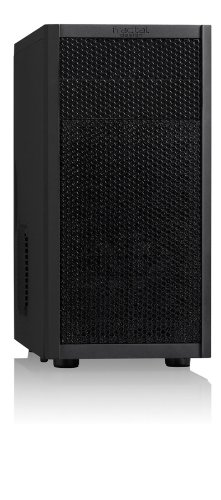


Quick Summary
The iONZ KZ-36T Arc is an M-ATX PC case for gaming and office builds, with tempered glass, a front I/O USB Type-C connection and an anodised aluminium finish in silver. It is described as a dual chamber case, and the stated size information shows it is built for compact system layouts with defined space for selected components.
The case is presented with support for Micro ATX and ITX motherboards, plus HD audio support, USB 3 and Type-C ports, and ventilation through a multi dot pattern cooling design.
Who It Is Best For
This case suits buyers planning a Micro ATX or ITX build who want a silver chassis with tempered glass and front access to USB Type-C. It also suits anyone checking for clearance around a graphics card, CPU cooler or radiator, because the listed dimensions and component space matter when matching parts.
Key Details
| Detail | Verified information and buyer relevance |
|---|---|
| Product name | iONZ KZ-36T Arc, identified as an M-ATX case for gaming and office use. |
| Finish | Silver with anodised aluminium and tempered glass for the visible external styling. |
| Motherboard support | Compatibility with Micro ATX and ITX motherboards. |
| Front I/O | Includes USB Type-C, USB 3 and HD audio support. |
| Case layout | Dual chamber design with a side area that conceals an ATX PSU. |
| Cooling allowance | Space for up to five fans, with ventilation through multi dot pattern cooling vents. |
| Dimensions | 360 mm long, 275 mm wide and 330 mm high, which is important for desk and component fit checks. |
| Component clearance | Supports GPUs up to 350 mm, a 240 mm radiator or a 160 mm CPU cooler. |
Why Buyers Choose It
- The tempered glass and anodised aluminium finish give the case a more refined visible presentation.
- Micro ATX and ITX support makes it relevant for smaller build formats.
- Front USB Type-C, USB 3 and HD audio support place commonly used connections within easy reach.
- Allowance for up to five fans and the listed vent pattern provide clear cooling-related specification checks.
How It Works
The case is used as the enclosure for a Micro ATX or ITX computer build. Its dual chamber layout separates the internal space, with the PSU positioned in the side area described in the listing. Front access ports provide Type-C, USB 3 and HD audio connections from the case exterior.
Before building, check that your motherboard format, GPU length, cooler height and radiator size match the stated clearances. The dimensions are also important if you are planning where the case will sit on a desk or under it.
Real World Use
In day-to-day use, this case is aimed at a compact desktop build where the front connections are easy to reach and the silver finish is part of the visible setup. The stated ventilation design and fan support are relevant when planning airflow around installed components.
If you are choosing parts for a new build, the most important checks are motherboard format, graphics card length and cooling clearance.
What To Know Before You Buy
Confirm that your build uses a Micro ATX or ITX motherboard before ordering. Check the 350 mm GPU limit, the 240 mm radiator space and the 160 mm CPU cooler allowance against your chosen parts. The listed dimensions of 360 x 275 x 330 mm should also be checked against your available space. The PSU concealment arrangement and dual chamber layout are part of the case design, so make sure that suits your planned build.
Common Buyer Questions
Which motherboards does it support?
It is listed for Micro ATX and ITX motherboards.
Does it include USB Type-C on the front panel?
Yes, front I/O USB Type-C is stated, along with USB 3 and HD audio support.
How large a graphics card can fit?
The stated GPU allowance is up to 350 mm, so check your card length before ordering.
What cooling space is listed?
It states room for up to five fans, plus a 240 mm radiator or a 160 mm CPU cooler.
Final Buying View
This is a compact silver PC case for buyers who need Micro ATX or ITX support, front USB Type-C access and the stated component clearances. Compare the motherboard format, graphics card length and cooling requirements with your planned build before choosing it.