
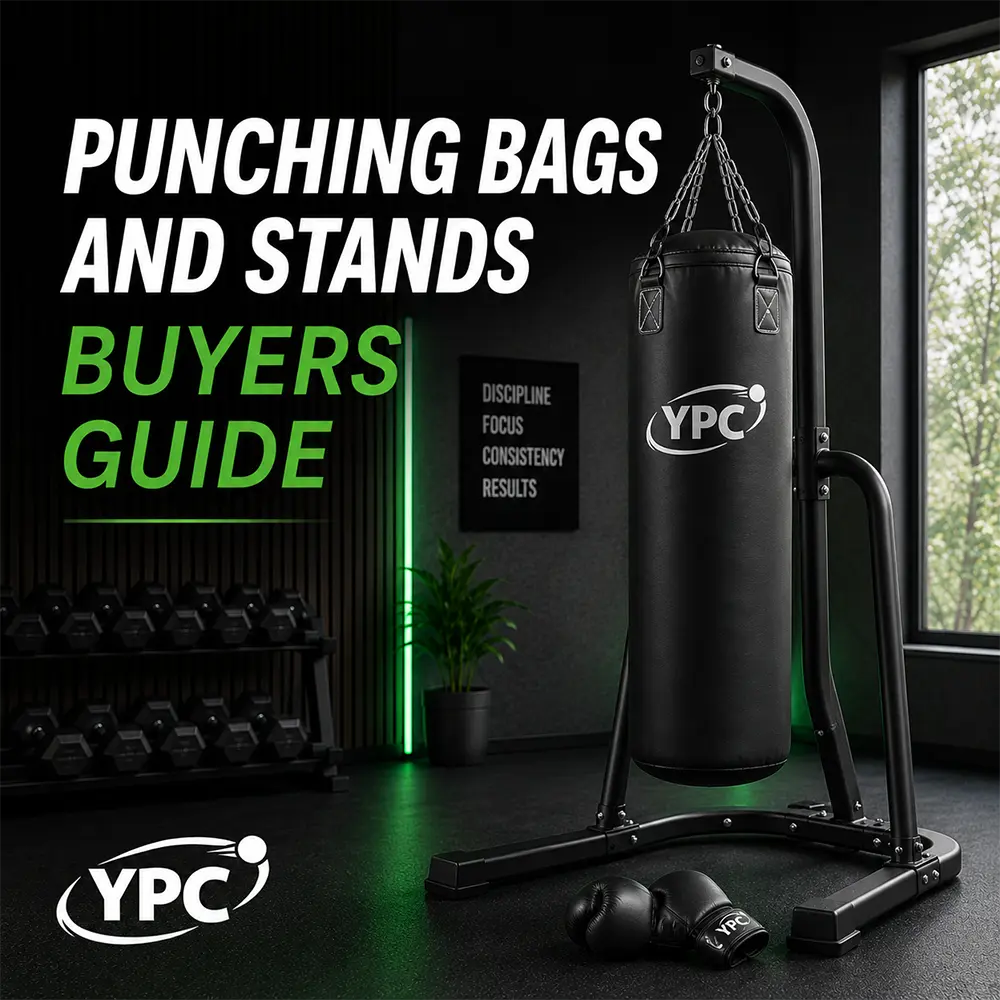
Punching bags and stands are striking surfaces used in boxing and other combat sports training environments. This Buyers Guide explains the main differences between hanging bags, freestanding bags and stand-supported systems, and how those differences affect suitability for various spaces and training contexts. The aim is to help you compare options clearly while keeping safety, space and stability considerations central.
Quick Product Comparison Framework
| Feature area | How options differ |
|---|---|
| Bag type | Hanging bags, freestanding bags, stand supported bags |
| Support method | Ceiling mounted, wall or frame mounted, weighted base |
| Bag size and height | Compact to full length designs |
| Weight and fill | Lighter training bags to heavier impact focused bags |
| Outer material | Synthetic coverings, reinforced or layered materials |
| Base design | Fixed mounts, weighted bases, adjustable frames |
| Space requirements | Minimal footprint to larger dedicated areas |
Key Decision Criteria Explained
Training environment and space
Available floor area, ceiling height and surrounding clearance strongly influence which bag types are suitable.
Mounting versus freestanding preference
Some setups rely on fixed mounting points, while others use self supporting bases. Each has different space and stability considerations.
Bag size and weight range
Bag dimensions and mass influence how the bag behaves during training and how much room it requires.
Floor interaction and protection
Freestanding bases and stands interact directly with flooring, which may affect suitability in shared or domestic spaces.
Noise and movement considerations
Impact and bag movement can create noise or vibration, which may matter in shared environments.
Product Type Differentiation and Variants
Hanging punching bags
Suspended bags designed to hang from a suitable support structure.
Freestanding punching bags
Self contained units using weighted bases rather than overhead mounting.
Stand supported bags
Bags attached to dedicated frames or stands without ceiling fixation.
Hybrid systems
Combined bag and frame systems designed for flexible placement.
Specifications vary — see individual product pages for details.
Suitability by Reader Type or Need
- Beginners often prioritise stability confidence and manageable size.
- Recreational users may prefer flexible freestanding options for shared spaces.
- Regular trainers often focus on durability and consistent bag behaviour.
- Experienced martial artists may choose based on preferred training style and space control.
- Home or garage gym users frequently balance footprint, ceiling height and floor protection.
Common Mistakes and Misunderstandings
- Assuming all bags behave the same regardless of mounting method.
- Choosing bag size without considering available space.
- Overlooking floor interaction for freestanding systems.
- Expecting one setup to suit every training environment.
- Ignoring noise and movement in shared spaces.
Safety and Suitability Caveats
Punching bags and stands are used in impact based training environments. Suitability depends on appropriate space, stable placement and correct product selection. No bag or stand eliminates injury risk. Always follow manufacturer guidance and training supervision requirements.
Maintenance Expectations and Lifespan Considerations
Punching bags and stands require periodic inspection of outer materials, seams, bases and support structures. Lifespan depends on construction quality, materials and frequency of use. Over time, filling compression, surface wear or base degradation may occur. Durability varies between products.
How to Compare Models Efficiently
Start by identifying your training space and ceiling height. Decide whether a mounted or freestanding system fits best. Compare bag size and weight next, then review base or support design. Finally, consider material durability and storage or relocation needs.
Summary Buyer Decision Checklist
- Training space and ceiling height
- Mounted or freestanding preference
- Bag size and weight suitability
- Floor protection needs
- Noise and movement tolerance
- Durability expectations
- Frequency of use
- Budget alignment
Frequently Asked Questions
Are freestanding bags suitable for home gyms?
Many people use them at home, provided there is sufficient space and a stable floor surface.
Do hanging bags require ceiling installation?
Hanging bags rely on suitable support structures. Specifications vary — see individual product listings.
Are stands included with all punching bags?
Not always. Some bags are sold separately from stands.
Does a heavier bag mean better training?
Heavier bags behave differently, but suitability depends on space and training preference.
Can punching bags be used in shared spaces?
They can be, but noise, movement and floor interaction should be considered carefully.
For products in this category, visit:
https://www.ypc.co.uk/product-category/diet-fitness-and-exercise-equipment/exercise-equipment/boxing-and-combat-sports/punching-bags-and-stands/