

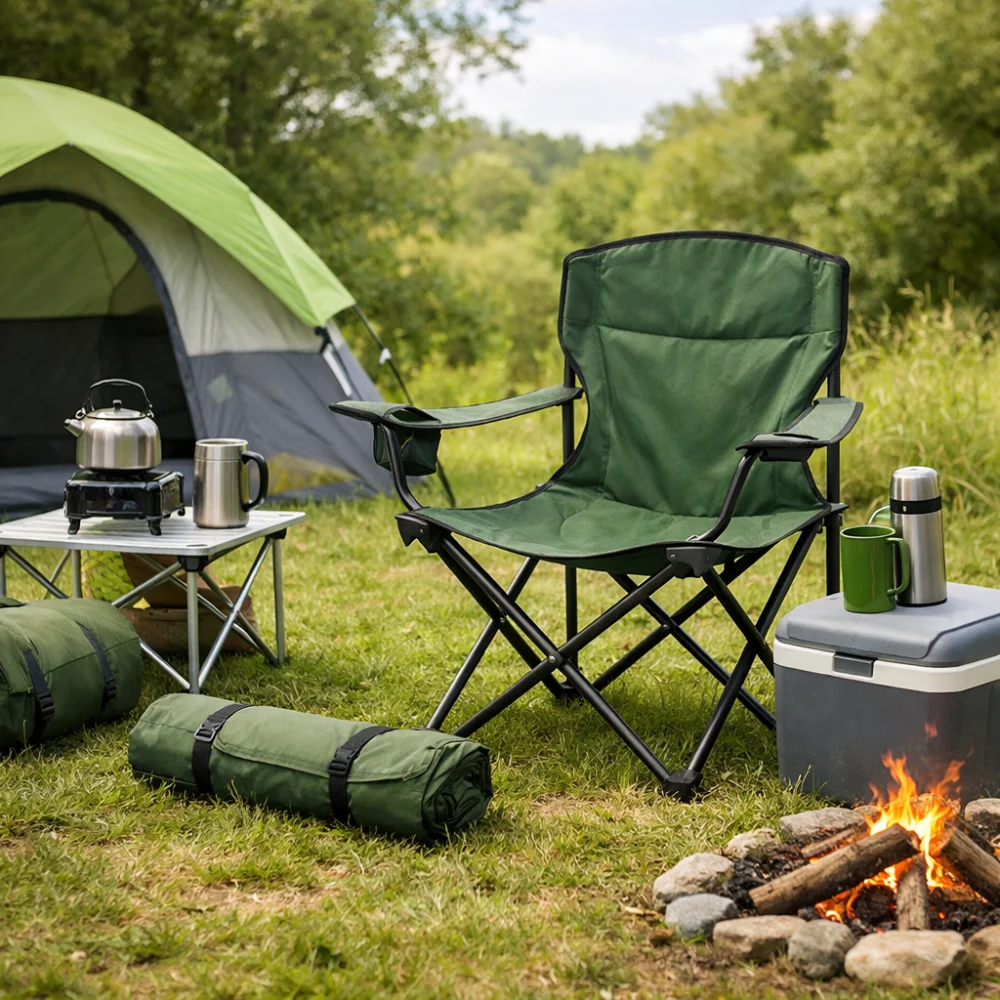
Camping chairs look simple, but the right choice depends on how you travel, where you sit and how much comfort you want to carry. A chair that is fine for a campsite meal may feel awkward on a day at the beach or too bulky for a short walk-in pitch.
This guide helps you compare the main features without getting lost in product details. It focuses on practical points such as portability, seating style, support and ease of use.
If you are choosing for family camping, festivals, fishing trips or garden use, it helps to start with the same question: how will the chair actually be used? Once that is clear, the differences between folding, reclining, padded and more compact styles become much easier to judge.
Compare Camping Chairs




As an Amazon Associate we earn from qualifying purchases.
What should you look for in a camping chair?
The best starting point is to match the chair to your usual trip. If you want something quick to carry and store, portability matters most; if you want longer evenings outdoors, comfort and support become more important. A good camping chair is usually a balance between packability, seat height, stability and the way it feels after a while sitting in it.
Specifications vary by model, so always check the individual product page before buying.
| Feature | What it means | Why it matters | What to check |
|---|---|---|---|
| Portability | How easy the chair is to carry, fold and store | Important for car boots, festivals and walk-in camping | Folded size, carry bag and how much space it will take alongside other gear |
| Seat style | The shape and feel of the sitting area | Affects comfort, posture and how relaxed the chair feels | Whether you prefer upright seating, a deeper seat or extra support |
| Weight and bulk | How heavy and cumbersome the chair is when packed | Helps decide whether it is easy to transport on your own | Whether the chair suits car camping, short carries or lighter packing |
| Support features | Extras such as armrests, high backs or side storage | Can improve comfort and convenience for longer sits | Which extras you will actually use rather than simply notice |
| Stability | How steady the chair feels on the ground | Useful on uneven pitches, grass or softer surfaces | Frame style, base shape and whether it feels suitable for your usual terrain |
| Pack-away ease | How straightforward it is to open, fold and put away | Matters when you use the chair often or want a simple routine | Whether the folding mechanism suits you and can be managed easily |
Key decision criteria explained
Comfort versus compactness
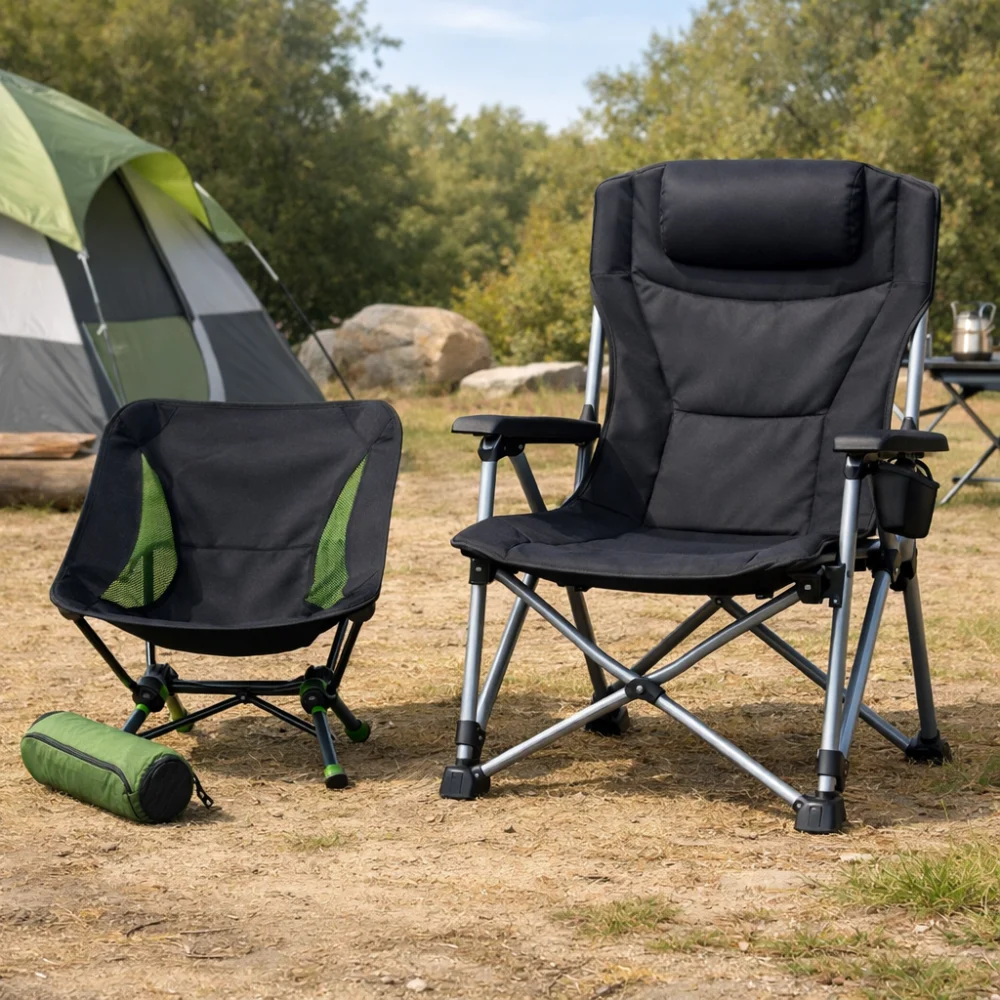
Camping chairs often sit on a spectrum between comfort and convenience. Larger, more supportive designs can be nicer for a long evening round the pitch, but they may take up more room in transit. Smaller folding chairs are easier to carry and store, but they can feel less relaxed for extended sitting.
Seat height and sitting position
Seat height changes how easy it is to sit down, stand up and use a low table. A lower chair can feel more relaxed, while a higher seat is often easier for people who prefer a more upright position. Think about the rest of your camping setup, especially if you will be using the chair with a camping table or around a fire pit area.
Frame and overall build style
The frame usually affects how the chair feels to use and pack away. Some buyers want a simple folding chair with minimal fuss, while others prefer a more structured design with extras such as a higher back or armrests. The main trade-off is usually between a lighter, simpler chair and one that feels more substantial.
Added features
Side pockets, cup holders, padded areas and storage bags can be useful, but they should not distract from the basics. A chair with plenty of extras is not necessarily better than one that is comfortable, stable and easy to carry. Choose features that suit your routine rather than choosing on appearance alone.
Camping chair types and variants
Within this category, buyers commonly compare a few broad styles. Compact folding chairs suit those who prioritise easy transport and simpler packing. Reclining or lounger-style chairs are more about relaxed seating, which may suit longer stays in one place, but they are usually less about portability.
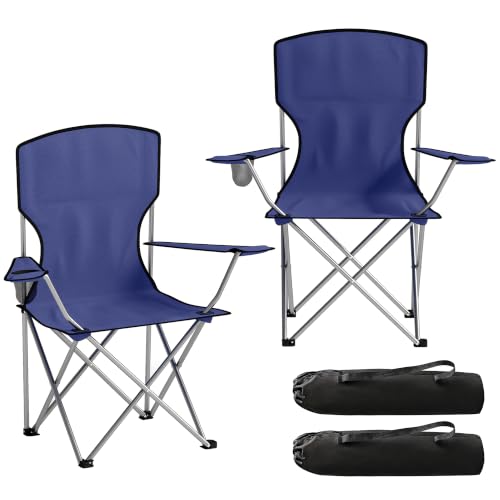
Heavy-duty or more substantial chairs may appeal if you want a stronger-feeling seat or a roomier design. Double or bench-style camping seats can work for couples or families, but they are less flexible to position than individual chairs. Director-style chairs add a more upright sitting position and often feel convenient around a table, though they may be a less compact option.
Which camping chair suits different buyers?
| Buyer need | What usually matters most | Likely suitable direction |
|---|---|---|
| Walk-in camping | Weight, folded size and easy carrying | Choose a more compact chair that is simple to move with the rest of your kit |
| Car camping | Comfort and convenience | A larger chair or one with more support may be worth the extra bulk |
| Festivals | Portability, quick setup and storage | Look for a straightforward folding chair that is easy to handle in busy spaces |
| Fishing or long outdoor sessions | Support for longer sitting | Prioritise comfort, stability and any features that help you settle in for longer |
| Family use | Practical seating and easy sharing | Consider whether individual chairs or a bench-style option better suits the group |
| Occasional garden use | Ease of storage and general comfort | A versatile, foldable design may be the simplest choice |
Common mistakes to avoid
- Choosing only on appearance. A chair can look smart but still be awkward to carry or sit in for long periods.
- Ignoring packed size. Even a comfortable chair can become inconvenient if it takes up too much room in the car or storage area.
- Overlooking your usual table height. A seat that feels wrong at the table can be frustrating on every trip.
- Assuming extra features always help. Cup holders and pockets are useful only if they fit the way you camp.
- Not checking the product page closely. Specifications vary by model, so always check the individual product page before buying.
Suitability and practical caveats
Camping chairs are generally simple products, but suitability still matters. Think about the surface you usually sit on, how often you will carry the chair and whether the seat style suits the intended user. A chair that works well on a campsite may be less convenient on a beach, festival field or uneven ground.
If the chair is for a child, an older family member or anyone who prefers easier sitting and standing, focus on comfort, stability and height rather than extras alone. For any specific concern, the product page is the place to confirm the chair’s intended use and any model-specific limitations.
Maintenance and storage
Most camping chairs are easier to keep in good condition if they are folded and stored dry after use. Dirt, sand and moisture can build up around moving parts or fabric, so it is sensible to check how the chair should be cleaned and stored. A carry bag or compact folding form can also make storage much easier between trips.
If you plan to use a chair often, think about how quickly you want to set it up and pack it away. The more regularly it is used, the more important it becomes that the chair is straightforward to handle and not awkward to stow in your car or home.
How to compare camping chairs efficiently
- Start with the main use: camping, festivals, fishing, garden seating or family trips.
- Choose the style that fits that use, such as compact, upright, recliner or bench-style seating.
- Compare the factors that matter most to you: comfort, portability, support and storage.
- Check the trade-off between convenience and seating comfort.
- Read the individual product information carefully before deciding.
Camping chair buyer checklist
- Will the chair suit your usual trip type and travel method?
- Is the packed size practical for your car, storage space or walking distance?
- Does the seat style match how long you expect to sit in it?
- Will the height and shape work with your table or camping setup?
- Are any extra features genuinely useful for you?
- Have you checked the individual product page for the model details?
Frequently asked questions
What is the main difference between a basic folding chair and a more supportive camping chair?
A basic folding chair usually focuses on simplicity and easy handling, while a more supportive chair may offer a higher back, armrests or a roomier seat. The better choice depends on whether you value compactness or longer sitting comfort. Neither is automatically better for everyone.
Are larger camping chairs harder to use on trips?
They can be more comfortable, but they often take up more room and may be heavier or bulkier to carry. If you travel by car and have space, that may not be a problem. If you need to walk with your kit, compactness becomes more important.
Do I need a camping chair with extra features?
Not necessarily. Extras such as pockets or cup holders can be convenient, but the chair still needs to be comfortable and practical first. It is usually better to choose a simpler chair that suits your needs than a feature-heavy one that does not.
Is a reclining chair a good choice for camping?
It can be, if your main aim is relaxed sitting in one place. The trade-off is usually greater bulk or less ease of transport. If you move around a lot, a simpler folding chair may be more convenient.
Can one camping chair work for both camping and garden use?
Yes, many buyers use the same chair for both. The key is to choose a style that fits both uses reasonably well, rather than one that is highly specialised for a single purpose. A versatile foldable design is often the easiest option.
What should I check before buying a camping chair online?
Focus on the seat style, packed size, ease of folding, comfort features and how the chair fits your intended use. It also helps to confirm what is shown on the individual product page, because details can vary from one model to another.
More Camping Chairs
See all 373 Camping Chairs →


As an Amazon Associate we earn from qualifying purchases.


