

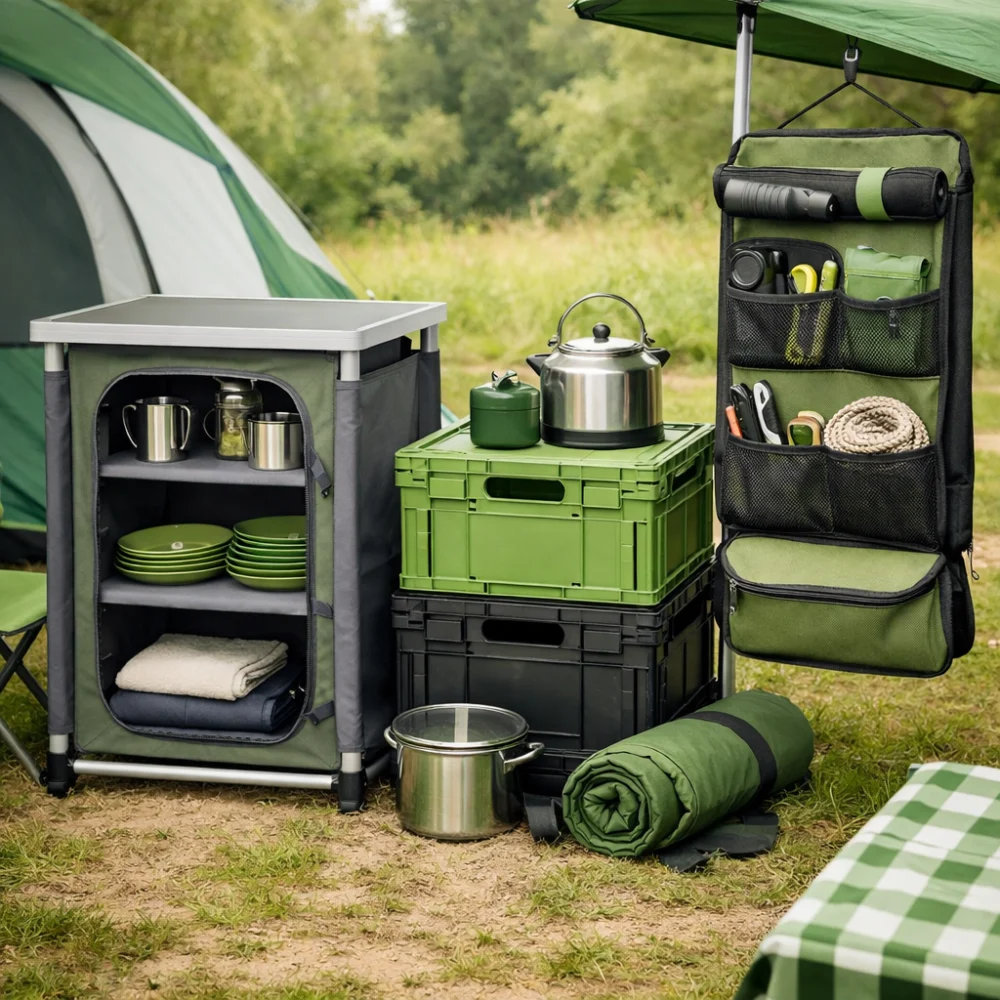
Camping storage is about keeping kit organised, protected and easy to reach while you are away from home. The right choice depends on whether you need something for a tent, awning, vehicle boot, campsite kitchen or general gear organisation.
Because storage needs vary so much, it helps to think first about where the item will be used, how often it will be moved and how much packing space you can spare. That usually matters more than any one feature on its own.
Compare Camping Storage


As an Amazon Associate we earn from qualifying purchases.
What should you look for in camping storage?
The best starting point is to match the storage type to the job. A soft cupboard, folding crate, rigid box or boot organiser each solves a different problem, and the main trade-off is usually between structure, packed size and ease of carrying. If you want something to live in the tent or awning, stability and shelf layout may matter more than compact storage. If you want something for transport, foldability and tidy packing may matter more.
| Feature | What It Means | Why It Matters | What To Check |
|---|---|---|---|
| Storage type | Whether it is a cupboard, crate, box, organiser or kitchen-style unit | Different shapes suit different spaces and packing habits | Where it will be used and what kind of items it needs to hold |
| Structure | Rigid, semi-rigid or foldable construction | Changes how stable it feels and how much room it takes when packed away | Whether you need more support or more compact storage |
| Capacity layout | Shelves, compartments, drawers, pockets or open space | Affects how easy it is to separate food, clothing and small items | Whether the layout matches the kit you usually take |
| Portability | How easy it is to carry, move and store between trips | Important for campers who pack frequently or use shared storage space | Handles, pack-down size and whether it comes apart or folds flat |
| Surface and base | Whether it has a worktop, lid, feet or raised base | Influences usability on uneven ground and in campsite routines | Where you will place it and how level the ground usually is |
| Material and care | The materials used for the frame, fabric or plastic body | Determines cleaning, durability expectations and how it handles damp conditions | How easy it is to wipe down and store when not in use |
Which details matter most?
Space and layout
Think about the items you actually want to store. Clothing, food, cooking kit and small accessories all benefit from different layouts. Shelved units suit people who want quick access to grouped items, while open crates or boxes may suit bulkier kit that does not need separate compartments.
Pack size and transport
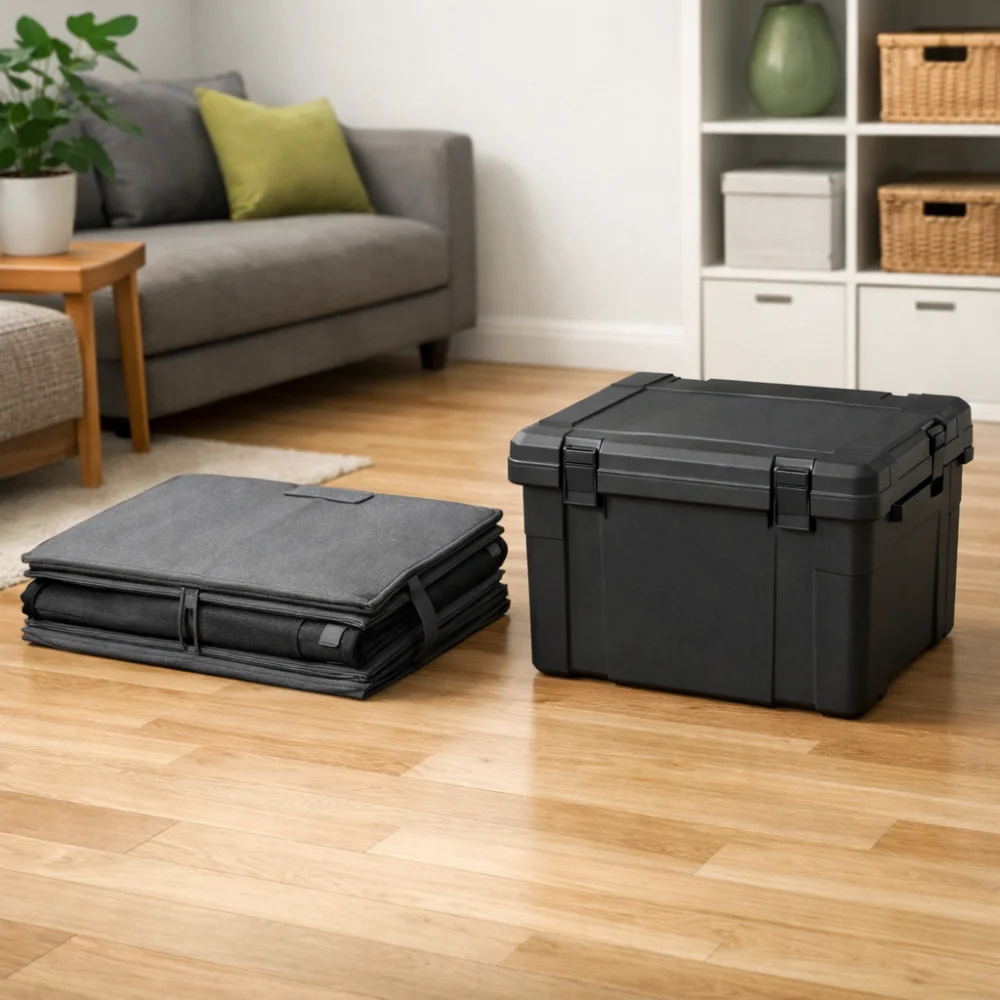
Camping storage should help you stay organised without taking over the car or tent. Fold-flat designs are useful when space is tight, but they may offer less structure than a rigid box or lidded container. If you travel light or move camp often, packed size can be just as important as capacity when the unit is in use.
Stability in use
Some camping storage is designed to stand in place like furniture, while other options are mainly for loading and unloading. If you want a cupboard or kitchen-style unit, check that the design looks suitable for the surface it will stand on and the space you have available. Specifications vary by model, so always check the individual product page before buying.
Weather and cleaning
Camping storage is often exposed to damp grass, dusty boots and general outdoor use. Materials that are easy to wipe clean can be helpful, especially for food or muddy equipment. Even for indoor-style use, it is sensible to think about how the item will be cleaned and dried between trips.
Types of camping storage
Folding cupboards and wardrobe-style units are useful when you want a more organised setup with shelves or hanging space. They suit longer stays, family camping and anyone who likes a clear place for clothing or kitchen items, but they usually take more effort to assemble than a simple crate.
Storage crates and boxes are often the simplest option for general kit, spares and bulk items. They can be easier to stack and move, although they may not separate contents as neatly as a shelved unit.
Camping kitchen storage is aimed at cooking and food prep, often combining shelves, a work surface or enclosed space. This can be very practical for campsite cooking, but it is only worth it if you will actually use the extra structure.
Car boot organisers and vehicle storage help keep transit gear tidy between journeys. They are a good fit if you want to separate camping items from everyday luggage, though they are less useful once you are set up at the campsite.
Who needs which kind of storage?
| Buyer need | Likely better fit | Why | Trade-off |
|---|---|---|---|
| Family camping | Shelved cupboard or kitchen-style storage | Makes it easier to separate shared items and keep essentials visible | Takes more space and is usually less minimal to pack |
| Weekend or touring trips | Fold-flat cupboard, crate or organiser | Balances convenience with easier transport and storage at home | May have fewer features than a larger furniture-style unit |
| Cooking-focused camping | Camping kitchen storage | Helps organise cookware, food and accessories in one place | Only worthwhile if you want a dedicated prep area |
| Vehicle-first campers | Boot organiser or stackable boxes | Helps keep kit contained during travel and loading | May not be ideal as campsite furniture |
| Minimal packers | Simple box or crate | Provides basic order without much setup | Less convenient for sorting lots of small items |
Common mistakes to avoid
- Choosing capacity without considering shape. A unit can be large enough on paper but still awkward for the kit you carry. Check the layout as well as the overall size.
- Overestimating how much assembly you want. A more structured unit may be useful, but only if you are happy to set it up each trip.
- Ignoring where it will live when packed away. If storage at home is limited, fold-flat design may matter more than a slightly larger usable space.
- Buying a kitchen-style unit for general storage. It may be more furniture than you need unless you will use the surface and shelving properly.
Safety and suitability to check
Camping storage is usually straightforward to buy, but it still needs to suit the way you camp. Check that the intended use matches your plans, especially if you want to place it on uneven ground, store heavier items or use it near food. If you are storing breakable or valuable items, look carefully at how the unit closes, supports its contents and packs away.
Maintenance and lifespan considerations
General care can make a big difference to how long camping storage stays useful. Wipe down surfaces after trips, let fabric or enclosed units dry fully before packing them away, and avoid forcing hinges, zips or folding parts. If the design uses removable boards, covers or carriers, think about how easy they are to clean and store between uses.
How to compare options efficiently
- Decide where the storage will be used: tent, awning, campsite kitchen or vehicle.
- Choose the right type first, then compare layout and pack size.
- Check whether the unit needs to fold flat, stand steadily or stack neatly.
- Look at cleaning, assembly and transport convenience.
- Read the individual product page for the exact size, materials and features.
Summary buyer decision checklist
- Does the storage type match how you camp?
- Will it fit the space you have for use and for packing away?
- Is the layout suitable for the items you want to store?
- Do you want fold-flat convenience or a more rigid feel?
- Will it be easy to carry, clean and dry between trips?
- Have you checked the individual product page for the exact specification?
Frequently asked questions
What is camping storage used for?
Camping storage helps keep equipment organised and easier to reach while you are travelling or on site. It can be used for clothing, food, cookware, toiletries, small accessories or general kit depending on the style you choose.
Is a folding cupboard better than a storage box?
Neither is always better. A folding cupboard is usually better if you want shelves, easy access and a more furniture-like setup, while a storage box is often simpler and easier to stack. The right choice depends on whether you value organisation or plain, compact transport more.
Should I choose camping storage for the tent or the car boot?
That depends on where the item will do the most work. Tent-side storage is about daily access and keeping the pitch tidy, while boot storage is about transport and loading. Some buyers use both, but the best solution is usually the one that matches the main part of the trip.
What should I check before buying camping storage online?
Check the type, the layout, the packed size and how easy it is to clean and store. It is also worth confirming whether the product is intended for indoor-style campsite use, travel storage or kitchen organisation. Specifications vary by model, so always check the individual product page before buying.
Do I need a special camping kitchen storage unit?
Only if you want a dedicated area for cooking or food prep. If you mainly need to tidy away general gear, a simpler cupboard, crate or organiser may be enough. Kitchen-style units are most useful when you know you will make regular use of the extra structure.
How much camping storage do I actually need?
Start with the amount of gear you carry most often, not the biggest trip you might one day take. It is usually better to choose storage that fits your regular routine and leaves enough room to access items easily. Oversized storage can be harder to pack, move and store at home.
Ready to choose?
See all 157 Camping Storage →As an Amazon Associate we earn from qualifying purchases.


