

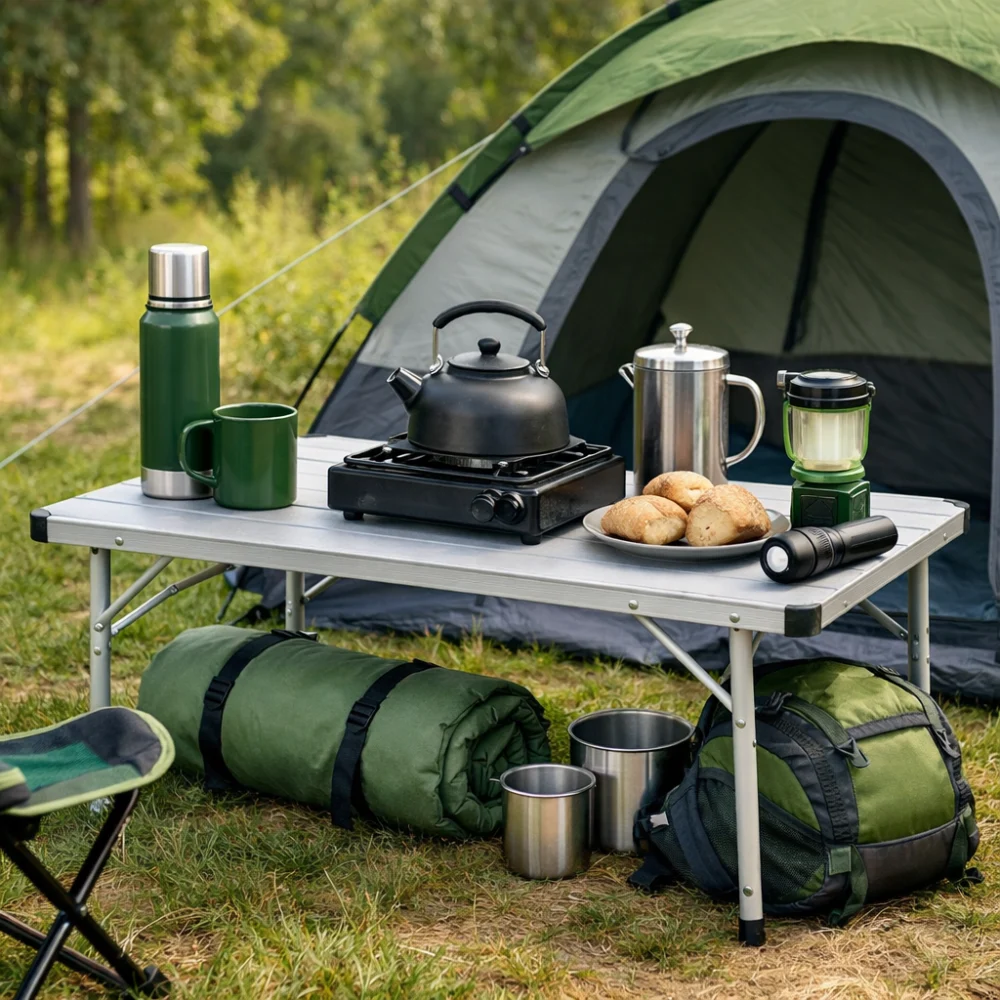
Camping tables are a simple comfort upgrade, but the right one depends on how you travel and what you plan to use it for. A small table for drinks or a lantern has different priorities from a family table for meals, food prep or campsite organisation.
This guide helps you compare the features that matter most: size, height, stability, portability and how quickly the table folds away. It is written for buyers who want a practical choice without overbuying.
Compare Camping Tables


As an Amazon Associate we earn from qualifying purchases.
What should you look for in a camping table?
Start with the way you will use it. A compact folding table may be ideal if space is tight, while a larger surface can be more useful for cooking, eating or keeping kit off the ground. The main trade-off is usually between usable surface area, packability and sturdiness.
If you camp by car, you may have room for a more generous table. If you carry gear by hand or want something for festivals and short trips, portability often matters more than size. Specifications vary by model, so always check the individual product page before buying.
| Feature | What It Means | Why It Matters | What To Check |
|---|---|---|---|
| Table size | The usable surface area and overall footprint | It affects how many items fit on the table and how much campsite space it takes up | Measure against your tent porch, awning, pitch or picnic area |
| Height | How high the tabletop sits from the ground | It affects comfort for eating, food prep and putting items within easy reach | Check whether it suits seats, stools or low camping chairs |
| Folded size | How compact the table becomes when packed away | It determines how easily the table fits in a car boot, storage box or carry bag | Look at the packed dimensions and shape, not just whether it folds |
| Weight | How heavy the table is to carry and move | It matters most for walkers, festival-goers and anyone setting up alone | Compare weight with how far you will carry it and how often you will move it |
| Stability | How steady the table feels on uneven ground | A steadier table is more practical for drinks, plates and cooking gear | Check the leg design, locking mechanism and whether the table is intended for rough ground |
| Material and surface | The frame and tabletop construction | It affects cleaning, weather resistance, durability and how the table feels in use | Look for a surface that suits the kind of camping and cleaning you expect |
Key decision criteria explained
Size and shape
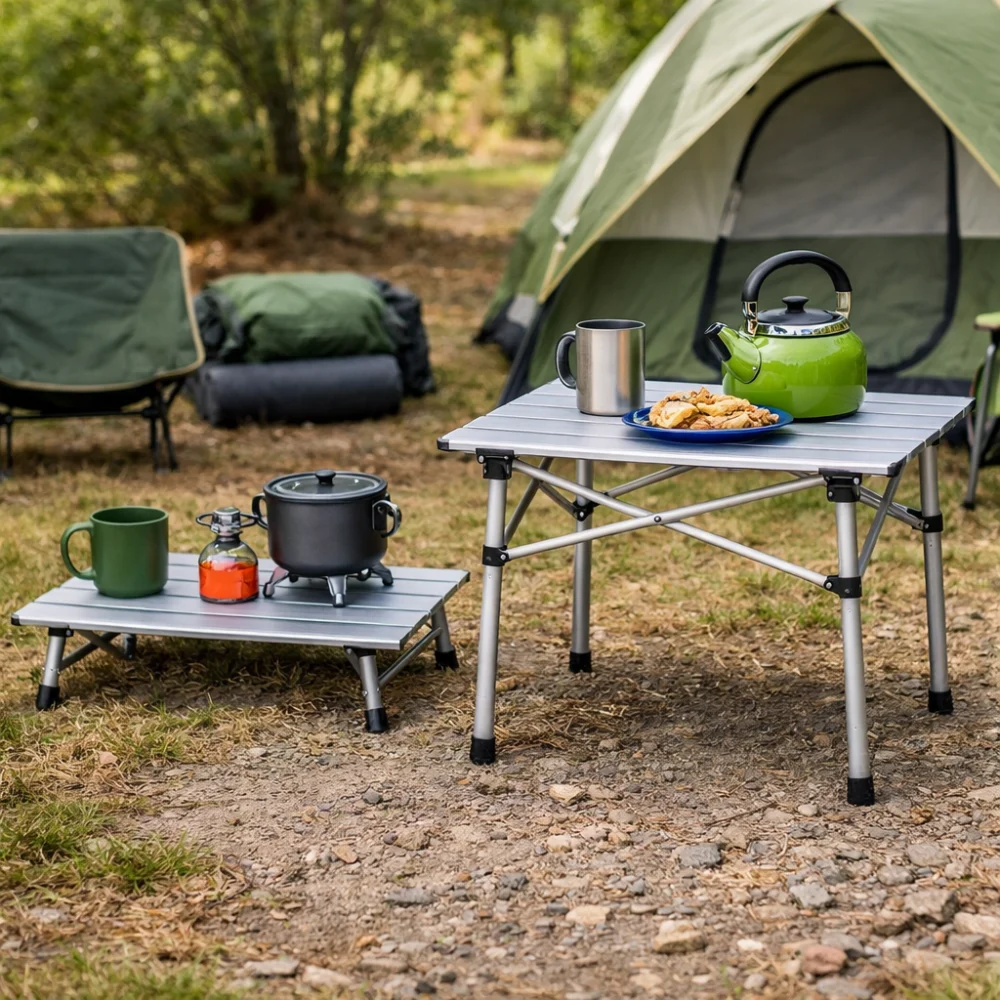
Think about what you want on the table at the same time. A small side table can hold mugs, a lantern or a phone, while a larger rectangular table is more practical for meals or shared campsite tasks. Longer or wider tables may be less convenient to pack, but they can make group camping easier.
Height and seating match
The table should suit the chairs or stools you already use. Low tables can work well for relaxed camping, beach use or sitting close to the ground, while standard-height tables feel more natural for eating and preparing food. The wrong height is a common reason a table feels awkward even when the size looks right.
Portability and pack size
Camping tables are often chosen for how small they fold as much as for how they look open. A table that is easy to carry but awkward to store may still be fine for short trips, while regular campers often prefer a design that packs neatly and is simple to handle. If you travel with limited boot space, the folded shape can matter as much as the weight.
Stability and ground conditions
Tables used on grass, gravel or uneven campsite ground need a bit more stability than those used on a level patio. Folding leg designs vary, and some will feel more planted than others depending on how they lock out and how the load is spread. If you plan to use the table for food or hot drinks, steadiness matters more than a slight saving in pack size.
Materials and cleaning
Camping tables are usually chosen for convenience, so easy cleaning is important. Smooth surfaces are generally simpler to wipe down after meals, while more open or fabric-led designs may be lighter or more compact but less convenient for sticky food or wet kit. Think about whether the table will mainly be used for eating, storage or occasional side-table duty.
Types and variants to compare
There are a few common camping table styles, and each suits a different kind of trip.
- Compact side tables are useful for drinks, lights and small items. They suit solo campers or anyone who wants a secondary table, but they are limited for meals and food preparation.
- Mid-size folding tables offer a better balance of surface area and portability. They are a sensible option for couples, small families or mixed-use camping.
- Low camping tables can work well with low seating or relaxed outdoor setups. Their limitation is that they may not suit every chair height or cooking task.
- Table-and-seat sets can be convenient if you are starting from scratch, but the combined design may be less flexible than buying separate items.
Which table suits which buyer?
| Buyer need | More suitable table traits | Reason |
|---|---|---|
| Solo or weekend camper | Compact, light, quick to fold | Easy to carry and store when you only need a small surface |
| Family or group camping | Larger tabletop, steadier frame, sensible height | Better for meals, shared items and repeated daily use |
| Festival or short stay use | Portable, simple, not overly bulky | Convenient when setup time and carrying effort matter |
| Car camper with more space | More surface area and comfort-focused design | Room in the boot allows a less minimal choice |
| Buyer wanting a second table | Small side table or low table | Useful for keeping items separate from the main eating area |
Common mistakes and misunderstandings
- Choosing by size alone: a bigger table is not always better if it is too heavy or awkward to store.
- Ignoring chair height: the table may look right in isolation but feel uncomfortable if it does not match your seating.
- Overlooking packed dimensions: some tables are easy to use but less convenient to transport than expected.
- Assuming all folding tables feel the same: the locking and leg design can make a big difference to day-to-day use.
- Not thinking about cleaning: if you will use the table for food, a surface that wipes clean easily is usually more practical.
Safety and suitability caveats
Choose a table that suits the intended use and the conditions you expect. If you plan to place hot cookware, heavy items or food on it, make sure the product page gives enough information for that use rather than assuming every camping table is suitable. A stable table on level ground is easier to use than one pushed beyond what it was designed to handle.
Maintenance, storage and lifespan considerations
Camping tables usually need only basic care, but storage conditions can affect how well they hold up over time. Wiping the table clean after use, drying it before storage and keeping it in a dry place can help avoid unnecessary wear. If a table has moving parts, hinges or a carry bag, check that these suit how often you expect to pack and unpack it.
How to compare options efficiently
- Decide what the table is mainly for: eating, storage, drinks, cooking support or mixed use.
- Choose the size and height that best match your seating, campsite space and carrying needs.
- Compare folded size, weight and setup simplicity.
- Check stability, surface type and how easy it is to clean.
- Read the individual product page carefully and compare any model-specific details before you buy.
Summary buyer checklist
- Does the table suit your main use, such as meals, storage or a side surface?
- Will the size and height work with your chairs, tent space or pitch layout?
- Is the folded size practical for your car boot, storage space or carry plans?
- Does the table seem stable enough for the ground conditions you expect?
- Is the surface easy enough to clean for the way you will use it?
- Does it look simple enough to set up, pack away and store after each trip?
Frequently asked questions
What size camping table do I need?
The right size depends on how many people will use it and what you want to put on it at once. A smaller table can be enough for drinks or a couple of items, while shared meals usually need more surface area. Think about your actual campsite setup rather than choosing the largest table available.
Are low camping tables better than standard-height ones?
Neither is automatically better. Low tables suit relaxed seating, compact setups and some festival or beach uses, while standard-height tables are often more comfortable for eating and preparing food. The best option is the one that matches your chairs and your usual camping style.
How important is table weight?
Weight matters most if you carry the table any distance or move it often. If you travel by car and only set up once, a slightly heavier table may be worth it for extra stability or surface area. If you need to move it frequently, lighter options are usually easier to live with.
What makes one camping table more stable than another?
Stability comes from the frame design, the way the legs lock and how well the table stands on uneven ground. A table can look similar to another one but feel much steadier in use. If you expect rougher ground, stability is one of the first features to compare.
Do I need a table with a carry bag?
Not always, but a carry bag can make storage and transport more convenient. It may also help keep the table together with its parts when packed away. If you camp often or have limited storage space, that convenience can be useful.
Can a camping table be used for food preparation?
Sometimes, but only if the surface, size and stability suit that purpose. For food use, a table that wipes clean easily and feels steady is usually more practical. Check the product information rather than assuming every camping table is suitable for prep work.
More Camping Tables
See all 319 Camping Tables →


As an Amazon Associate we earn from qualifying purchases.


