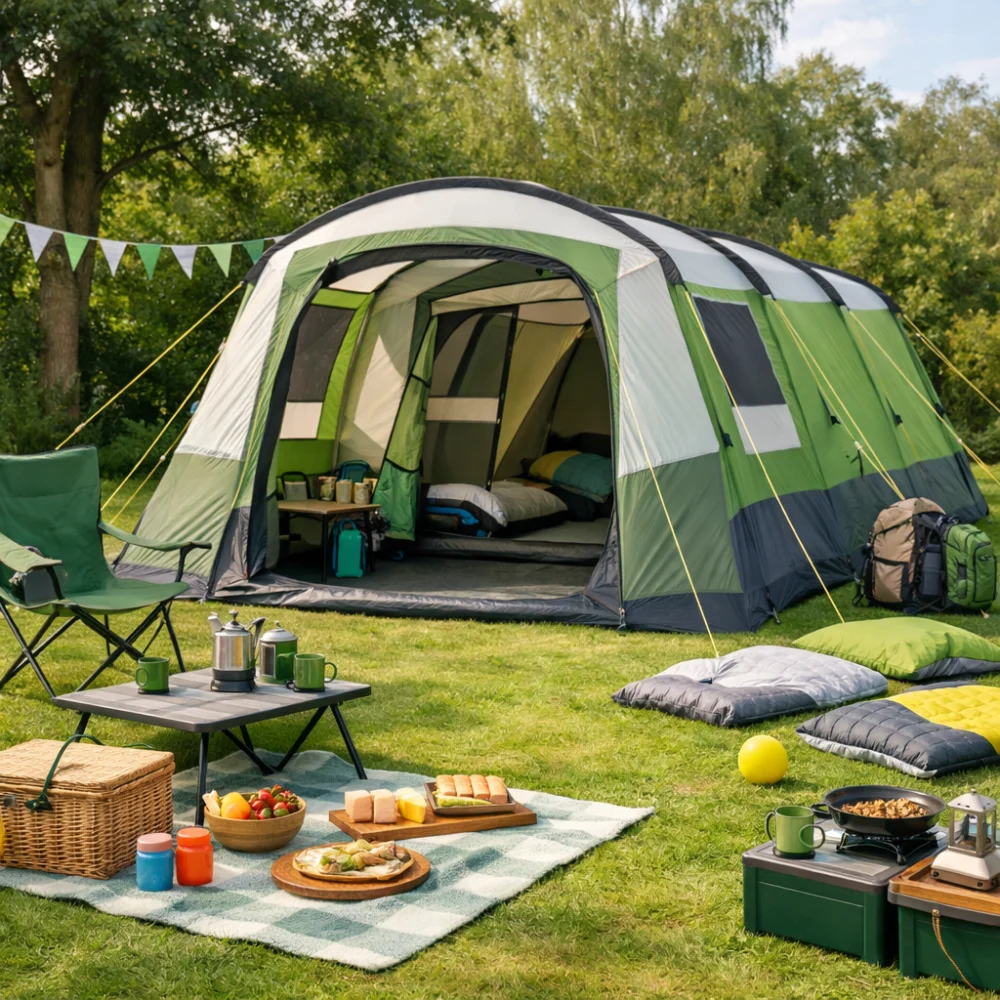
Family tents are for buyers who want shared camping space that feels manageable, comfortable, and suited to the way they travel. Some people are looking for a simple base for short breaks, while others want more room for sleeping, changing, and spending time together when the weather is less predictable.
This guide explains how to compare family tents in a sensible way, so you can focus on the features that affect day-to-day use rather than getting distracted by labels or marketing terms. Specifications vary by model, so always check the individual product page before buying.
It is especially useful if you are choosing for a family, buying for mixed experience levels, or trying to balance space with ease of pitching and pack away.
Quick Answer
The right family tent is the one that gives you enough usable space for the people and gear you actually take, while still being practical to pitch, carry, and store. Think first about sleeping capacity, then look at whether you need a living area, separate bedrooms, or extra headroom. After that, compare pitching style, weather suitability, and ventilation so the tent matches your kind of trip. Specifications vary by model, so always check the individual product page before buying.
Quick Product Comparison Framework
| Feature | What It Means | Why It Matters | What To Check |
|---|---|---|---|
| Sleeping capacity | How many people the tent is intended to sleep | Gives a first pass on whether the tent is big enough | Allow for real-world comfort, bedding, and bags |
| Usable living space | Room outside the sleeping area for sitting or storing kit | Makes longer stays more comfortable | Look for layout details, not just overall size |
| Bedroom layout | How the sleeping areas are arranged | Helps with privacy, family routines, and organisation | Check whether bedrooms are separate or open plan |
| Pitching style | How the tent is set up and supported | Affects convenience and how much effort setup takes | Read whether it is designed for simpler or more involved pitching |
| Headroom | Standing or sitting space inside the tent | Improves comfort, especially for longer stays | Check shape and internal height descriptions |
| Weather suitability | How the tent is intended to cope with typical camping conditions | Important for comfort when conditions change | Review product page details carefully |
| Ventilation | How air can move through the tent | Helps reduce stuffiness and can improve comfort | Look for mesh panels, vents, or airflow features |
| Packed size and weight | How bulky the tent is when stored and carried | Matters for car space, lifting, and transport | Check whether it suits your vehicle and storage space |
| Extras and living features | Added space or practical touches | Can improve day-to-day use on family trips | See whether porches, rooms, or storage areas are included |
Key Decision Criteria Explained
Space that feels usable, not just large on paper
With family tents, the main question is not only how many people the tent can sleep, but how comfortable it will feel once bags, bedding, and wet clothing are inside. A tent can look generous in a product name and still feel tight in practice if you need room to move around or keep things organised.
Buyers often trade portability for comfort here. A larger tent may give you a better camping experience on site, but it may also be heavier, bulkier, and more involved to handle.
Check the layout details on the product page, including sleeping areas, living space, and internal height.
Pitching style and ease of use
Some family tents are chosen because they are straightforward to set up, while others are designed with more space or more structure in mind. Ease of pitching matters if you camp often, arrive late, or are setting up with children nearby.
The trade-off is usually between convenience and the amount of usable space or added structure you want. A simpler tent may be easier to manage, while a more elaborate layout may suit longer stays better.
Specifications vary by model, so always check the individual product page before buying.
Bedroom layout and privacy
Family tents vary in how they divide sleeping space. Some suit couples and children who do not need much separation, while others are better if you want distinct areas for sleeping or a bit more privacy.
This matters because a thoughtful layout can make evenings, early mornings, and rainy days much easier to handle. It is also worth thinking about who is sharing the tent and whether everyone needs the same amount of personal space.
Look for clear product descriptions of room divisions rather than assuming a tent will work a certain way.
Headroom and interior comfort
Headroom affects how comfortable a tent feels when people are getting dressed, organising bags, or spending time inside during bad weather. A family tent with good internal height can feel much easier to live with than one that is mainly focused on sleeping.
The trade-off is often between a roomier shape and the overall size of the packed tent. Taller or more spacious designs can be less compact to carry and store.
Ventilation and airflow
Ventilation matters because family tents are often used for longer stays and more varied weather. Good airflow can make the tent feel fresher and more comfortable, especially when several people are sharing the space.
Buyers should check whether the product page mentions vents, mesh areas, or other airflow features. Do not rely on the tent’s size alone to judge comfort.
Weather suitability and trip length
Family tents are used for everything from quick weekends to longer holidays. A tent that suits one style of trip may not be ideal for another. If you camp regularly or stay for several nights, comfort and layout may matter more than absolute simplicity.
For shorter trips, you may prefer something easier to manage and quicker to live with. For longer trips, a little extra space and organisation can be worth the added bulk.
Product Type Differentiation and Variants
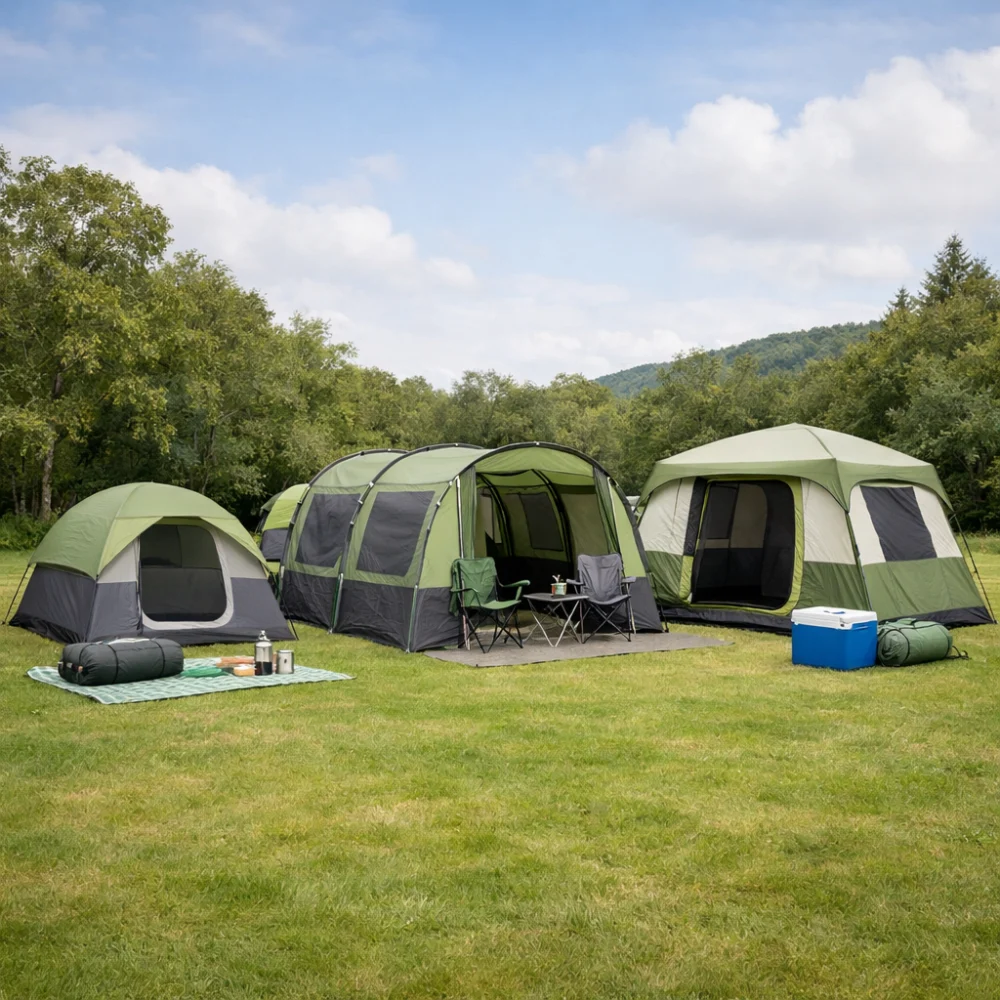
Family tents come in a few broad styles, and the right one depends on whether your main priority is living space, quick setup, or a more compact profile.
Cabin-style family tents
These are usually chosen by buyers who want a more house-like feel inside, often with a focus on usable standing or sitting space. They may suit families who spend more time inside the tent.
The main limitation is that a roomier shape may be less compact when packed and may take more effort to manage.
Tunnel-style family tents
Tunnel-style tents often appeal to buyers who want a practical layout with separate zones and good use of floor space. They can work well for family trips where organised living space matters.
The trade-off is that the shape and layout may feel less straightforward if you are trying to keep the setup and pack away as simple as possible.
Multi-room family tents
These suits buyers who want sleeping areas separated from living space, or who like a clearer division between shared and private areas. They can make longer stays feel more organised.
The limitation is that more rooms can mean more complexity and more tent to handle overall.
Specifications vary by model, so always check the individual product page before buying.
More compact family tents
These may suit smaller families, shorter breaks, or buyers who want family-friendly space without moving into the largest or most involved designs. They can be easier to transport and handle.
The trade-off is that you may have less room for bags, bedding, and wet-weather comfort.
Suitability By Buyer Type Or Need
| Buyer type or need | What to look for | Why it suits them |
|---|---|---|
| First-time buyer | Clear layout, manageable size, simple product description | Reduces guesswork and makes the purchase easier to judge |
| Family with children | Usable living area, sensible room layout, easy organisation | Helps with changing, storing kit, and day-to-day comfort |
| Weekend camper | Balanced size and ease of handling | Comfort matters, but so does quick and practical setup |
| Longer-stay camper | More living space, better internal organisation, good headroom | Makes repeated use and rainy days easier |
| Buyer with limited car space | Compact packed size and sensible weight | Helps the tent fit into the vehicle without being awkward |
| Buyer prioritising comfort | Separate areas, better airflow, generous internal space | Improves how pleasant the tent feels on site |
| Buyer prioritising simplicity | Less complex layout and straightforward setup style | Reduces stress when arriving and pitching |
Common Mistakes And Misunderstandings
Assuming the sleeping capacity tells the whole story. It is better to think about real use, including bags, bedding, and whether people want to sit inside comfortably.
Choosing size without considering handling. A larger tent can be appealing, but it may also be harder to carry, pitch, and store.
Overlooking the layout. Two tents with the same capacity can feel very different if one has better room divisions or more usable living space.
Ignoring ventilation. Comfort can drop quickly if the tent feels stuffy, especially on longer family trips.
Mixing up similar tent categories. Family tents are for shared camping use, while other tent categories may be better suited to different trip styles such as backpacking, festivals, or vehicle-based camping.
Not checking the product page closely enough. Features that matter most to you may vary by model, so always confirm the details before buying.
Safety And Suitability Caveats
Choose a family tent that suits the people using it and the type of camping you plan to do. Consider who will be carrying, pitching, and living in the tent, and whether the size and layout feel manageable for them.
Use the tent only as intended, and check the individual product page for model-specific details. For families with younger children, make sure the tent and the space around it suit their needs and supervision level.
It is also sensible to think about the campsite conditions and the space available to you, rather than assuming any family tent will work equally well everywhere.
Maintenance, Storage And Lifespan Considerations
Family tents tend to last better when they are packed away carefully and stored in a dry, organised way. That helps protect the tent itself and keeps poles, pegs, and accessories easier to find next time.
General wear can come from repeated pitching, packing, and everyday use. Foam or fabric components, zips, and support parts may vary by model, so care expectations are not identical from one tent to another.
Some models may include features that affect care or storage requirements, so check the product page for model-specific information where relevant.
How To Compare Models Efficiently
- Decide how many people will actually use the tent, and how much space they need.
- Check whether you want sleeping-only space or a more usable living area as well.
- Compare bedroom layout, internal height, and how easy the tent looks to live with.
- Think about pitching style and whether you want something simpler or more involved.
- Review packed size, especially if vehicle space or home storage is limited.
- Check ventilation and any layout features that affect comfort on longer trips.
- Read the individual product page before buying, since specifications vary by model.
Summary Buyer Decision Checklist
- Have you allowed enough space for real use, not just the stated sleeping number?
- Does the layout suit your family and the way you camp?
- Is the tent practical to pitch, carry, and store?
- Does it offer enough living comfort for your typical trip length?
- Have you checked ventilation and headroom?
- Have you read the individual product page for model-specific details?
Frequently Asked Questions
What size family tent should I buy?
Choose a tent based on how many people will use it and how much room you want for bags and movement. In practice, many buyers prefer a bit more space than the minimum sleeping number suggests. That gives you a more comfortable tent for changing, relaxing, and storing kit.
Are bigger family tents always better?
Not always. Bigger tents can feel more comfortable on site, but they can also be heavier, bulkier, and more involved to manage. The better choice depends on whether comfort, convenience, or storage space matters most to you.
Should I choose separate bedrooms or one open space?
Separate bedrooms can help with privacy and organisation, especially for families or longer trips. An open space can feel simpler and may suit buyers who want a more straightforward layout. Think about how you will actually use the tent, not just how it looks in photos.
What matters more: sleeping capacity or living space?
Both matter, but for family camping the usable living space is often just as important as the sleeping area. Sleeping capacity tells you the basic scale, while living space tells you how comfortable the tent will feel once you are on site.
How important is ventilation in a family tent?
Quite important, especially if several people are sharing the tent or you are staying for more than one night. Good airflow can make a tent feel more pleasant and less stuffy. Check the product page for vents, mesh panels, or similar features.
What should I check before buying a family tent for children?
Check the size, layout, and how manageable the tent is for the adults who will be using it. It is also sensible to think about space, supervision, and whether the tent feels suitable for your family’s camping routine. Read the product page carefully, as specifications vary by model.
Is packed size important for family tents?
Yes, because a family tent that is comfortable on site may still be awkward in the car or at home if it is too bulky. Packed size affects transport, storage, and how easy the tent is to handle. It is worth checking before you decide.