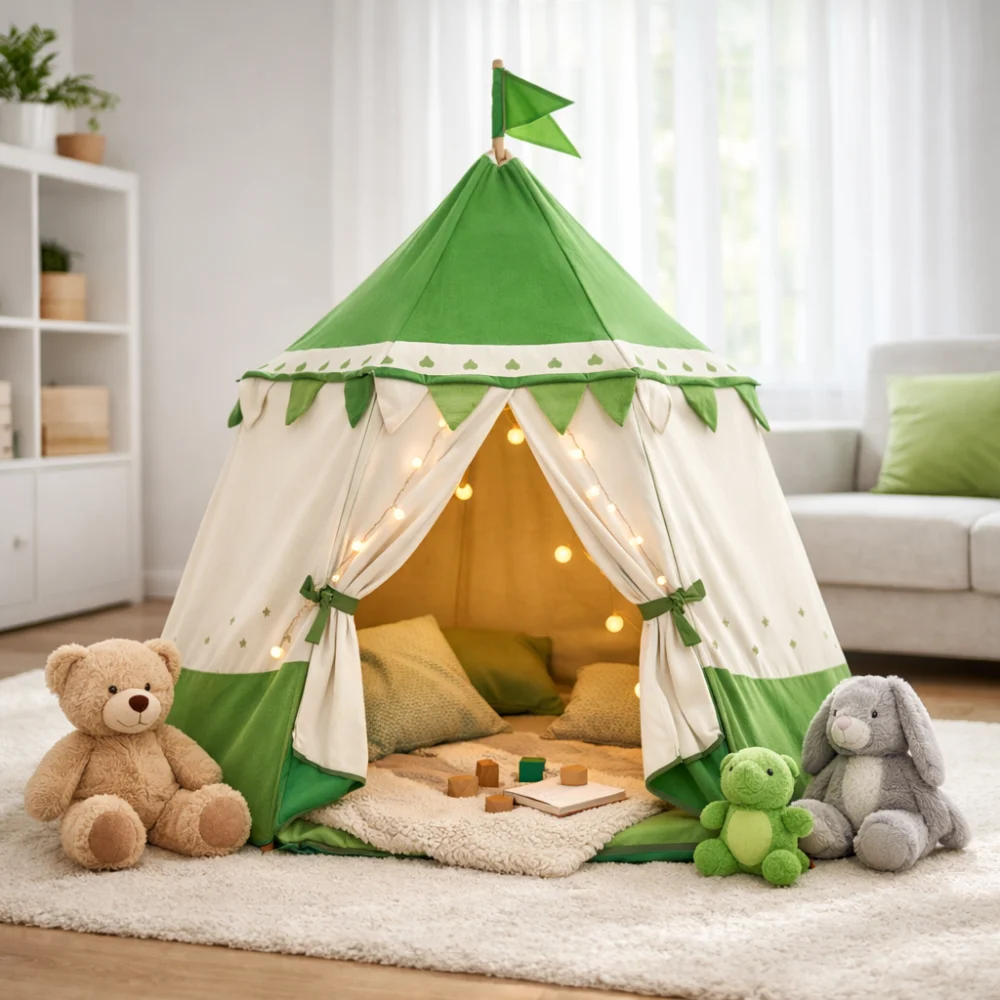
Kids play tents are a simple way to create a den, reading corner, pretend-play space, or quiet hideaway. They are often bought for bedrooms, playrooms, gardens, and gifts, so the main decision is not just what looks appealing, but what will suit the child and the space available.
This guide explains the main types of kids play tents, the features that are worth comparing, and the common mistakes buyers make. Specifications vary by model, so always check the individual product page before buying.
It is also worth thinking about how the tent will be used day to day. A tent for occasional indoor play has different priorities from one that may be moved between rooms, stored away often, or used in a garden on dry days.
Quick Answer
The best kids play tent is usually the one that suits the child’s age, the available space, and how the tent will be used. Smaller, simpler tents are often easier for younger children and tighter rooms, while larger playhouses or themed tents may suit shared play or more elaborate pretend play. Look closely at size, ease of setup, stability, and whether the design fits indoor, outdoor, or mixed use. If specifications vary by model, always check the individual product page before buying.
Quick Product Comparison Framework
| Feature | What It Means | Why It Matters | What To Check |
|---|---|---|---|
| Size | The overall footprint and height of the tent | It needs to fit the room and suit the child’s play style | Approximate dimensions, ceiling height, and whether there is room around it |
| Style | Pop up, playhouse, teepee, themed tent, or dome-style design | Different styles suit different ages and types of play | Whether the shape suits the child’s interests and the intended use |
| Setup | How easy it is to assemble and move | Important if the tent will be put away often or used in more than one place | Whether it is foldable, pop up, or needs simple assembly |
| Space inside | How much room there is for one child or more | Helps avoid a tent that feels cramped or too large for the room | Suggested user count and internal space description on the product page |
| Indoor or outdoor use | Whether the tent is suited to home play, garden use, or both | Not every play tent is equally suited to every setting | Product description, base style, and any stated use guidance |
| Material and finish | The fabrics and general construction style | Affects feel, ease of cleaning, and how well it stands up to regular play | Material details and any care notes on the product page |
| Features | Extras such as windows, curtains, lights, bunting, or printed themes | These can add interest, but they are not always the most important factor | Whether the extras are useful or mainly decorative |
| Storage and portability | How easy it is to fold, carry, and store away | Useful for smaller homes or toys that are not left up all the time | Carry bag, foldable design, and packed size where stated |
Key Decision Criteria Explained
Size and space
Size is one of the most important factors because a tent can feel either cramped or overpowering depending on the room. Buyers often focus on how it looks in photos, but the practical question is whether it will fit where it is meant to go and still leave room for play around it.
Check the footprint, height, and any stated space for users. If the tent is for a bedroom or playroom, think about furniture placement and the child’s ability to get in and out easily.
Style and type of tent
Kids play tents come in different shapes and themes, and the style often shapes how the tent is used. A simple pop up tent may suit quick everyday play, while a themed playhouse or teepee may feel more like a special den or role-play space.
The trade off is usually between visual appeal and practicality. A more decorative tent may be exciting, but a simpler design can be easier to set up, move, and store.
Ease of setup and storage
Some buyers want a tent that can be opened quickly and put away just as easily. That matters if the space is shared, if the tent will be moved between rooms, or if it is only needed at certain times.
Look for wording such as pop up, foldable, or easy assembly, but always check the individual product page before buying. A tent that is simple to store can be a better day-to-day choice than one that is slightly more impressive but awkward to manage.
Indoor or outdoor use
Some kids play tents are mainly for indoor use, while others are better suited to garden play or mixed use. The intended setting matters because it affects how often the tent can be used and how much care it may need.
If a tent is likely to move outside, consider whether it is easy to bring back in and store. For garden use, buyers should still treat the product description as the main source of guidance and check what the individual model is designed for.
Features and extras
Windows, curtains, bunting, lights, or printed themes can make a tent more appealing to a child. These features can improve the play experience, but they should not distract from the basics such as size, shape, and practicality.
Decorative extras are usually most useful when they match the child’s interests and still leave the tent easy to use. A simple design with one or two thoughtful features is often more practical than a heavily decorated tent that is difficult to manage.
Product Type Differentiation and Variants
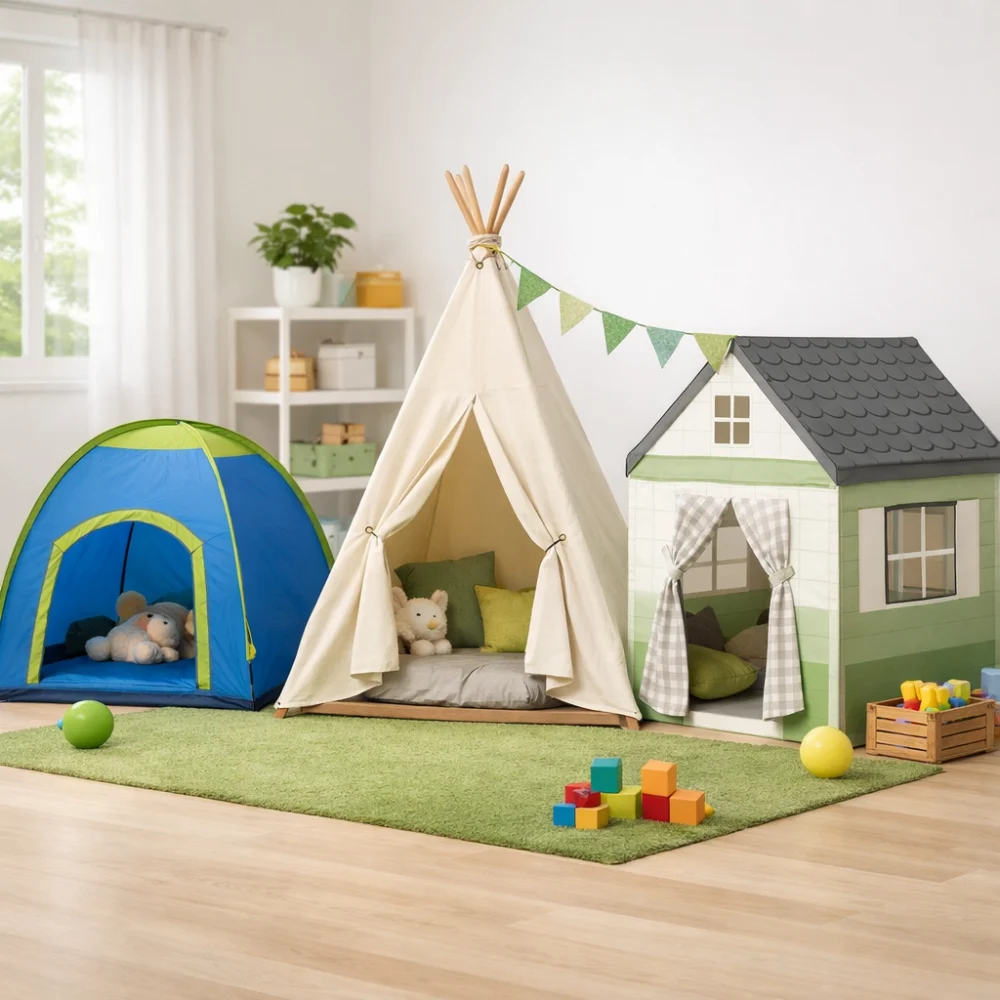
Kids play tents are usually sold in a few main styles. Each one suits a slightly different kind of buyer.
Pop up play tents
These are often chosen for convenience and quick setup. They may suit parents who want something easy to open, move, and store without much effort.
The main limitation is that they may be less structured in feel than more elaborate playhouses, so check the product page for size and design details.
Playhouse-style tents
These tend to feel more like a little room or pretend home. They may suit children who enjoy role play, reading corners, or creating a more permanent den.
The trade off is often a larger footprint, so they need more space and may be less convenient to pack away often.
Teepee-style tents
Teepee-style tents are often chosen for their simple shape and decorative look. They may suit a bedroom or playroom where appearance matters as much as play value.
They are not automatically better for every child, so check whether the height, opening, and internal space suit the intended user.
Themed tents
Themed tents are designed around a play idea such as a castle, vehicle, rocket, or fantasy setting. These can be appealing as gifts or for children with a strong interest in a particular theme.
Specifications vary by model, so always check the individual product page before buying.
Suitability By Buyer Type Or Need
| Buyer type or use case | What tends to matter most | What to look for |
|---|---|---|
| First-time buyer | Simplicity and easy setup | Clear size details, straightforward assembly, and a design that is not too large |
| Parent buying for a bedroom or playroom | Fit and everyday usability | Footprint, height, storage, and whether it blends with the room |
| Gift buyer | Visual appeal and broad appeal | A theme or style that feels fun without being too specific |
| Buyer with limited space | Compact size and easy storage | Foldable or pop up designs and clear dimensions |
| Buyer wanting shared play | Room inside and stability | Space for more than one child where stated, plus a shape that feels comfortable to use |
| Buyer wanting a reading nook or den | Cosy feel and low distraction | Simple styling, comfortable internal space, and a design that feels enclosed enough for quiet play |
| Buyer planning occasional garden use | Practical portability | Easy moveability and product information that supports the intended setting |
Common Mistakes And Misunderstandings
Choosing on appearance alone. A tent can look great in a listing but still be awkward in a real room. The better approach is to start with size, use, and storage needs, then decide which style fits.
Ignoring room height and footprint. A tent that fits the floor space may still feel too tall, too wide, or too intrusive. Measure the place where it will live before buying.
Assuming every play tent is equally easy to put away. Some are much more convenient than others. If the tent will not stay up all the time, storage and folding matter more than many buyers expect.
Overvaluing decorative extras. Lights, curtains, and themed prints can be appealing, but they should not replace basic checks such as size and practical use.
Not matching the tent to the child’s play habits. A child who likes quiet reading may prefer a cosy den, while a child who enjoys active pretend play may prefer a larger playhouse or themed tent.
Forgetting that specifications vary by model. Small differences in size, setup, and design can change how suitable a tent feels. Always check the individual product page before buying.
Safety And Suitability Caveats
Kids play tents should be used only as intended and with care suited to the child’s age and handling ability. When buying for younger children, consider whether adult supervision is appropriate in the normal way for that household.
Also think about the play space itself. A tent that suits a calm indoor corner may not suit a busy family room or a rougher outdoor setting. Check the product page for any model-specific guidance and do not assume all tents are designed for the same use.
As with any children’s item, avoid treating decorative features as the main decision point. The best choice is usually the one that is sensible, comfortable to use, and suitable for the environment where it will be placed.
Maintenance, Storage And Lifespan Considerations
Most kids play tents benefit from being stored neatly when not in use, especially if they are moved between rooms. Keeping parts together helps reduce the chance of pieces being misplaced.
General wear is normal with regular play. Fabric, frames, and fastenings can all age at different rates depending on use and handling, so it is sensible to expect some variation between models.
Foam or soft accessories, where included, may wear over time, and any battery-related features should be checked carefully on the product page if stated. Rough use may shorten lifespan, so a tent for daily play may need a more practical design than one for occasional use.
How To Compare Models Efficiently
- Decide where the tent will be used most often.
- Check the size against the space you actually have.
- Choose a style that fits the child’s play habits.
- Look at setup and storage so the tent suits your routine.
- Compare internal space and any stated user suitability.
- Decide whether extras are useful or just decorative.
- Read the individual product page before buying, especially where specifications vary by model.
Summary Buyer Decision Checklist
- Does the tent fit the room or garden space?
- Is the style right for the child’s age and play preferences?
- Is it easy enough to set up and store?
- Does the tent suit indoor, outdoor, or mixed use?
- Is the inside space appropriate for one child or more?
- Are the extras useful rather than just decorative?
- Have you checked the individual product page for model-specific details?
Frequently Asked Questions
What type of kids play tent is best for a beginner?
A simple pop up tent is often the easiest starting point because it is usually straightforward to use and move. That said, the best choice still depends on the space available and whether the tent is meant for everyday play or occasional use.
Are bigger kids play tents always better?
Not necessarily. A bigger tent can be great if there is room for it and the child will use the extra space, but it may feel awkward in a smaller room. A smaller tent can be more practical if you want easy storage and simple day-to-day use.
Do kids play tents suit indoor and outdoor use?
Some do, but not all. Check the product page to see what the individual tent is designed for, and avoid assuming that a tent meant for indoor den play will suit the garden in the same way.
How do I choose a kids play tent as a gift?
Look for a style that has broad appeal and is not too dependent on a very specific theme. Practical details still matter, so check the size, setup, and storage needs before choosing on looks alone.
How much space do I need for a kids play tent?
It depends on the model, but you should allow enough room for the tent itself and some space around it. Always check the stated dimensions and think about where it will sit in relation to furniture or other toys.
What should parents check before buying?
Parents should check size, intended use, ease of setup, and whether the tent feels suitable for the child’s age and play style. It is also sensible to confirm any model-specific information on the product page before buying.
Are themed kids play tents worth considering?
They can be, especially if the child likes imaginative play or a particular theme. The main thing is to make sure the tent is still practical in size and use, rather than choosing it purely because it looks fun.
What matters more: features or practicality?
Practicality usually matters more. Features can make a tent more enjoyable, but a good fit for the room, easy setup, and suitable size are often the real deciding factors.
For products in this category, visit: Kids Play Tents