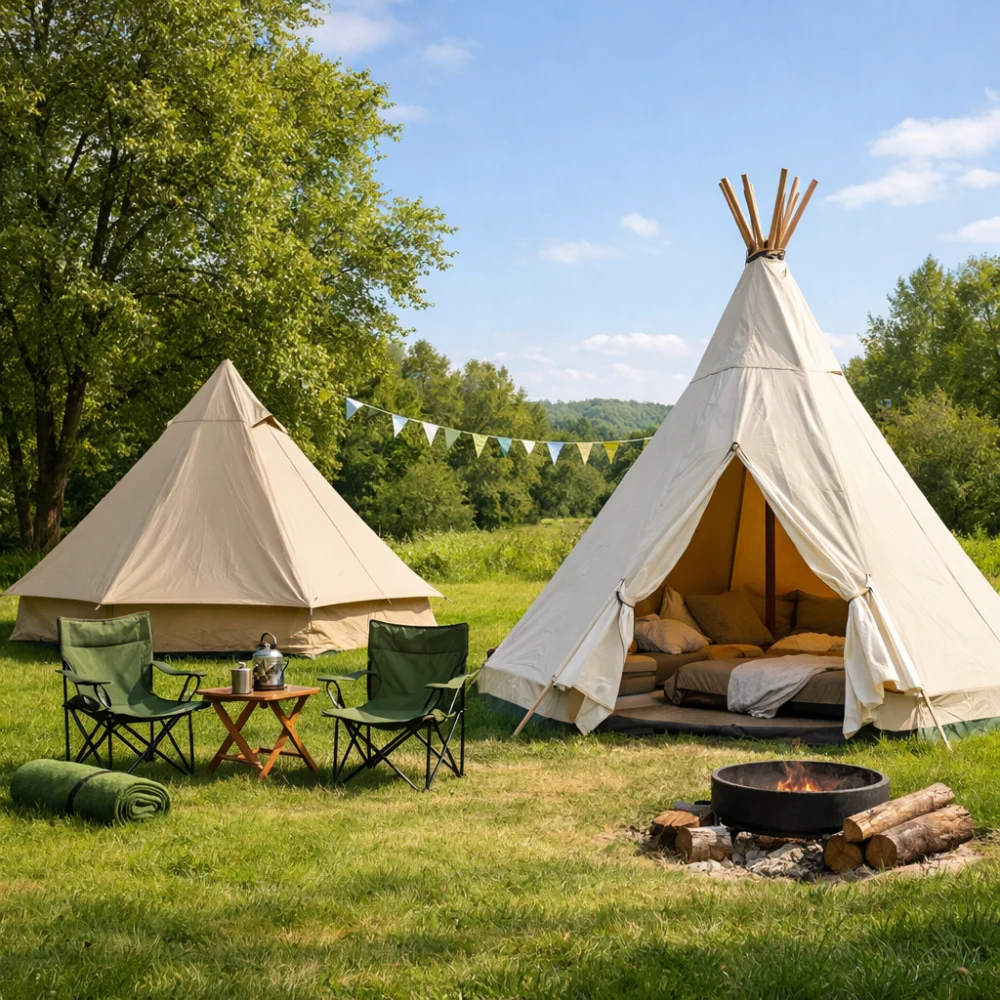
Pyramid and teepee tents suit buyers who want a simple, distinctive tent shape with flexible use cases. They are often considered by campers looking for a compact shelter, a family or group tent with usable standing space, or a hot tent setup where that is part of the design.
This guide focuses on how to choose between the different styles within the category, what matters most when comparing listings, and which details are easy to overlook. Specifications vary by model, so always check the individual product page before buying.
Quick Answer
Choose a pyramid or teepee tent if you want a tent shape that often gives good central height and straightforward pitching. The best choice depends on who will use it, how much space you need, whether you want a lightweight or more substantial shelter, and whether any stove-related features are actually part of the model you are looking at. Specifications vary by model, so always check the individual product page before buying.
Quick Product Comparison Framework
| Feature | What It Means | Why It Matters | What To Check |
|---|---|---|---|
| Shape and height | The overall tent form and how the interior is arranged | Helps you judge headroom, usable floor space, and how easy it feels to move around inside | Look for notes on peak height, wall angle, and whether the tent suits sitting, sleeping, or shared use |
| Capacity | The number of people the tent is intended to accommodate | Affects comfort, kit storage, and whether the tent feels cramped or spacious | Check the stated person rating and think about whether you want extra room for bags or gear |
| Pitching style | How the tent is set up and supported | Can affect ease of use, stability, and how much time setup takes | Read whether the model is single pole, multi-point, or otherwise designed, and consider how confident you are with setup |
| Weight and pack size | How easy the tent is to carry and store | Important for transport, walking to camp, and general convenience | Compare the listed packed size and weight where provided |
| Seasonal suitability | The kind of conditions the tent is aimed at | Helps you match the tent to summer trips, cooler weather, or more varied use | Check product wording carefully and avoid assuming one tent suits all conditions |
| Ventilation | How air can move through the tent | Helps with comfort and reducing stuffiness | Look for vents, mesh panels, or other ventilation details on the product page |
| Stove-related features | Whether the tent is designed with a stove opening or similar feature | Relevant only for buyers looking at hot tent use | Confirm exactly what the product page says and do not assume every pyramid tent includes this |
| Materials and build style | The fabrics, structure, and construction approach | Affects comfort, durability, and how substantial the tent feels in use | Compare material descriptions and any model-specific construction notes |
Key Decision Criteria Explained
Space and interior feel
The shape is one of the main reasons buyers choose this category. A pyramid or teepee layout can create a more open-feeling centre, which is useful if you value headroom or want a tent that feels less boxy. The trade-off is that edge space may be less usable than in a more rectangular design, so it helps to think about where you will actually sleep and store kit.
Check the stated capacity, but also think about how much room you want beyond the minimum. A tent described for a certain number of people may be comfortable for sleeping, yet tighter once bags or extra gear are included.
Pitching style and ease of use
Some buyers want a simple shelter they can understand quickly, while others are happy with a more involved setup if the shape suits their trip. The main question is not whether a tent is objectively easy, but whether its pitching style matches your experience and patience level.
Look for clues on the product page about poles, pegging points, and whether the tent is meant for quick leisure use or something more deliberate. Specifications vary by model, so always check the individual product page before buying.
Weight, packed size, and carrying convenience
If you will be moving the tent any distance, weight and packed size matter more than many buyers expect. A tent that feels fine in a car-camping context may be less convenient if you must carry it by hand for part of the journey.
For buyers who mainly care about vehicle-based camping, packed size may matter more than absolute weight. For buyers with limited storage space, a neat packed form can be just as important as the tent itself.
Ventilation and comfort
Pyramid and teepee tents can feel comfortable when ventilation is well thought through, but the amount of airflow varies by model. This matters if you want a shelter that feels less enclosed or if you are planning to use it in changing weather.
Check the product page for vents, windows, mesh panels, or other airflow details. Do not assume that a single central shape automatically means better ventilation.
Hot tent features and stove-related wording
Some models in this category are aimed at hot tent use and may mention a stove opening or similar feature. This is only relevant if you are specifically looking for that style of shelter.
Do not assume all pyramid or teepee tents are designed for this purpose. If that feature matters to you, read the product page carefully and treat the exact wording as the deciding point.
Product Type Differentiation and Variants
The category includes more than one practical style, even though they share a similar overall shape.
Compact single or small-group shelters
These may suit buyers who want a lighter, simpler tent for one person or a small group. They can be a sensible choice if you value a smaller footprint and do not need lots of separate living space.
The limitation is usually comfort room rather than versatility. If you want extra space for gear or a more relaxed feel inside, check the dimensions carefully.
Larger family or group pyramid tents
These are aimed at buyers who want more internal volume and a roomier feel. They can work well when the priority is shared shelter rather than minimal pack size.
The limitation is that a larger tent may be less convenient to carry, store, or pitch. Specifications vary by model, so always check the individual product page before buying.
Hot tent or stove-compatible styles
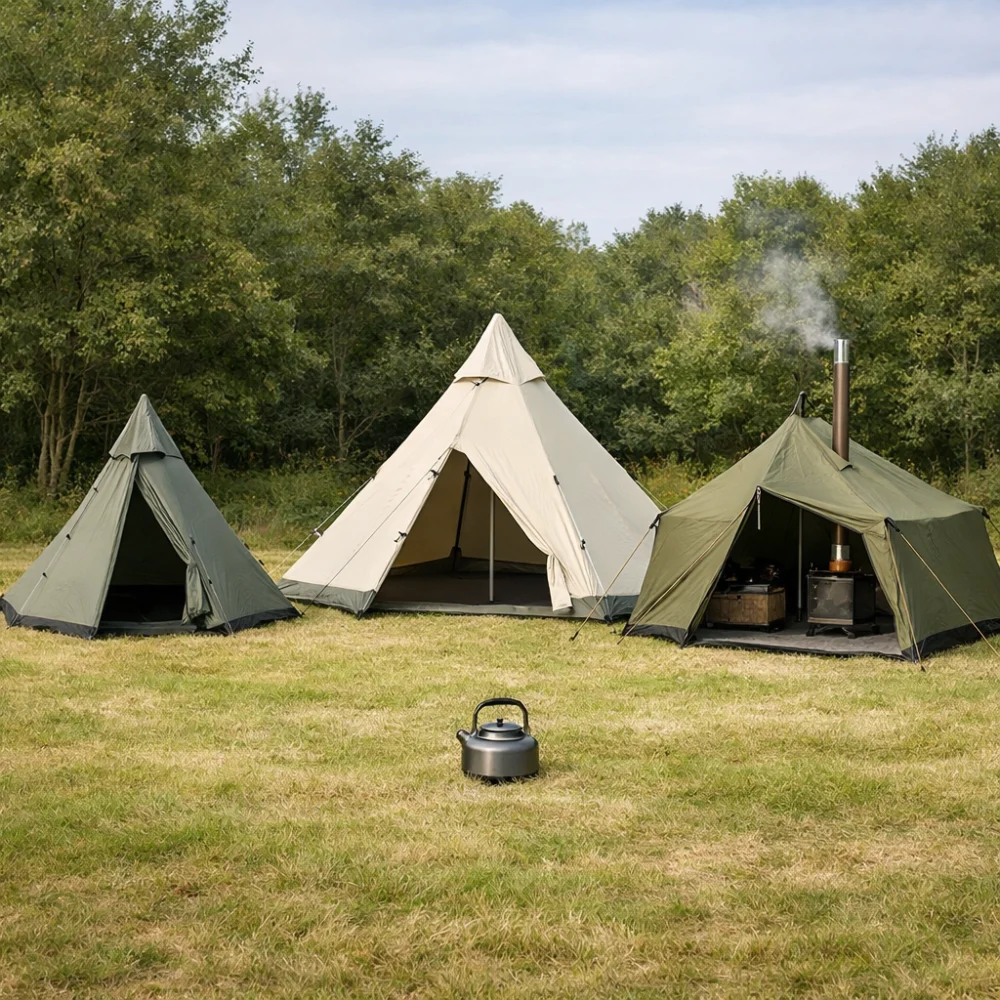
These are for buyers who are specifically searching for a teepee-style tent with wording that suggests stove use or a stove opening. They are not interchangeable with standard camping tents unless the listing clearly says so.
The limitation is that the feature set is more specific, so it is worth checking the exact wording and not assuming every model in the category is built the same way.
Suitability By Buyer Type Or Need
| Buyer type or need | What to look for | Why it helps |
|---|---|---|
| First-time buyer | Simple pitch, clear capacity information, and straightforward product wording | Makes it easier to choose a tent that feels manageable rather than overcomplicated |
| Buyer wanting more headroom | Central height and an interior layout that feels open | Improves comfort if you dislike crouching or feeling boxed in |
| Car camper | Comfort, space, and pack size that suits vehicle storage | Allows you to prioritise room and convenience over minimal weight |
| Buyer carrying the tent by hand | Lower packed bulk and a sensible carry weight where listed | Helps keep transport practical |
| Family or shared use | Roomier capacity and enough interior space for kit | Reduces crowding and makes the shelter feel more usable |
| Buyer looking for a hot tent style | Product pages that clearly mention stove-related features | Helps avoid buying a standard tent when a specific shelter type is needed |
| Buyer who values simplicity | Clear setup description and an uncomplicated structure | Supports a calmer first use experience |
Common Mistakes And Misunderstandings
Assuming all pyramid and teepee tents are the same. They share a family resemblance, but the details vary a lot. The better approach is to compare capacity, pitching style, and any special features one by one.
Choosing only by stated person count. Capacity numbers do not always tell you how roomy a tent will feel once bags, footwear, or extra kit are inside. It is often better to think about comfort space, not just sleeping slots.
Overlooking the impact of the shape on usable space. The centre may feel roomy, but the edges may be less practical than expected. Make sure the layout suits how you plan to use the tent.
Assuming a hot tent feature comes as standard. Some listings may mention stove-related features, but that does not mean every model in the category includes them. Always read the individual product page carefully.
Ignoring packed size and carry convenience. A tent can look ideal on paper and still be awkward to transport or store. If that matters to you, compare the practical dimensions before buying.
Safety And Suitability Caveats
Use the tent only as intended and make sure the model you choose suits your planned camping style. If children will be using or staying in the tent, consider handling suitability and the level of supervision that feels appropriate for your situation.
For any tent used around a stove-related feature, read the product page carefully and follow the manufacturer’s wording exactly. Do not assume features or suitability that are not clearly stated.
Also consider your campsite or garden space, the weather you expect, and how much room you need for comfortable movement. Product pages can help, but they do not replace judgement about the actual setting.
Maintenance, Storage And Lifespan Considerations
General care can make a difference to how long a tent stays usable. Keeping the tent clean, dry, and stored sensibly usually helps protect both the fabric and the accessories that come with it.
Foam darts are not relevant here, but fabric panels, poles, pegs, and fastenings can all vary by model. Rough use, poor packing, or damp storage can shorten the useful life of a tent. If the product page mentions any special materials or components, treat those as model-specific rather than universal.
How To Compare Models Efficiently
- Decide who will use the tent and how much space they actually need.
- Check whether you want a compact shelter, a roomier shared tent, or a hot tent style.
- Compare the stated capacity with the amount of gear you expect to keep inside.
- Look at pitching style and think about whether it suits your experience level.
- Compare packed size, carry convenience, and storage needs.
- Check ventilation details and any weather-related wording on the product page.
- Confirm whether any stove-related feature is clearly stated if that matters to you.
- Read the individual product page before buying, because specifications vary by model, so always check the individual product page before buying.
Summary Buyer Decision Checklist
- Does the tent suit the number of people and the amount of gear you need to fit inside?
- Do you prefer a compact shelter or a roomier interior feel?
- Is the pitching style realistic for your experience and patience level?
- Have you checked packed size and carry convenience?
- Does the ventilation look suitable for the way you plan to use it?
- If relevant, does the product page clearly state any stove-related feature?
- Have you read the individual product page carefully before buying?
Frequently Asked Questions
What is a pyramid or teepee tent best for?
It is often chosen for its distinctive shape, central height, and simple shelter style. Buyers may like it for camping trips where a roomy-feeling centre matters more than a boxy layout.
Are pyramid and teepee tents good for families?
Some larger models may suit family or shared use, but that depends on the actual size and layout. Check the capacity carefully and think about whether you want space for bags as well as sleeping room.
Are these tents easy to pitch?
That varies by model and by the buyer’s experience. Some people will find the structure straightforward, while others may prefer a different tent style if they want the simplest possible setup.
Do all pyramid tents have a stove opening?
No. Only some models appear to be designed with hot tent use in mind. If that feature matters to you, check the product page wording exactly and do not assume it is included.
What should I check before buying one online?
Look at capacity, packed size, pitching style, ventilation, and any special features that are clearly stated. It also helps to consider whether the interior shape suits how you plan to camp.
Is a bigger teepee tent always better?
Not always. Bigger tents can offer more room, but they may also be less convenient to carry, store, or pitch. The right size depends on your use, not just the number in the listing.
How do I know if one will suit my trip?
Start with who will use it, how much gear you carry, and whether you want a lighter shelter or a more spacious one. Then compare the product page details against those needs rather than choosing only from photos.
For products in this category, visit: Pyramid and Teepee Tents.