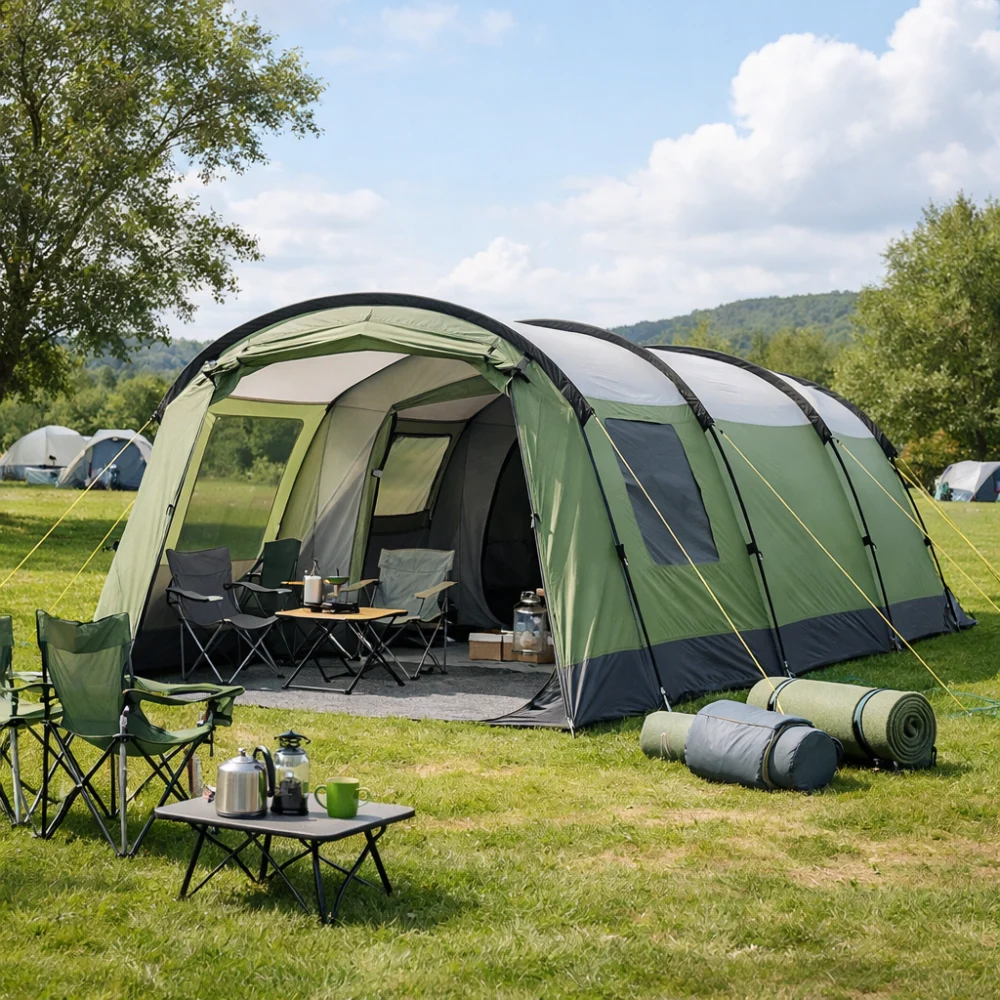
Tunnel tents are a popular choice for campers who want a roomy layout, a clear living area and sleeping space that feels more organised than a simple compact tent. They are often chosen by families, group campers and anyone who values usable space over the smallest possible pack size.
This guide explains how to compare tunnel tents, what matters most when you are choosing between them, and which features are worth checking on the individual product page. Specifications vary by model, so always check the individual product page before buying.
If you are deciding between different tent shapes, this guide will help you work out whether a tunnel tent suits your trip, your group size and your campsite expectations.
Quick answer
A tunnel tent is usually a good choice if you want a practical balance of sleeping space and living space, especially for family or group camping. The most important things to check are the number of sleepers, the internal layout, how easy it is to pitch, and whether the tent suits the sort of weather and campsite conditions you expect. If you value compact packing or ultra-fast setup, another tent shape may suit you better. Specifications vary by model, so always check the individual product page before buying.
Quick product comparison framework
| Feature | What It Means | Why It Matters | What To Check |
|---|---|---|---|
| Sleeping capacity | How many people the tent is designed to accommodate | Affects comfort and how cramped the tent will feel | Look for realistic space for your group, not just the headline number |
| Internal layout | How the tent is divided into bedrooms, living areas and entrances | Changes privacy, organisation and day-to-day comfort | Check the number of rooms, door positions and whether there is a usable communal area |
| Pitching style | How the tent goes up and how much effort it needs | Important if you arrive late, camp often or pitch with limited help | Read whether it is designed for straightforward setup and how many people are likely needed |
| Headroom and width | How much standing or sitting space there is inside | Affects comfort in bad weather and how easy it is to move around | Check standing height claims and whether the main area feels usable for your group |
| Weather protection | The tent’s overall approach to keeping out wind and rain | Important for comfort, but conditions and setup still matter | Look for product page details on waterproofing and construction, then compare them carefully |
| Ventilation | How air moves through the tent | Helps reduce stuffiness and moisture build-up | Check for vents, windows and breathable design features |
| Porch or awning space | Extra sheltered area outside the sleeping section | Useful for muddy boots, storage or sitting out of the rain | See whether the extra space is enclosed, open-sided or only small |
| Packed size | How bulky the tent is when stored away | Matters for car boot space and carrying comfort | Check the packed dimensions if transport space is limited |
| Weight | How heavy the tent is | Important if you carry it far from the car | Compare this with how far you expect to move it, not just the campsite use |
| Family or group suitability | How well the tent fits real-world use | Some tents feel spacious on paper but tight in practice | Look beyond the headline size and consider whether the layout suits your routine |
Key decision criteria explained
Size and real usable space
The headline capacity tells you roughly how many people the tent is meant for, but it does not always tell you how comfortable it will feel. A tent that technically fits your group may still feel tight once you add bags, wet kit and everyday living space. If you want a calmer camping experience, it is often worth allowing extra room rather than choosing the smallest possible option.
Check how the space is divided, whether there is room to sit together, and whether the sleeping area feels separate from the living area. That makes a big difference on longer trips and poor-weather days.
Layout and room separation
Many buyers choose tunnel tents because the shape can lend itself to a clear layout. Some have one main living area with bedrooms behind it, while others add porches, extra rooms or flexible zones. The right layout depends on whether you want privacy, easy access or a simple shared space.
If you are camping with children or a group, separate rooms can help with sleeping routines and organisation. If you prefer one open social space, check that the layout does not feel too divided for your needs.
Pitching effort
How easy a tent is to pitch matters more than many buyers expect. A larger tunnel tent may offer better living space, but it can also take more time and attention to set up. If you camp often, arrive late, or usually pitch in mixed weather, a simpler setup may be more valuable than a slightly larger interior.
Think about how many people will usually help and whether you want a tent that feels straightforward rather than demanding.
Weather and comfort
Tunnel tents are often chosen for comfort and space, but comfort depends on more than floor area. Ventilation, sheltered entrances and the overall shape of the tent all affect how it feels in use. If you are likely to camp in changeable conditions, it is sensible to read the individual product page carefully rather than assuming all tunnel tents behave the same.
Look for details that suggest the tent is designed to balance shelter and airflow, especially if you want it for longer stays.
Storage, access and everyday practicality
A tent can look ideal until you think about how you will actually use it. Door placement, porch space and internal organisation all affect whether the tent feels easy to live with. If you want somewhere for boots, bags, cooking kit or damp clothing, extra sheltered space can be more useful than a slightly larger sleeping area.
For many buyers, practical details matter more than a single headline feature. A well-laid-out tent is often more enjoyable than a larger one that is awkward to use.
Product type differentiation and variants
Tunnel tents are not all the same. The main differences usually come from size, internal layout and how much living space they provide. Specifications vary by model, so always check the individual product page before buying.
Compact tunnel tents
These suit buyers who want the tunnel shape but do not want a very large shelter. They may work well for shorter trips, smaller groups or campers who want a more manageable tent. The main limitation is that they may feel less generous once bags and day-to-day kit are inside.
Family tunnel tents
These are aimed at buyers who want more room for sleeping and living, often with a clearer division between areas. They can be a sensible choice for family holidays or longer stays where comfort matters. The trade-off is usually size, weight and more involved pitching.
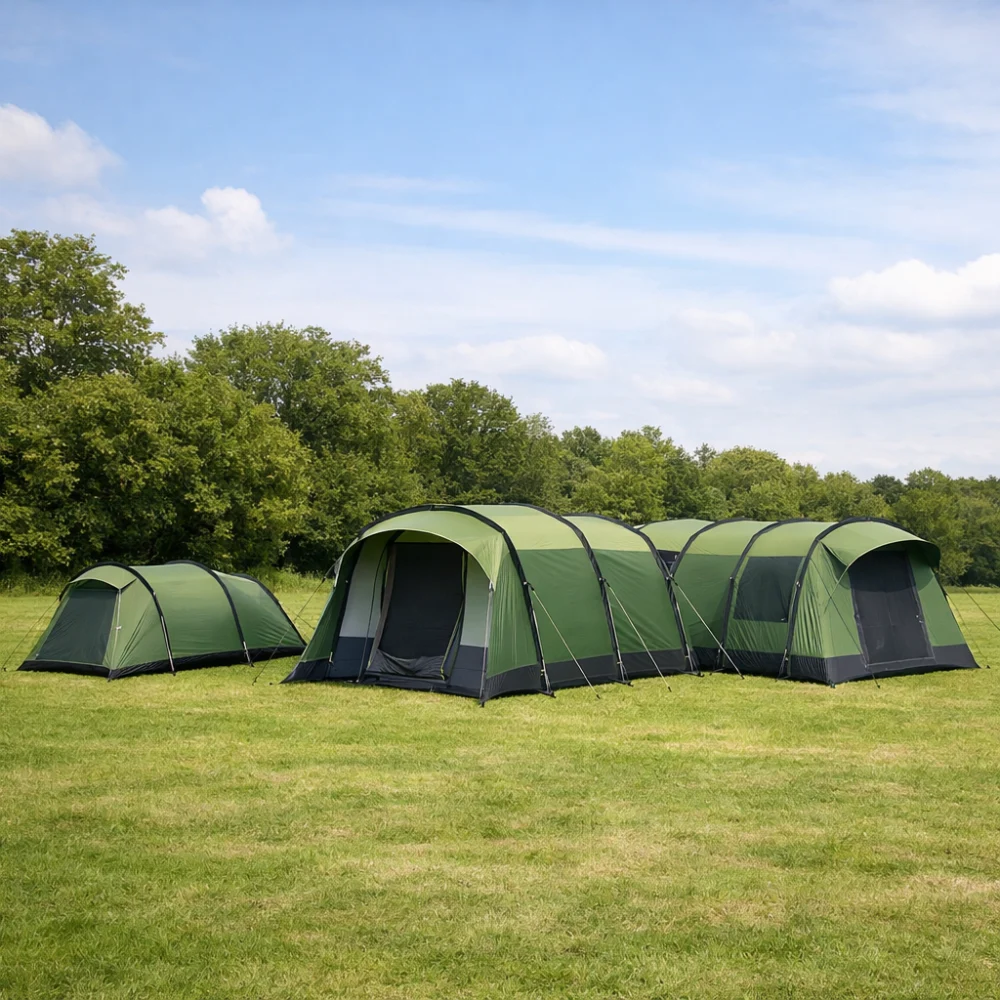
Multi-room tunnel tents
These are designed to separate sleeping and living zones more clearly, which can be useful for privacy and organisation. They suit buyers who want a more structured camping setup. The limitation is that a more complex layout may not suit everyone, especially if you want a very simple tent.
Tunnel tents with porch or vestibule space
These add sheltered external space, which can be useful for storage or for creating a buffer between outside and the main living area. They can be especially helpful on mixed-weather trips. The key thing to understand is that porch space varies a lot, so check how usable it really is.
Suitability by buyer type or need
| Buyer type or need | Look for | Why it helps |
|---|---|---|
| First-time buyer | Simple layout, clear pitching guidance, sensible size | Makes the tent easier to live with and less stressful to use |
| Family camper | Separate sleeping space, useful living area, practical storage space | Helps keep the tent organised and comfortable |
| Group of friends | Shared living space, good access, enough room for kit | Supports social use and everyday convenience |
| Buyer who values comfort | Extra headroom, room to sit, porch or vestibule space | Makes longer stays more pleasant |
| Buyer with limited storage or car space | Check packed size and weight carefully | Helps avoid choosing a tent that is awkward to transport |
| Buyer who pitches often | Straightforward setup and a layout that feels manageable | Reduces setup effort each time you camp |
| Buyer needing a weather-buffered setup | Covered entrances and sensible ventilation | Improves everyday comfort in mixed conditions |
Common mistakes and misunderstandings
Assuming the quoted capacity equals comfortable living space. A tent may technically fit a group, but still feel tight once bags and personal items are added. It is usually better to think about real comfort rather than the headline number alone.
Choosing on size without checking the layout. Two tunnel tents with the same capacity can feel very different in use. Look at room division, entrance positions and whether the living area suits your camping style.
Overlooking setup effort. A larger tent may offer more comfort, but it may also take more time and coordination to pitch. If you want easy trips, keep setup practicality in mind from the start.
Ignoring packed size and transport. Some buyers focus only on the tent once it is up. If you have limited boot space or need to carry it far, transport size can matter just as much as interior space.
Underestimating how useful porch space can be. A small sheltered zone can make a tent feel far more organised. It can be worth prioritising if you camp in changeable weather or want better storage options.
Safety and suitability caveats
Choose a tunnel tent that suits the intended users and the way you camp. For families, consider whether the layout and handling feel appropriate for everyone who will use it. For any tent, read the individual product page carefully and do not assume every model offers the same level of comfort, space or weather suitability.
Use the tent as intended, and think about the campsite space you expect to have available. If you are unsure whether a tent suits your needs, it is usually better to compare layouts carefully than to rely on the title alone.
Maintenance, storage and lifespan considerations
General care is simple but worthwhile. Keeping the tent clean and dry before storage can help it stay in better condition for longer. Storing poles, pegs and fabric together in an organised way also makes the next trip easier.
Over time, normal use can affect any tent. Rough handling, repeated damp storage and heavy wear may shorten its usable life. If the tent includes model-specific parts or features, check the product page for the details that apply to that item.
How to compare models efficiently
- Decide how many people will actually use the tent.
- Check whether you want a simple shared space or separate rooms.
- Compare the amount of usable living space, not just the headline capacity.
- Look at pitching effort and whether it suits your camping routine.
- Check for porch space, ventilation and access that suit your trip style.
- Review packed size and transport needs before you buy.
- Read the individual product page carefully, because specifications vary by model, so always check the individual product page before buying.
Summary buyer decision checklist
- Is the tent size realistic for your group and kit?
- Does the layout suit how you want to camp?
- Will the pitching effort suit the people using it?
- Is there enough living space for comfort?
- Do you need porch or vestibule space?
- Have you checked packed size and transport needs?
- Have you read the individual product page for model-specific details?
Frequently asked questions
What is a tunnel tent best for?
Tunnel tents are usually best for buyers who want a practical amount of space and a clear living layout. They are often a strong option for family camping, group camping or longer stays where comfort matters. The right model depends on how much room you need and how much setup effort you are comfortable with.
Are tunnel tents good for families?
They can be, especially when you want separate sleeping and living areas. Families often value the sense of organisation that a tunnel layout can provide. It is still worth checking that the space and layout suit the number of people and the amount of kit you will bring.
Is a bigger tunnel tent always better?
No. Bigger can mean more comfort, but it can also mean more weight, more bulk and more pitching effort. The right tent is the one that fits your group, your transport space and the way you actually camp.
What should I check before buying a tunnel tent?
Check capacity, layout, pitching effort, packed size and whether the tent offers the kind of living space you want. If you camp in mixed weather, look closely at ventilation and sheltered areas too. Specifications vary by model, so always check the individual product page before buying.
Do tunnel tents usually have separate bedrooms?
Some do, but not all. Tunnel tents can come in different layouts, from simple open designs to multi-room options. Always check the product page to see how the space is arranged.
Are tunnel tents easy to carry?
That depends on the model. Some are manageable for car camping, while larger versions may be bulkier and less convenient to move around. If carrying comfort matters, packed size and weight are worth checking closely.
How important is porch space?
Porch space can be very useful if you want somewhere to keep muddy items, bags or damp gear. It is not essential for everyone, but many buyers find it makes a tent more practical in everyday use. The amount of usable porch space can vary a lot between models.
How do I know if a tunnel tent will suit my trip?
Think about who will use it, how long you will stay, and whether you want a simple sleeping shelter or a more comfortable living space. If you want room to spend time inside, a tunnel tent may suit you well. If you want the smallest, fastest or most compact option, compare other tent styles too.
For products in this category, visit: Tunnel Tents