Quick Answer
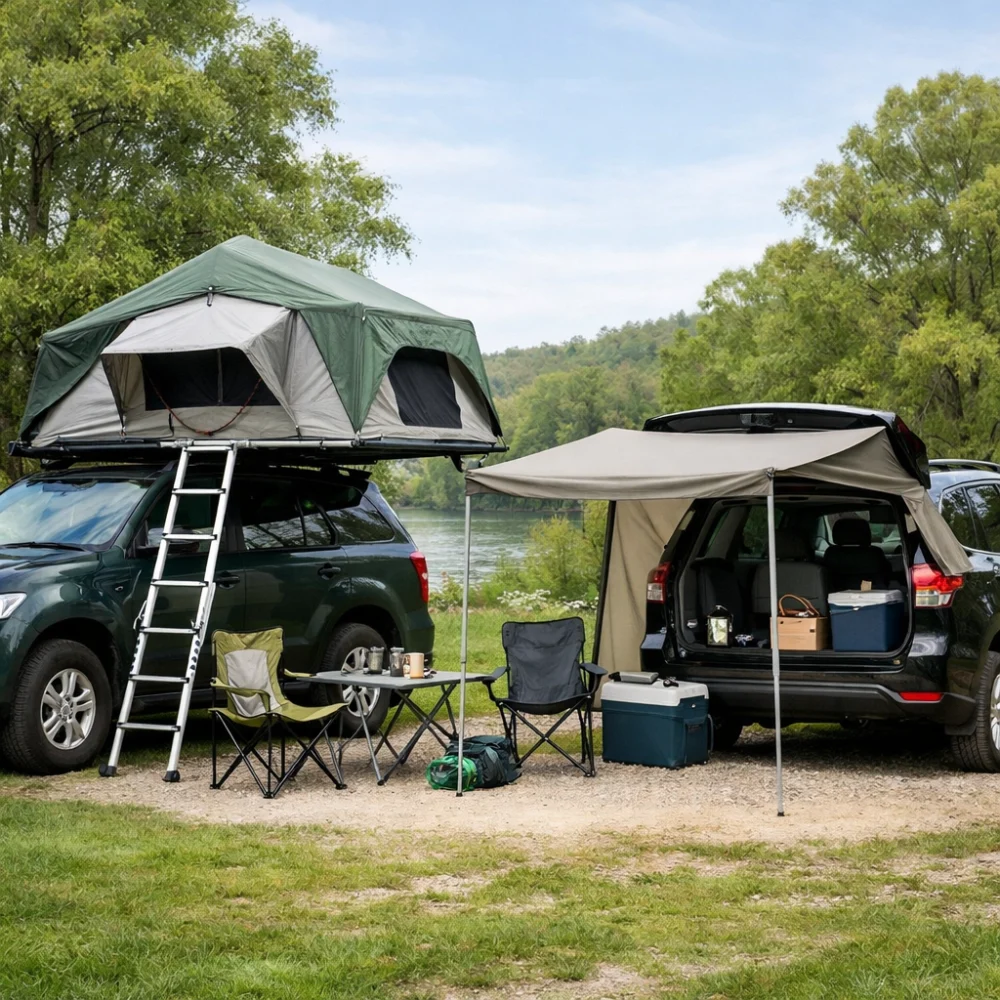
Vehicle and roof tents suit buyers who want camping shelter that connects to a vehicle, uses the vehicle as part of the setup, or sits on a roof rack for sleeping or cover. The right choice depends on how you travel, how much space you need, how often you will set it up, and whether you want sleeping space or just sheltered outdoor cover. Specifications vary by model, so always check the individual product page before buying.
If you are comparing options, start with the type of use you want: sleeping in the tent, creating a covered side space, extending the rear of a vehicle, or adding shelter at the tailgate. Then check vehicle fit, mounting requirements, and whether the design suits the number of people using it.
These products are often bought by campers who want a more integrated setup than a standalone tent, but they are not all the same. Some are designed more like sleeping tents, while others are awnings or shelters that add usable space around the vehicle.
Quick Product Comparison Framework
| Feature | What It Means | Why It Matters | What To Check |
|---|---|---|---|
| Product style | Whether it is a roof tent, tailgate tent, awning, or vehicle shelter | Different styles solve different camping needs | Match the style to sleeping space, shade, or sheltered access |
| Vehicle fit | How the product connects to your car, SUV, van, truck, or roof rack | Fit is central to whether it will work for your setup | Check the product page for vehicle or rack guidance |
| Use case | Sleeping area, weather cover, changing space, or storage-adjacent shelter | Some buyers need a place to sleep; others need extra covered space | Choose the type that matches your main purpose |
| Setup style | How the shelter is put in place and attached | A simpler setup can matter more than added features | Look for clear setup information and mounting method |
| Space and layout | How much usable room the design appears to offer | Comfort depends on whether the layout suits your group | Check dimensions and interior or covered area details |
| Weather protection | The level of shelter the design is intended to provide | Important for rain, shade, and wind exposure | Read the product description carefully and avoid assuming all designs offer the same protection |
| Packability and storage | How easy it is to stow the product when not in use | Useful if you travel often or have limited vehicle space | Check whether the product is meant to stay mounted or be packed away |
| Accessories and extras | Additional parts supplied or recommended | Can affect convenience and the total setup you need | Look for included or separately needed parts on the product page |
Key Decision Criteria Explained
Product type
Start by identifying whether you want a roof tent, a tailgate tent, a vehicle awning, or a vehicle shelter. A roof tent is generally chosen for sleeping space, while an awning or side shelter is more about shade and covered living space. Tailgate designs are often used to create a practical rear access area.
The main trade-off is simplicity versus versatility. A shelter that adds usable covered space may be easier to live with for day trips, while a sleeping setup is more about overnight comfort and trip style.
Vehicle and mounting fit
Fit matters because these products depend on how they attach to your vehicle or roof rack. Some are made for specific vehicle shapes or access points, while others are more universal in concept. Specifications vary by model, so always check the individual product page before buying.
The trade-off here is flexibility versus certainty. A more general design may suit more vehicles, but a model that clearly matches your setup can reduce guesswork.
Space and capacity
Buyers often focus on how many people a product is described for, but space is also about comfort, kit storage, and how the layout works in practice. A design that sounds suitable on paper may feel cramped if you want extra room for bags or changing.
Check the usable area, not just the headline description. If you travel as a pair but want more room, a slightly larger layout can be more comfortable than the smallest option.
Setup and pack-down effort
Some buyers want something that stays mounted or is ready to use quickly, while others prefer a more flexible shelter they can pack away after each trip. The main trade-off is speed versus convenience on the vehicle.
If you camp often, convenience can matter more than novelty features. If you use the product only occasionally, it may be worth choosing the style that is easiest to live with on a normal day-to-day basis.
Weather and shelter expectations
Vehicle and roof tents are often chosen for better integrated shelter, but not every product is designed the same way. Some are mainly for cover, some for sleeping, and some for extending usable outdoor space.
Do not assume every product provides the same level of all-weather use. Check the listing carefully and choose based on the conditions you realistically expect to face.
Storage and vehicle practicality
Consider where the product will live when you are not using it. Roof-mounted products can affect day-to-day practicality differently from rear or side shelters, especially if you want to keep the vehicle versatile for ordinary driving and storage.
This is a common decision point for buyers who camp only a few times a year. A product that is easy to store may suit infrequent use better than a larger setup.
Product Type Differentiation and Variants
There are several broad styles within this category, and each suits a different kind of buyer. Specifications vary by model, so always check the individual product page before buying.
Roof tents
Roof tents are designed to sit on top of a vehicle and are usually considered by buyers who want a dedicated sleeping setup. They can be appealing for people who want a more integrated camping arrangement.
The main limitation is that they depend on the vehicle and roof setup, so fit and mounting matter a great deal.
Tailgate tents
Tailgate tents are used at the rear of a vehicle to create a sheltered extension or enclosed rear area. They can suit buyers who want access, cover, or a practical extra space linked to the boot or tailgate.
The main limitation is that they are more about utility space than standalone camping comfort.
Vehicle awnings and side shelters
These are usually chosen by buyers who want shade or a covered area beside a vehicle. They can work well for cooking prep, sitting out, or creating a dry transition space.
The main limitation is that they do not necessarily give you sleeping space, so they serve a different purpose from roof tents.
Trailer or vehicle-mounted shelter styles
Some products are designed as portable shelters that connect to a vehicle or trailer-style setup. They may suit buyers who want a more flexible outdoor living arrangement.
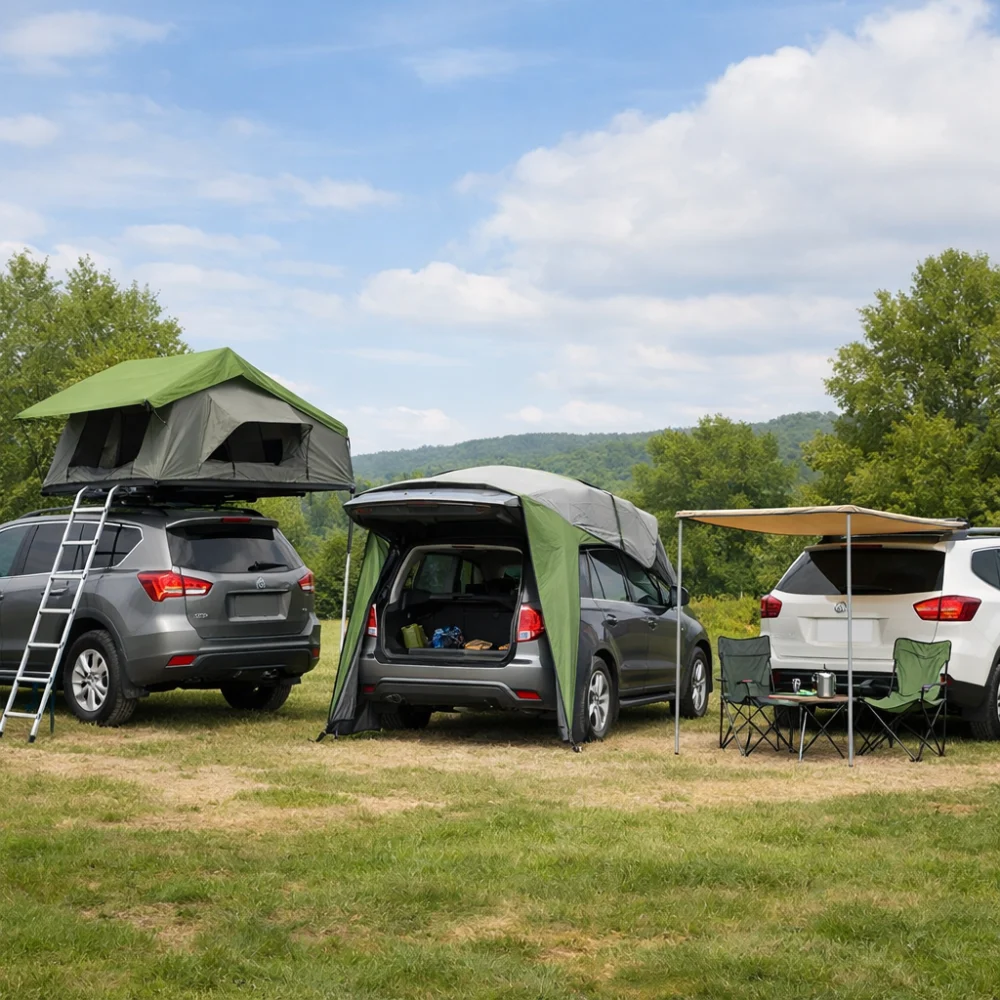
The main limitation is that mounting and layout can vary widely from model to model.
Suitability By Buyer Type Or Need
| Buyer type or need | What tends to matter most | Likely better fit | Watch out for |
|---|---|---|---|
| First-time buyer | Simple choice, clear fit, low confusion | A straightforward awning, shelter, or clearly described vehicle tent | Overcomplicated setups or unclear mounting information |
| Couple or two-person camper | Comfort, space, and practical use | A roof tent or compact shelter with enough room for your style of travel | Choosing purely on headline capacity |
| Family buyer | Usable space and easy day-to-day practicality | A larger shelter or vehicle extension style product | Assuming every roof tent or awning will suit family use |
| Weekend camper | Fast setup and straightforward storage | A product that balances convenience with the space you need | Buying a more elaborate system than you will want to use often |
| Overlander or frequent traveller | Mounting fit, practical layout, repeated use | A setup that matches the vehicle and travel style closely | Ignoring how often it will be fitted and removed |
| Buyer needing shade or rain cover | Covered space rather than sleeping space | Vehicle awning or side shelter | Expecting a shade product to perform like a sleeping tent |
| Buyer wanting rear access space | Boot-side convenience and covered loading area | Tailgate tent | Assuming it adds the same kind of living space as a side awning |
Common Mistakes And Misunderstandings
Assuming all vehicle tents do the same job. Some are for sleeping, some for shade, and some for rear access or side cover. The correction is to start with the use case before comparing features.
Choosing on capacity wording alone. A product description can suggest space without telling the full comfort story. The correction is to check layout, usable area, and whether you need room for bags as well as people.
Overlooking fit and mounting needs. A tent or awning that sounds ideal may not suit your vehicle or roof setup. The correction is to confirm compatibility information on the product page before you get attached to the idea.
Confusing convenience with versatility. A quick shelter is not always the same as a dedicated camping sleep setup. The correction is to decide whether your priority is overnight use or day-to-day covered space.
Forgetting how often it will be used. A larger or more involved setup can be fine for frequent trips but inconvenient for occasional ones. The correction is to match the product to how often you realistically camp.
Safety And Suitability Caveats
Use the product only as intended and check the listing carefully before buying. Consider the vehicle, mounting method, and whether the design suits the people who will use it.
If children will be involved, think about supervision, access, and whether the setup is appropriate for your family. Also consider the space you will use it in, especially if you expect busy campsites or limited pitch areas.
Do not assume every product offers the same level of weather protection or suitability for every trip. Specifications vary by model, so always check the individual product page before buying.
Maintenance, Storage And Lifespan Considerations
General care is usually about keeping the product clean, dry where possible, and stored in a way that avoids unnecessary wear. If the design includes moving parts or fittings, those can vary by model.
For buyers who travel regularly, it is sensible to think about how easy the product is to store between trips. Rough handling, repeated setup, and poor storage can shorten useful life over time. Some models may also involve batteries or other added components, if stated on the product page.
How To Compare Models Efficiently
- Decide whether you need sleeping space, shade, rear access cover, or a side shelter.
- Check that the product suits your vehicle and mounting setup.
- Compare the space against how many people and how much kit you actually carry.
- Think about setup effort and whether you want a fitted or more flexible arrangement.
- Read the product page for any model-specific details before buying.
Summary Buyer Decision Checklist
- Have I chosen the right type of vehicle or roof tent for my use?
- Does it suit my vehicle and mounting setup?
- Is the space right for the people using it and any kit I carry?
- Does the setup style match how often I will use it?
- Am I clear on whether I need sleeping space or just shelter?
- Have I checked the individual product page for model-specific details?
Frequently Asked Questions
What is the difference between a roof tent and a vehicle awning?
A roof tent is generally chosen for sleeping, while an awning is usually chosen for shade or covered outdoor space. They solve different problems, so the better choice depends on whether you need a place to sleep or a place to sit, cook, or change.
Are vehicle and roof tents suitable for all vehicles?
No, not necessarily. Fit depends on the product design and how it mounts, so it is important to check the individual product page rather than assuming compatibility.
How do I know which size to choose?
Start with the number of people using it, then think about whether you need space for bags, changing, or extra comfort. A description that seems large enough may still feel tight if you want a bit of room around you.
Is a tailgate tent the same as a roof tent?
No, they serve different purposes. A tailgate tent is usually about rear access and sheltered space at the back of the vehicle, while a roof tent is more about sleeping accommodation.
What should a first-time buyer focus on most?
First-time buyers should focus on vehicle fit, product type, and how easy the setup is to live with. It is usually better to choose a clear, practical match than to chase extra features you may not use.
Do these products need a lot of storage space?
It depends on the model and whether it is meant to stay mounted or be packed away. If storage is limited, check the product page for any clues about practicality between trips.
What is the biggest mistake buyers make?
The biggest mistake is often choosing the wrong type for the job. A good-looking shelter is not very useful if it does not match your vehicle, travel style, or the kind of space you actually need.
Should I buy based on capacity or layout?
Both matter, but layout often makes the bigger difference to comfort. Capacity alone does not always tell you how usable the space will feel in real camping conditions.
For products in this category, visit: vehicle and roof tents.