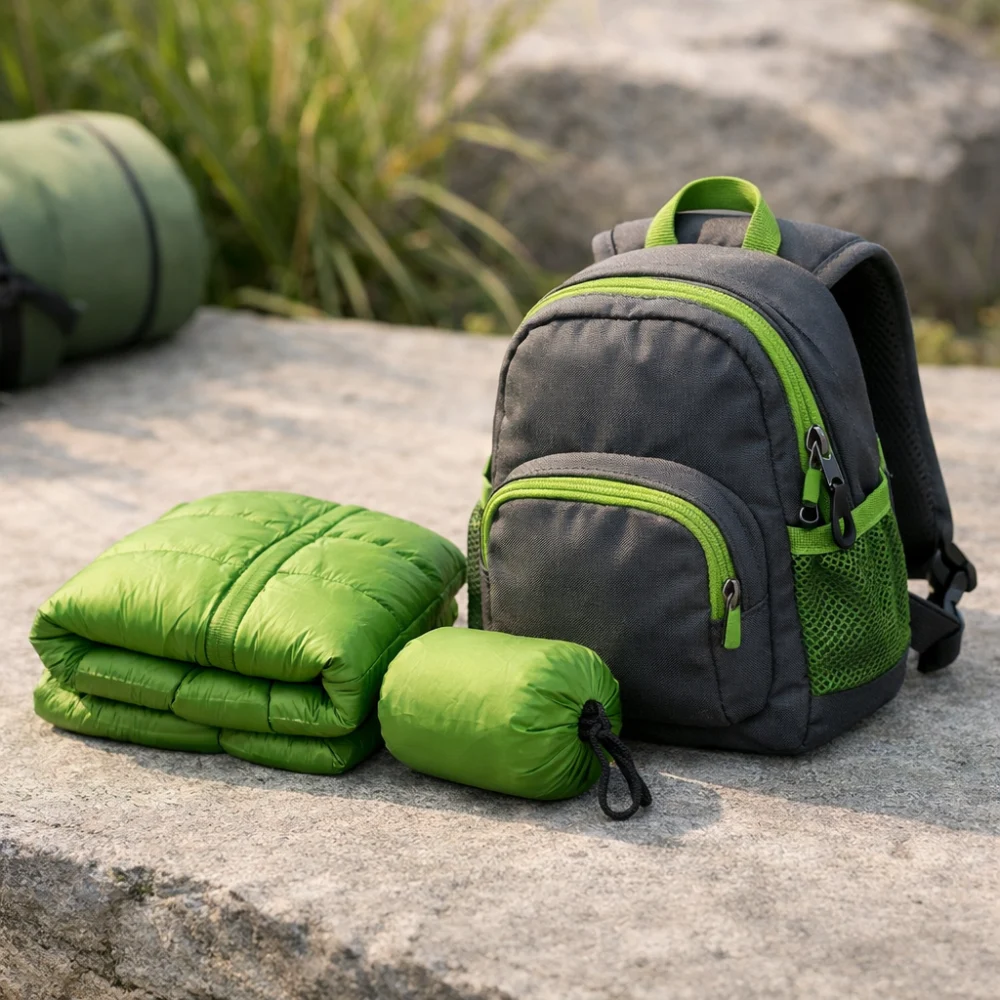
Kids’ packable jackets are a practical layer for days when the weather can change without much warning. They are usually chosen for walking, school trips, holidays and family outings when a lightweight jacket is easier to carry than a bulkier waterproof or insulated coat.
The main buying question is not just whether a jacket packs away, but how well it suits the child’s planned use. Some families want the lightest option for a rucksack pocket, while others care more about comfort, coverage and how often the jacket will be worn.
This guide helps you compare those trade-offs clearly so you can choose a jacket that fits the child, the weather and the journey.
What should you look for in a kids’ packable jacket?
The best starting point is to match the jacket to the kind of outings it will cover. A packable jacket is most useful when you want a low-bulk layer that can be carried until needed, but the lightest option is not always the most comfortable or durable one. A slightly less compact jacket may be easier for a child to put on, move in and wear for longer periods.
Think about weather protection, fit, ease of packing and how the jacket will be stored. Specifications vary by model, so always check the individual product page before buying.
| Feature | What it means | Why it matters | What to check |
|---|---|---|---|
| Packed size | How small the jacket folds or stows away | Important if it needs to fit in a school bag, day pack or travel bag | Look for clear size or packing information on the product page |
| Weight and bulk | How easy it is to carry before it is worn | Helps if the jacket will be taken on every outing | Compare how compact the jacket is against the child’s usual bag space |
| Weather protection | The level of cover from wind and rain | Determines whether it suits light showers, breezy conditions or wetter days | Check the stated fabric description and intended use |
| Fit and layering room | How the jacket sits over other clothing | Affects comfort, freedom of movement and whether it can be worn over a fleece or jumper | Review size guidance and consider the layers the child usually wears |
| Hood and cuffs | Features that help keep the jacket in place and reduce drafts | Useful when weather changes quickly or when the child is active outdoors | See whether the product page mentions hood design, cuffs or hem adjustment |
| Ease of use | How simple it is for a child to put on, remove and repack | Matters if the jacket will be used independently | Look for simple fastenings and a packing method the child can manage |
Key decision criteria
Packability versus comfort
A more packable jacket is usually easier to carry, but compact designs can feel lighter in structure. If the jacket is mainly for emergencies, that may be fine. If it is likely to be worn for long stretches, comfort, breathability and freedom of movement become more important.
Protection level
Different jackets are useful in different weather conditions. Some are better as a wind layer or for brief showers, while others aim for broader wet-weather cover. It helps to decide whether the jacket is a backup layer or something a child will wear as part of regular outdoor clothing.
Fit for growing children
Children need room to move, but an oversized jacket can be awkward to pack and less effective at keeping out draughts. A closer fit may feel neater, while a little extra room can help with layering. The key is to check the individual size guide and think about how much growing room is sensible for the intended season.
Features that add convenience
Small details can make a big difference in daily use. A hood, easy zip, secure cuffs and a simple packing arrangement can all improve the experience for families. These details are often more useful than extra complexity, especially for younger children.
Types and variants you may see
Within this category, the differences are usually about how the jacket balances lightness, coverage and convenience rather than about dramatic style changes.
- Ultra-compact packable jackets: suited to keeping in a bag for occasional use, but they may feel more minimal.
- Everyday packable jackets: a middle ground for regular school runs, walks and travel, with a balance of carry comfort and practicality.
- More protective packable jackets: useful when a child may spend longer outdoors, though they may pack slightly less small.
The right choice depends on whether the jacket is mainly a spare layer, a walking essential or a travel item. A compact jacket can be very convenient, but convenience should not come at the expense of the comfort the child needs to actually wear it.
Choosing by buyer need
| Buyer need | What to prioritise | Why |
|---|---|---|
| School or day bag backup | Packed size, light weight, easy stowage | It needs to be carried often and taken out quickly if the weather changes |
| Family walking and sightseeing | Comfort, layering room, weather protection | The jacket may be worn for longer periods and over other clothing |
| Holiday travel | Low bulk, versatile coverage, easy packing | Bag space is limited and the jacket may need to serve in varied conditions |
| Children who dress themselves | Simple fastenings, manageable packing, clear fit | Ease of use matters as much as technical performance |
Common mistakes to avoid
- Choosing only by how small it packs: a jacket that disappears into a pocket is convenient, but the child still needs to be willing to wear it.
- Ignoring layering needs: if the jacket is meant to go over a jumper, check that the fit allows room without feeling tight.
- Overlooking the intended weather: a light packable jacket for a breezy walk is not the same as a jacket intended for frequent wet-weather use.
- Forgetting who will use it: younger children may need simpler features than older ones who can manage more adjustability.
Safety and suitability caveats
Choose a jacket that suits the activity and the season rather than assuming one packable layer will cover every situation. For wet or windy conditions, it is sensible to check the product information carefully and to think about whether the child will also need warmer layers underneath.
If the jacket is for school, travel or outdoor clubs, check any practical requirements from the setting as well as the product page. A packable jacket should be easy for the child to carry and wear, but it should also be appropriate for the kind of day it is meant to handle.
Maintenance and storage
Packable jackets are often chosen because they are easy to keep in a bag until needed, so storage is usually part of the buying decision. Think about whether the jacket comes with, or folds into, a method the child can manage without help.
General care needs may vary from one jacket to another, especially where fabric finishes or weather-resistant treatments are involved. Check the individual product page and care label for cleaning guidance, and avoid assuming that every packable jacket will have the same wash or drying needs.
How to compare options efficiently
- Decide when the jacket will be used most often: occasional backup, regular walking or travel.
- Check the balance between packed size and comfort.
- Compare the weather protection and layering room.
- Look at the practical details that help a child use it independently.
- Read the individual product page carefully before choosing.
Summary buyer decision checklist
- Does the jacket suit the child’s main activities?
- Will it fit in the bag or space where it needs to be carried?
- Is there enough room for a layer underneath?
- Does the level of weather protection match the likely conditions?
- Are the features simple enough for the child to use easily?
- Have you checked the individual product page for size and care details?
Frequently asked questions
What is a kids’ packable jacket for?
It is a lightweight jacket that can be carried until needed, which makes it useful for changeable weather. Families often choose one for walks, trips and travel where carrying a bulky coat would be inconvenient.
Is a packable jacket the same as a waterproof jacket?
Not always. Some packable jackets are designed mainly as wind layers or for light showers, while others offer more weather protection. Check the product page rather than assuming all packable jackets are intended for the same conditions.
Should I size up for growing room?
Sometimes a little extra room is useful, especially if the jacket will be worn over other layers. Too much extra space can make it less comfortable and less convenient to pack, so it is worth balancing growth room against practical fit.
Are packable jackets good for school bags?
They can be, because their main advantage is low bulk. The most suitable option is one that packs neatly, is easy to carry and can be put on without fuss when the weather changes.
What features are most useful for children?
Simple fastenings, a hood, comfortable cuffs and an easy packing method are often the most helpful features. Younger children especially benefit from jackets that are easy to manage without constant adult help.
How do I choose between a very compact jacket and a more comfortable one?
Think about how often the jacket will actually be worn. If it is mainly a spare layer, compactness may matter most; if it will be worn for longer periods, comfort and coverage become more important.