

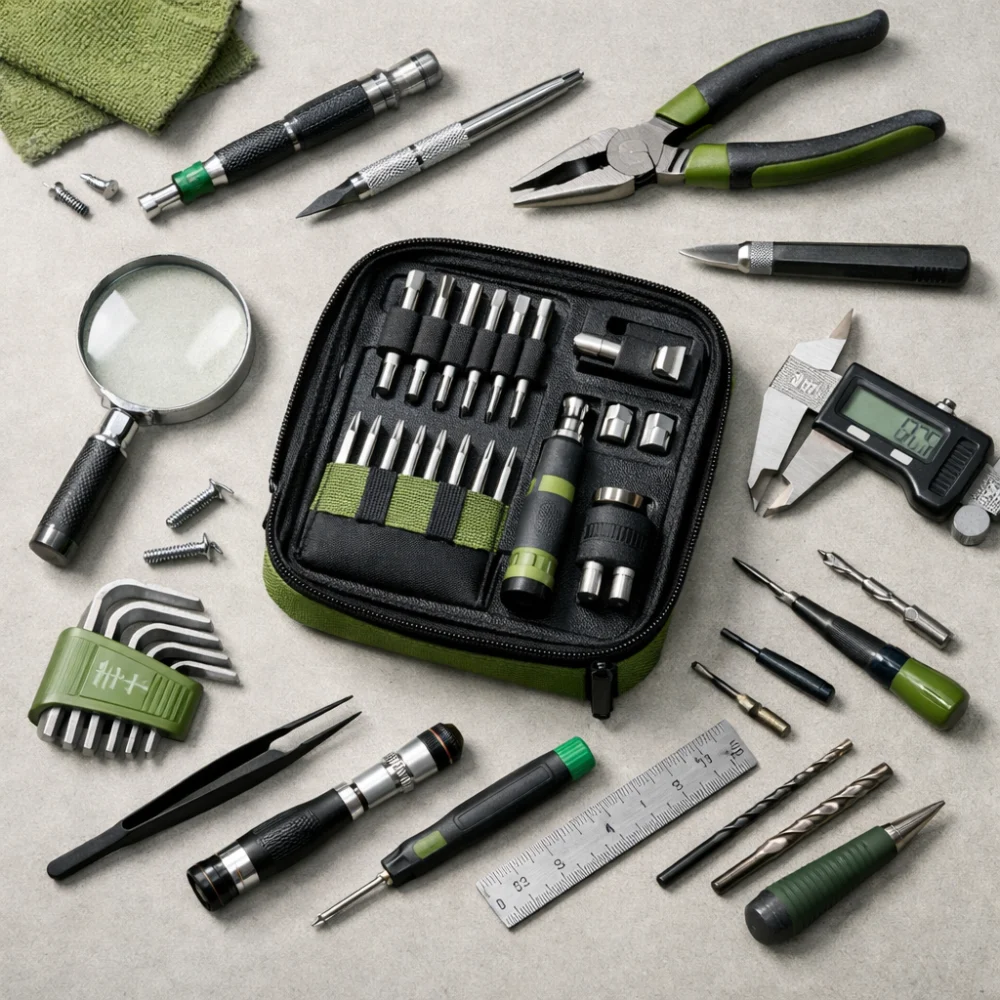

Airsoft tools are for the hands-on jobs that come up when you look after airsoft equipment, from fitting parts and making small adjustments to carrying out routine maintenance. The right set can make a simple task quicker and reduce the risk of stripping screws, damaging fittings or using the wrong size tool.
Because airsoft gear varies widely, buyers often need to balance precision, convenience and versatility. A compact set may suit occasional jobs, while a more specialised tool may be better if you regularly work on different items. Specifications vary by model, so always check the individual product page before buying.
Compare Airsoft Tools


As an Amazon Associate we earn from qualifying purchases.
What should you look for in airsoft tools?
Start with the job you actually need to do. The most useful tool is not always the biggest set, but the one that matches the fasteners, fixes or adjustments you expect to handle most often. A good choice usually comes down to tip fit, build quality, storage and whether the tool is comfortable enough to use carefully.
| Feature | What It Means | Why It Matters | What To Check |
|---|---|---|---|
| Tool type | Hand tools, precision sets or powered tools | Different jobs need different levels of control and speed | Match the tool type to the task you expect to do most often |
| Tip and head size | The shape and fit of the working end | Poor fit can slip or damage screws and fittings | Look for the sizes and styles that suit the item you are working on |
| Grip and handling | How secure and comfortable the tool feels in use | Comfort helps with careful work and reduces mistakes | Check whether the handle design suits longer or more delicate jobs |
| Set contents | How many tools or accessory pieces are included | A broader set may cover more tasks, but some pieces may be unused | Compare the included items with the jobs you actually plan to do |
| Storage | Case, organiser or loose individual tools | Good storage keeps small parts together and easy to find | Decide whether portability or workshop organisation matters more |
Key decision criteria
Precision and fit
For small fasteners and careful adjustments, accurate tip fit matters more than sheer force. A tool that fits properly is easier to control and less likely to damage the head of a screw or leave a fitting chewed up. If you work on compact items, precision is usually more valuable than a larger all-purpose tool.
Manual or powered
Manual tools give you fine control and are often the safest starting point for delicate work. Powered tools can save time on repeated tasks, but they are less forgiving if you need very light pressure or exact control. If you only do occasional maintenance, a manual set is often the simpler choice.
Set size versus usefulness
Large kits can look attractive, but more pieces are only helpful if you will use them. A smaller, better-matched set may be easier to store, faster to select from and more likely to include the sizes you actually need. Think about whether you want one general kit or a few carefully chosen tools.
Durability and finish
Well-finished tools tend to feel more secure in use and may last better under repeated handling. That does not mean every expensive set is automatically better, but loose tolerances and rough finishes can make careful work frustrating. Check the product description for the materials and construction details that are actually stated.
Types of airsoft tools
There are three broad ways buyers usually approach this category.
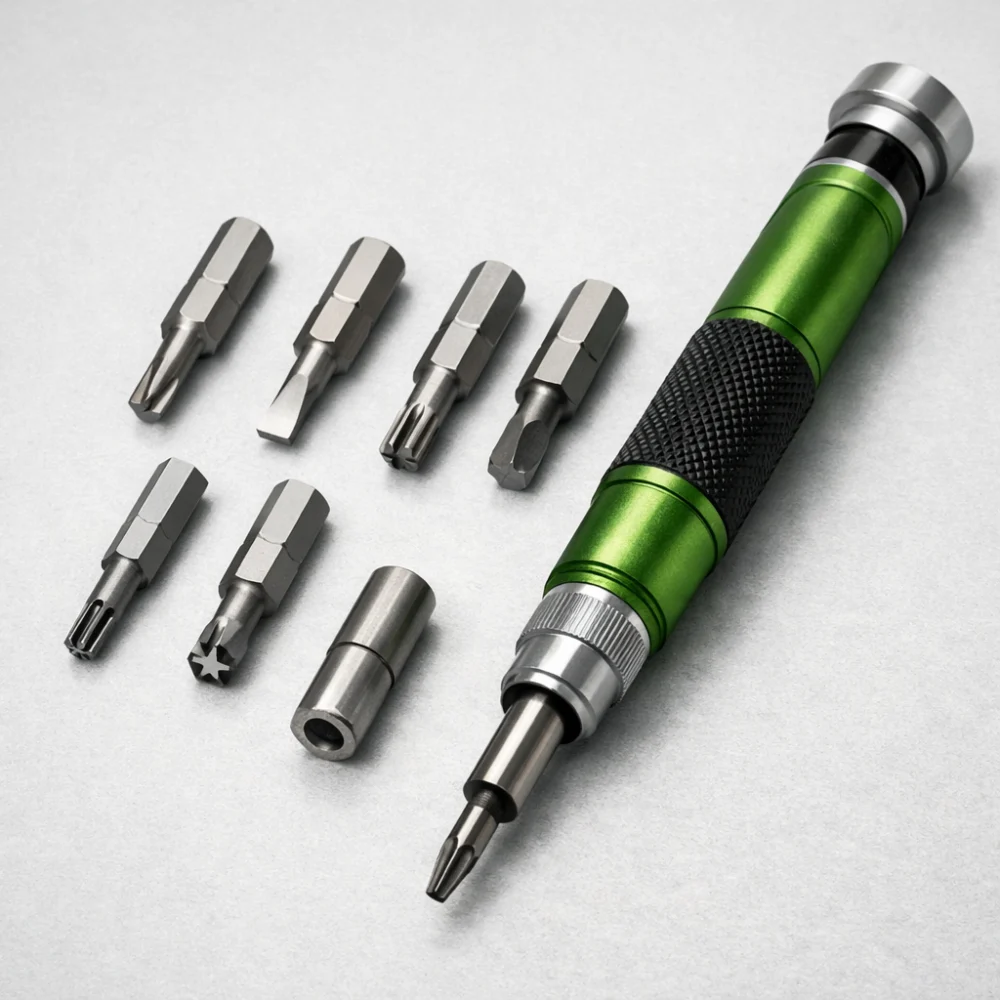
- Precision screwdriver sets suit small fasteners and detailed maintenance work.
- General hand tool sets are useful when you want a wider mix of sizes and functions in one place.
- Powered precision tools may suit regular users who want to speed up repetitive jobs, provided they still allow enough control.
Each type trades convenience against control in a different way. A set that is versatile may not be the most comfortable for delicate jobs, while a highly specialised tool may be excellent for one task but less useful for others.
Which tool type suits which buyer?
| Buyer need | What usually helps | Why | Possible downside |
|---|---|---|---|
| Occasional home maintenance | Compact manual set | Simple, easy to store and adequate for routine jobs | May not cover every specialist task |
| Frequent tinkering | Broader set with better organisation | More likely to cover different fasteners and fittings | Can include pieces you rarely use |
| Delicate adjustments | Precision-focused tools | Better control for small or easily damaged parts | Less suited to bigger or tougher jobs |
| Faster repeated work | Powered precision tool | Can reduce hand strain and save time | Needs more care to avoid over-tightening or slipping |
Common mistakes to avoid
- Buying by piece count alone. A bigger set is not automatically more useful if the important sizes are missing or the extras are unlikely to be used.
- Ignoring fit. Even a good-looking tool can be a poor choice if the tip or head does not match the fastener properly.
- Choosing speed over control. For detailed work, careful handling matters more than how quickly the task can be finished.
- Overlooking storage. Small tools are easier to misplace when they do not come with a sensible case or organiser.
Safety and suitability considerations
Choose tools that suit the specific task and the item being worked on. If a job feels beyond routine maintenance, it is sensible to pause and check the product information carefully rather than forcing a poor fit or using the wrong tool. Keep in mind that specifications vary by model, so always check the individual product page before buying.
Maintenance and storage
Most tools last longer when they are kept clean, dry and stored together after use. Small parts are easier to lose than larger hand tools, so a case or organiser can be worth having even if it seems simple. If you are choosing a powered tool, also think about charging or battery care where relevant, because convenience depends on how you plan to keep it ready.
How to compare options efficiently
- Start with the job you need to do most often.
- Decide whether you need a manual set, a precision set or a powered option.
- Check the tool sizes, heads or included accessories against your likely tasks.
- Compare handling, storage and how easy the set will be to keep organised.
- Read the individual product page closely before you buy.
Summary buyer decision checklist
- Does the tool match the jobs you actually need to do?
- Do the sizes, tips or included pieces suit your equipment?
- Is the level of precision enough for careful work?
- Would a manual or powered tool make more sense for your use?
- Does the set include storage that will help you keep track of small parts?
- Have you checked the individual product page for the exact specification?
Frequently asked questions
Do I need a full set or just one good tool?
If you only do one type of maintenance, a single well-chosen tool may be enough. If you expect to tackle different jobs, a set can be more practical because it gives you more flexibility without needing to buy pieces separately.
What matters more: the number of pieces or the quality of the fit?
Fit matters more for most buyers. A smaller set with the right heads or tips is usually more useful than a large kit that feels loose or awkward in use.
Are powered tools always better?
Not necessarily. Powered tools can be convenient for repeated jobs, but manual tools usually give better control for delicate or precise work. The right choice depends on how often you will use the tool and how careful the task needs to be.
Should I buy a tool set with storage?
Storage is often helpful, especially for small pieces that are easy to misplace. A case or organiser can make a set more practical even if the tools themselves are fairly basic.
Can one set handle every airsoft maintenance job?
Usually not. Airsoft equipment can involve different fasteners and tasks, so it is better to choose a set that matches the most common jobs you expect to do rather than assuming one product will cover everything.
How do I know whether a tool is suitable?
Check the product description for the tool type, included pieces and any stated sizes or features. If the product page does not clearly show what is included, it may be worth looking for a clearer option.
Choosing cleaning and support tools
Airsoft maintenance tools are not limited to screwdrivers. Cleaning aids and holders or stands serve different purposes, so compare them by the equipment and task they are intended for rather than by appearance or a broad product label. Check the stated compatibility and dimensions where provided; a tool intended for another type or size of equipment may not be suitable.
A holder can help keep equipment supported during maintenance, but its usefulness depends on whether its shape and adjustment range suit the item you need to support. Cleaning tools likewise vary in design and intended fit. Avoid assuming that a general-purpose or similarly named product is suitable for every airsoft item.
When to consider specialist tools
For a specific maintenance task, a dedicated tool may be a better fit than a large general kit, while a broad set may offer more flexibility for varied jobs. Powered or rotary tools are a separate choice: consider whether the task genuinely benefits from them and whether the product information makes its intended use clear. Do not assume that a tool designed for other equipment is appropriate for airsoft gear.
Are general-purpose cleaning tools suitable for airsoft equipment?
Not automatically. Designs and sizes can differ, so check the product information for the intended equipment and compatibility before choosing a cleaning aid. If the intended fit is unclear, avoid relying on the product name alone.
Ready to choose?
See all 251 Airsoft Tools →As an Amazon Associate we earn from qualifying purchases.


