

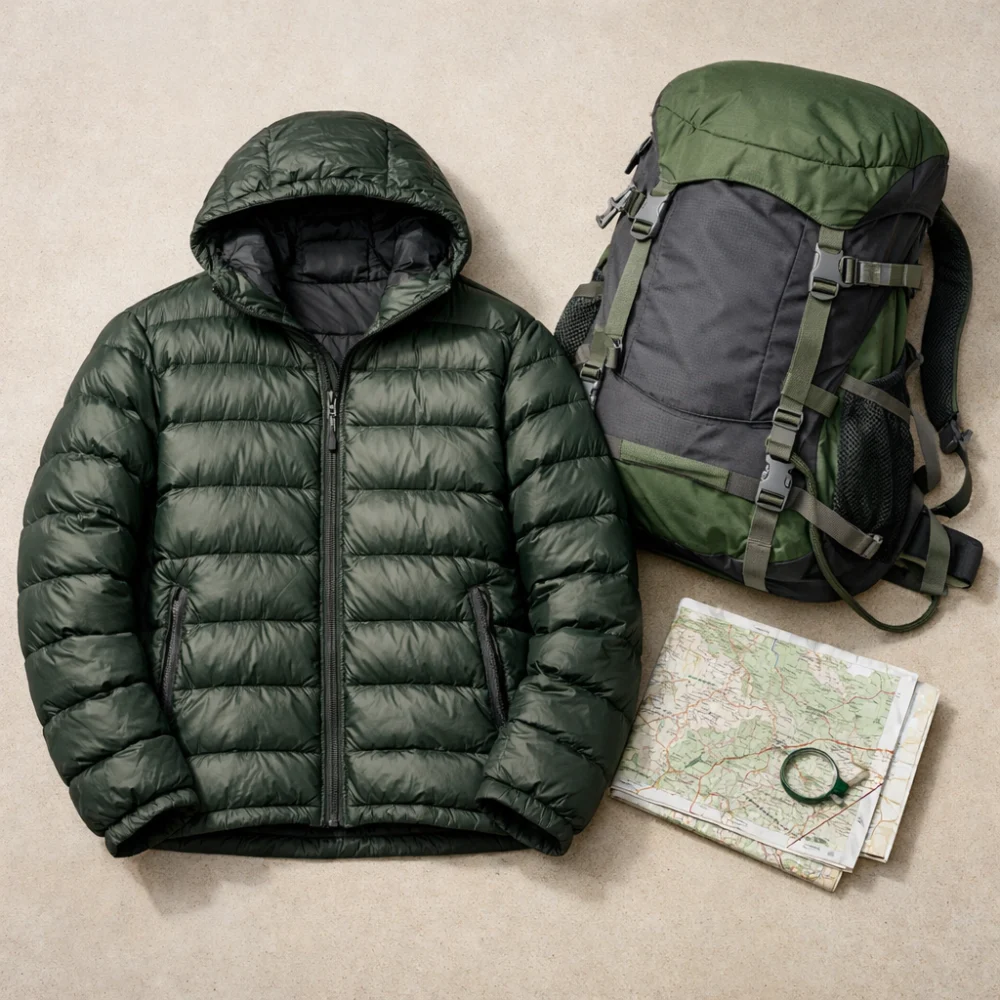

Men’s down jackets are a popular choice when you want a warm layer that still feels relatively light and easy to wear. They suit walkers, commuters and anyone who wants a jacket for cold, dry conditions or for layering under a shell.
The main buying decision is not simply how warm a jacket feels, but how that warmth is balanced against weather resistance, packability, fit and comfort. Some jackets are aimed at brisk everyday use, while others are better for cold stops, travel or carrying in a rucksack.
If you are comparing options for walking, it helps to think about where you will wear the jacket most often, how much room you want for layers, and whether you need something that packs down neatly.
Compare Men's Down Jackets


As an Amazon Associate we earn from qualifying purchases.
What should you look for in a men’s down jacket?
Start with the conditions you expect to face. A down jacket is usually chosen for warmth-to-weight efficiency, but the right option depends on how active you are, how wet the conditions may be and whether you want a jacket for standstill warmth or general day-to-day wear. The best starting point is usually warmth, then fit, then whether the jacket packs down or gives you more weather protection.
Specifications vary by model, so always check the individual product page before buying.
| Feature | What it means | Why it matters | What to check |
|---|---|---|---|
| Warmth | How much insulation the jacket provides | Helps match the jacket to cold weather, stopping breaks or everyday use | Look at the intended use, jacket style and whether it is described as lightweight or heavier weight |
| Fit | How the jacket sits on the body and over layers | Affects comfort, mobility and how well warmth is retained | Check the cut, sizing guidance and whether you plan to layer underneath |
| Weight and packability | How easy the jacket is to carry or stow | Useful for travel, hiking and changeable weather | See whether the jacket is designed to pack away or carry easily |
| Weather resistance | How the jacket handles wind and light moisture | Down is warm, but conditions can change quickly outdoors | Check the outer fabric description and whether extra protection is mentioned |
| Hood and coverage | How much head and upper-body protection the jacket gives | Can improve comfort in colder or breezier conditions | Look for hooded or non-hooded styles and the amount of coverage offered |
Key decision criteria
Warmth and intended use
Down jackets are most useful when you want strong insulation without a heavy feel. For active walking, a lighter jacket may be enough if you generate plenty of body heat; for colder stops, evenings out or slower-paced use, a warmer style may be more appropriate. Think about whether the jacket will be used on its own or as part of a layering system.
Fit over layers
A jacket that is too tight can feel restrictive and reduce the usefulness of your mid-layers. A jacket that is too loose may let in draughts or feel bulky under a shell. If you expect to wear a fleece or base layer underneath, allow for that when checking the sizing and cut.
Packability and portability
Some men’s down jackets are chosen because they are easy to store in a bag or rucksack. That can be a practical advantage for changeable weather, travel and walking holidays. If portability matters to you, look for compact styles and be realistic about the balance between packability and maximum warmth.
Weather resistance
Down is valued for warmth, but it is not the same thing as waterproof protection. If you expect drizzle, wind or mixed conditions, check how the outer fabric is described and whether the jacket is intended as a mid-layer, outer layer or casual cold-weather piece. A down jacket can be a very good choice for dry cold days, but it may not replace a rain jacket.
Features that affect comfort
Details such as a hood, cuff style, hem adjustment and pocket layout can change how useful a jacket feels in everyday use. These are worth checking if you plan to wear the jacket for commuting, travel or long days outdoors. Small comfort features often matter more than buyers expect.
Common types and variants
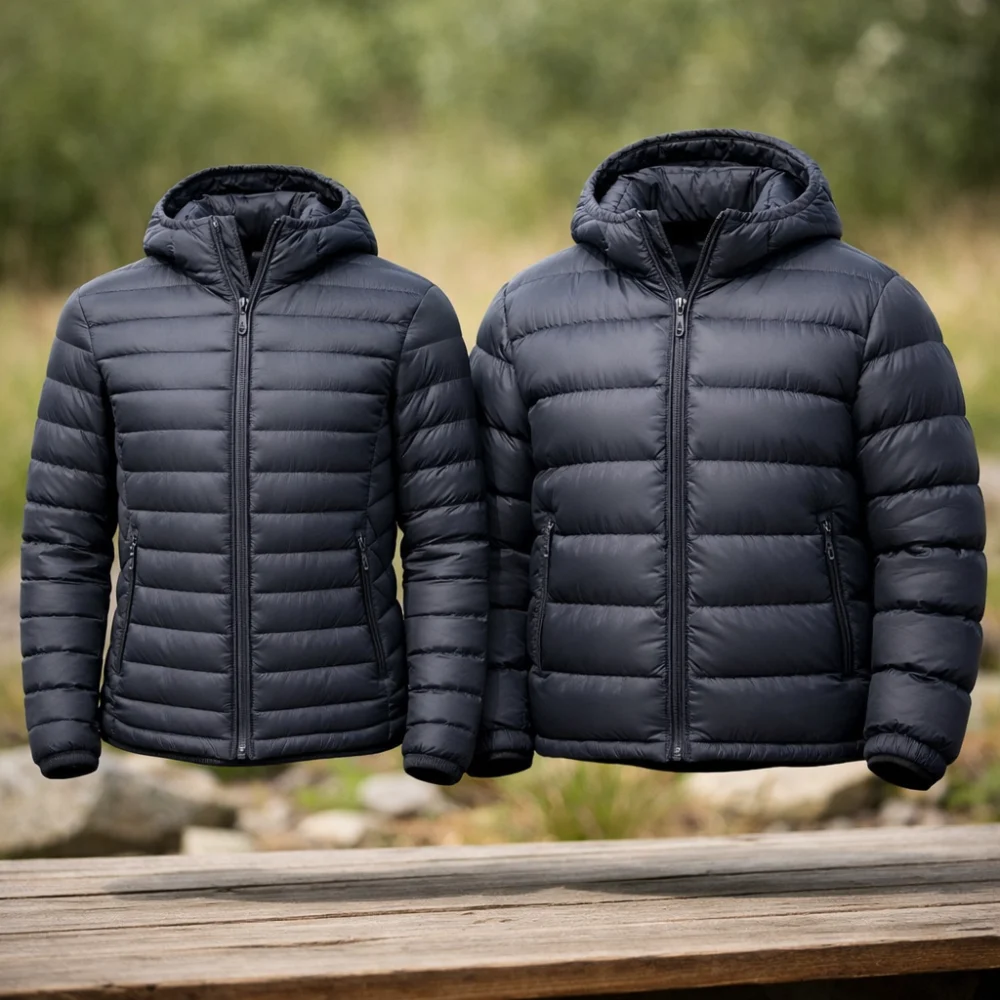
Within men’s down jackets, the main variations are usually around warmth, weight, length and how technical the jacket feels. Some styles are compact and easy to carry, while others are designed more for everyday winter wear. There are also hooded and non-hooded versions, and some jackets place more emphasis on a streamlined look than on outdoor performance.
- Lightweight down jackets: Good for carrying, layering and milder cold, but usually less substantial in very low temperatures.
- Hooded down jackets: Useful when you want extra coverage for the head and neck area, though a hood can add bulk.
- Packable styles: Handy for travel and walking, but often a trade-off between compactness and maximum insulation.
- Everyday winter styles: Better if you want a jacket for general cold-weather use rather than a highly technical layer.
Which jacket suits which buyer?
| Buyer need | What usually matters most | What to prioritise |
|---|---|---|
| Walking in cold, dry weather | Reliable warmth and comfort | Insulation level, fit over layers and comfort features |
| Travel or commuting | Easy carrying and versatile wear | Packability, weight and a style that works in different settings |
| Layering under a shell | Low bulk and a practical fit | Slimmer cut, sleeve comfort and compatibility with outer layers |
| Everyday winter use | Comfort and convenience | Coverage, pockets, hood choice and overall look |
| Changing outdoor conditions | Flexibility | Balance between warmth, wind protection and portability |
Common mistakes to avoid
- Choosing warmth without considering weather: A very warm jacket is not automatically the most suitable if you need better wet-weather protection.
- Ignoring fit over layers: If you want to wear a fleece underneath, account for that before buying.
- Assuming all down jackets pack down equally well: Some are more portable than others, so check the product information rather than relying on the category name.
- Overlooking the difference between warmth and waterproofing: A warm jacket can still need a separate waterproof layer in poor weather.
Safety and suitability considerations
Think about the conditions you will actually use the jacket in. Down jackets are generally a good choice for cold weather, but they are best matched to the right layer system and weather conditions. If you expect persistent rain, check whether you also need a waterproof shell rather than assuming the jacket will do every job.
For colder outdoor use, it is sensible to compare the jacket’s coverage, fit and intended use carefully. A jacket that is comfortable for town wear may not be the best choice for exposed walking, and vice versa.
Maintenance, storage and lifespan
Jackets in this category usually benefit from careful storage so the insulation is not left compressed for long periods. If a jacket is packable, that makes it convenient for travel, but long-term storage is still worth considering. Also check the care guidance on the individual product page, because cleaning and drying needs can vary by model.
Regular use, repeated compression and exposure to moisture can all affect how a jacket feels over time. That makes it worth choosing a jacket whose intended use matches how you plan to wear it most often.
How to compare options efficiently
- Define the main use: walking, commuting, travel or general winter wear.
- Decide the warmth level you need: lighter for active use, more insulation for slower or colder conditions.
- Check the fit: make sure it works with your usual layers.
- Compare portability and weather resistance: decide whether packability or extra protection matters more.
- Read the product page carefully: confirm the details that affect comfort, coverage and care.
Summary buyer decision checklist
- Will you wear it mainly for walking, commuting or everyday use?
- Do you need a lighter jacket or something warmer and more substantial?
- Will you layer underneath it?
- Do you want a hood, or is a simpler style fine?
- Is packability important to you?
- Do you need more weather protection than a down jacket typically provides?
- Have you checked the individual product page for the exact specifications?
Frequently asked questions
Are men’s down jackets good for walking?
They can be a very good choice for walking in cold, dry conditions, especially when you want warmth without excessive bulk. They are often best as part of a layered outfit rather than as a standalone answer to all weather. If your walks are exposed to rain, think about whether you also need a waterproof outer layer.
What is the difference between down and padded jackets?
Down jackets use down insulation, while padded jackets may use synthetic fill or a mix of materials. The practical difference is often about warmth, weight, moisture handling and feel, but the exact benefits depend on the individual jacket. If you are comparing both, read the product details rather than relying on the jacket name alone.
Do I need a hood on a down jacket?
Not always. A hood can add useful coverage in colder or breezier conditions, but it can also add bulk if you want a slimmer, simpler jacket. Think about whether you already wear a hat or usually combine your jacket with a separate waterproof outer layer.
Can I wear a down jacket in wet weather?
It depends on the conditions and the jacket’s outer fabric, but down is generally chosen for warmth rather than as a substitute for waterproof protection. Light moisture may be manageable in some cases, yet persistent rain usually calls for a waterproof layer. Check the product page carefully if wet-weather use matters to you.
How should a men’s down jacket fit?
It should feel comfortable through the shoulders and arms, with enough room for layering if needed. A close fit can help keep warmth in, but it should not restrict movement. If you are between sizes or plan to wear thicker layers underneath, consider that when choosing.
Are packable down jackets worth it?
They can be very useful if you travel, hike or want a jacket you can carry easily. The trade-off is that a more packable jacket may not offer the same level of insulation as a less compact style. Decide whether convenience or maximum warmth matters more for your use.
How to compare down insulation details
If a product page lists fill power, it describes the loft produced by a given weight of down; it is not, by itself, a complete warmth rating. The amount of down used, the jacket’s construction and its fit also affect how warm it may feel, so compare the whole garment rather than choosing by one figure.
Where fill weight or construction details are supplied, use them as additional context, not as guarantees of performance. Check that the information relates to the jacket in the size you are considering, and weigh any claimed warmth against how active you expect to be and what layers you will wear.
More Men's Down Jackets
See all 325 Men's Down Jackets →


As an Amazon Associate we earn from qualifying purchases.


