

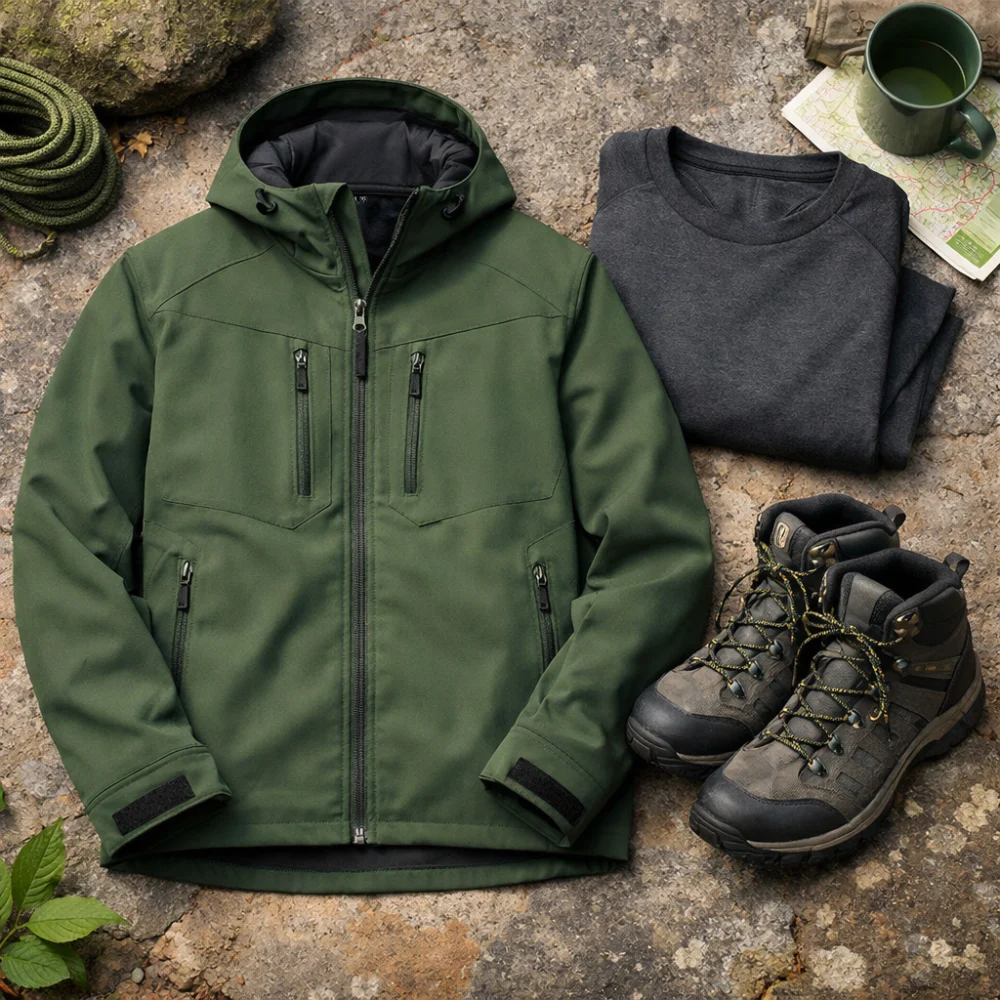

Men’s softshell jackets are a popular choice for walkers who want a balance of comfort, stretch and light weather resistance. They sit between a fleece and a waterproof shell, which makes them useful for cool, dry or mildly unsettled days when full waterproofing is not the main priority.
Because the category covers a wide range of designs, the right choice depends on how you walk, how much warmth you want and how much weather protection you expect. Some softshells are built for active hill walking, while others lean more towards everyday wear or a bit of extra warmth.
This guide explains the main features to compare, the trade-offs to expect and the checks that matter before you buy.
Compare Men's Softshell Jackets


As an Amazon Associate we earn from qualifying purchases.
What should you look for in a men’s softshell jacket?
The best starting point is how you plan to use it. If you want something for brisk walks in cool conditions, look for comfort, movement and breathability first. If you expect more exposed weather, pay closer attention to wind resistance, water resistance and how well it layers over other clothing. Specifications vary by model, so always check the individual product page before buying.
| Feature | What it means | Why it matters | What to check |
|---|---|---|---|
| Weather resistance | How well the jacket handles wind and light moisture | Determines whether it suits dry walks, breezy ridges or occasional showers | Look for the level of wind resistance and whether the fabric is described as water resistant, shower resistant or waterproof |
| Breathability | How easily heat and moisture can escape | Affects comfort when you are moving at pace or wearing the jacket for longer periods | Check whether the jacket is aimed at active use or more general everyday wear |
| Warmth | The amount of insulation or lining in the jacket | Helps you match the jacket to season and activity level | Look at the lining, fabric weight and whether you will still have space to layer underneath |
| Stretch and fit | How much the fabric moves with you and how the cut sits on the body | Important for arm movement, reaching and wearing a rucksack | Check the fit notes, cuff style, hem adjustment and whether the jacket is described as stretchy or fitted |
| Hood and collar design | Whether the jacket has a hood, and how the neckline is shaped | Changes how much shelter you get and how bulky the jacket feels | Decide whether you want a hood for extra coverage or a simpler collar for layering and lower bulk |
Key decision criteria
Weather resistance versus waterproof protection
Softshell jackets are usually chosen for comfort and versatility rather than for heavy rain. They can be a good option in windy conditions or for brief light showers, but they are not the same as a dedicated waterproof jacket. If you walk in the UK often, think carefully about whether you need a jacket that copes with changeable weather or one that is mainly there for comfort between showers.
Breathability and activity level
If you move quickly, climb hills or tend to overheat, breathability can matter more than extra padding or a heavier lining. A more breathable softshell is often easier to wear for longer periods because it is less likely to feel stuffy. The trade-off is that very breathable jackets may offer less warmth or weather protection than thicker options.
Warmth and layering
Some softshells are relatively light and work best over a base layer, while others have a fleece-like lining or a warmer feel. Think about whether you want the jacket to do most of the insulating on its own or act as part of a layered system. A jacket that is too snug may limit layering, while one that is too roomy may feel less effective in the wind.
Fit and mobility
Walking jackets should allow you to swing your arms freely and wear a backpack without discomfort. Stretch panels, articulated shaping and a sensible cut can make a noticeable difference on the move. If you are between sizes or like to wear thicker mid-layers, check the fit guidance carefully.
Features that are useful, not just visible
Pockets, cuffs, hem adjustment and hood design can all affect how practical a jacket feels in everyday use. More features are not automatically better; the useful ones are the ones you will actually use while walking. Consider whether you want simple, low-bulk design or extra adjustability for changing conditions.
Common softshell jacket types and variants
Within this category, the most common differences are usually about weight, warmth and weather protection rather than dramatic style changes.
- Lightweight softshells: Better for active walking and milder weather, with less bulk and usually less warmth.
- Warmer or fleece-lined softshells: Suited to cooler conditions, but may feel heavier and less breathable when you are moving fast.
- Hooded softshells: Useful when you want extra coverage in wind or light drizzle, though the hood can add bulk.
- Water-resistant softshells: Helpful for occasional light moisture, but still worth pairing with a waterproof shell if you need real rain protection.
Which softshell jacket suits which buyer?
| Your need | What to prioritise | Why it helps |
|---|---|---|
| Fast-paced walking | Breathability, stretch and a lighter build | Helps you stay comfortable when you are generating more heat |
| Cooler weather use | Warmer lining and better wind resistance | Improves comfort when temperatures are lower |
| Mixed weather outings | Balanced weather resistance with a hood | Gives more flexibility when conditions are changeable |
| Everyday wear | Comfortable fit, simple styling and easy layering | Makes the jacket easier to use beyond the trail |
| Rucksack use | Mobility, sensible pocket placement and a neat fit | Reduces bulk and helps the jacket sit comfortably under straps |
Common mistakes and misunderstandings
- Assuming a softshell is waterproof: Many are only water resistant, so check the product description if you need protection in real rain.
- Choosing too much warmth for active use: A heavily lined jacket can feel comfortable at first but may become too warm once you start moving.
- Ignoring fit over layers: A jacket that feels fine over a T-shirt may be too tight once you add a fleece underneath.
- Focusing on features you will not use: Extra pockets or a hood are not always worthwhile if you prefer a simpler jacket.
Suitability and caveats
Softshell jackets are a practical choice for walking, travel and everyday wear, but they are not the right answer for every weather situation. If you expect persistent rain, a dedicated waterproof layer is usually the more suitable option. For colder conditions, think about whether you need the jacket to provide warmth on its own or just to sit over a mid-layer.
Keep in mind that construction, performance and features vary widely from one model to another, so the wording on the product page matters.
Care, storage and long-term use
Softshell jackets are usually chosen because they are easy to wear and relatively straightforward to look after, but the exact care needs vary. Check the garment care information for washing guidance, especially if the jacket has a lining or a membrane-backed fabric. Good storage, regular cleaning and avoiding unnecessary compression can help the jacket keep its shape and comfort for longer.
How to compare options efficiently
- Start with your main use: walking, everyday wear, layering or mixed weather.
- Decide how much warmth you need and whether breathability is more important than insulation.
- Check whether you need only water resistance or something closer to a waterproof outer layer.
- Compare fit details, hood design and mobility features.
- Read the individual product page carefully before you decide.
Summary buyer decision checklist
- Is this jacket mainly for dry, breezy or changeable weather?
- Do you need more warmth, more breathability or a better balance of both?
- Will you wear it over a mid-layer?
- Do you want a hood, or would a simpler design suit you better?
- Does the fit allow comfortable movement and rucksack use?
- Have you checked the product page for the exact weather resistance and care guidance?
Frequently asked questions
Are softshell jackets good for walking?
Yes, they are a very common choice for walking because they balance comfort, movement and moderate weather protection. They work especially well in cool, dry or slightly windy conditions. If you want protection from steady rain, you may still need a waterproof jacket.
Can I wear a softshell jacket in winter?
That depends on the jacket and how cold you feel when walking. Some warmer or fleece-lined softshells are suitable for colder days, especially with layering underneath. Lighter versions are usually better for milder weather or more active use.
Is a hood necessary on a softshell?
Not necessarily. A hood adds extra coverage in wind or light drizzle, but some buyers prefer the lower bulk and simpler feel of a hoodless jacket. The better choice depends on whether you value extra shelter or easier layering.
How is a softshell different from a waterproof jacket?
A softshell is usually chosen for comfort, stretch and breathability, while a waterproof jacket is designed for better rain protection. Softshells may cope with light showers, but they are not the same as a dedicated rain shell. That trade-off is the key thing to understand before buying.
What should I check if I want to wear it with layers?
Check the cut, the size guidance and whether the jacket is described as slim, regular or roomy. You want enough space for a base layer or mid-layer without the jacket feeling restrictive. If you are between sizes, think carefully about how you plan to wear it.
Do softshell jackets need special care?
They do not usually need complicated care, but you should still follow the garment label. Washing and storage can affect how the fabric feels and performs over time. Specifications vary by model, so always check the individual product page before buying.
How to interpret softshell weather claims
“Softshell” covers jackets with different constructions and levels of protection; the category name alone does not tell you how a particular jacket will perform. Wind resistance, water resistance and waterproof protection are separate considerations, so look for information about each rather than treating one claim as proof of another.
If staying dry in sustained rain is important, check whether the product information explicitly describes the jacket as waterproof and explains its rain protection. A water-resistant description may suit brief or light moisture, but it should not be taken as a promise of waterproof performance. A more protective design may also feel less comfortable during hard activity, so weigh the conditions you expect against how much breathability and freedom of movement you want.
More Men's Softshell Jackets
See all 687 Men's Softshell Jackets →


As an Amazon Associate we earn from qualifying purchases.


