


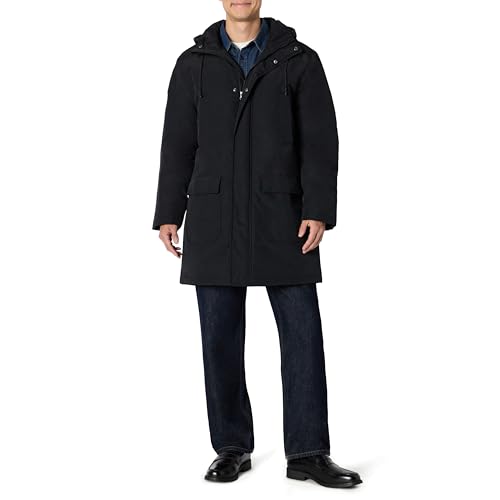
Men’s parka jackets are a practical choice when you want more coverage than a short jacket and a calmer, weather-ready shape for colder months. They vary a lot in warmth, length, lining, hood design and outer fabric, so the right choice depends on how and where you plan to wear it.
This guide focuses on the buying decisions that matter most. It can help you compare styles for everyday commuting, outdoor walking, workwear or casual winter use without overcomplicating the process.
If you are choosing between several parkas, it is usually easier to start with the weather you need to handle, then narrow down the length, insulation and hood features that suit you best.
Compare Men's Parka Jackets


As an Amazon Associate we earn from qualifying purchases.
What should you look for in a men’s parka jacket?
The best place to start is the balance between warmth, coverage and flexibility. A longer parka often feels more protective in cold or windy conditions, but it can be less convenient for active use than a shorter jacket. The most suitable option is usually the one that matches your daily routine rather than the one with the most features.
Specifications vary by model, so always check the individual product page before buying.
| Feature | What it means | Why it matters | What to check |
|---|---|---|---|
| Length | How far the jacket extends down the body | Affects warmth, coverage and ease of movement | Whether you want extra protection for commuting, standing outdoors or everyday wear |
| Insulation and lining | The internal layers that help retain warmth | Determines how suitable the jacket is for colder conditions | Whether the lining suits your local weather and how much bulk you are happy to carry |
| Hood design | Whether the hood is fixed, detachable or simply shaped differently | Changes versatility and weather coverage | Whether you want a hood for rain and wind, or prefer the option to remove it |
| Outer fabric | The outer shell material and finish | Affects comfort, weather resistance and day-to-day wear | Whether the description mentions weather-resistant or waterproof qualities if that matters to you |
| Pockets and closure | Fastenings, zips, poppers and storage pockets | Influences convenience and how secure the jacket feels in use | Where the pockets are placed and whether the main fastening is easy to use with layers underneath |
Key decision criteria explained
Warmth and insulation
Warmth is usually the main reason people choose a parka. Some parkas are designed for milder everyday wear, while others are built with thicker lining for colder weather. More insulation can improve comfort in winter, but it may also make the jacket heavier or less adaptable across seasons.
Think about whether you want something for short trips outdoors, long walks, or standing around in cold conditions. If you plan to wear thick layers underneath, check that the fit leaves enough room without feeling restrictive.
Length and coverage
Longer parkas can give extra coverage around the hips and upper legs, which is useful in wind and cold. Shorter parkas may feel easier to move in and less bulky when you sit, drive or travel. The right length often depends on whether you prioritise protection or freedom of movement.
Hood and collar details
A hood can be a useful feature if you regularly face rain, wind or changeable weather. Detachable hoods offer more flexibility, while fixed hoods can be simpler and less likely to be misplaced. A higher collar can also improve comfort if you want a little extra shield around the neck.
Outer finish and weather protection
Many buyers want a parka that handles light rain, damp air or blustery conditions. That does not mean every jacket is suitable for the same weather. Check the product description for the level of protection described, and think about whether you need something mainly for dry cold or for wetter conditions as well.
Fit and layering room
Fit matters because a parka that is too snug can feel awkward over knitwear or mid-layers, while one that is too loose may feel bulky. Consider what you normally wear underneath in winter. If you prefer thicker jumpers, a slightly roomier cut may be more comfortable.
Common parka types and how they differ
There are a few broad parkas to compare, even when the style names vary.
- Casual everyday parkas: These suit commuting, errands and general winter wear. They usually aim for a balance of comfort and practical coverage.
- Insulated winter parkas: These are aimed more at colder weather and people who spend longer outdoors. The trade-off is often extra bulk.
- Weather-focused parkas: These put more emphasis on shelter from wind and rain. Check the product wording carefully if that matters to you.
- Workwear or high-visibility parkas: These are chosen for specific environments where visibility or workplace suitability matters. Make sure the style matches your intended use rather than treating it as a general casual jacket.
Which parka suits which buyer?
| Buyer need | Features that may suit | Main trade-off | What to verify |
|---|---|---|---|
| Daily commuting | Moderate warmth, comfortable fit, useful hood, easy fastening | Too much bulk can feel cumbersome | Length, pocket placement and whether it works over work clothes |
| Cold-weather walking | More insulation, good coverage, secure hood | Extra warmth can reduce flexibility | Whether the jacket is likely to feel comfortable when moving |
| Wet and windy conditions | Weather-resistant outer fabric, hood, longer cut | Weather protection can add weight or stiffness | How the product describes its outer shell and closure |
| Layering over knitwear or uniforms | Roomier fit, easy sleeves, practical pockets | A looser cut can look and feel less streamlined | Fit guidance and model photos if available |
Common mistakes and misunderstandings
- Choosing by appearance alone: A parka can look similar across many listings, but the warmth level and fit may be very different. Check the details rather than assuming all parkas feel the same.
- Assuming one hood style suits everyone: Some buyers prefer a fixed hood for simplicity, while others want the option to remove it. The right choice depends on how often you expect to use it.
- Ignoring layering space: A jacket that fits over a T-shirt may not work as well over winter layers. Think about your normal clothing underneath.
- Expecting all-weather performance from a generic description: Terms such as water resistant, windproof or waterproof are not interchangeable. Read the product wording carefully.
Safety and suitability caveats
Parka jackets are mainly a comfort and weather-suitability purchase, but it still helps to match the jacket to the situation. A casual winter parka may be ideal for daily wear and light outdoor use, while a workwear style may suit a different setting altogether. If you need a jacket for a particular environment, check the product page carefully rather than relying on the name alone.
For colder or wetter conditions, it is sensible to treat the product description as the source of truth for coverage and weather claims. A jacket that suits one buyer’s routine may feel too warm, too heavy or not protective enough for another.
Maintenance, storage and lifespan considerations
Simple care can help a parka stay useful for longer. Before you buy, think about whether you want a jacket that is easy to clean and store, especially if it is likely to be worn often in bad weather. Bulkier parkas may need more hanging space, and insulated styles may take longer to air out after use.
If a product has removable parts such as a hood or lining, that may make care easier, but it also adds another detail to keep track of. Check the care information on the product page so you know what kind of upkeep the jacket is likely to need.
How to compare options efficiently
- Start with your main use: commuting, casual wear, walking or workwear.
- Decide how much warmth and coverage you actually need.
- Compare hood, lining, length and outer fabric before focusing on colour or styling.
- Check the fit guidance and think about what you will wear underneath.
- Read the individual product page for the exact details that matter to your choice.
Summary buyer decision checklist
- Choose a length that suits how much coverage you want.
- Check whether the jacket is warm enough for your usual weather.
- Decide if you want a fixed hood, detachable hood or no hood preference.
- Think about room for layers underneath.
- Check the outer fabric description for weather-related wording.
- Make sure pockets, fastening and overall fit suit your routine.
Frequently asked questions
Are parka jackets warmer than regular jackets?
They often are, but not always. Parkas usually offer more coverage and are commonly designed with colder weather in mind, yet the actual warmth depends on the individual model. Check the lining and fabric details rather than assuming based on the style name.
Should I choose a parka with a hood?
If you expect wind or rain, a hood can be very useful. Some buyers prefer the flexibility of a detachable hood, while others want the simpler feel of a fixed one. The better choice depends on how often you think you will use it.
What is the main difference between a parka and a casual jacket?
A parka usually gives more coverage and often feels more weather-focused than a standard casual jacket. That can make it a better option for colder months, but it may also be bulkier. If you want an easier everyday layer, a lighter jacket may suit you better.
Do I need a waterproof parka?
Not necessarily. Many buyers only need something that handles light damp or wind, while others need a jacket for more changeable weather. Look closely at the wording used on the product page, because weather-resistant and waterproof are not the same thing.
How should a parka fit?
It should be comfortable enough to wear with your normal layers, without feeling tight across the shoulders or chest. At the same time, an overly loose fit can feel bulky and less tidy. Fit preference is personal, so compare the product information with how you plan to wear it.
Can I wear a parka for everyday use?
Yes, many parkas are bought for daily wear because they are practical and easy to combine with casual clothing. The key is choosing a style that is not too heavy or overly specialised for your routine. Look for the balance of comfort, length and warmth that suits your day-to-day use.
How to check parka sizing
Use the individual product’s size guide rather than assuming that the same labelled size will fit consistently across different brands or styles. Check whether the measurements describe the wearer or the garment, and compare them with a jacket that fits comfortably over the layers you expect to wear. Sleeve and body length can matter as much as chest room, particularly with a longer parka.
Choosing a parka for work
If you need a parka for a workplace or a setting with specific visibility requirements, confirm that the garment’s stated features meet the requirements for that use. A product title or bright colour alone does not establish that it is suitable for a particular work environment.
More Men's Parka Jackets
See all 314 Men's Parka Jackets →



As an Amazon Associate we earn from qualifying purchases.