

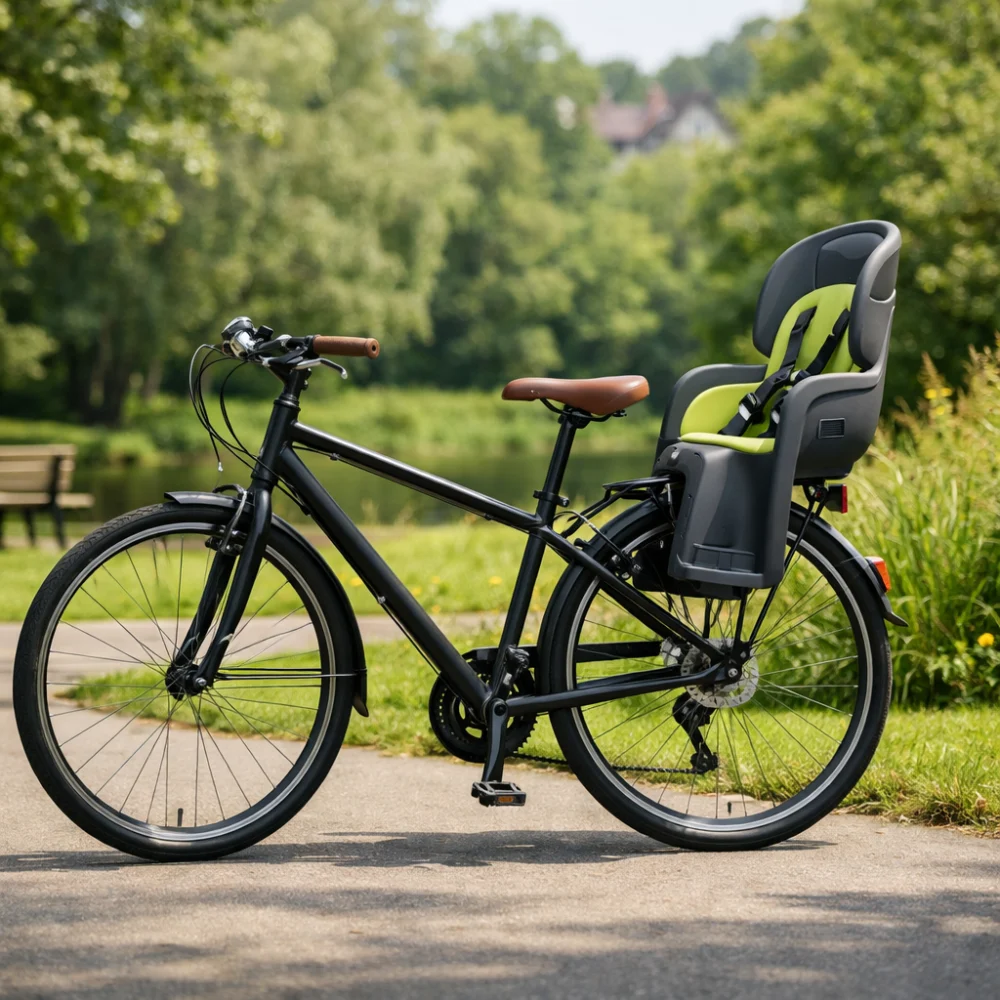

Cycling child seats are for carrying a young passenger on a bike while keeping the ride practical for everyday journeys and family outings. The right choice depends less on brand name and more on fit, position, mounting style and how much support you want for your child.
Some buyers want a straightforward seat for short trips, while others need a setup that works with a particular bike shape or growing child. The key is to compare where the seat sits, how it attaches and whether it matches the rider, the bike and the intended use.
If you are choosing for the first time, focus on compatibility before features. A well-matched seat is usually easier to live with than one that looks more elaborate but does not suit the bike or the child.
Compare Cycling Child Seats


As an Amazon Associate we earn from qualifying purchases.
What should I look for in a cycling child seat?
Start with fit and position, then look at everyday practicality. A front or rear seat changes balance, handling and visibility, so the starting point is whether the seat suits your bike and the age or size of the child it is meant for. After that, compare how securely it mounts, how easy it is to get the child in and out, and whether the seat offers the level of support you want for short rides or regular use.
Specifications vary by model, so always check the individual product page before buying.
| Feature | What it means | Why it matters | What to check |
|---|---|---|---|
| Seat position | Whether the seat fits at the front or rear of the bike | Changes balance, child visibility and how the bike feels to ride | Which position the product is designed for and whether your bike allows it |
| Mounting style | How the seat attaches to the bike | Affects installation, stability and whether it suits your frame or rack setup | Attachment method and any fit notes on the product page |
| Child support | The shape of the seat and the restraint system | Helps keep the child comfortably and securely in place | Harness style, foot support and overall seating support |
| Adjustability | Features that can be changed as the child grows | Can improve usefulness over time | Adjustable straps, footrests or seat position details |
| Ease of use | How simple the seat is to fit, use and remove | Important if the seat will be used often or shared between bikes | Release mechanism, access to buckles and the installation approach |
| Bike compatibility | Whether the seat works with your specific bicycle | Compatibility is often the deciding factor | Frame shape, rack suitability and any exclusions listed by the seller |
Key decision criteria
Seat position: front or rear
Front-mounted seats can make it easier to keep an eye on a younger child, while rear-mounted seats are often chosen when the child is a bit bigger or when a front setup is not suitable. The trade-off is that each position affects the bike differently, so the best option depends on the bicycle and the rider’s comfort with handling changes.
Attachment and compatibility
Some seats rely on a specific frame shape or mounting point, while others need a suitable rear rack or a particular clearance around the bike. This is one of the most important checks because a seat that does not fit properly is unlikely to be practical, even if the rest of the design looks appealing.
Support, restraint and comfort
Look at how the child is held in place and how the seat supports the body during the ride. A secure restraint and sensible foot support matter more than decorative extras. For a short commute, simple support may be enough; for longer or more frequent rides, comfort and adjustability become more important.
Weight and handling
Adding a child changes how the bike feels, especially at low speed and when stopping. Lighter seats may be easier to manage, but the overall setup still depends on the rider, the bicycle and where the child sits. If you are comparing options, think about how stable the bike feels when stationary as well as when moving.
Ease of fitting and daily use
If the seat will be removed often, pay attention to how much effort that takes and whether it can be moved between bikes. For regular family use, a setup that is easy to buckle, secure and adjust may save frustration over time.
Common types and variants
The category is usually centred on a few practical variants rather than many specialised styles. Front-mounted seats suit some younger children and can be convenient for close supervision. Rear-mounted seats are often chosen for a more traditional passenger position and may suit a wider range of bicycles. Some seats are designed with extra support or quick-release features, while others keep the design simpler.
The main limitation is that not every style works with every bike. What looks like a small design difference can change compatibility, balance and the rider’s space on the bike.
Which seat suits which buyer?
| Buyer need | What to prioritise | Why |
|---|---|---|
| Occasional short trips | Simple fit and easy use | Convenience matters more than extra adjustment if the seat will only be used now and then |
| Regular school or nursery runs | Secure mounting and quick everyday access | Frequent use benefits from a seat that is easy to fit, buckle and check |
| Buying for a specific bike | Compatibility first | Frame shape, rack fit and clearance can be more important than any feature list |
| Shared family use | Adjustability and straightforward removal | A seat that is easier to adjust or move can be more practical between riders and bikes |
| Gift or first purchase | Clear product information and simple setup | First-time buyers benefit from fewer assumptions and fewer fit surprises |
Common mistakes and misunderstandings
- Choosing on appearance alone. A seat can look compact or well finished and still be a poor fit for the bike. Always check mounting details first.
- Assuming all child seats fit all bikes. Frame shape, rack use and clearance can make a big difference, so compatibility should be confirmed on the product page.
- Overlooking the day-to-day routine. If you will use the seat often, simple fastening and adjustment can matter more than optional extras.
- Ignoring how the bike will feel with a passenger. A child seat changes balance, turning and stopping feel, so it is worth thinking about your usual routes and parking situation.
Safety and suitability caveats
Choose a seat that is intended for the child’s size and the type of bike you own, and do not rely on assumptions about fit. Check the mounting method, the support provided and any listed limitations before buying. If you are unsure whether a particular bike frame or rack is suitable, treat that as a reason to compare alternatives rather than to force the fit.
Maintenance, storage and everyday care
Most buyers should think about simple upkeep rather than complex maintenance. Dirt, weather exposure and regular fastening and unfastening can all affect how convenient a seat feels over time. If the seat uses pads, straps or removable parts, it is sensible to check how easy they are to clean and whether the seat can be stored dry when not in use.
How to compare options efficiently
- Confirm the bike type and where the seat can mount.
- Decide whether front or rear position suits your riding and your child.
- Compare support, restraint and adjustability for the journeys you actually make.
- Check how easy the seat is to fit, remove and use every day.
- Read the individual product page carefully for compatibility notes before you buy.
Summary buyer decision checklist
- Does the seat suit the age or size of the child you have in mind?
- Will it fit your bike’s frame, rack or mounting area?
- Is the seat position right for your handling and visibility preferences?
- Is the support and restraint system simple enough for regular use?
- Will the seat be easy to clean, store and move if needed?
- Have you checked the product page for any fit limitations or exclusions?
Frequently asked questions
Are front child seats better than rear child seats?
Neither is automatically better. Front seats can be useful when you want the child closer and easier to see, while rear seats are often preferred when you want a more traditional setup or when the front of the bike is not suitable. The best choice depends on the bike, the rider and the child’s size.
Can I use any child seat on any bicycle?
No, not safely or practically. Bike shape, mounting points, frame clearance and rack suitability all matter. Check the product page carefully and make sure the seat is designed for your kind of bicycle.
What matters more: the mounting system or the seat shape?
The mounting system usually comes first because a seat that does not fit properly is not a good option regardless of how comfortable it looks. Once fit is confirmed, seat shape, support and ease of use become the next most important points.
How do I compare different child seats quickly?
Compare position, attachment method, support, adjustability and how easy the seat will be to use every day. If two options look similar, the deciding factor is often compatibility with your bike rather than extra features.
Is a more adjustable seat always the better choice?
Not always. Adjustability can help if you expect to use the seat often or as the child grows, but it is only useful if the seat also fits your bike well and remains simple enough for regular use.
What should I check before ordering a first child seat?
Check the bike type, the mounting method, where the seat sits, and the product page for fit notes. It is also worth thinking about how often you will use the seat, because that affects how important convenience and quick access will be.
Check passenger eligibility and load limits
Before choosing a seat, check its stated child eligibility, including any age, size or weight limits, and consider whether the child can sit comfortably within its support and restraint system. Also check the bicycle’s permitted load and, where relevant, the rack’s limit: a seat being compatible with a bike does not by itself confirm that the complete setup is within those limits.
More Cycling Child Seats
See all 209 Cycling Child Seats →


As an Amazon Associate we earn from qualifying purchases.


