

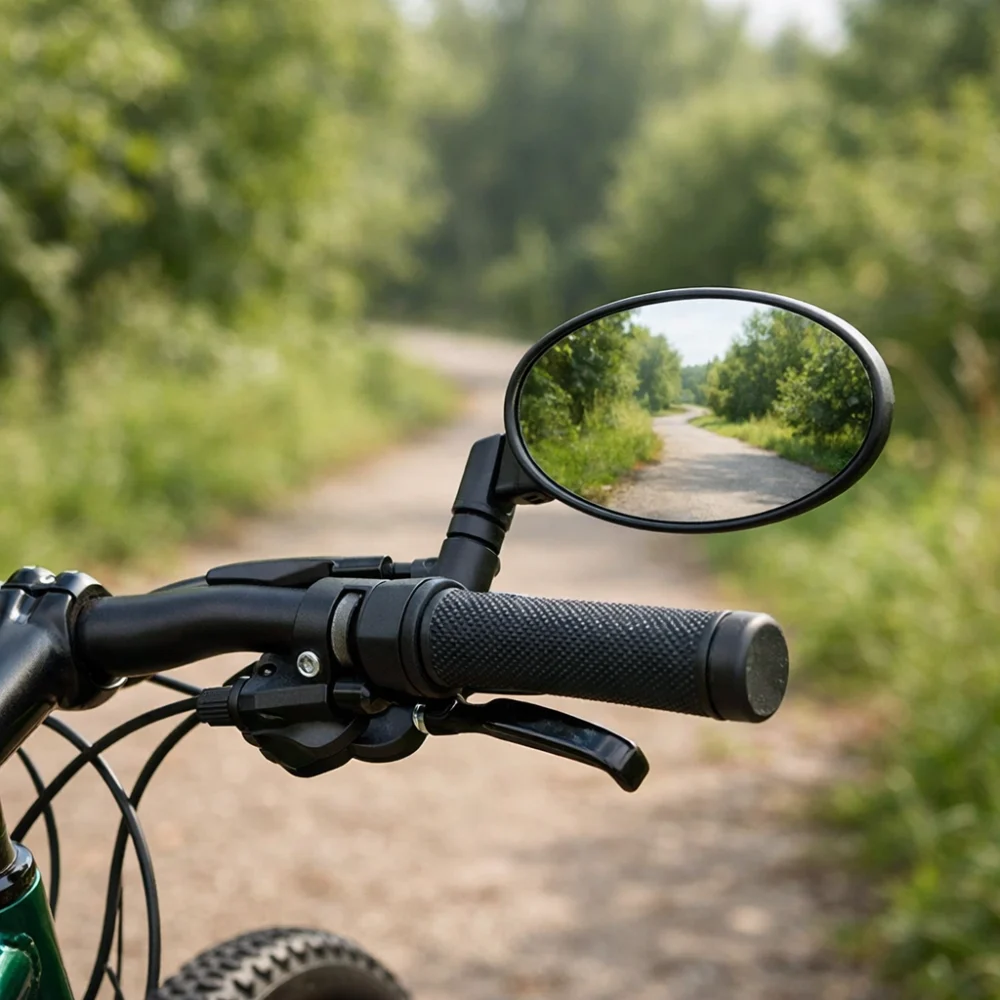

Cycling mirrors are a simple accessory, but they still need a sensible choice. The right mirror depends on where you ride, how much rear visibility you want and how much handlebar or bar-end space you have.
Some riders want a discreet aid for town riding and commuting, while others prefer a wider rear view for longer or busier routes. The main decision is usually between easier visibility and a setup that stays out of the way.
Compare Cycling Mirrors


As an Amazon Associate we earn from qualifying purchases.
What should you look for in a cycling mirror?
Start with fit, mounting style and the amount of rear view you want. A mirror that fits securely and adjusts easily is usually more useful than one that looks large or highly featured but is awkward to position.
For most buyers, the important trade-off is between a compact mirror that is less intrusive and a larger one that may offer a broader view. Specifications vary by model, so always check the individual product page before buying.
| Feature | What it means | Why it matters | What to check |
|---|---|---|---|
| Mounting style | How the mirror attaches to the bike | Determines whether it suits your handlebars or bar ends | Look for the fixing method and where it is designed to sit |
| Adjustability | How easily the mirror angle can be set | Helps you get a useful rear view without constant readjustment | Check whether the mirror offers simple positional adjustment |
| Field of view | How much of the road behind is visible | A wider view can reduce how often you need to turn your head | Look for wording about wide-angle or convex viewing where provided |
| Size and profile | The mirror’s physical presence on the bike | Affects clutter, clearance and how exposed it feels in use | Check whether the design is compact or more prominent |
| Left or right side use | Which side the mirror is intended for | Important for comfortable positioning and natural use | Confirm the side, or whether the mirror can be used on either side |
| Compatibility | Whether the mirror suits your bike setup | A poorly matched mount is the most common reason for disappointment | Compare the product page details with your handlebar or bar-end setup |
Key decision criteria
Where you ride
Urban riding, commuting and shared paths often make rear visibility more valuable because traffic can change quickly. If you ride mainly on quieter roads or off-road routes, you may prefer a smaller mirror that is there when needed but does not dominate the bars.
Mounting position
Cycling mirrors are commonly chosen for either the handlebar end or another bar-mounted position. Bar-end styles can be neat and stable when they suit the bike, while other mounts may be easier to fit in some setups.
Visibility and image clarity
A mirror is only useful if you can get a clear, usable view from your normal riding position. Some riders prefer a broader reflected view, while others care more about a stable image that is easy to glance at quickly.
Stability and adjustment
Look for a mirror that stays where you set it once fitted. If it moves too easily, you will spend more time re-adjusting it and less time benefiting from it.
Left, right or either side
Check whether the mirror is intended for a specific side. This matters because a mirror placed on the wrong side can feel unnatural or be less convenient to use.
Common cycling mirror types
There is not a huge range of fundamentally different mirror categories, but a few practical variants appear often.
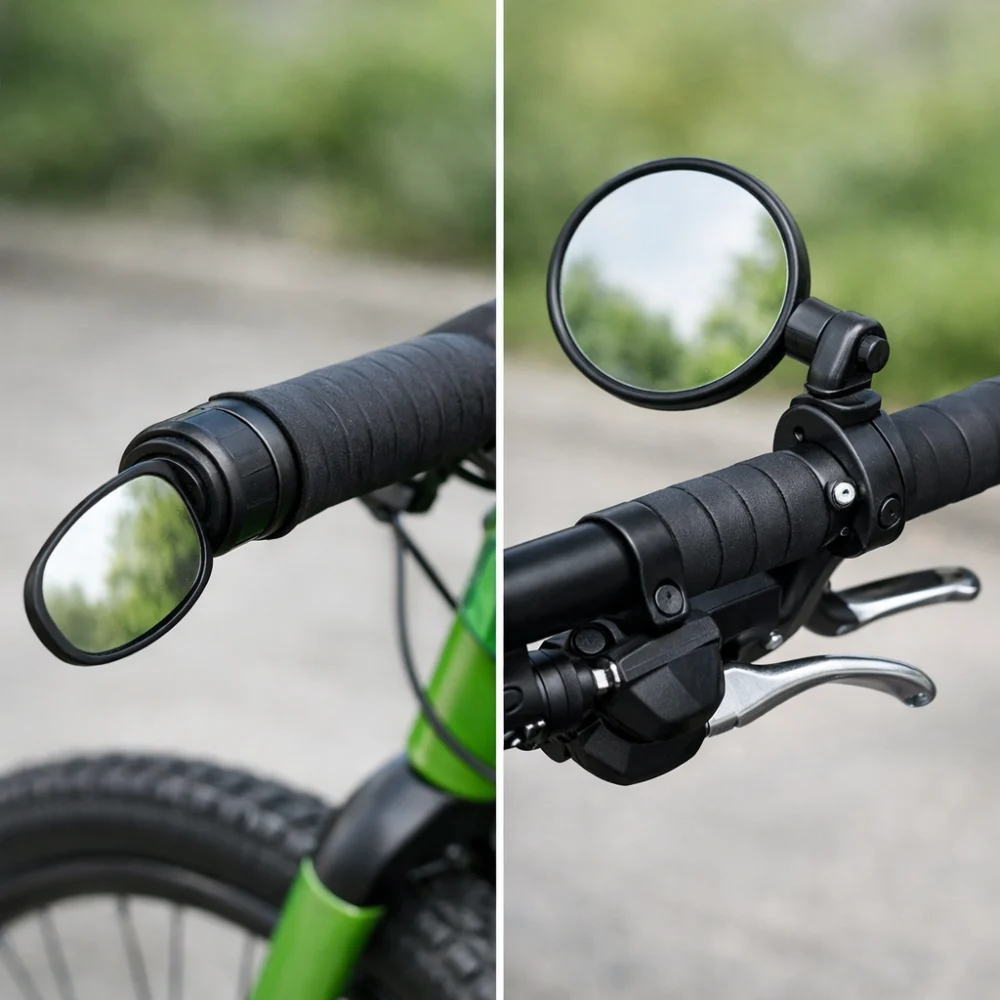
- Bar-end mirrors: Fit into or near the end of the handlebar and can look tidy when matched well to the bike.
- Handlebar-mounted mirrors: Fix more visibly to the bar and may suit riders who want an easier-to-position option.
- Convex mirrors: Usually aimed at giving a wider rear view, though the image can feel smaller than a flat mirror.
- Smaller compact mirrors: Better if you want a low-profile accessory and only need a quick rear glance.
Which type suits you depends on your bike, your riding position and how noticeable you want the mirror to be.
Which mirror suits which rider?
| Buyer need | Likely priority | What to focus on |
|---|---|---|
| Daily commuting | Quick rear checks in traffic | Secure fit, easy adjustability and a useful field of view |
| Leisure riding | Simple extra awareness | Comfort, low fuss and a mirror that does not feel obtrusive |
| Riders with limited neck rotation | Reducing the need to look back often | A stable, easy-to-see mirror positioned for your normal riding posture |
| Compact bikes or tight cockpit setups | Clearance and neat fit | Size, mounting position and whether the mirror will interfere with controls |
| Frequent mixed-surface riding | Durable, secure positioning | How firmly the mirror is held and whether it can be kept in place |
Common mistakes and misunderstandings
- Choosing by appearance alone: A mirror can look suitable but still fit awkwardly on your bike.
- Ignoring side placement: A left- or right-specific mirror may not suit the position you expected.
- Expecting every mirror to give the same view: The angle, shape and size all affect what you can actually see.
- Overlooking handlebar space: Grips, controls and bar ends can limit where a mirror can sit comfortably.
- Assuming adjustment is the same on all models: Some mirrors are easier to set and keep in place than others.
Safety and suitability caveats
A mirror can improve awareness, but it does not replace looking around when needed. Choose a design that suits your bike and riding position, and make sure it does not interfere with braking, steering or hand placement.
If you ride in traffic, use the mirror as a helpful extra view rather than your only way of checking behind. The best option is the one that feels natural enough that you will actually use it.
Maintenance, storage and lifespan considerations
Cycling mirrors are usually low-maintenance, but they still benefit from occasional cleaning and checking that the mount remains secure. A dirty lens or a loose fitting can make the mirror much less useful.
If the mirror is exposed to weather, vibration or frequent folding and adjustment, expect it to need occasional attention. When comparing options, it is worth thinking about how easy it will be to keep clean and correctly positioned.
How to compare options efficiently
- Decide why you want a mirror: commuting, general visibility, comfort or a more compact setup.
- Check where it will mount and whether that suits your handlebar or bar-end layout.
- Compare the view, size and adjustability rather than focusing only on appearance.
- Think about whether you want a low-profile design or a broader rear view.
- Read the individual product details carefully before buying.
Summary buyer decision checklist
- Does the mounting style suit your bike?
- Is the mirror intended for the correct side?
- Will the size and shape fit your riding position?
- Does the product page describe a useful amount of adjustability?
- Will it stay clear of controls, grips and other accessories?
- Does the style match whether you want discreet or wider rear visibility?
Frequently asked questions
Are cycling mirrors worth it?
They can be useful if you want extra awareness of traffic behind you, especially in busier areas. Whether they feel worth it depends on how often you ride and how comfortable you are checking behind without one.
What is the main difference between bar-end and handlebar-mounted mirrors?
Bar-end mirrors usually sit more neatly at the end of the bar, while handlebar-mounted versions may be easier to fit on some bikes. The better choice depends on your cockpit layout and how much space you have.
Do I need a mirror on both sides?
Not usually. Many riders only want one mirror for a quick glance behind, and the correct side depends on personal preference, road position and the product design.
Will a cycling mirror fit any bike?
No, not automatically. Fit depends on the handlebar style, available space and the way the mirror mounts, so it is important to check the product details carefully.
Is a wider mirror always better?
Not necessarily. A wider view can be helpful, but it may also mean a larger or more noticeable mirror, and some riders prefer a smaller design that feels less intrusive.
How often will I need to adjust it?
That depends on the model, how securely it mounts and how rough your rides are. A well-matched mirror should not need constant readjustment once fitted correctly.
Check the mirror view and mounting fit
Mirror shape affects how the reflected view feels. A convex mirror may show a broader area, but objects can appear smaller or seem farther away; a flatter view may feel more familiar while showing less around you. Consider which view you find easier to interpret, and check the product details for the mirror type where this information is provided.
For fit, compare the stated mounting requirements with your handlebar shape and available space. A bar-end design may need an accessible bar end, while other mounts may have their own clamp or positioning requirements. If the product page gives dimensions or fitting details, check these against your bike rather than assuming that a universal-style description guarantees compatibility.
More Cycling Mirrors
See all 247 Cycling Mirrors →


As an Amazon Associate we earn from qualifying purchases.


