

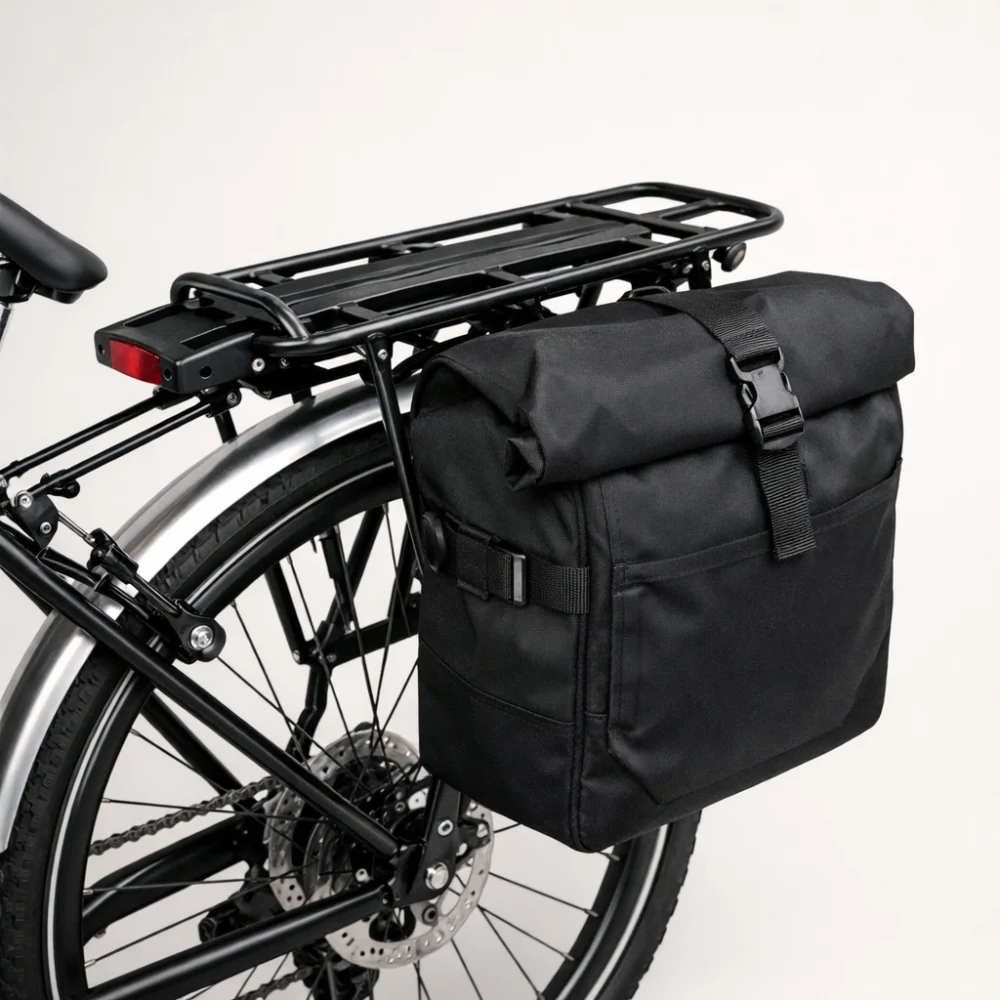

Cycling pannier bags are a practical way to carry shopping, commuting kit or touring essentials without loading your back. The right choice depends less on brand names and more on how the bag mounts, how much you need to carry and whether you ride in dry or wet conditions.
If you are comparing pannier bags for the first time, it helps to think about your rack, your typical load and how often you will take the bag on and off the bike. Small differences in closure, shape and attachment can make a big difference in everyday use.
Specifications vary by model, so always check the individual product page before buying.
Compare Cycling Pannier Bags


As an Amazon Associate we earn from qualifying purchases.
What should you look for in cycling pannier bags?
The best starting point is fit: the bag needs to suit your pannier rack and leave enough clearance for your heel, mudguards and heel movement. After that, focus on the way it opens, how securely it attaches and how easy it is to carry once you are off the bike.
Water resistance, capacity and carrying convenience are the main trade-offs. A more weather-ready bag may close more securely or use more structured materials, while a lighter bag may be easier to handle but less protective in heavy rain.
| Feature | What it means | Why it matters | What to check |
|---|---|---|---|
| Attachment style | How the bag fixes to the rack and stays in place | Affects stability, ease of fitting and removal | Check that it suits your rack shape and that the fastening looks easy to use |
| Capacity | How much the bag can carry | Determines whether it suits commuting, shopping or longer rides | Think about your usual load rather than the biggest trip you might ever do |
| Weather protection | How well the bag helps keep contents dry | Important for commuting and year-round use | Look for the closure style and any mention of water resistance or waterproofing on the product page |
| Shape and size | The bag’s overall profile on the bike | Can affect heel clearance, balance and how the bike feels loaded | Consider whether a slim profile or larger boxier shape better suits your rack and riding style |
| Off-bike carry | How easy it is to carry when you are not riding | Useful for shopping, work or mixed travel | Check for handles, shoulder straps or conversion features if portability matters |
| Visibility and detailing | Reflective elements or bright finishes | Can improve everyday visibility in traffic | Check the product description for any reflective details, but do not assume every bag has them |
Key decision criteria
1. Rack compatibility
Pannier bags are only useful if they work with the rack you already have or plan to buy. The important question is not just whether a bag can hang on a rack, but whether it sits securely and clears the wheel and mudguards. A bag that is awkward to mount may be fine for occasional use but frustrating every day.
2. Capacity and packing style
Think about what you actually carry. A commuter may want room for clothing, lunch and a lock, while a shopper may prefer a bag that opens wide and is easy to pack. Bigger is not always better: an oversized bag can be harder to balance and may encourage overpacking.
3. Weather protection
Different bags handle wet conditions in different ways. Some are designed to resist splashes and showers, while others aim for more thorough protection. If you ride through changeable weather, check how the top closes and whether the bag is described as waterproof or water-resistant on the product page.
4. Carrying comfort away from the bike
If you take the bag into shops, stations or an office, off-bike handling matters. Padded straps, grab handles and neat closures can make a bag feel more convenient day to day. If the bag will usually stay on the bike, this may matter less than stability and weather protection.
5. Loading and access
Some pannier bags are easier to load than others. A wide opening can help with shopping or work gear, while a more structured shape can keep contents organised. The trade-off is that a softer, simpler bag may pack down more easily when empty.
Common pannier bag types and variants
There are a few common styles to compare, even when the category looks straightforward.
- Single pannier bags are useful for lighter loads or one-sided carrying. They can be a simple choice for commuting or short trips.
- Pair-style panniers are better when you want to balance heavier loads across both sides of the rear rack.
- Convertible bags may work as panniers and as shoulder bags or backpacks, which suits mixed travel but can add complexity.
- Top bags and rack bags often prioritise easy access and compact carrying, but they may offer less capacity than full panniers.
The right style depends on whether you value load balance, portability or simple everyday access.
Which pannier bag suits which buyer?
| Buyer need | What tends to matter most | Why it points you in that direction |
|---|---|---|
| Daily commuting | Secure attachment, easy access, weather protection | Regular use rewards quick fitting and reliable everyday handling |
| Shopping and errands | Wide opening, decent capacity, easy off-bike carrying | You need the bag to load and unload quickly at the shop or home |
| Longer rides or touring | Stable fit, balanced loading, durable construction | Comfort and stability matter more when the bag is on the bike for longer |
| Mixed bike-and-walk use | Shoulder strap or handle, sensible size, tidy shape | The bag needs to work both on the rack and when carried around |
| Wet-weather riding | Closure design and stronger weather resistance | Protection from rain becomes a priority rather than a nice extra |
Common mistakes to avoid
- Choosing by capacity alone. A large bag is not helpful if it is awkward on your rack or too bulky for your bike.
- Ignoring heel clearance. Even a well-made bag can be annoying if it sits where your heel naturally moves while pedalling.
- Overlooking how it closes. The opening and closure affect both weather protection and how easy the bag is to use every day.
- Assuming all panniers carry the same way. Some are designed mainly for the bike, while others are easier to take indoors.
- Not checking the product page carefully. Small differences in fitting system or carry options can make one model far more suitable than another.
Safety and suitability checks
For cycling accessories like pannier bags, the main concern is suitability rather than complexity. Make sure the bag is appropriate for the type of rack and riding you have in mind, and do not assume a bag will suit every bike shape or load. Keep weight sensible, and check that the bag does not interfere with wheels, lights or your riding position.
Maintenance, storage and lifespan considerations
Pannier bags are usually low-maintenance, but care still matters. Dirt, road spray and regular use can affect fastenings, fabric and closures over time, so it is sensible to keep the bag clean and dry when possible. If you need a bag for frequent wet-weather riding, look for materials and closures that are suited to that routine, and store the bag somewhere dry when not in use.
How to compare options efficiently
- Decide what you will carry most often.
- Check whether your rack and bike setup suit the bag’s fitting style.
- Compare capacity, closure style and weather protection.
- Think about off-bike carrying if you will use the bag away from the bicycle.
- Read the individual product page closely before you choose.
Summary buyer decision checklist
- Does the bag suit your rack and leave enough clearance?
- Is the capacity right for your usual load?
- Is the closure and weather protection suitable for your riding?
- Will the bag be easy to carry when you are off the bike?
- Does the shape look practical for your type of use?
- Have you checked the individual product details carefully?
Frequently asked questions
Do I need a pannier rack to use pannier bags?
In most cases, yes. Pannier bags are designed to work with a rack, so it is worth checking the product page and making sure your bike has the right setup before buying. Some bags are more adaptable than others, but rack compatibility should always be confirmed rather than assumed.
Are pannier bags better than backpacks for cycling?
They can be, especially if you want to keep weight off your shoulders. A pannier bag can make commuting or shopping feel more comfortable, but it also depends on whether you need the bag to detach quickly and how often you will carry it by hand.
Is waterproof always better than water-resistant?
Not always, because the right choice depends on how wet your rides usually are. Waterproof-style protection can be more reassuring in frequent rain, while water-resistant options may be enough for occasional showers or lighter use. Check the product wording carefully, because those terms are not the same.
What size pannier bag should I choose?
Choose the size that fits your normal use, not the largest possible load. A smaller bag can be neater and easier to handle, while a larger one is better if you regularly carry shopping or work items. If you are undecided, start with the items you carry most often and work from there.
Can one pannier bag be used on either side of the bike?
Some can, but not all. The shape, fastening position and any included fittings can affect whether a bag works comfortably on either side. Always check the product page rather than assuming a bag is reversible or symmetrical.
What matters most for a commuter pannier bag?
For commuting, the main priorities are secure attachment, sensible weather protection and ease of access. If you also carry the bag into work or onto public transport, off-bike handling becomes more important too.
How do I avoid buying a bag that is too bulky?
Look at the bag’s shape as well as its capacity. A compact, well-shaped bag may be easier to live with than a larger one that feels awkward on the bike. Checking how the bag sits on a rack is just as important as checking how much it can hold.
Check what is included and the load limits
Before comparing prices or capacity, confirm whether the listing is for one bag or a pair, and whether any mounting components are included. A bag’s stated capacity is not the same as the load your rack or bike can support: check their respective limits and account for the bag as well as its contents. If the product information does not make the intended quantity or fitting components clear, do not assume they are included.
More Cycling Pannier Bags
See all 246 Cycling Pannier Bags →


As an Amazon Associate we earn from qualifying purchases.


