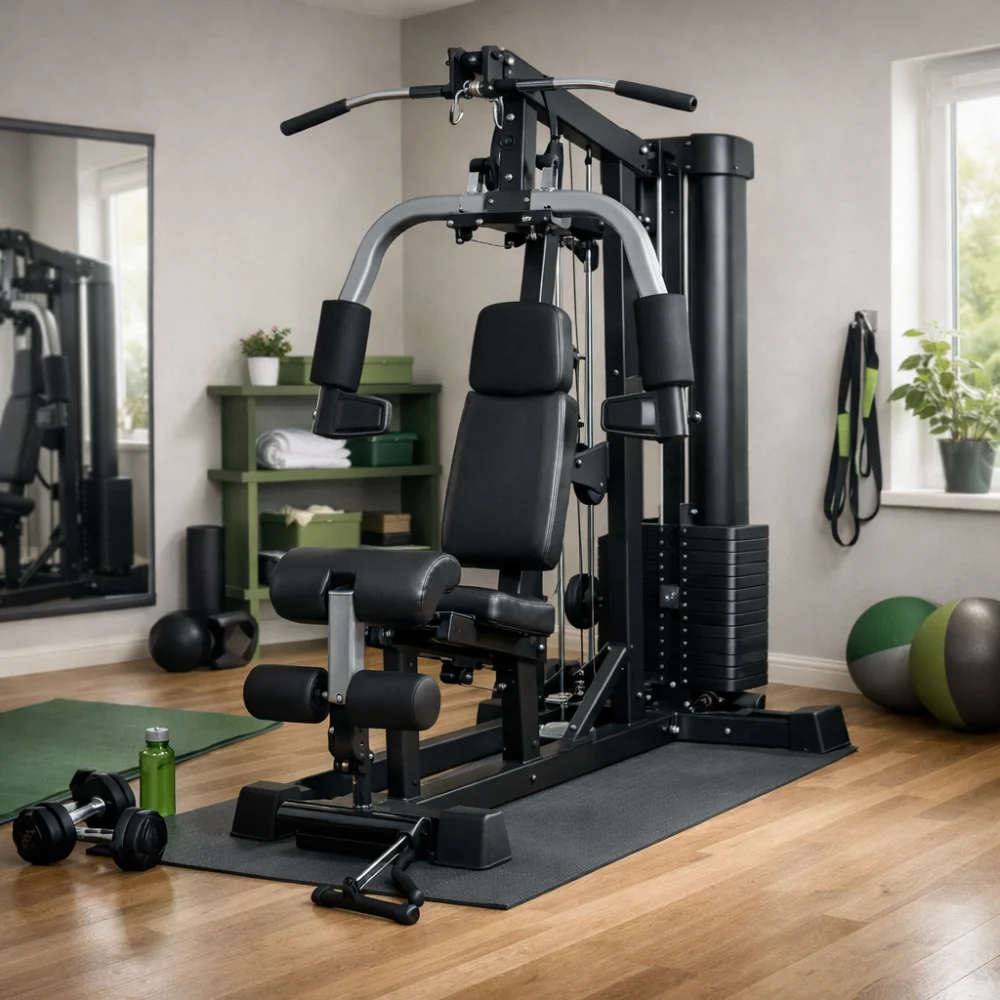
Multi gyms are a practical way to bring several strength-training movements into one machine at home. They are usually chosen by people who want a more compact alternative to a full commercial gym setup, or who prefer a single station that feels organised and predictable to use.
The right choice depends less on headline exercise counts and more on how you plan to train, how much room you have and who will use the equipment. Some buyers want a simple machine for general strength work, while others need a more robust setup for regular sessions and a wider range of movements.
If you are comparing multi gyms for the first time, focus on the exercises you will actually use, the space available in your room and the feel of the resistance system. Specifications vary by model, so always check the individual product page before buying.
What should you look for in a multi gym?
A good starting point is to decide how you want to train. Multi gyms can bring together push, pull and leg exercises in one frame, but different models place the emphasis in different ways. The most useful comparison is not simply how many exercises are listed, but whether the machine supports the movements you will do regularly and whether it fits your home environment.
| Feature | What It Means | Why It Matters | What To Check |
|---|---|---|---|
| Exercise range | The movements the machine is set up to support | Helps you judge whether it covers your main training plan | Look at the listed exercises and ask whether they match your routine |
| Station layout | How the frame and stations are arranged | Affects ease of use, comfort and how much floor space is needed | Check the product page for the overall layout and room requirements |
| Resistance system | How the machine creates resistance for each exercise | Influences the feel of the workout and how training progresses | Confirm how resistance is provided and whether it suits your preferred style of training |
| Adjustment options | How easily the setup can be changed for different users or exercises | Useful if more than one person will use the machine or if you want variety | Check whether pads, seats or arms can be adjusted and how straightforward that is |
| Footprint and clearance | The space the machine occupies and the room needed around it | Important in home gyms where space is limited | Compare dimensions carefully and allow for movement around the machine |
| Build and stability | The overall construction and how solid the unit feels in use | Can affect confidence, comfort and suitability for regular sessions | Look for construction details and any notes about intended use |
Key decision criteria explained
Training goal
Start with the type of training you want to do. Some buyers want a broad, general strength machine for regular whole-body sessions, while others mainly want upper-body work with a few lower-body exercises added in. The clearer your training goal, the easier it is to ignore features you are unlikely to use.
Available space
Home gyms are often bought to solve a space problem, so dimensions matter. A machine that looks manageable in a listing may still need extra clearance for sitting, loading, moving the seat or using attachments comfortably. Measure the intended room before comparing details on any individual listing.
Resistance feel and progression
Buyers often focus on exercise lists and overlook how the machine will feel to use. The resistance system, the way movements travel and the adjustment range all affect whether the machine suits beginners, regular users or a household with different needs. If you want gradual progression, compare the details carefully rather than assuming all multi gyms train the same way.
Ease of adjustment
A machine that is quick to set up is more likely to be used often. If several people will share it, look for simple changes between exercises and clear adjustment points. Complex setups can still be worthwhile, but only if the added versatility matches the effort involved.
Construction and stability
A sturdier frame and a well-planned layout can make a multi gym feel more reassuring in use. That matters if you plan frequent sessions or expect the machine to become a central part of your home gym. Check the product page for the construction details that are actually provided, rather than assuming a similar-looking machine will behave the same way.
Common multi gym types and how they differ
Most buyers will be choosing between a compact single-station setup and a larger multistation arrangement. The right option usually comes down to how many exercises you want available at once and how much room you can give the machine.
- Compact multi gyms suit smaller homes or buyers who want a straightforward all-in-one station. Their main limitation is that they may offer fewer options or less generous adjustment room.
- Multi-station home gyms are better when more than one training position is useful, or when you want a broader range of exercises built into one unit. Their main trade-off is greater size and a stronger need for planning the layout.
- More specialised home gym machines may emphasise a particular movement pattern or training style. They can be a good fit if you already know what you want, but they may feel less flexible to a household with mixed training preferences.
Which multi gym suits which buyer?
| Buyer need | What to prioritise | Why it helps |
|---|---|---|
| First home gym setup | Simplicity, clear exercise list and manageable size | Makes the machine easier to place and use consistently |
| Shared household use | Easy adjustment and enough variety for different users | Helps several people use the same machine without frustration |
| Smaller room or garage | Footprint, clearance and storage practicality | Reduces the risk of buying something that dominates the space |
| Regular strength sessions | Stability, comfortable setup and a resistance feel you can live with | Supports repeat use rather than novelty buying |
| General fitness and variety | Exercise range and ease of switching between movements | Helps keep sessions varied without needing several separate machines |
Common mistakes when buying a multi gym
- Choosing by exercise count alone. A long list can be impressive, but it does not tell you whether the exercises suit your goals or whether the machine fits your room.
- Underestimating space needs. The machine itself is only part of the picture. You also need room to sit, move, load and change position comfortably.
- Ignoring adjustment effort. A model may look versatile but still feel awkward if changing between exercises takes too long.
- Overlooking who will use it. A machine that suits one person well may be less convenient for a household with different heights, preferences or training experience.
- Assuming similar-looking machines perform the same way. Small design differences can affect comfort, layout and the way resistance feels, so compare the actual listing details rather than appearance alone.
Safety and suitability checks
Multi gyms are generally bought for home strength training, but suitability still depends on the user and the space. Check that the machine is intended for the type of use you have in mind, and make sure the room is level, clear and suitable for a large piece of exercise equipment. If more than one person will use it, check that the setup works for the widest range of users in the household.
It is also sensible to read the individual product page carefully for any notes on intended use, assembly needs or space requirements. That is especially important if the machine will sit in a room with limited ceiling height or narrow access.
Maintenance, storage and long-term use
A multi gym is not usually something you store away after each session, so think of it as a fixed part of the room. That makes cleaning, access and the ability to leave enough space around it more important than with smaller home fitness items. Regular light cleaning and keeping the area clear are usually more relevant than complicated maintenance.
If a model uses attachments, moving parts or adjustable sections, it makes sense to consider how easy those parts are to access and keep tidy. The simpler the layout, the easier it is to keep the machine ready for regular use.
How to compare multi gyms efficiently
- Decide how you want to train, and which movements matter most.
- Check the available space and the clearance the machine will need.
- Compare the exercise list, adjustment points and overall layout.
- Look at the construction details and any notes about intended use.
- Read the individual product page carefully before making a final choice.
Summary buyer decision checklist
- Does the machine support the exercises you will actually use?
- Will it fit the room with enough clearance for comfortable use?
- Is the resistance setup suitable for your training style?
- Will the adjustment process work for all intended users?
- Does the construction and layout match how often you plan to use it?
- Have you checked the full individual product page for the details that matter most?
Frequently asked questions
Are multi gyms good for small homes?
They can be, provided you choose carefully. A compact model may be a better fit than a larger multistation machine, but you still need to allow for the space needed to sit, move and train safely. Measuring the room before you compare options is the most useful first step.
What matters more: the number of exercises or the type of exercises?
The type of exercises usually matters more. A long list looks useful, but it is less helpful if it does not match your training plan or if you are unlikely to use most of it. Focus on the movements you will repeat regularly.
Is a larger multi gym always better?
Not necessarily. Larger machines may offer more variety or more than one training position, but they also need more room and may be less suited to a simple home setup. The better choice is the one that matches your space and routine.
Can one multi gym suit more than one user?
Often yes, but only if the adjustment range and setup are practical for everyone who will use it. If the machine will be shared, look carefully at seat positioning, access points and how easy it is to switch between exercises.
What should I check on the product page before buying?
Check the exercise list, dimensions, layout, resistance details and any notes about assembly or intended use. Those are the details most likely to affect whether the machine works well in your home.
Do I need to overthink maintenance?
Usually not, but it is sensible to think about cleaning, access and keeping the area around the machine clear. For a home gym machine, ease of ownership matters more than complicated upkeep.
Why do two similar multi gyms feel so different?
Small differences in frame design, adjustment range and station layout can change the experience a lot. That is why it is worth comparing the actual product information instead of relying on appearance alone.