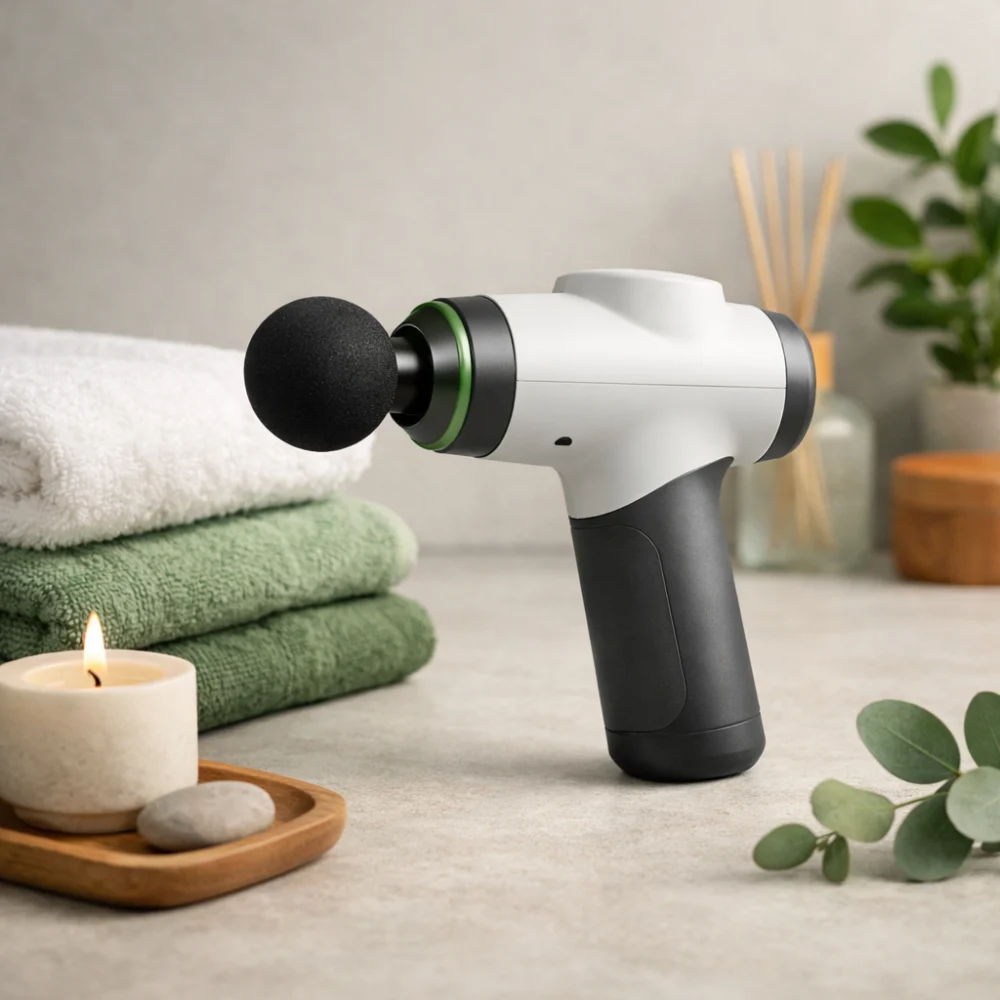
Massagers can be a simple way to target areas that feel tight, tired or overworked, but the right choice depends on where you want to use it and how you prefer the pressure to feel. Some buyers want a hands-free option for the neck and shoulders, while others need a handheld design for more precise control.
This guide focuses on the buying decisions that matter most: fit, comfort, power source, ease of use and how the design suits the body area you want to reach. It is aimed at shoppers comparing different styles rather than choosing a specific model.
Specifications vary by model, so always check the individual product page before buying.
What should you look for in a massager?
The best starting point is the body area you want to address and how much control you want over pressure and movement. A hands-free neck-and-shoulder style is convenient if you want a more relaxed, set-and-use experience, while a handheld massager gives you more control over angle and contact point. The main trade-off is usually convenience versus precision.
Think about the power source, the type of massage action and whether you want a design that can be held in place, draped over the body or moved around as needed. Comfort matters as much as intensity, because a massager that feels too strong, awkward or difficult to position is less likely to be used regularly.
| Feature | What it means | Why it matters | What to check |
|---|---|---|---|
| Format | Handheld, pillow-style, neck and shoulder, or other body-focused shapes | Determines where the massager can be used comfortably | Whether the shape matches the area you want to target |
| Massage action | How the unit creates the massage sensation | Changes the feel, pressure and level of control | The product description for the massage type and any settings mentioned |
| Heat option | Some models include a warming function | May make the experience feel more comfortable for some users | Whether heat is included, and whether it can be used separately |
| Power source | Plug-in, rechargeable or battery-powered | Affects portability and where you can use it | How the unit is powered and whether that suits your routine |
| Controls | Buttons, remote control or simple on-device operation | Influences ease of use during a session | Whether the controls look easy to reach and understand |
| Fit and coverage | How well the design sits on the body and reaches the intended area | Important for comfort and practical use | Any size guidance, shape notes or body-area focus on the product page |
Key factors that shape the right choice
Where you plan to use it
The most important question is whether you want a massager for the neck and shoulders, the back, legs or another area. A compact handheld unit can be easier to aim at specific spots, while a shaped pillow or draped design may be better for sitting still and relaxing. If you choose the wrong form factor, the product may work well in theory but not fit how you actually want to use it.
How much control you want
Some buyers prefer a massager that works in a more fixed position, while others want to move it across different muscles and adjust the pressure themselves. Fixed designs are usually simpler to use, but handheld options can offer better control over placement and contact. If you are buying for another person, consider whether they would rather hold the device or let it do most of the work.
Massage style and intensity
Massagers can feel very different even when they are aimed at the same body area. The key point is not the label alone, but how the action is described and whether the model appears to offer more than one setting. A gentler option may suit someone who wants comfort, while a more focused design may suit a buyer who wants firmer contact. Avoid assuming that a stronger feel is automatically better.
Heat, portability and convenience
Heat can be a useful extra for some shoppers, but it should be treated as a comfort feature rather than the main reason to buy. Portability also matters: a rechargeable or cordless design may suit a sofa, office or travel bag, while a plug-in model may be more suitable for regular use in one place. Consider whether simplicity or flexibility matters more in day-to-day use.
Common types and what they suit
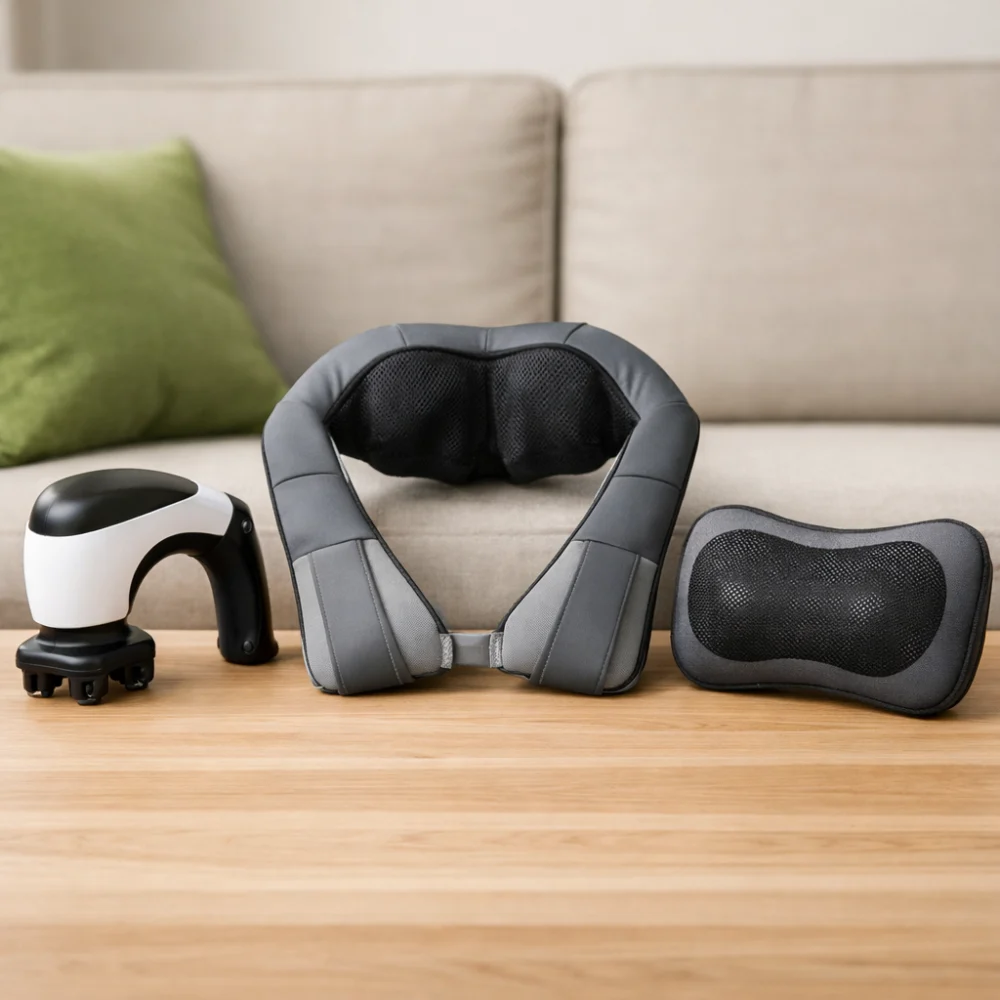
- Handheld massagers: useful when you want to move the device yourself and focus on a specific area. The trade-off is that they require more effort to hold and position.
- Neck and shoulder massagers: shaped for a more hands-free feel and often chosen by buyers who want an easier, more relaxed setup. Their main limitation is that the shape may be less adaptable to other body areas.
- Pillow-style massagers: often used on the back, neck or shoulders while seated or lying in a supported position. They can be convenient, but the fixed shape may not suit everyone equally well.
- Vibration-style massagers: may appeal to buyers who want a lighter sensation or a simpler design. They may feel different from kneading or rolling styles, so it is worth checking the description carefully.
Which type suits which buyer?
| Buyer need | What to prioritise | Why it helps |
|---|---|---|
| Targeting one area precisely | Handheld control and easy manoeuvring | Lets you focus on the spot you actually want to reach |
| Relaxed use with minimal effort | Hands-free or body-shaped design | Reduces the amount of repositioning during use |
| Buying for a shared household | Simple controls and a flexible format | Makes the massager easier for different users to handle |
| Need for portability | Cordless or rechargeable power, if available | More convenient away from a fixed seating area |
| Preference for a gentler feel | Massage style and setting options | Helps avoid a design that feels too intense or too focused |
Common mistakes to avoid
Choosing by appearance alone. A massager can look appealing but still be awkward for the area you want to use it on. Check the shape and intended use first.
Assuming heat is essential. Heat can be useful, but not everyone needs it. It is better to treat it as an extra feature rather than the main buying decision.
Overlooking ease of handling. A device that is heavy, awkward or fiddly may not get used much. Simplicity often matters more than extra functions.
Expecting one design to suit every area. A product made for the neck may not feel right on the legs or lower back. Keep the intended use narrow unless the product page clearly states otherwise.
Safety and suitability notes
Massagers are personal comfort products, so suitability matters as much as features. If you are buying for someone with a health condition, sensitivity to pressure, or any concern about using a massage device, it is sensible to check the product information carefully and seek appropriate advice where needed. Do not assume that every massager is suitable for every body area or every user.
Check the intended use, power source and any notes about who the product is designed for. If the description is vague, treat that as a sign to be cautious rather than to fill in the gaps yourself.
Care, storage and everyday ownership
Most massagers are easier to keep in good condition if they are stored clean, dry and without pressure on cables, pads or moving parts. If a model has removable covers, mains power or rechargeable charging requirements, factor that into how and where you plan to keep it. A product that fits your routine is usually easier to maintain than one that needs extra handling after every use.
It is also worth thinking about cleaning before you buy, especially if the product will be used frequently or shared. Check whether the surface materials and design look easy to wipe down and whether any parts need special care.
How to compare massagers efficiently
- Decide which body area you want to target and whether you want a handheld or hands-free design.
- Compare the massage style, comfort and how much control the user has during use.
- Check the power source, controls and any convenience features such as heat.
- Weigh up portability, storage and how often you are likely to use it.
- Read the individual product page carefully before deciding.
Buyer checklist
- Does the shape suit the body area you want to target?
- Is the massage style likely to feel comfortable for the intended user?
- Do you want handheld control or a more hands-free design?
- Is the power source convenient for where it will be used?
- Are the controls simple enough for everyday use?
- Do any extra features, such as heat, actually add value for you?
- Does the product page give enough information for your needs?
Frequently asked questions
Are all massagers suitable for the same body areas?
No. Massagers are usually designed with a particular area or use pattern in mind, and that affects how comfortable and effective they feel. A neck massager, for example, may not be the best choice if your main interest is more targeted use elsewhere.
Is a more powerful massager always better?
Not necessarily. What feels good depends on the user and the area being targeted, and stronger pressure is not always more comfortable. It is often better to match the style of the device to the intended use than to focus only on intensity.
Should I choose a handheld or hands-free design?
Choose handheld if you want more control over placement and pressure. Choose hands-free if you prefer something easier to use in a seated or resting position. The better option is the one that fits how you expect to use it most often.
Is heat important?
Heat can be a nice extra for some buyers, but it is not essential for everyone. Consider it a comfort feature rather than a deciding factor unless you know you specifically want it.
What should I check on the product page before buying?
Look for the intended body area, massage style, power source, controls and any notes about fit or use. If any of these are unclear, it is better to pause and compare another option rather than guess.
Can one massager be shared by different people?
Sometimes, but only if the design and controls suit everyone who will use it. Shared use makes comfort, hygiene and ease of adjustment more important, so simple and easy-to-clean designs are usually easier to manage.