
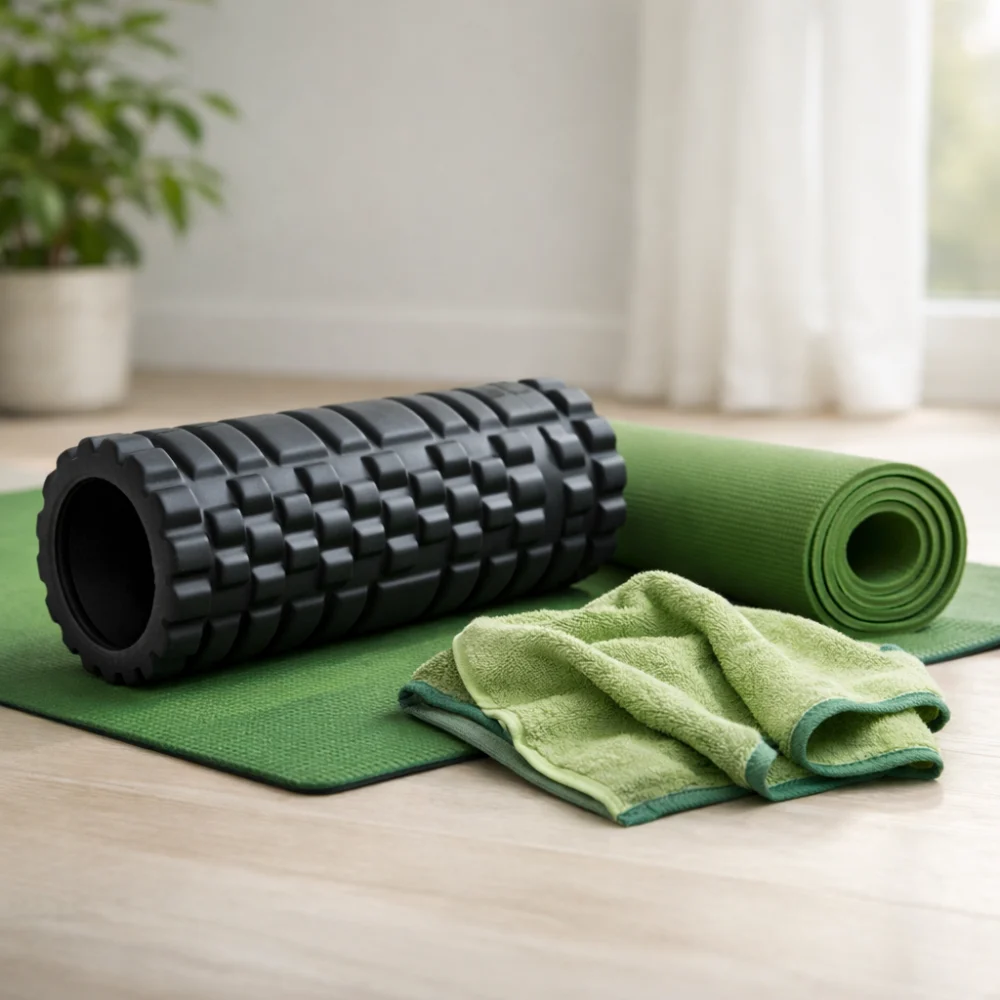
Foam rollers are simple recovery tools used for self-massage, mobility work and loosening up tight-feeling muscles after exercise. They come in a few main forms, and the right choice depends less on brand names and more on how firm, long and comfortable you need the roller to be.
If you are buying one for the first time, the main decision is usually between a smoother roller and one with more texture or a firmer feel. The best starting point is to match the roller to how sensitive you are, where you plan to use it and whether you want a gentle introduction or a more focused massage.
Because this is a broad recovery category, it helps to compare the practical features rather than chase the most aggressive-looking option. Specifications vary by model, so always check the individual product page before buying.
What should you look for in a foam roller?
A good foam roller is the one that suits the area you want to work on and the amount of pressure you are comfortable with. The main trade-off is usually between comfort and intensity: softer rollers feel easier to start with, while firmer or textured rollers can feel more targeted but less forgiving.
| Feature | What it means | Why it matters | What to check |
|---|---|---|---|
| Firmness | How much the roller gives under body weight | Changes the level of pressure you feel during use | Look for the product description to indicate a softer, medium or firmer feel |
| Surface texture | Smooth, lightly textured or more ridged surface | Influences how targeted or gentle the massage feels | Choose a surface that matches your comfort level and intended use |
| Length | The overall size of the roller | Affects stability, coverage and how easy it is to use on different body areas | Check whether the length suits back, legs or smaller muscle groups |
| Diameter | How thick the roller is | Can change comfort, balance and the way pressure is applied | Compare the listed dimensions if you have a preferred feel or storage space |
| Construction | The roller’s shape and internal build | Influences weight, feel and how the roller behaves under pressure | Read the description for the type of build, especially if you want a more supportive roller |
| Intended use | Whether it is aimed at general recovery, mobility or more focused massage | Helps you avoid choosing a roller that is more intense than you need | Match the wording to your routine rather than assuming every roller serves the same purpose |
Key decision criteria explained
Firmness and pressure
Firmness is one of the most important factors because it changes how strong the roller feels against your body. A softer roller is often more approachable if you are new to foam rolling or prefer a gentler sensation. A firmer roller may suit people who want more pressure, but it can feel harsh if you are not used to it.
Surface shape and texture
Smooth rollers are usually easier to understand and can feel more even across larger areas. Textured rollers may feel more focused on specific points, which some buyers like for a deeper massage sensation. The trade-off is that more texture can also mean more intensity, so it is worth checking the product images and description carefully.
Length and stability
Longer rollers can feel more stable for back work and larger muscle groups, while shorter rollers may be easier to store and carry. If you mainly want general lower-body use, a compact roller may be enough. If you want more support when lying along the roller, length becomes more important.
Shape and construction
Some foam rollers are simple cylindrical designs, while others use a hollow-core or structured build to change the way pressure is delivered. That can affect how the roller feels, how supportive it seems and how it fits into your routine. In this category, construction is mainly about feel and usability rather than a single universal advantage.
Product types and variants
The main variation in this category is between smooth rollers and more textured rollers. Smooth rollers are the simplest option and are usually easier for beginners. Textured rollers may give a more intense sensation and can feel more specific, but they are not automatically better for everyone.
You will also see different lengths and builds. Longer rollers tend to be better for broader movements and more stable positioning, while shorter rollers may be more convenient if space is limited or you want something easier to pack away. The right variant depends on how and where you plan to use it.
Which foam roller suits different buyers?
| Buyer need | What to prioritise | Why |
|---|---|---|
| Beginner or occasional user | Smoother surface, moderate firmness | Usually more comfortable and easier to get used to |
| Regular gym user | Firmness that matches your tolerance, size that suits your routine | Helps the roller feel practical for repeated use |
| Someone focused on mobility work | Stable shape and a length that suits the body areas you work on | Support and reach matter more than a highly aggressive surface |
| Buyer with limited storage space | Shorter roller or compact build | May be easier to keep at home or take to the gym |
| Buyer wanting stronger pressure | Firmer construction and more textured design | Can deliver a more targeted feel, if you are comfortable with it |
Common mistakes to avoid
- Choosing the firmest option straight away: a roller that feels too hard can put you off using it regularly.
- Ignoring the size: a roller that is awkward to store or too short for the way you want to use it may not suit you in practice.
- Assuming texture is always better: more texture can mean more sensation, but not necessarily more comfort or better usability.
- Overlooking the intended use wording: some rollers are presented as general recovery tools, while others are aimed at more focused massage.
Safety and suitability
Foam rollers are straightforward products, but comfort and suitability still matter. If you are sensitive to pressure, choose a gentler option rather than assuming a more intense roller will be better. If you have a health concern, recent injury or ongoing pain, check whether the product is appropriate for your situation before use.
Maintenance, storage and lifespan considerations
Foam rollers are usually low-maintenance, but the buying decision should still consider how you will keep and use one. A simple design may be easier to wipe clean and store, while a larger roller needs more space. Over time, the feel of the roller may change with repeated use, so it is worth choosing a build that looks suitable for the amount of use you expect.
How to compare foam rollers efficiently
- Decide whether you want gentle recovery support or a firmer, more targeted feel.
- Choose between a smooth and textured surface based on comfort and experience level.
- Check the length and diameter to make sure the roller suits your body areas and storage space.
- Look at the product description for the build and intended use rather than relying on appearance alone.
- Compare only the options that match your comfort level and routine.
Foam roller buyer checklist
- Have I chosen the right firmness for my comfort level?
- Does the surface style match the kind of massage feel I want?
- Is the length suitable for the body areas I plan to use it on?
- Will the size fit my storage space or gym bag?
- Does the product description fit my intended use?
- Have I checked the individual product page for the exact details?
Frequently asked questions
What is a foam roller used for?
A foam roller is commonly used for self-massage, mobility work and general recovery after exercise. People choose them to apply pressure to muscles in a controlled way, but the feel depends heavily on the roller’s firmness and surface. It is best to think of them as a practical recovery aid rather than a one-size-fits-all solution.
Is a textured foam roller better than a smooth one?
Not always. A textured roller may feel more targeted, but that can also make it less comfortable for beginners or for anyone who prefers a gentler experience. A smooth roller is often the safer starting point if you are unsure what pressure you like.
Does the length of the roller matter?
Yes, because it affects stability, storage and how easily you can use the roller on different parts of the body. Longer rollers may feel more supportive for broader areas, while shorter ones can be easier to store and carry. The right choice depends on how you plan to use it.
Are foam rollers difficult to use?
They are usually straightforward, but the level of comfort varies. If the roller is too firm or too textured for your preference, it can feel more intense than expected. Picking a gentler option makes it easier to start.
Can I use one foam roller for different exercises?
Often, yes, because many rollers are versatile recovery tools. That said, the best choice still depends on what you want to do with it, whether that is gentle mobility work or more focused pressure. Check the product description so the roller suits your routine.
What should I check before buying online?
Check firmness, surface style, length, diameter and the intended use wording. Those details tell you more about how the roller is likely to feel than the category name alone. If anything is unclear, the individual product page should be the final reference.