

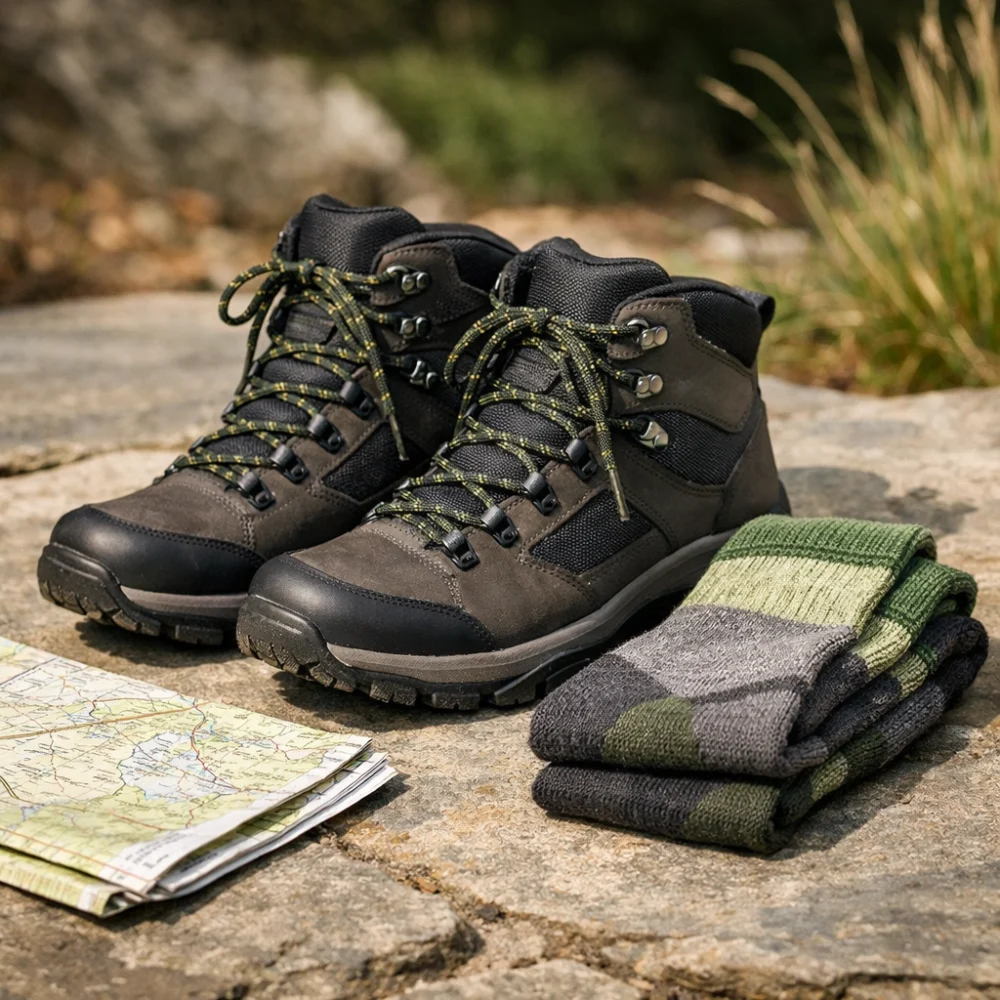

Men’s hiking boots are built for outdoor walking where ordinary shoes may not offer enough grip, protection or support. The right pair depends on the ground you walk on, how much load you carry and how much weather protection you need.
Some buyers want a boot for regular countryside walks, while others need something sturdier for rougher terrain, wetter conditions or longer days out. The main challenge is balancing support, comfort, flexibility and weight.
Because hiking boots vary a lot between models, it helps to focus on the features that affect how they feel and perform rather than on the label alone.
Compare Men's Hiking Boots


As an Amazon Associate we earn from qualifying purchases.
What should you look for in men’s hiking boots?
The best starting point is fit, followed by sole grip, ankle height, weather resistance and overall comfort. A boot that seems more substantial is not automatically better; the right choice is the one that suits your walking terrain and the amount of protection you actually need.
Specifications vary by model, so always check the individual product page before buying. If you walk mostly on well-made paths, a lighter boot may be enough; if you often face muddy tracks, uneven ground or heavier packs, more structure can be useful.
| Feature | What It Means | Why It Matters | What To Check |
|---|---|---|---|
| Fit | How the boot sits on your foot through the heel, toe and instep | Fit affects comfort, stability and how likely you are to get rubbing | Length, width, toe room and whether the boot suits the socks you plan to wear |
| Support | The amount of structure through the upper and sole | More support can feel steadier on uneven ground or on longer walks | How stiff the sole feels, how secure the heel is and whether the upper holds the foot well |
| Grip | The tread pattern and outsole design | Good grip helps on loose, muddy or sloping surfaces | Tread depth, pattern and whether the sole looks suited to the terrain you face most often |
| Weather protection | How well the boot resists wet conditions and general outdoor use | Useful if you walk in rain, wet grass or muddy ground | Any waterproofing or weather-resistant claims on the product page and how much breathability matters to you |
| Weight and flexibility | How heavy and easy to move in the boot feels | Lighter, more flexible boots can be less tiring on easier routes | Whether you prefer a more agile feel or a firmer, more protective boot |
Key decision criteria
Terrain
Think about where you actually walk. Well-surfaced paths and moderate countryside routes usually need less boot than rocky trails, wet fields or steep ground. A more robust boot can help on uneven terrain, but it may feel less flexible on easier walks.
Weather and moisture
If you often walk in damp conditions, weather resistance becomes an important deciding factor. That does not mean every buyer needs the heaviest waterproof boot available. In milder or warmer weather, too much protection can make the boot feel warmer than necessary.
Support versus freedom of movement
Support can be helpful if you want a steadier feel or carry a rucksack, but extra structure often means less softness underfoot. A more flexible boot may feel more comfortable straight away, while a firmer boot may suit buyers who prefer a planted feel.
Weight
Boot weight affects how tiring the footwear feels over time. Lighter boots are often easier for everyday use and shorter walks, while heavier boots may offer a more substantial feel. The right balance depends on whether you prioritise all-day ease or added structure.
Ankle height
Higher-cut boots can offer more coverage and a more secure feel around the ankle, while lower-cut designs may move more freely. Height alone is not a guarantee of better support, so it is worth judging the overall construction rather than the collar height in isolation.
Product types and variants
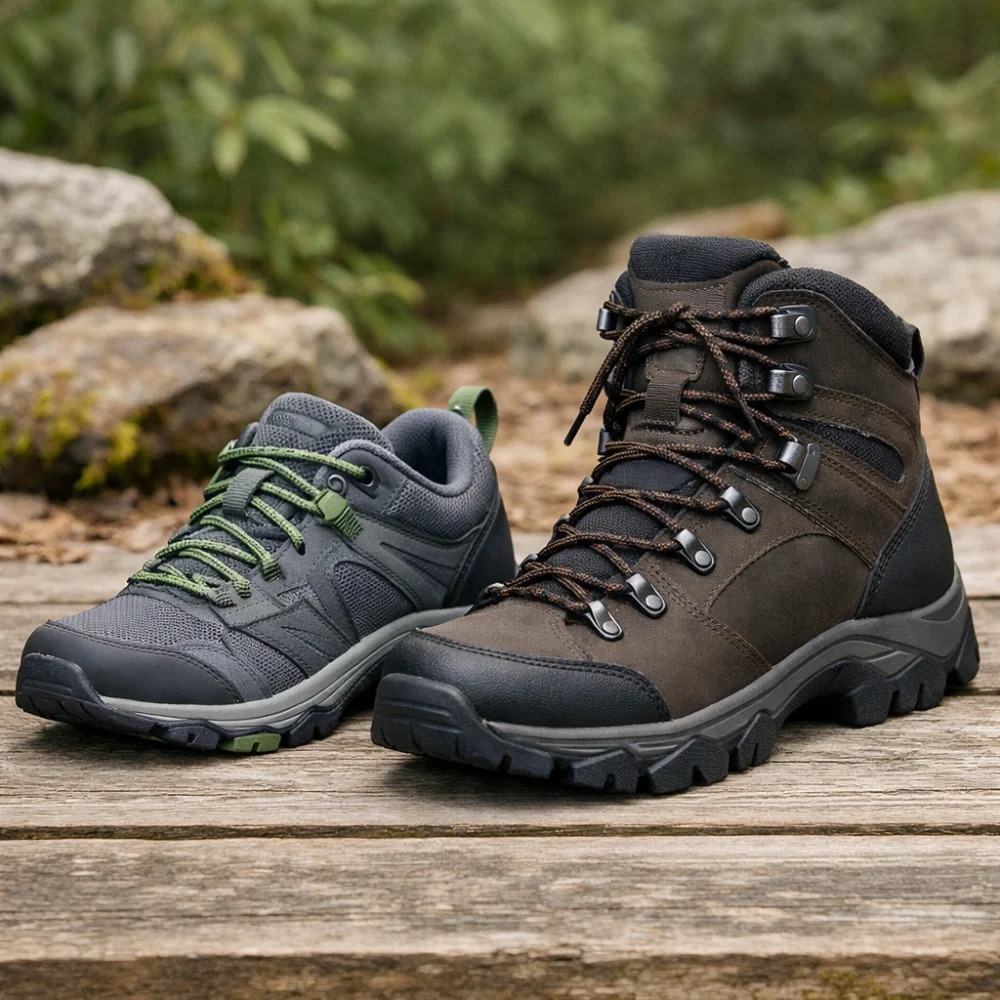
Within men’s hiking boots, the main differences are usually around cut, weight and weather focus rather than highly technical specialisation.
- Lightweight hiking boots: Often chosen by walkers who want a softer, more agile feel for easier routes and regular use.
- Mid-cut hiking boots: A common choice for buyers who want a balance of support, protection and flexibility.
- More robust hiking boots: Suited to tougher ground, heavier loads or buyers who want a firmer feel underfoot.
The trade-off is usually comfort versus structure. More boot can mean more reassurance on difficult ground, but it can also reduce freedom of movement and add weight.
Which boots suit different buyers?
| Buyer need | What usually matters most | Why |
|---|---|---|
| Regular walkers on maintained paths | Comfort, moderate grip and a lighter feel | You may not need the most rigid or heavily protected option |
| Wet-weather walkers | Weather protection, secure fit and a sole suited to slippery surfaces | Damp ground and rain make traction and moisture management more important |
| Rough-terrain hikers | Support, sturdier construction and reliable grip | Uneven ground can place more demands on the boot’s structure |
| Buyers carrying a rucksack | Foot stability and comfortable support over long periods | Extra load can make a secure, well-fitting boot more valuable |
| Value-focused buyers | Fit and the few features that match actual use | It is usually better to pay for the traits you need than for extras you will not notice |
Common mistakes to avoid
- Choosing by appearance alone: A boot that looks rugged may not suit your foot shape or walking habits.
- Overbuying for the terrain: If you mostly walk on easy routes, an overly stiff boot may feel unnecessary.
- Ignoring sock choice: Hiking socks affect fit, so consider the thickness you will actually wear.
- Assuming all waterproof boots feel the same: Weather resistance, breathability and comfort can vary by model.
- Forgetting about break-in: Some boots feel fine immediately, while others need time to soften and settle.
Safety and suitability checks
Check that the boot suits the kind of walking you do most often, especially if you move between dry paths, muddy ground and rougher terrain. A boot that is too heavy, too stiff or too warm for your use can reduce comfort and make walking less enjoyable.
Also check the product information for sizing guidance and any model-specific notes about weather protection or construction. If you have particular foot comfort concerns, a careful fit check matters more than any broad category label.
Maintenance, storage and lifespan
Hiking boots usually last longer when they are cleaned after muddy use and allowed to dry naturally. Storage in a cool, dry place helps preserve materials, and the way a boot ages will depend on how often you wear it and the conditions you walk in.
If a model has waterproofing or treated materials, keep in mind that performance can change over time with use. That makes care and realistic expectations part of the buying decision, not just the initial price or appearance.
How to compare options efficiently
- Start with your main walking conditions: easy paths, mixed countryside or rougher terrain.
- Decide how much support, weather protection and weight you are prepared to balance.
- Compare fit-related details first, then check the sole and upper construction.
- Look for the trade-off that matters most to you, such as lightness versus structure.
- Read the individual product page carefully before deciding.
Summary checklist
- Does the fit suit your foot shape and the socks you wear for walking?
- Is the level of support appropriate for your terrain and load?
- Does the grip look suitable for the surfaces you walk on most?
- Is the weather protection level practical for your usual conditions?
- Does the weight feel like a sensible balance for comfort and structure?
- Have you checked the individual product page for model-specific details?
Frequently asked questions
Are hiking boots better than walking shoes?
Not always. Hiking boots usually make more sense when you want extra support, more coverage or better protection on rougher ground. For easier routes, some walkers prefer the lighter, freer feel of walking shoes.
Do I need waterproof hiking boots?
Only if your walking conditions justify them. Waterproofing is useful in wet weather, muddy fields and damp grass, but it can feel warmer than a non-waterproof option. Think about the conditions you face most often rather than choosing waterproofing by default.
Should I choose a high or mid-cut boot?
The cut affects how the boot feels, but it is not the only thing that matters. Mid-cut boots often give a practical balance for many walkers, while higher cuts may suit those who want more coverage or a firmer feel. Fit and overall structure still matter more than collar height alone.
How much should hiking boots move when I walk?
They should feel secure rather than loose. Too much movement can lead to rubbing and instability, while a boot that feels overly tight may become uncomfortable on longer walks. Try to judge how the heel, midfoot and toe area work together.
Do hiking boots need breaking in?
Some do and some feel comfortable more quickly. It depends on the materials and construction of the individual model. A short, careful wear-in period before a longer walk is often sensible when the boot feels new or firmer than you expected.
Can I use hiking boots for everyday wear?
Yes, if the boot feels comfortable enough for day-to-day use. Just remember that a more technical or heavy boot may be less convenient for everyday walking than a lighter option. Choose based on how often you will wear it and what you want it to do.
What matters more: tread or upper material?
Both matter, but in different ways. Tread helps with grip, while the upper contributes to comfort, support and protection. If you walk in mixed conditions, it is worth checking both rather than focusing on just one feature.
More Men's Hiking Boots
See all 701 Men's Hiking Boots →


As an Amazon Associate we earn from qualifying purchases.


