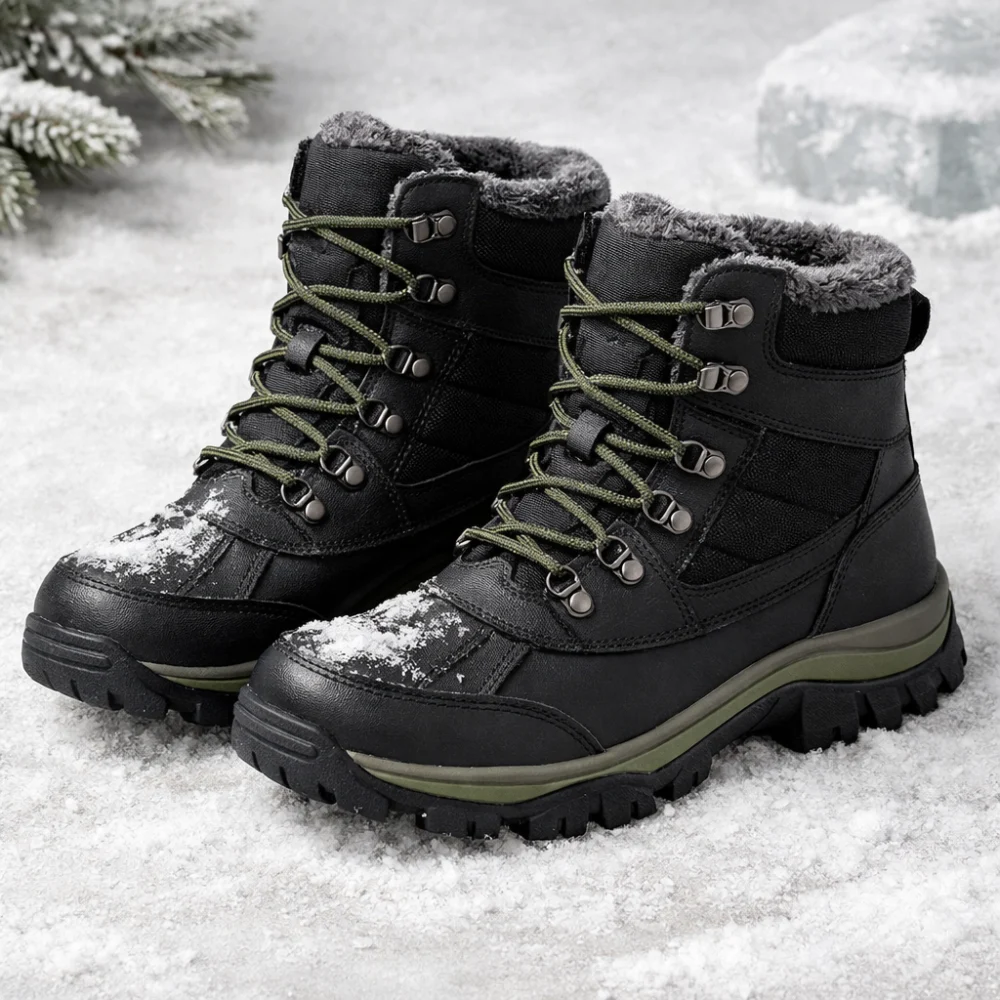
Men’s snow boots are designed for cold-weather wear when ordinary walking shoes or lighter boots may feel too exposed. Buyers usually want a balance of warmth, water resistance, grip and comfort, but the right choice depends on where and how the boots will be used.
This guide focuses on the decisions that matter before you buy: how much insulation you need, how much weather protection to expect, and whether you want a boot that is easier to walk in or one that is better suited to deeper cold and slush.
Because product details vary, it helps to compare the information on each listing carefully rather than assume all snow boots behave the same. Specifications vary by model, so always check the individual product page before buying.
What should you look for in men’s snow boots?
The best starting point is your likely conditions. If you expect wet pavements, slush and short periods outdoors, a lighter, easier-to-wear boot may be enough. If you spend longer periods in colder weather, or want more protection from snow and damp ground, look more closely at warmth, coverage and sole grip.
The main trade-off is usually between protection and flexibility. More coverage and insulation can improve comfort in cold conditions, but the boots may feel bulkier and less breathable. A simpler pair can be easier for everyday use, but may offer less margin in harsher weather.
| Feature | What it means | Why it matters | What to check |
|---|---|---|---|
| Warmth | How much cold protection the boot is designed to provide | Affects comfort in low temperatures and when standing still | Look for the lining, insulation description and how the boot is intended to be used |
| Water resistance | How well the boot handles wet snow, slush and rain | Helps keep feet drier in winter conditions | Check whether the product is described as waterproof or water-resistant and note any limits |
| Grip | The outsole’s ability to hold on wet or slippery surfaces | Important on pavements, paths and uneven winter ground | Look at the sole pattern and any mention of traction or winter-focused tread |
| Fit and entry | How easy the boot is to put on and how it feels on the foot | Matters for comfort, convenience and wearing thicker socks | Check the fastening style, shaft opening and any width or size notes |
| Coverage | How much of the lower leg the boot covers | Affects snow protection and warmth around the ankle and calf | Compare ankle, mid-calf and taller profiles if these are mentioned |
| Weight and bulk | How heavy and substantial the boot feels when worn | Can affect comfort for longer walks or daily wear | Read the product description for cues about a lighter or sturdier build |
Key decision criteria
Warmth and lining
Warmth is one of the main reasons people buy snow boots, but the level you need depends on use. For short journeys and mild winter conditions, a modest lining may be enough. For longer time outdoors or colder temperatures, buyers often want a boot that offers more insulation and a more enclosed feel.
Do not assume a soft lining automatically means a boot is suitable for very cold weather. Check how the product describes its intended conditions and look for clues about overall construction as well as the lining itself.
Waterproof or water-resistant
These terms are often confused. Waterproof usually suggests stronger protection against wet conditions, while water-resistant can mean the boot handles light or moderate moisture but is not intended for prolonged soaking.
If you expect slush, puddles or wet snow, this is a crucial detail. Also think about where water may enter: the upper material, tongue area and top opening can all affect how well the boot performs in real use.
Outsole grip
Grip matters as much as warmth for winter walking. A boot that feels cosy but slips on wet paving is not a good fit for many everyday buyers. Winter-style tread patterns can help, but the best choice still depends on where you walk most often.
For mixed use, look for a sole that seems suitable for paved paths as well as occasional uneven ground. Deep tread can be useful, but it may not feel as smooth on harder surfaces.
Height and coverage
Snow boots vary from ankle-height styles to taller options that cover more of the lower leg. Lower styles are often easier to walk in and may feel less restrictive, while taller designs can help with snow protection and warmth.
The right height depends on whether you mainly need everyday winter footwear or something more protective for snowier conditions. Taller is not automatically better if you want flexibility and lighter wear.
Fit, width and sock room
Fit is especially important with winter boots because many people wear thicker socks in colder weather. A boot that feels fine with a thin sock may become tight once winter layers are added. At the same time, too much extra room can reduce comfort and stability.
If the listing gives width information, size notes or details about a slip-on, lace-up or adjustable opening, use those clues to judge whether the boot is likely to suit your feet and usual socks.
Types and variants within the category
Men’s snow boots are not all the same, even when they share the same purpose. Some are made for daily winter use with a simple, practical shape. Others focus more on coverage, warmth or a sturdier feel for more demanding weather.
- Slip-on styles: Convenient for quick wear, but they may offer less adjustability than lace-up designs.
- Lace-up styles: Often easier to fine-tune for fit, especially if you want room for thicker socks.
- Mid-calf or taller boots: Usually chosen for more coverage and a more weather-protective feel.
- Lower-profile winter boots: Can be easier for everyday walking, but may provide less snow protection.
The most suitable variant depends on whether you value ease, coverage, adjustability or all-day comfort more highly.
Which type suits which buyer?
| Buyer need | Helpful features | Why that fit makes sense |
|---|---|---|
| Everyday winter walking | Comfortable fit, decent grip, practical water resistance | Useful for commuting, errands and mixed pavement use |
| Colder or snowier conditions | More coverage, stronger warmth, better weather protection | Helps when exposure to cold or snow is more frequent |
| Easy on and off | Simple entry, slip-on design or straightforward fastening | Convenient for regular short outings |
| Thicker socks or wider feet | Roomier fit, width information, adjustable closure | Improves comfort and reduces the risk of a cramped feel |
| Longer walks | Balanced weight, stable sole, comfortable fit | Helps avoid a boot that feels too bulky over distance |
Common mistakes to avoid
- Choosing warmth without checking grip: A very warm boot is still a poor choice if it feels unsafe on wet ground.
- Assuming all winter boots are waterproof: Check the actual wording on the product page rather than relying on the category alone.
- Ignoring sock thickness: Winter wear often needs a little extra room, so fit should be judged in context.
- Picking more coverage than you need: Taller boots can be useful, but they are not always the most comfortable option for everyday use.
- Overlooking ease of walking: A bulky boot may feel fine indoors but tiring over a full day outside.
Safety and suitability caveats
Snow boots are a seasonal footwear choice, not a guarantee of safe footing or dry feet in every condition. Surface ice, deep slush and prolonged wet weather can still create problems, so it is worth reading the product description carefully and matching the boot to the situation you expect.
If you need footwear for frequent harsh weather, long outdoor periods or specific work conditions, make sure the individual product page clearly supports that use rather than assuming a general winter boot will be enough.
Care, storage and everyday ownership
General upkeep matters because winter footwear is exposed to salt, moisture and dirt. After use, it is sensible to let boots dry properly before storing them, and to keep them clean according to the material used. Some finishes need a little more attention than others, so the upper material is worth checking before you buy.
If you plan to wear the boots regularly, think about how easy they will be to dry, clean and store between outings. A pair that is simple to look after can be more practical than one that needs frequent attention.
How to compare options efficiently
- Decide where you will wear them most often: short daily journeys, colder walks or snowier conditions.
- Choose the level of coverage and warmth that suits that use.
- Compare grip, weather resistance and fit rather than focusing on one feature alone.
- Check whether the boot will work with your usual socks and how easy it is to put on.
- Read the individual product page for the exact description, because details can differ between models.
Summary buyer decision checklist
- Have you matched the boot to your likely winter conditions?
- Does the warmth level suit how long you will be outside?
- Is the water protection described in a way that fits your use?
- Does the sole look suitable for the surfaces you walk on?
- Will the fit work with your usual socks?
- Is the height right for the balance of coverage and comfort you want?
- Have you checked the individual product page for any model-specific details?
Frequently asked questions
Are snow boots the same as winter boots?
Not always. Snow boots usually suggest stronger protection for snow, slush and colder conditions, while winter boots can be a broader category with less specific weather focus. Always check the product description to see how the boot is intended to be used.
Do I need waterproof snow boots?
If you expect wet snow, slush or frequent puddles, waterproofing is often worth prioritising. If you only need occasional cold-weather wear, water resistance may be enough. The right choice depends on how exposed the boots will be.
Should I size up for thick socks?
Sometimes, but not automatically. A better approach is to check the product’s fit notes and consider whether the boot already allows enough room. Too much extra space can make walking less comfortable.
Is a taller boot always warmer?
Not necessarily. Height can help with coverage and reduce exposure, but overall warmth also depends on the lining, construction and how the boot fits. A tall boot that fits poorly may still feel cold.
Are snow boots suitable for everyday walking?
Many are, provided the fit and weight feel comfortable for regular use. For long pavement walks, a lighter and more flexible boot may be easier to wear than a very bulky one. Think about how often you will actually use them.
What matters more: lining or sole grip?
Both matter, but the most important feature depends on your conditions. Warmth helps in cold weather, while grip helps on slippery surfaces. For many buyers, a balanced boot is better than one that excels in only one area.