

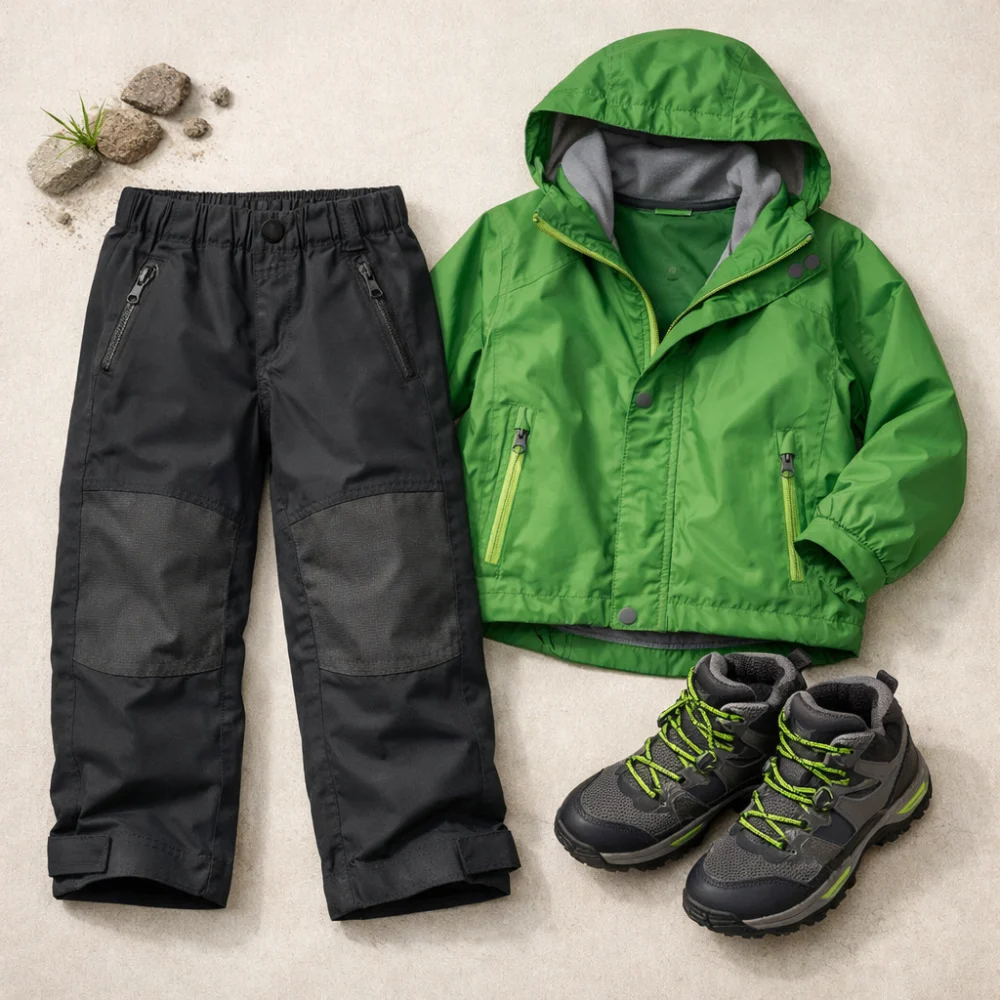

Kids’ softshell trousers are a practical choice for active days outdoors when you want more comfort and flexibility than hard waterproof bottoms usually provide. They are often chosen for walking, school trips, forest adventures and cooler-weather play.
The main decision is how much weather protection you need versus how breathable and easy to move in the trousers should feel. That balance matters because children often want trousers they can wear for long periods without feeling stiff, hot or restricted.
Because product details vary, it helps to look at the fabric build, lining, fastening style and intended use rather than assuming every softshell trouser will perform the same way.
Compare Kids Softshell Trousers


As an Amazon Associate we earn from qualifying purchases.
What should you look for in kids’ softshell trousers?
The best starting point is the type of outdoor use your child will actually have. If the trousers are for walking, climbing and general cold-weather wear, comfort and flexibility may matter most. If they are for wetter conditions, you will want to check how much water resistance is stated and whether a warmer lining is included.
Softshell trousers sit between lightweight outdoor trousers and fully waterproof trousers. They usually aim to be more comfortable and more breathable than waterproof layers, but they may not be the right choice for prolonged wet grass, heavy rain or very muddy play.
| Feature | What it means | Why it matters | What to check |
|---|---|---|---|
| Weather resistance | How much drizzle, spray or damp conditions the trousers are designed to handle | Helps you judge whether they suit dry walks, changeable weather or wetter outings | Look for the product page wording rather than assuming full waterproof protection |
| Breathability | How well the fabric allows warmth and moisture to escape | Can make a big difference during active play or longer walks | Check whether the description emphasises active use or all-day comfort |
| Warmth and lining | Whether the trousers are lightly brushed, fleece lined or unlined | Changes how suitable they are for colder days and how bulky they feel | Confirm the lining details, especially for winter use |
| Fit and movement | How easily a child can bend, run and climb in them | Comfort is often the deciding factor for children who are active for long periods | Check fit guidance, waistband style and any mention of stretch |
| Durability | How well the trousers are likely to cope with regular outdoor wear | Important for school runs, trails and frequent use | Look for reinforced areas or robust fabric descriptions where stated |
| Practical details | Pockets, cuffs, waist adjusters and fastening style | These features affect everyday convenience more than many buyers expect | Review the product page photos and description for child-friendly details |
Key decision criteria
1. Weather conditions
Think about the worst conditions the trousers need to handle, not just the most common ones. Softshell can be a good choice for cool, breezy or light-showery days, but the level of protection varies. Specifications vary by model, so always check the individual product page before buying.
2. Warmth versus breathability
Some softshell trousers are built for milder conditions, while others add lining for extra warmth. A warmer pair can be useful in winter, but thicker construction may feel less airy during active play. For energetic children, too much insulation can be as inconvenient as too little.
3. Fit and freedom of movement
Children usually notice tightness, rubbing or stiffness long before adults do. Look for details that support movement, such as flexible fabrics, adjustable waists or a cut intended for outdoor activity. If a child will crouch, scramble or walk for long periods, ease of movement is often more valuable than a sleek shape.
4. Everyday practicality
Small features can affect how often a child actually wears the trousers. Pockets, easy fastenings and a waist that can be adjusted may make dressing simpler and reduce the need to size up unnecessarily. For family buyers, convenience is often part of value.
Types and variants you may see
Within this category, the main differences are usually about warmth and weather handling rather than dramatic style changes.
- Lightweight softshell trousers suit active use in cool but not severe conditions. They may feel easier to move in, but they are less suitable if extra warmth is needed.
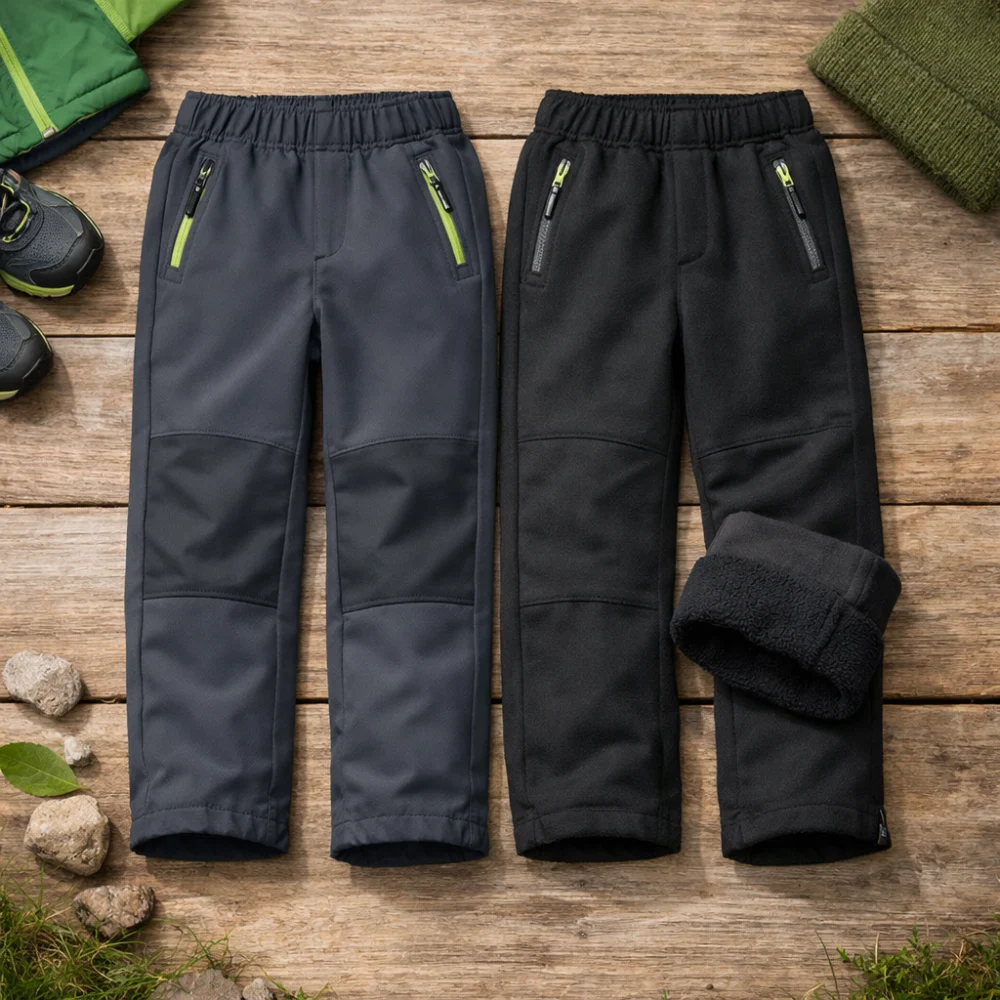
- Fleece-lined softshell trousers can feel better in colder weather. The trade-off is that they may be warmer and less breathable during very energetic use.
- Water-resistant softshell trousers may help in light damp conditions. They are not automatically the same as fully waterproof trousers, so check the product wording carefully.
Choosing by child and use
| Buyer need | What to prioritise | Why it helps |
|---|---|---|
| School or everyday outdoor wear | Comfort, easy fastening and a sensible fit | Makes the trousers easier to wear regularly without fuss |
| Walking and family days out | Breathability, movement and moderate weather resistance | Helps the child stay comfortable on longer outings |
| Colder-season use | Extra lining and enough room for movement | Improves warmth without making the trousers feel restrictive |
| Wet or muddy conditions | Clear water-resistance claims and easy-clean practicality | Helps you avoid choosing a pair that is too light for the job |
Common mistakes to avoid
- Assuming all softshell trousers are waterproof. Some will handle light dampness, but others are mainly about comfort and flexibility.
- Choosing warmth without thinking about activity level. A heavily lined pair can be too warm for energetic children.
- Ignoring the fit details. A child who cannot move easily is unlikely to enjoy wearing them, however good the fabric sounds.
- Overlooking the intended use. Trousers for walking may not be the best choice for very wet or very muddy play.
Suitability and care considerations
These trousers are most useful when they match the child’s routine, the season and the expected weather. If the product page does not clearly state the level of water resistance or lining, treat it as a sign to read the description carefully rather than making assumptions.
General care usually matters for comfort and longevity. Outdoor trousers often last better when they are cleaned according to the care label and stored dry between outings, but washing guidance can differ from one product to another.
How to compare options efficiently
- Start with the main use: walking, school wear, colder weather or mixed outdoor play.
- Decide whether comfort or stronger weather protection matters more.
- Check lining, fit and movement before comparing smaller details.
- Look at practical extras such as adjustable waists and pockets.
- Read the individual product page closely for the exact level of water resistance and any model-specific details.
Kids softshell trousers buying checklist
- Does the product suit the weather your child will face most often?
- Is the fit likely to allow running, bending and climbing?
- Is the lining suitable for the season?
- Are you expecting softshell comfort or fuller waterproof protection?
- Do the practical details make dressing and wearing easier?
- Have you checked the individual product page for model-specific information?
Frequently asked questions
Are kids’ softshell trousers waterproof?
Not always. Some are water-resistant enough for light damp conditions, while others are better described as weather-resistant outdoor trousers rather than fully waterproof bottoms. It is worth checking the product wording carefully before assuming they will cope with heavy rain.
When are softshell trousers a better choice than waterproof trousers?
They are often a better choice when comfort, flexibility and breathability matter more than complete wet-weather protection. For active use on cool days, many buyers prefer the less rigid feel of softshell. For prolonged rain or very wet ground, waterproof trousers are usually the more suitable comparison.
Do fleece-lined softshell trousers feel bulky?
They can feel warmer and a little thicker than unlined versions, which may be helpful in cold weather. The trade-off is that they can feel less airy during energetic play. The best choice depends on how cold the conditions are and how active the child will be.
What size should I choose for a growing child?
It is sensible to check the sizing guidance on the individual product page rather than relying only on age labels. Children grow at different rates, so a waist that can be adjusted may be more useful than simply buying larger. Too much extra room can make movement awkward.
Are softshell trousers good for school use?
They can be, especially if the child needs something comfortable for outdoor time, travel or after-school activities. The key is whether the style, warmth and weather resistance suit the school routine. A straightforward, easy-to-wear pair is often more useful than a highly technical one.
How do I know if they will be warm enough?
Look for details such as fleece lining, thicker fabric or cold-weather wording in the product description. Warmth also depends on layering, activity level and how long the child will be outside. If the guide or product page is unclear, treat that as a sign to check the exact item closely.
What practical features are worth paying attention to?
Adjustable waists, easy fastenings, pockets and cuffs can all make a difference in day-to-day use. These details may seem minor, but they affect how often a child is happy to wear the trousers. Comfort and convenience often matter more than style alone.
More Kids Softshell Trousers
See all 195 Kids Softshell Trousers →



As an Amazon Associate we earn from qualifying purchases.


