

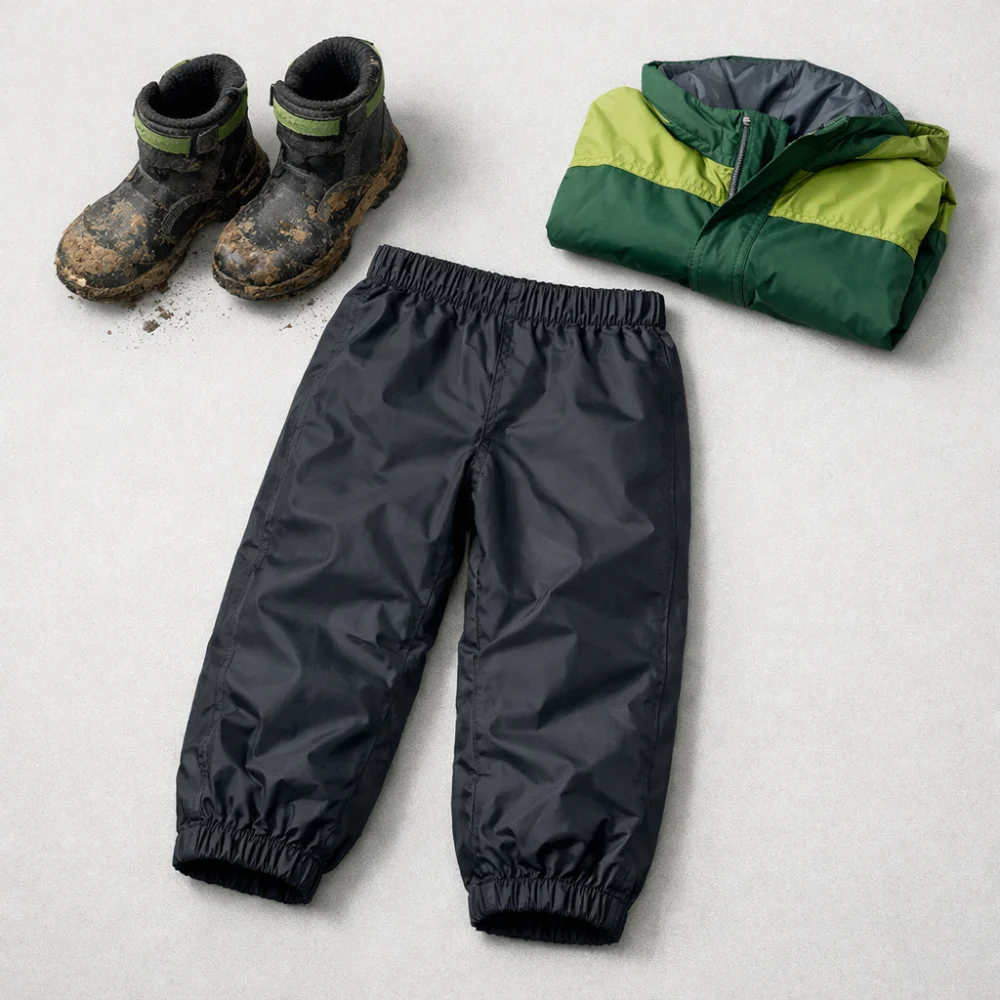

Kids waterproof trousers are a practical layer for staying drier in rain, wet grass and muddy play. They are usually bought for outdoor activities, school journeys, days out and anywhere a child will be out for longer than a quick dash between doors.
The main buying challenge is balancing waterproof protection, comfort and ease of use. Some pairs are designed as quick overtrousers to pull on over normal clothes, while others are made for more frequent wear and a closer fit.
Because children vary so much in height, movement and how hard they play, it helps to think about where the trousers will be worn, what will be worn underneath and how easy they will be to get on and off.
Compare Kids Waterproof Trousers


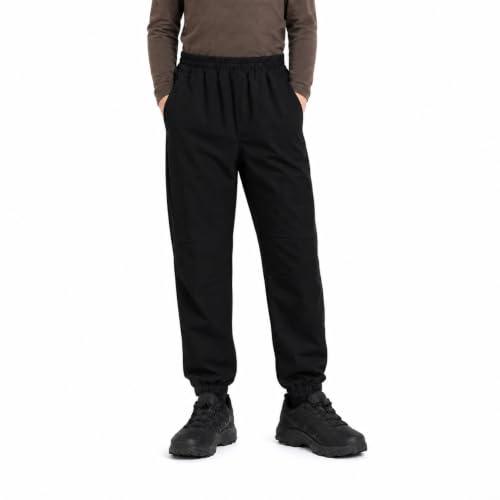
As an Amazon Associate we earn from qualifying purchases.
What should you look for first?
Start with the intended use. If the trousers are mainly for sudden showers and messy outdoor activities, a simple overtrouser style may be enough. If they will be worn more often, comfort, fit and breathability become more important.
The main trade-off is usually between weather protection and all-day comfort. A more protective pair can be less airy or bulkier, while a lighter pair may feel easier to wear but suit shorter wet spells better.
| Feature | What it means | Why it matters | What to check |
|---|---|---|---|
| Intended use | Whether the trousers are for school, play, walking or layering over other clothes | Different uses call for different levels of convenience and comfort | Look for whether the item is styled as overtrousers, rain trousers or all-purpose waterproof trousers |
| Fit and room | How much space there is for movement and layers underneath | A tight fit can restrict play; too much room can feel bulky | Check the size guidance and whether the cut is intended to go over other trousers |
| Closure style | How the trousers fasten at the waist or leg openings | A simple closure can make changing easier for children and adults | Look for waist adjustability, elasticated sections or easy-on designs |
| Leg openings | How the ankles are finished | Helps keep lower legs manageable over boots or shoes | Check whether the hems are adjustable, elasticated or designed to sit over footwear |
| Packability | How easy they are to fold or carry | Useful for school bags, days out and unexpected rain | Consider whether the trousers are meant to be lightweight and easy to stow |
| Wear comfort | How the material and shape feel during movement | Children are more likely to wear them if they feel comfortable in motion | Look for practical wording about flexibility, lining or lightweight construction |
Key decision criteria explained
Overtrousers or regular waterproof trousers?
Overtrousers are designed to go over existing clothes, which makes them useful for unpredictable weather and muddy activities. Regular waterproof trousers may be chosen for more frequent use or a neater fit. The right choice depends on whether convenience or a closer, less bulky feel matters more.
Fit around movement
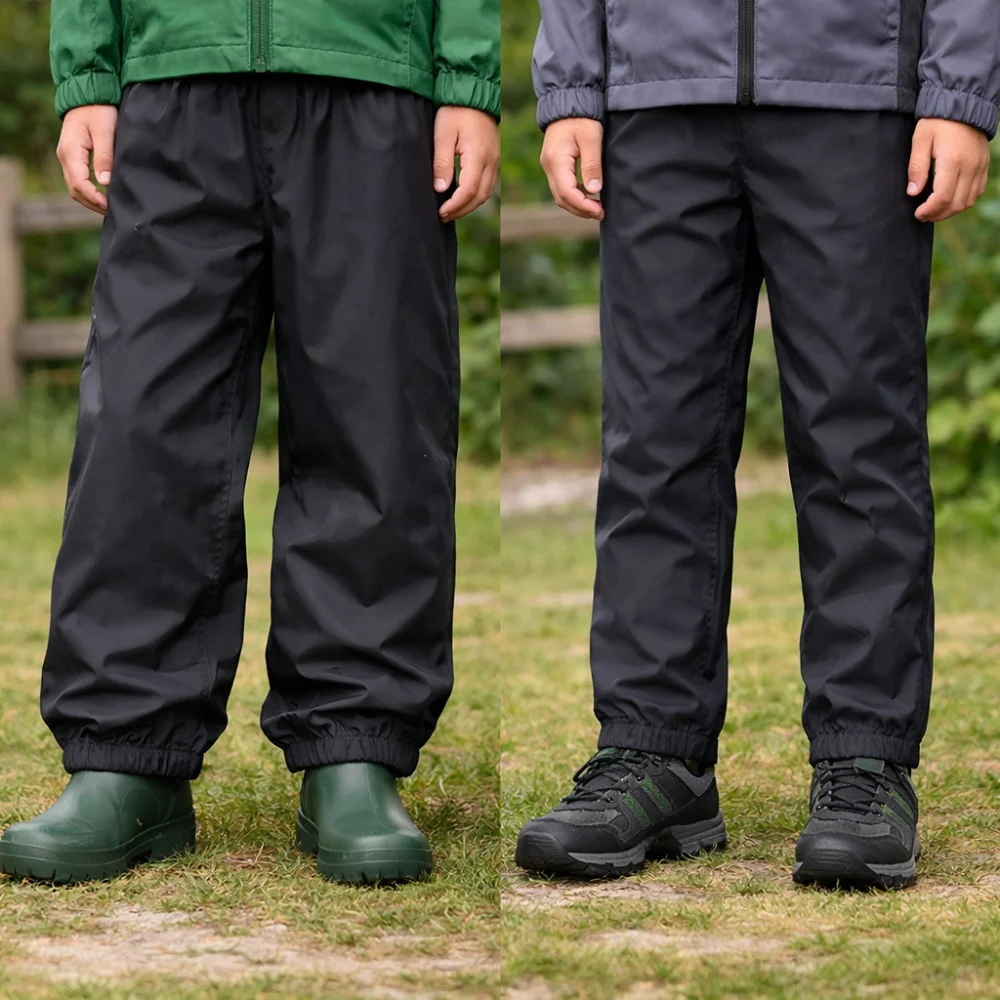
Children need enough space to crouch, climb, cycle and run. If the trousers are too snug, they can feel awkward over leggings or school trousers. If they are very loose, they may catch on boots or feel cumbersome, so it is worth checking the intended fit carefully.
Waist and ankle details
Practical waist and hem features can make a big difference to how usable the trousers are. Elasticated waists, adjustment features and leg openings that work well over shoes can save time and frustration, especially for younger children who need quick changes.
Breathability and comfort
Waterproof trousers are meant to keep water out, but they still need to feel wearable. For short, occasional use, that may matter less than for longer walks or active days. If the trousers will be worn for extended periods, look for product information that suggests they are comfortable enough for that use. Specifications vary by model, so always check the individual product page before buying.
Common types and variants
Within this category, the main differences are usually about how the trousers are designed to be worn rather than radically different product families.
- Overtrousers: Best when the child needs a waterproof layer that can be pulled on quickly over normal clothes. Their main limitation is that they can feel more bulky.
- Packaway styles: Useful when you want something easy to carry for changing weather. The trade-off is that very lightweight designs may be chosen for convenience first.
- More durable everyday styles: Better for frequent use, repeated wear and active outdoor play. They may feel less compact to pack.
- Suit-set compatible trousers: Often chosen as part of a matching rain set. This is handy if you want a coordinated wet-weather outfit, but the trouser fit still needs checking on its own.
Which type suits different needs?
| Need | What to prioritise | Why |
|---|---|---|
| School or nursery backup pair | Easy on and off, reliable overclothing fit, simple care | They may need to be used quickly and stored in a bag or locker |
| Outdoor play in muddy conditions | Roomy fit, durable feel, leg coverage over boots | Movement and practicality matter more than a neat silhouette |
| Walking or family days out | Comfort over longer periods, better balance between protection and wearability | The trousers may be worn for more than a short burst of rain |
| Travel or emergency rain layer | Packability, light weight and simple fastening | They need to be easy to carry and quick to deploy |
Common mistakes to avoid
- Buying on size alone: kids waterproof trousers often need space for layers or movement, so fit and intended use matter as much as age guidance.
- Assuming all waterproof trousers are the same: some are made mainly as overtrousers, while others are aimed at more regular wear.
- Ignoring ankle and waist details: these small features can make a big difference to comfort and practicality.
- Choosing for weather only: the child still has to put them on, move in them and tolerate wearing them.
Safety and suitability caveats
Check that the trousers suit the child’s activities and the layers they will wear underneath. Waterproof clothing is helpful in wet conditions, but it is not the same as all-purpose outdoor wear, and comfort can vary a lot by design.
If the trousers are for school, trips or club use, it is sensible to confirm any clothing requirements before buying. For younger children especially, ease of changing can be just as important as weather resistance.
Care, storage and long-term use
Most kids waterproof trousers are easier to keep in good condition if they are dried and stored sensibly after use. Mud and wet grass can make any pair look tired quickly, so simple cleaning matters when choosing a practical everyday item.
It is also worth thinking about how often the trousers will be packed away, washed and worn over shoes or boots. A pair that is convenient to care for is often the one that gets used more often.
How to compare options efficiently
- Decide where the trousers will be used most often.
- Choose between a simple overtrouser style and a more everyday fit.
- Check the size guidance, especially if they must fit over other clothes.
- Compare the waist, ankle and comfort details that affect real-world use.
- Read the individual product information carefully before choosing.
Summary buyer checklist
- Will the trousers be worn over other clothes or on their own?
- Is the fit roomy enough for movement and layering?
- Are the waist and leg openings practical for the child?
- Will they be used for short showers, regular wet play or longer outings?
- Are they easy to carry, put on and clean?
Frequently asked questions
Are kids waterproof trousers the same as rain trousers?
Often, yes in practical terms. The wording can vary by retailer or style, but the important thing is whether the trousers are intended to keep a child dry in wet conditions and how they are meant to be worn.
Should I buy a size up?
Not automatically. Some waterproof trousers are designed to go over other clothes, so a little extra room can help, but too much space may make them awkward to wear. Check the size guidance for the individual product.
Do they need to be worn over boots?
Not always, but the leg opening should work comfortably with the footwear your child usually wears. If the trousers are intended for muddy or wet ground, it helps if the hems are practical over shoes or boots.
What is the difference between packaway and regular styles?
Packaway styles are usually chosen because they are easy to carry and pull out when needed. Regular styles may be better if the trousers will be worn more often or need to feel more substantial in use.
How do I choose for a very active child?
Prioritise movement, comfort and an easy fit over simply picking the most protective-looking option. A child who can move freely is more likely to keep the trousers on when the weather turns.
Are these trousers only for heavy rain?
No. They are also useful for drizzle, wet grass, muddy paths and general outdoor play. The right pair depends on how often your child meets wet conditions, not only on downpours.
Consider lining as well as rain protection
A lined pair may feel warmer and more comfortable in cold weather, but can be less suitable when the child will be active or when the trousers need to fit over bulky layers. An unlined pair can work as a more adaptable outer layer, with warmth adjusted through the clothing worn underneath. Neither style is best for every use: consider the weather, activity and expected layers.
Check whether the product information describes a lining or insulation, and whether the trousers are intended as an outer layer over other clothing. Do not assume that a warmer-feeling design provides better rain protection; check the stated weather protection separately.
More Kids Waterproof Trousers
See all 272 Kids Waterproof Trousers →


As an Amazon Associate we earn from qualifying purchases.


