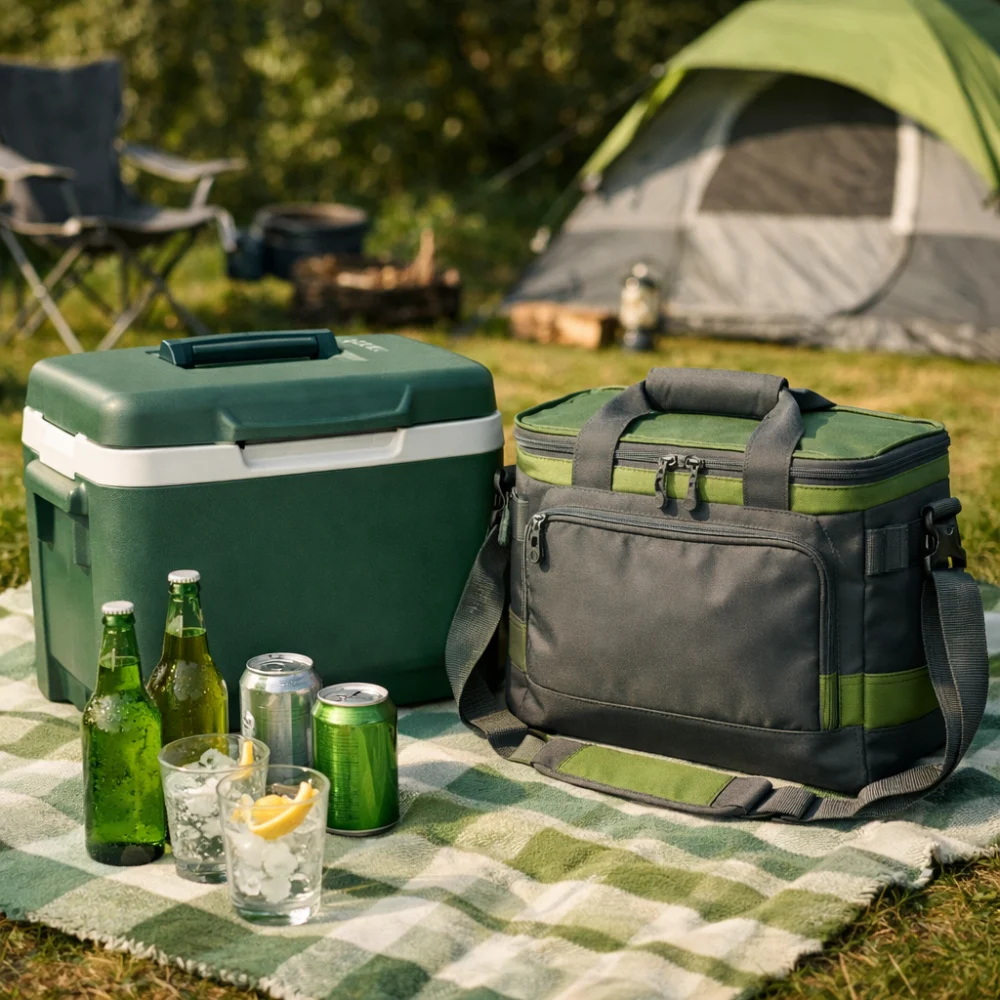
Camping cool boxes and fridges cover a wide range of ways to keep food and drinks cold away from home. Some are simple insulated boxes for short trips, while others are powered units designed for longer stays, van travel or more regular use.
The right choice depends less on the label and more on how you camp, how long you need things to stay cold and where you will power or carry the unit. It also depends on how much space you have, how often you will move it and whether you want convenience or a more hands-on cooling solution.
This guide helps you compare the main types and choose a product that suits your trip length, transport, storage space and power setup.
What should you choose: a cool box or a camping fridge?
A cool box is usually the simplest option if you want lightweight cooling for shorter outings, picnics or weekend trips. A camping fridge is more suited to longer stays, regular travel or situations where you want more consistent cooling and less dependence on ice or pre-chilled contents. The best starting point is to decide whether you need passive insulation, powered cooling or a mix of both. Specifications vary by model, so always check the individual product page before buying.
| Feature | What it means | Why it matters | What to check |
|---|---|---|---|
| Cooling method | Insulated, powered compressor, absorption or other design | Determines how cold contents can be kept and whether power is needed | Whether the unit relies on ice, electricity or another heat source |
| Capacity | How much food and drink it can hold | Affects trip length, group size and how much space it takes up | Internal volume and whether the shape suits your usual items |
| Portability | Weight, handles, wheels or backpack-style carrying | Important if you move the unit between car, campsite and storage | How easy it is to lift, carry and load when full |
| Power requirements | What supply, if any, the unit needs | Essential for vans, road trips and off-grid use planning | Voltage, plug type and whether it suits your setup |
| Insulation and retention | How well a box holds temperature without active cooling | Helps with day trips and reduces the need for frequent opening | Lid seal, wall thickness and whether it is intended for long ice retention |
| Noise and convenience | How much attention the unit needs while in use | Matters in tents, campervans and shared spaces | Whether the design is passive or powered, and any operating considerations |
Key decision criteria explained
Trip length and food plan
Short outings often suit a simple cool box or soft cooler, especially if you mainly want to protect drinks, sandwiches and chilled snacks. Longer trips, or trips where you need reliable storage for fresh food, usually justify a powered camping fridge or fridge-freezer style unit. Think about what you are carrying, how often you will restock and whether you need to keep items cold for one day or several.
Power access
If you camp with mains hook-up, travel in a vehicle or have a suitable battery setup, a powered fridge may be practical. If you do not want to manage power, a passive cool box is simpler and easier to use. The key question is not just whether a unit can run from power, but whether it fits the power source you actually have available.
Size and usable space
Capacity is only part of the story. The shape of the interior, lid opening and external footprint all affect how easy the product is to pack and use. A smaller unit that fits neatly in a boot or van may be more useful than a larger one that is awkward to carry or wastes space.
Portability and handling
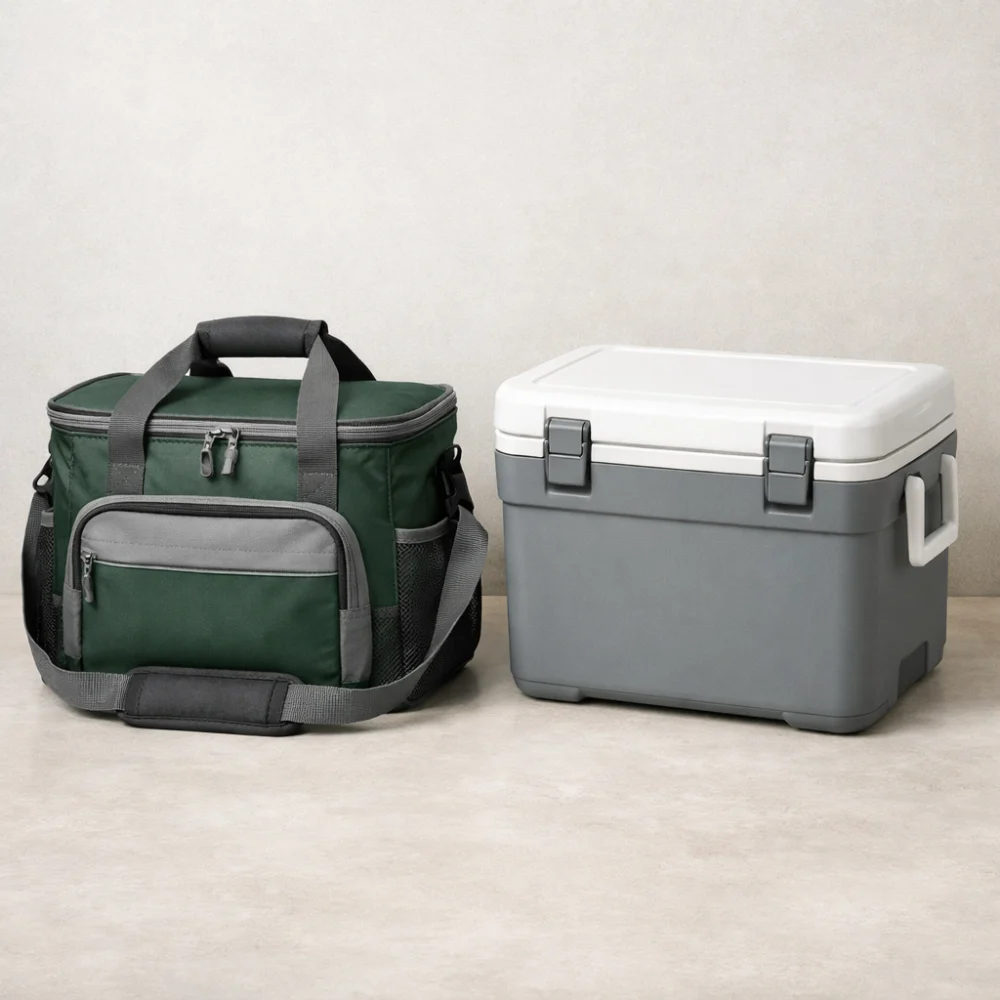
For regular carrying, look at handles, grip points and whether the unit stays manageable when full. Soft coolers and backpack styles can be easier to move for day trips, while rigid boxes may feel steadier for vehicle storage. If you expect to lift it often, portability matters as much as cooling performance.
Temperature retention versus active cooling
Some buyers mainly need insulation, while others need a unit that actively maintains a lower temperature. Passive cool boxes depend heavily on what you put inside and how often you open them. Powered fridges reduce that dependence, but they add cost, weight and power planning.
Types and variants within this category
Rigid cool boxes are a common choice for camping, picnics and car travel. They are straightforward, durable in feel and good when you want a simple cold-storage solution without a power connection. Their limitation is that they rely on insulation and chilled contents rather than active refrigeration.
Soft coolers and cooler bags suit lighter packing, short trips and carrying by hand. They are often more compact when not in use and easier to store. Their limitation is that they usually offer less rigid protection and may be less suited to heavier loads or longer cooling needs.
Portable electric fridges are aimed at campers, van users and frequent travellers who need more consistent cooling. They are more convenient for longer use, but they depend on a suitable power supply and usually need more planning around placement and transport.
Fridge-freezer style units can suit buyers who need more flexibility with fresh and frozen items. They are more specialised, so it is worth checking how the storage space is divided and whether that setup matches your actual packing habits.
Which option suits which buyer?
| Buyer need | Better fit | Why it suits | Main limitation |
|---|---|---|---|
| Day trips and picnics | Soft cooler or small rigid cool box | Simple, portable and easy to carry | Less suitable for long-duration cooling |
| Weekend camping | Medium rigid cool box or compact powered fridge | Balances capacity with manageable size | Choice depends on how much power and packing space you have |
| Van travel or regular touring | Powered camping fridge | Supports more consistent food storage | Needs suitable power and space planning |
| Lightweight packing | Soft cooler | Lower bulk and easier storage when empty | Less rigid protection for fragile items |
| Car boot storage for family use | Rigid cool box or larger electric unit | Often easier to load and access repeatedly | May take up more room than expected |
Common mistakes and misunderstandings
- Choosing by capacity alone: a bigger box is not always better if it is awkward to carry or too large for your vehicle.
- Ignoring the power setup: powered fridges only make sense if you can supply them reliably in the way you plan to travel.
- Assuming all cool boxes behave the same: insulation, shape and how often you open the lid can make a noticeable difference.
- Overlooking storage when empty: a large rigid unit may be inconvenient if you need to keep it in a garage or boot between trips.
- Forgetting the practical load: the item may be easy to carry empty but much less convenient once stocked with food and drink.
Safety and suitability checks
For camping cool boxes and fridges, the main buying concern is suitability rather than complex safety risk. Check that the product suits your intended use, especially if you will place it in a car, campervan, tent or outdoor kitchen area. If a model needs power, make sure its requirements suit your vehicle, campsite or home setup before relying on it.
Also think about ventilation, access and where the unit will sit when loaded. Specifications vary by model, so always check the individual product page before buying.
Maintenance, storage and ownership considerations
Think about how much cleaning and storage effort you are willing to accept. Cool boxes and cool bags are generally easier to wipe down and put away, while powered fridges may need more planning around cable storage, ventilation and placement. If you use the product only occasionally, it may be worth choosing something that is easy to store cleanly between trips.
If you expect to use ice packs, chilled bottles or temperature-sensitive items, consider whether the interior design makes loading and cleaning straightforward. Removable baskets, smooth interiors and simple seals can make regular use less fiddly.
How to compare options efficiently
- Start with your typical trip length and how much cooling you actually need.
- Choose the product type that fits your power access, carrying needs and storage space.
- Compare capacity, portability and ease of loading rather than focusing on one feature only.
- Check how the unit is intended to keep things cold and whether that matches your routine.
- Read the individual product page for the details that matter most to your setup.
Summary buyer decision checklist
- Does it suit day trips, weekend camping or longer travel?
- Do you want passive insulation or powered cooling?
- Is the size practical for your vehicle, campsite and storage space?
- Will it still be manageable when full?
- Does the power requirement match what you can actually use?
- Is the interior shape useful for the items you usually carry?
- Will it be easy to clean and store after use?
Frequently asked questions
What is the difference between a cool box and a camping fridge?
A cool box relies mainly on insulation, while a camping fridge uses active cooling or a powered system. A cool box is simpler and often lighter, but a camping fridge is usually better for longer trips or more consistent temperature control.
How do I choose the right size?
Think about how many people you are feeding, how long you will be away and whether you need room for bottles, prepared food or snack items. A box that sounds large on paper may still be awkward if the shape does not suit your usual packing.
Are soft coolers as useful as rigid cool boxes?
They can be very useful for short trips and light loads. The trade-off is that they usually offer less rigid protection and may not be as suitable when you need more structure or longer retention.
Do I need power for a camping fridge?
Yes, powered camping fridges need a suitable power source, so it is important to check what the product expects and what your setup can provide. If you do not want to manage power, a passive cool box may be the simpler choice.
What matters more: capacity or portability?
Both matter, but the better balance depends on how you travel. If you carry the unit often, portability may matter more than extra space; if it stays in a car or van, a larger capacity may be more useful.
Can I use a camping cool box for food and drinks on a picnic?
Yes, that is one of the most common uses. For a short outing, a simple cool box or soft cooler can be enough, especially if you pre-chill contents and keep the lid closed as much as possible.
What should I check before buying a powered model?
Check the power requirements, the size and the space it will occupy when installed or carried. It is also sensible to look at how easy it is to access the contents and whether the unit fits the way you travel.