Camping fire starters and lighters are small items, but they affect how easily you can get a stove, barbecue or campfire going. The right choice depends on where you are camping, what you are lighting and how much convenience or backup you want.
This guide helps you compare the main types without getting lost in minor features. It focuses on practical buying decisions such as ease of use, reliability, packability and whether you need a simple lighter, a fire steel or an ignition aid for more awkward conditions.
For most buyers, the best starting point is to match the fire starter to the job rather than looking for one universal answer. A compact lighter may suit everyday cooking, while a spark-based starter or fire-lighting aid can be more useful as a backup or for outdoor use where you want a different kind of ignition method.
What should you look for in camping fire starters and lighters?
The main decision is whether you want a quick, familiar flame source or a more manual fire-starting method. That choice affects convenience, storage, weather tolerance and how much preparation is needed before lighting tinder or fuel.
Specifications vary by model, so always check the individual product page before buying.
| Feature | What It Means | Why It Matters | What To Check |
|---|---|---|---|
| Ignition method | The way the item creates a flame or spark | Determines how simple, fast or hands-on it feels to use | Whether it is a lighter, fire steel, striker or fire-lighting aid |
| Intended use | What you plan to light | Cooking stoves, BBQs and campfires may have different needs | Whether the item suits your usual fuel and setup |
| Size and packability | How easy it is to carry in a pocket, pouch or cooking kit | Useful if space and weight matter on a trip | Overall form factor and whether it fits your kit |
| Ease of use | How straightforward it is to operate | Important for beginners, children under supervision or quick meals | Grip, ignition action and whether extra preparation is needed |
| Backup value | Whether it works as a spare ignition method | Helpful if you want a second way to start a fire or stove | How easy it is to store separately from your main lighter |
| Consumables or refills | Any fuel, striking surface or starter material it depends on | Affects ongoing use and convenience | Whether it needs refilling, replacement parts or separate tinder |
Key decision criteria explained
Ignition method
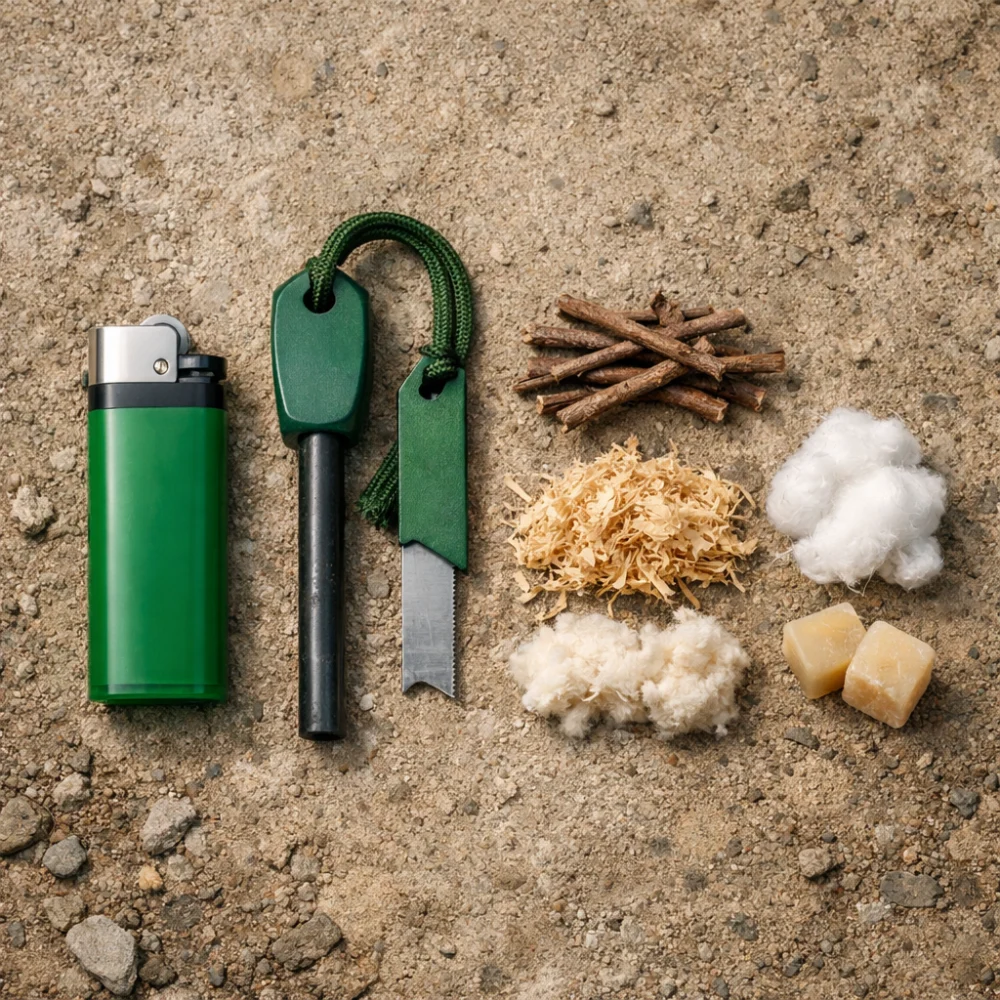
Campers often choose between flame-based lighters, spark-based fire steels and prepared fire-lighting products. A lighter is usually the simplest option for day-to-day cooking, while a fire steel can appeal if you want a more manual backup method. Fire-lighting aids such as starter squares or tinder bundles reduce the amount of preparation needed, but they are only one part of the ignition process.
Where and how you will use it
If you mainly cook at established pitches or campsites, convenience may matter more than ruggedness. If you are bushcrafting, walking with limited kit or planning to light fires in less predictable conditions, you may care more about portability and having a second ignition method. Think about the type of stove, fire pit or fuel you normally use, because that often narrows the choice quickly.
Pack size and storage
Small items are easier to keep in a cooking pouch, emergency kit or rucksack pocket. Larger starter aids may be more awkward to carry, but they can be easier to handle or use with gloves. The key trade-off is convenience versus comfort and redundancy.
Reliability versus simplicity
Many buyers want a product that is easy to understand on the first use. Others are happy to trade some convenience for a more manual system that does not rely on a single moving part or fuel source. The right balance depends on whether the item is your main lighter or a spare kept for backup.
Types and variants
This category usually includes a few broad types rather than one standard product:
- Everyday lighters are the simplest option for lighting stoves, candles or fire lighters when convenience is the priority.
- Fire steels and striker kits create sparks rather than a flame and are often chosen as a backup or for a more hands-on approach.
- Prepared fire starters such as blocks, wicks or tinder aids help get kindling going and are useful when you want a quicker start.
- Fuel-based or refillable lighter styles may suit buyers who want a reusable option rather than a disposable one.
Which type suits you best depends on what you are lighting, how often you camp and whether you want something very simple or something that works as a spare method. For many people, the most practical answer is to carry one easy flame source and one separate backup option.
Which type suits different buyers?
| Buyer need | What usually matters most | Possible fit |
|---|---|---|
| Day-to-day campsite cooking | Speed, ease and familiar use | A straightforward lighter or similar flame-based option |
| Backup in a cook kit | Reliability and compact storage | A small fire steel or a second ignition method kept separately |
| Bushcraft or outdoor skills use | Manual control and practice | A fire steel, striker kit or spark-based starter |
| Fire-lighting convenience | Less fuss getting tinder or kindling going | A prepared fire starter product |
| Gift or occasional camper use | Simple handling and obvious purpose | An easy-to-use lighter or starter kit |
Common mistakes and misunderstandings
Choosing for the wrong job. A product that works well for a barbecue may not be the most convenient choice for a compact cooking kit. Start with the place and task, then pick the style.
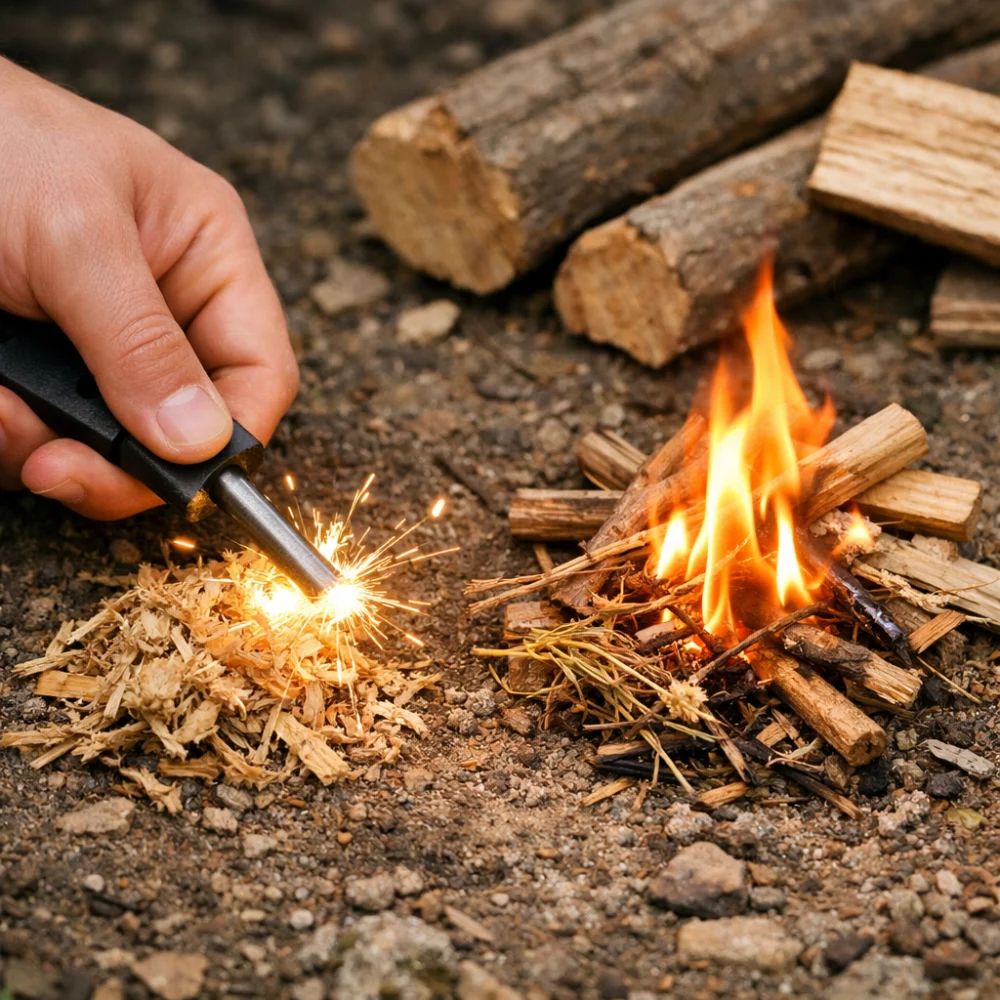
Ignoring what it needs to work with. Some products rely on tinder, kindling or separate fuel, so they are not complete fire systems by themselves. Check what else you will need before buying.
Assuming all lighters are equally suitable outdoors. Size, handling and storage matter when you are carrying kit in a bag or pocket. A slightly larger item can be easier to use, but not always easier to pack.
Overlooking backups. If you rely on one ignition method, it is worth thinking about a second option that is stored separately. That is a practical choice, not an overcomplication.
Safety and suitability caveats
Choose a fire starter or lighter that matches the environment and the way you plan to use it. Keep ignition items away from children when not in use, and check any product guidance supplied with the item before first use.
If you are buying for shared camping or family use, favour straightforward handling and clear storage. For open-fire use, make sure the rest of your kit is appropriate for the fuel and setting as well.
Maintenance, storage and lifespan
Some camping fire starters are effectively ready-to-use items, while others may need refilling, replacement fuel, or separate tinder and striking surfaces. That affects the real cost of ownership as well as convenience.
Store ignition items in a dry, accessible place so they are easy to find when needed. If a product includes consumable parts or fuel, check whether those are easy to replace before you decide.
How to compare options efficiently
- Decide whether you need a main ignition tool, a backup, or something for prepared fire lighting.
- Match the type to your usual use, such as camping cooking, fire pits, or outdoor skills practice.
- Compare size, handling and whether the item needs refills or extra materials.
- Think about convenience versus manual control and choose the trade-off you will actually live with.
- Check the individual product page for the exact details before you buy.
Summary buyer decision checklist
- Have I chosen the right ignition method for my usual camping setup?
- Will I use this as my main fire starter or as a backup?
- Does it suit the fuel, stove or fire-lighting task I have in mind?
- Is it small and easy enough to carry in my kit?
- Does it need refills, separate tinder or other consumables?
- Have I checked the individual product page for the exact details?
Frequently asked questions
What is the difference between a camping lighter and a fire steel?
A lighter creates a flame directly, while a fire steel makes sparks that you use with tinder or a prepared fire-lighting setup. A lighter is usually simpler for everyday use, but a fire steel can be useful as a separate backup method. The better choice depends on whether convenience or manual redundancy matters more to you.
Do I need a fire starter if I already have a stove?
Many stoves still need a reliable way to ignite them, so a fire starter or lighter is part of the cooking setup rather than a separate extra. If you already have one, you may still want a backup in case it is misplaced or runs out. That is especially helpful on longer trips.
Are fire starter squares and tinder products the same as a lighter?
No. Fire-lighting aids help get kindling going, but they do not replace the ignition source itself. They are best seen as support items that make it easier to build a flame.
What should a beginner buy first?
A simple, easy-to-use option is often the most sensible first purchase for a beginner. If you also want a backup, choose a separate spare method rather than relying on one item to do everything. The exact best fit depends on how you camp and what you light most often.
Are refillable lighters worth considering?
They can be if you want a reusable option and are happy to manage refills or replacements. The main benefit is less disposability, while the trade-off is a bit more upkeep. Check the individual product information so you know what is involved.
Should I carry more than one ignition method?
Many campers do, because a backup can be useful if one item is forgotten or stops working. A second method does not need to be complicated; it just needs to be stored separately and suit the way you actually camp. That is a practical choice rather than an essential rule.