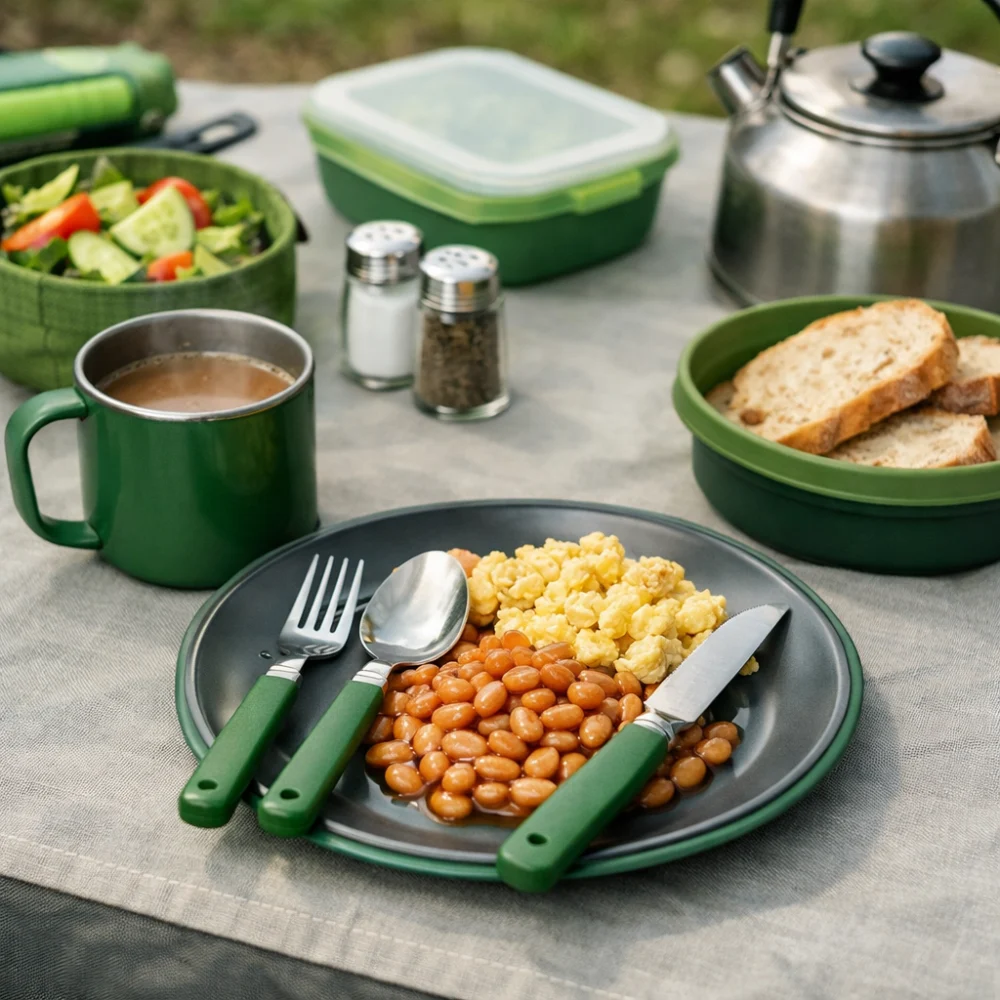
Camping cutlery and tableware cover the everyday items that make outdoor meals more practical: things to eat with, plates or bowls to serve from, and pieces that are easy to pack, carry and clean. The right choice depends less on one “best” set and more on how you camp, who you are buying for and how much space you have.
If you are replacing a single item, building a family camp kitchen or choosing a compact kit for backpacking, it helps to compare materials, pack size and how the pieces work together. A simple set can be ideal for short trips, while a more complete tableware setup may suit car camping or group use.
What should you look for in camping cutlery and tableware?
Start with the way you will use it. The most useful camping cutlery and tableware are comfortable to handle, easy to pack, and suitable for the type of meals you actually make outdoors. A compact set can save space, but it may be less comfortable for longer stays or family use. A larger dinner set may be more convenient at camp, but it will usually take up more room.
Specifications vary by model, so always check the individual product page before buying.
| Feature | What it means | Why it matters | What to check |
|---|---|---|---|
| Pack size | How much space the item or set takes when stored | Important for rucksacks, small cupboards and shared kit boxes | Whether it packs flat, stacks neatly or includes a case |
| Material | The main material used for the cutlery or tableware | Affects weight, feel, cleaning and durability | What the product page says about the material and finish |
| Set contents | Which pieces are included | Helps you avoid buying more than you need, or missing a key item | Whether it includes knife, fork, spoon, plates, bowls or a storage pouch |
| Cleaning ease | How simple the items are to wash after use | Important where water is limited or you want low-effort clean-up | Whether the shape is easy to rinse and whether care guidance is provided |
| Comfort in use | How the pieces feel when eating | Can matter more on longer trips than on a single overnight stay | Handle shape, size and whether the set suits adults, children or both |
| Storage and transport | How the items are kept together | Useful for preventing rattling, loss and mixed-up kit | Whether a pouch, case or bundled set is included |
Key decision criteria explained
Material and feel
Material affects weight, comfort and how the item will be used over time. Metal cutlery often feels familiar and durable, while lighter materials can be easier to carry and may suit simpler camping meals. Tableware materials also influence how sturdy the pieces feel when stacked, packed or handed round.
Think about whether you want something that feels close to home use or something that prioritises portability. For some buyers, a lighter set is the main advantage; for others, a more substantial feel is worth a little extra bulk.
Portability and packability
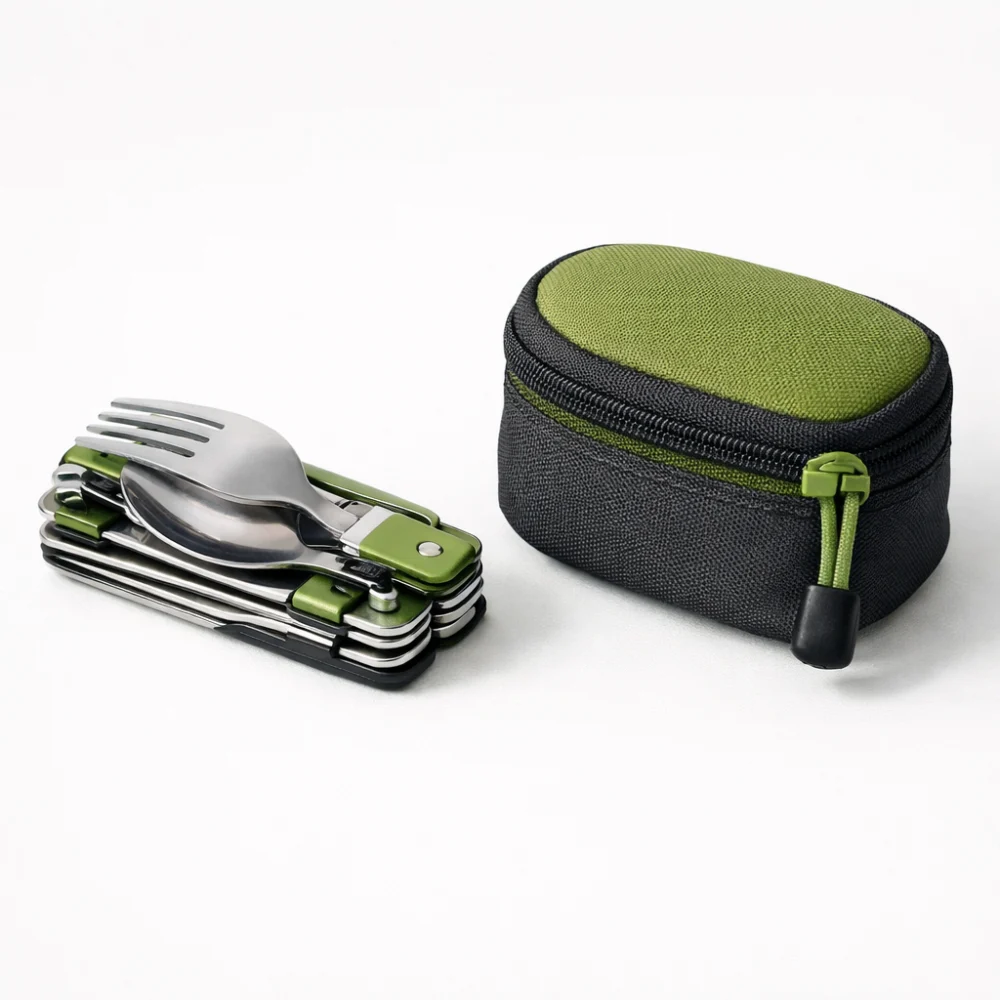
Campers who move site frequently, travel by public transport or carry everything by hand usually need compact kit. Look for nesting, folding or stackable designs if space is tight. If you mostly travel by car, size may matter less than convenience and comfort at mealtimes.
It can help to compare the packed form rather than just the individual pieces. A set that is small in use may still be awkward if it does not store neatly.
Set size and completeness
Some buyers only need a spoon or a basic cutlery set, while others want a wider dining kit for several people. The right amount depends on whether you are buying for one backpacker, a couple, a family or a shared camp kitchen. More pieces can be useful, but they also add weight, storage needs and cleaning time.
Choose a set that matches your real meals, not an idealised version of camping life. A tidy, smaller set is often more practical than a large one with pieces you will rarely use.
Ease of cleaning
Cleaning matters because outdoor washing can be more limited than at home. Simple shapes, fewer crevices and easy-to-rinse surfaces can make a noticeable difference after a meal. If you camp regularly, low-effort cleaning can be more valuable than extra features.
Check whether the product page gives any care guidance and whether the shape looks likely to trap food. That is especially helpful if you prefer quick pack-down at the end of the day.
Types and variants to compare
Camping cutlery and tableware usually fall into a few practical groups. Each has a different balance of convenience, size and versatility.
- Individual utensils: Useful if you only need a replacement spoon, fork or knife, or if you want to build a kit piece by piece.
- Compact cutlery sets: Good for minimal packing and short trips, especially when every gram or centimetre matters.
- Family or multi-person tableware sets: Suited to car camping or group use, where convenience and serving capacity matter more than compactness.
- Combined dining kits: Helpful if you want several matching pieces stored together, rather than assembling items separately.
There is no single type that suits every camper. The main trade-off is usually between compact simplicity and a fuller setup that is easier to use at camp.
Which type suits different buyers?
| Buyer need | What usually matters most | What often suits that need |
|---|---|---|
| Backpacking or lightweight travel | Low bulk, simple storage, easy carrying | Compact cutlery and minimal tableware |
| Family camping | Enough pieces for several people, easy cleaning, practical storage | Multi-piece sets or family tableware |
| Short weekend trips | Convenience and quick packing | A small set that covers the basics |
| Replacement for one missing item | Matching an existing kit and avoiding waste | Single utensils or small add-on pieces |
| Shared camp kitchen | Durability, organisation and easy identification | Sets that store together and are easy to sort |
Common mistakes to avoid
- Buying for appearance rather than use: a neat-looking set may not be the easiest to pack or clean.
- Choosing too many pieces: extra items can add clutter without adding much value.
- Ignoring storage: loose cutlery rattles, gets lost and is harder to keep together.
- Overlooking comfort: a very compact utensil may be less pleasant to use over a full trip.
- Assuming all sets are equivalent: the included pieces, size and materials can vary a lot.
Safety and suitability caveats
Check that the set is suitable for the way you camp and for the people who will use it. If you are buying for children, consider shape, size and general handling comfort. If you will use the items around a camp stove or hot food, make sure the design and material are appropriate for that kind of use.
For outdoor dining, it is also worth checking how easy the items are to keep clean and dry during the trip. That helps reduce hassle even when the product itself is simple.
Maintenance, storage and lifespan considerations
Camping cutlery and tableware usually last longer when they are rinsed soon after use, dried properly and stored together in a pouch or container. The more pieces a set has, the more useful organised storage becomes. If your kit includes several materials, check the care notes for each product before washing or packing it away.
Think about whether you want a kit that can live in your camping box between trips or one that you carry in and out each time. Simple storage habits often matter more than fancy features.
How to compare options efficiently
- Decide whether you need a single utensil, a compact set or a fuller tableware kit.
- Check how much space you can spare in a backpack, bag or camp box.
- Compare the materials and how comfortable the pieces are likely to be in daily use.
- Look at what is included so you do not buy more, or less, than you need.
- Read the individual product page carefully before deciding.
Summary buyer decision checklist
- Have I chosen the right type of cutlery or tableware for my camping style?
- Does the set size match the number of people who will use it?
- Will it pack neatly in the space I have available?
- Do the materials and shape suit the way I want to eat and clean up?
- Is storage included or easy to arrange?
- Have I checked the individual product page for the exact contents and care guidance?
Frequently asked questions
Is camping cutlery different from normal cutlery?
Often the main difference is in portability and storage. Camping versions are usually chosen because they are easier to pack, carry and keep together outdoors. Some feel similar to household cutlery, while others are designed to be more compact or lightweight.
What should I choose for a backpacking trip?
For backpacking, compactness usually matters most. A small, easy-to-pack utensil or set is often more practical than a full dining kit. Focus on size, weight and how neatly it stores rather than on having every possible piece.
What works better for family camping?
Family camping often benefits from more complete tableware and enough pieces for everyone. Easy storage and simple cleaning are usually important too. A larger set can be convenient, but make sure it still fits your available space.
Are complete dining sets always better than individual pieces?
Not always. Complete sets are convenient if you want everything kept together, but individual pieces are better if you only need replacements or want to build your kit gradually. The right choice depends on how much control you want over the contents.
How do I know if a set will be easy to clean?
Look for simple shapes and fewer hard-to-reach areas. If the product page mentions care instructions, that can also help you judge how much upkeep it needs. In general, uncomplicated designs are easier to rinse and dry.
Should I prioritise durability or low weight?
That depends on how you travel. If you carry everything on foot, low weight may matter most. If you travel by car or store the kit in a camp box, a sturdier feel may be more important than shaving off a little bulk.
Can one set suit both adults and children?
Sometimes, but not always. Smaller hands may prefer a different size or shape, so it is worth checking the product details and thinking about who will use it most often. For mixed-use family kits, practicality and ease of handling are usually the best guide.