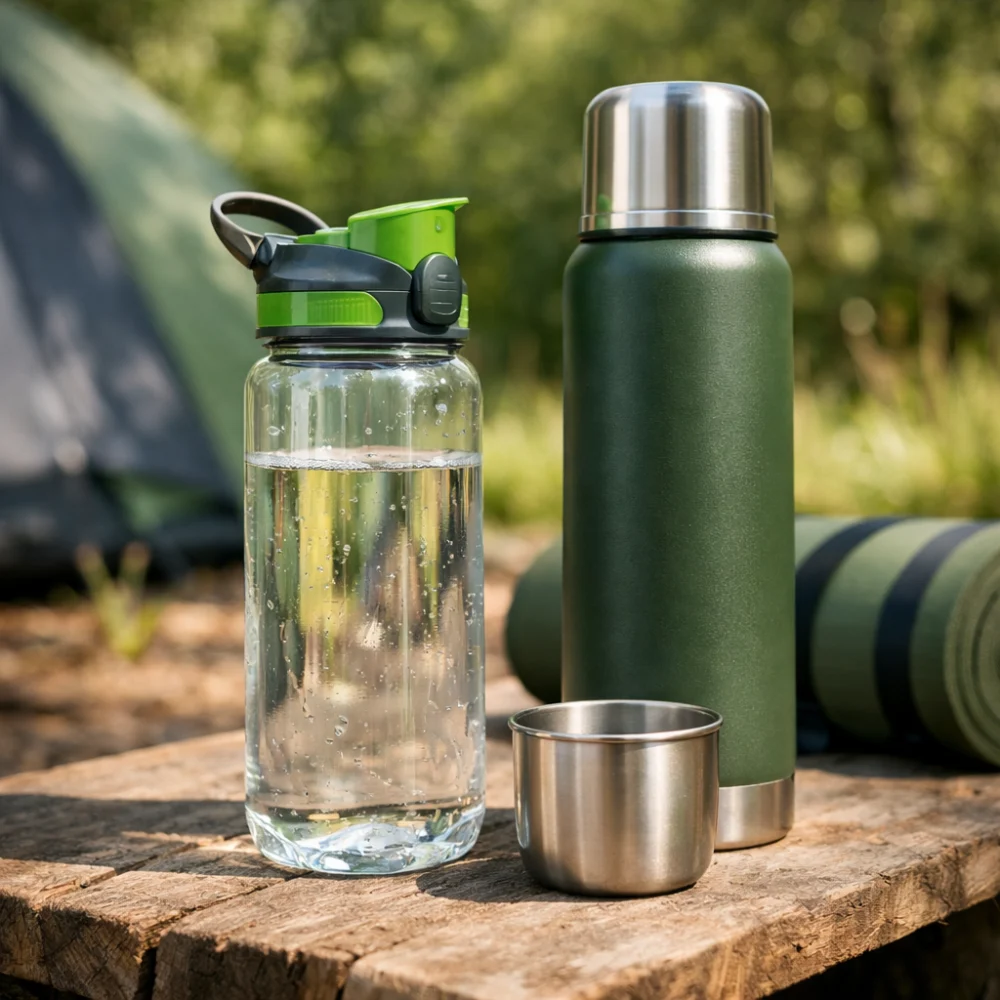
Camping water bottles and flasks are simple products, but the right choice depends on how you plan to use them. A day walk, family campsite, van trip or winter camp can all call for different sizes, materials and lid styles.
This guide helps you compare the practical choices without getting lost in product names. The main decision is usually whether you want a lightweight bottle for regular cold drinks or an insulated flask that helps keep drinks hot or cold for longer.
Some buyers also need a container that is easy to carry, easy to clean or suitable for sharing between people. Specifications vary by model, so always check the individual product page before buying.
What should you choose first?
Start with the way you will use it most often. If you mainly want drinking water for walks or campsite use, a straightforward bottle may be the most convenient option. If you want to carry tea, coffee or other drinks that benefit from temperature retention, an insulated flask is usually the better starting point. After that, compare capacity, lid style, insulation and how easy the bottle is to pack, clean and hold.
| Feature | What it means | Why it matters | What to check |
|---|---|---|---|
| Capacity | How much liquid it holds | It affects how often you need to refill and how much you carry | Choose a size that matches your trip length, group size and packing space |
| Insulation | Whether the bottle is designed to help keep drinks hot or cold | Important if you want warm drinks in camp or cooler water on a long day out | Check whether the product is insulated and whether that suits your intended use |
| Lid type | The way the bottle opens and closes | It affects convenience, leak resistance and ease of drinking on the move | Look for a lid that matches your preferred way of drinking and carrying |
| Material | Commonly stainless steel or plastic | Material can influence weight, durability and feel in use | Check the product page for the material and think about weight versus robustness |
| Ease of cleaning | How simple it is to wash and dry | Useful if you will use the bottle daily or for different drinks | Look for a design you can clean comfortably, especially around the lid and threads |
| Carrying features | Handles, loops or shapes that help with transport | Helpful for commuting, walking or handling a bottle with gloves on | Check whether the shape and grip suit the way you plan to carry it |
Key decision criteria explained
Size and capacity
Capacity affects both convenience and weight. A smaller bottle can be easier to pack and carry, while a larger one reduces refills. Think about whether you need it for personal use, sharing, or longer periods away from taps.
Insulated or non-insulated
Insulated flasks are worth considering when you want to help maintain drink temperature. Uninsulated bottles are often simpler and lighter, which can suit summer camping, short walks or everyday hydration. The trade-off is that they do not offer the same temperature retention.
Lid and drinking style
Some buyers prefer a screw lid, while others prefer a lid that is easier to sip from or pour from. The best choice depends on whether you will drink while moving, sit at camp, or pour hot drinks into cups. A lid that suits the drink style is often more useful than a stylish bottle shape.
Material and durability
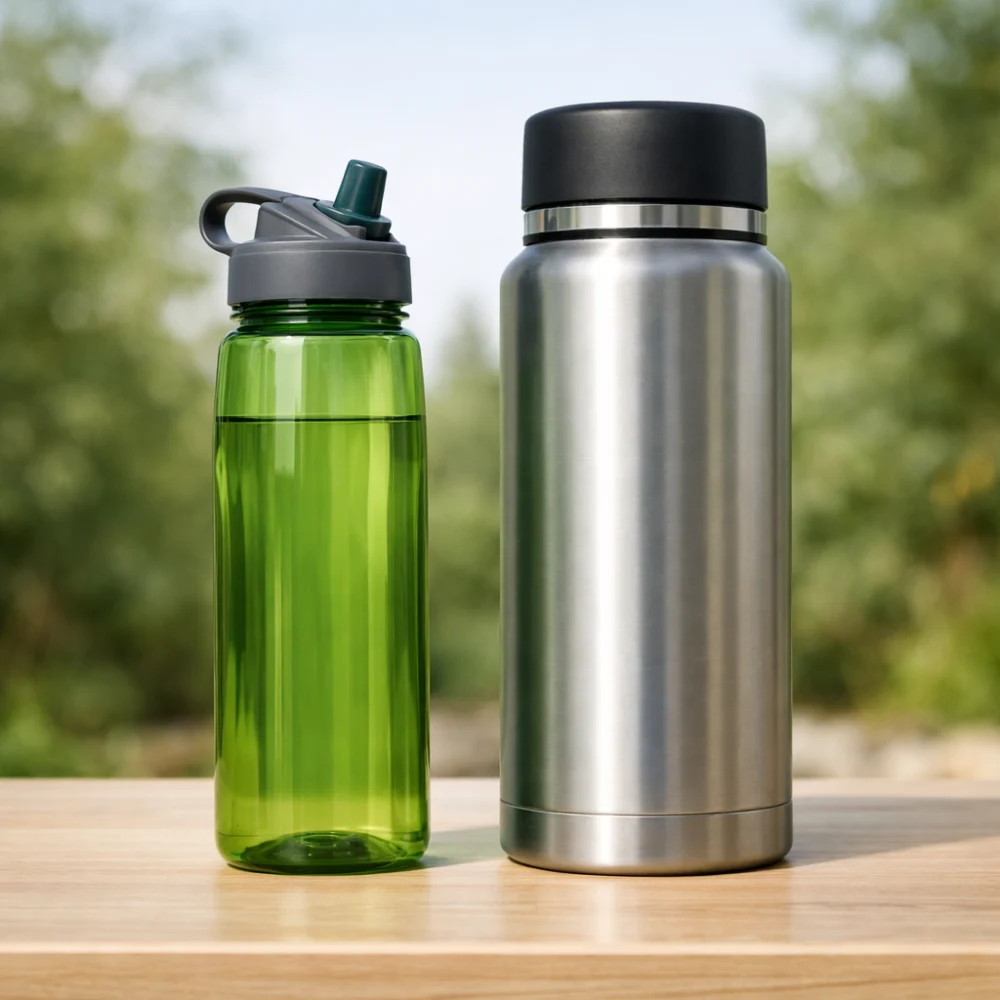
Camping use can be harder on containers than home use, so material matters. Stainless steel is often chosen for a sturdier feel, while plastic may be lighter and simpler for some buyers. Consider how likely the bottle is to be knocked about in a rucksack, vehicle or campsite box.
Weight and packability
For hikers and people carrying their kit by hand, the empty weight and shape can matter as much as capacity. A bottle that fits well in a side pocket or bag is often easier to use consistently than one that is awkward to store. Check the dimensions on the product page if space is limited.
Specifications vary by model, so always check the individual product page before buying.
Common types and variants
Within this category, the main differences are usually between simple water bottles, insulated bottles and insulated flasks. Simple bottles are generally best when low weight and quick access matter. Insulated models suit buyers who want more temperature control, while flask-style products are often chosen for hot drinks or more deliberate pouring rather than frequent sipping.
Some products are designed with handles, wide mouths or multiple lid options. These features can be useful, but they also add bulk or complexity, so they are worth choosing for a reason rather than as a default.
Which type suits which buyer?
| Buyer need | Useful features | Trade-off to consider |
|---|---|---|
| Day walkers | Light weight, secure lid, easy carry | A simpler bottle may offer less temperature retention |
| Car campers | Larger capacity, durable build, comfortable handling | More capacity can mean more storage space and more weight |
| People wanting hot drinks | Insulated flask, pour-friendly lid, easy cleaning | Insulated designs can be bulkier than basic bottles |
| Families or shared use | Higher capacity, easy-to-identify shape, practical lid | Larger containers are less compact to pack |
| Everyday reuse | Straightforward design, simple washing, comfortable grip | Very specialised lids may be less convenient day to day |
Common mistakes and misunderstandings
- Choosing capacity too quickly: a bottle that is too small can mean frequent refilling, while one that is too large may be inconvenient to carry.
- Assuming all flasks suit the same drinks: different lids and openings can make some products better for sipping, pouring or carrying.
- Ignoring cleaning needs: a bottle used for more than plain water may need a design that is easier to wash thoroughly.
- Focusing only on insulation: temperature retention is helpful, but weight, lid comfort and packability can matter just as much.
Safety and suitability considerations
Check that the bottle or flask suits the drinks you plan to carry and the way you plan to use it. A product that works well for cold water may not be the most practical choice for hot drinks, and vice versa. If you are buying for a child or for frequent use on the move, the lid style, grip and size are especially important to think through.
It is also sensible to check the product page for any care guidance or use limitations. That helps you judge whether the item fits your routine before you buy.
Maintenance, storage and everyday use
These products are usually chosen for repeated use, so cleaning and storage should be part of the decision. A bottle that is easy to rinse and dry may be more pleasant to use over time, especially if you switch between water, tea or coffee. If you will keep it in a rucksack or vehicle, think about whether the lid closes securely and whether the shape stores neatly.
For flasks and insulated bottles, it can also help to consider whether the opening is wide enough for practical filling and washing. A simple design is often easier to live with if the bottle will be used regularly rather than occasionally.
How to compare options efficiently
- Decide whether you need a basic bottle or an insulated flask.
- Choose a capacity that fits your trip length and carrying style.
- Compare lid type, weight, material and ease of cleaning.
- Think about whether the product needs to suit hot drinks, cold drinks or both.
- Check the individual product page for the details that matter most to your use.
Summary buyer decision checklist
- Will you use it mainly for cold water, hot drinks or both?
- Is the capacity right for your trip, day out or campsite routine?
- Do you want a lighter bottle or a more insulated design?
- Is the lid style convenient for drinking, pouring and carrying?
- Is it easy to clean and store after use?
- Does the shape suit your bag, rucksack or vehicle storage space?
Frequently asked questions
What is the difference between a water bottle and a flask?
A water bottle is usually chosen for simple drinking and easy carrying, while a flask is often associated with helping to keep drinks hotter or colder for longer. The right choice depends on whether convenience or temperature retention matters more to you.
Are insulated bottles always better for camping?
Not necessarily. Insulated bottles are useful when temperature retention matters, but they can be heavier or bulkier than simpler bottles. If you mainly want quick access to water, a basic bottle may be more practical.
What capacity should I choose?
That depends on how long you will be away from a refill point and whether the bottle is for one person or shared use. Larger capacities reduce refills, but they also take up more space and may be heavier to carry.
Which lid type is easiest to live with?
The easiest lid is the one that matches your routine. If you want to drink while walking, a more convenient opening may matter most; if you want to pour hot drinks, a different style may be better.
Is stainless steel better than plastic?
Each material has trade-offs. Stainless steel is often preferred for a sturdier feel, while plastic can be lighter and simpler for some uses. The better choice depends on your priorities rather than on one material always being superior.
How important is cleaning?
Very important if you will use the bottle often or for different drinks. A design that is easy to clean and dry is usually more pleasant to use and less likely to be left unused.