

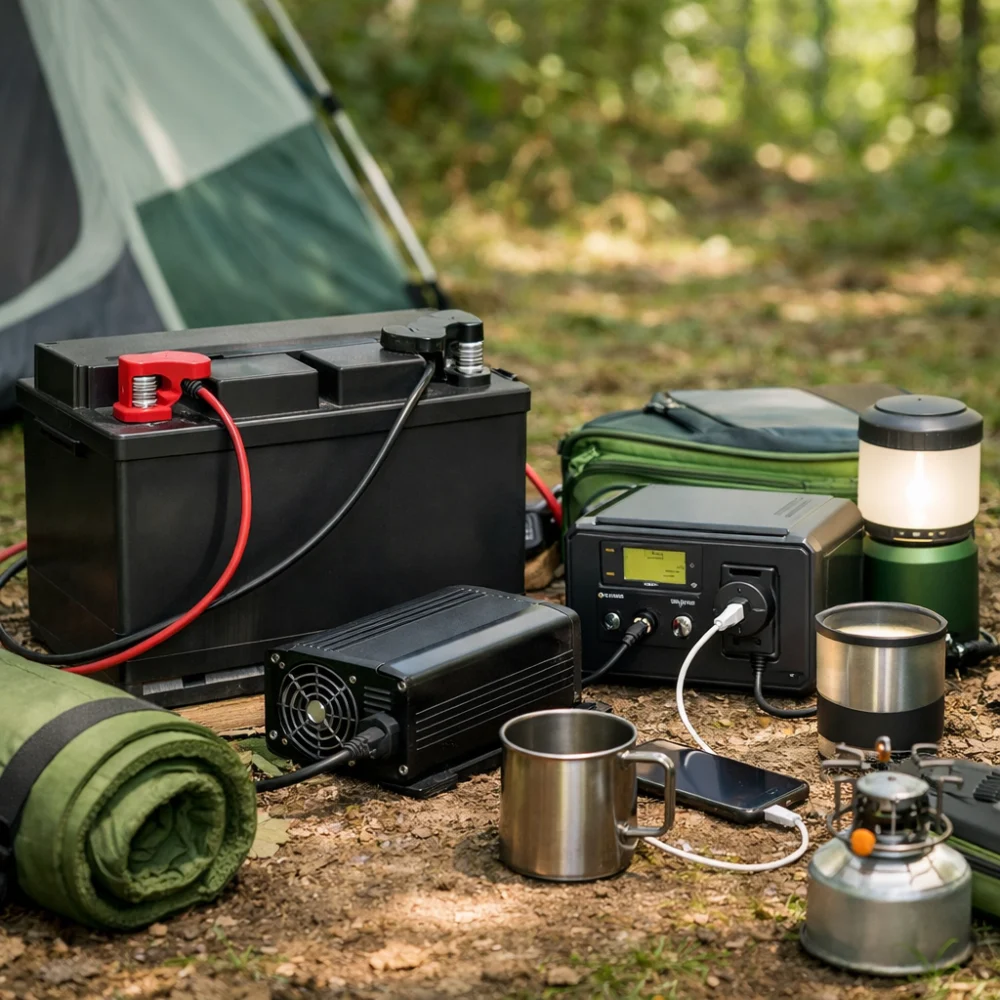

Camping leisure batteries are a practical way to store power for lights, pumps, charging devices and other off-grid camping needs. The right choice depends on how much power you need, how often you camp and how you plan to charge the battery.
It is easy to focus on a single figure such as capacity, but the better choice usually depends on the whole setup. Battery chemistry, weight, charging method and available space all affect what will suit your vehicle, caravan or campsite routine.
This guide helps you compare the main buying factors without getting lost in jargon. It is aimed at shoppers who want a simple way to narrow the options before checking the individual product page.
Compare Camping Leisure Batteries


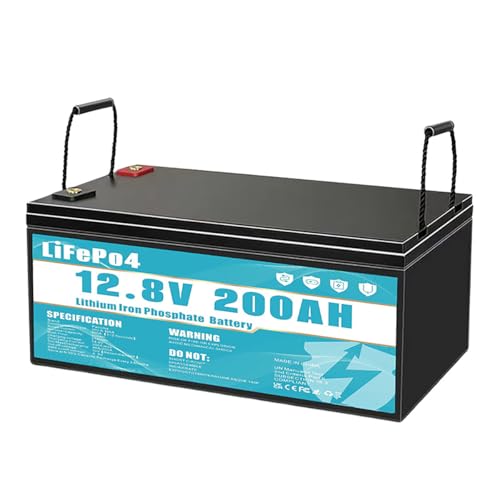

As an Amazon Associate we earn from qualifying purchases.
What should you look for in a camping leisure battery?
The best starting point is to match the battery to your actual power use and the way you camp. A battery with more capacity is not always the best choice if it is too heavy, too large or awkward to recharge. The main trade-off is usually between runtime, weight, charging flexibility and cost.
Specifications vary by model, so always check the individual product page before buying.
| Feature | What It Means | Why It Matters | What To Check |
|---|---|---|---|
| Battery type | The battery chemistry and construction | Affects weight, charging behaviour and how the battery is used | Look for the type stated on the product page and make sure it suits your charger and setup |
| Capacity | How much energy the battery can store | Helps determine how long it can support your equipment | Compare the stated capacity with your expected usage, not just with another battery |
| Weight and size | How easy the battery is to move, fit and mount | Important for portability and space-limited campers | Check the physical dimensions and whether the battery will fit the intended compartment |
| Charging compatibility | How the battery is intended to be charged | Influences convenience and whether it works well with your existing kit | Confirm compatibility with your charger, solar setup or charging routine |
| Terminals and connections | The connection style used to attach cables | Must match your cabling and installation method | Check terminal type and whether any accessories are needed |
| Maintenance needs | How much care the battery typically needs in storage and use | Useful for buyers who want simple ownership | Read the care notes and storage guidance on the product page |
Key factors that affect the right choice
Battery type
Different battery types can suit different camping habits. Some are chosen for simpler ownership, while others may be preferred for lighter weight or different charging characteristics. The important point is to choose the type that matches your setup rather than assuming every leisure battery behaves the same way.
When comparing types, check how the battery is intended to be used, what charging equipment it needs and whether it fits your available space. If you are replacing an existing battery, it is also sensible to compare the new type with the one already in use.
Capacity and runtime
Capacity affects how long the battery can support your lights and devices before needing a recharge. Higher capacity can be useful for longer trips or heavier use, but it may also mean more weight and a larger physical footprint.
Try to think about typical usage rather than the longest possible trip. A battery that looks large on paper may be unnecessary if your camping routine is modest, while a smaller battery may feel limiting if you rely on several powered items each evening.
Weight and portability
For campervan owners and people moving equipment by hand, weight is more than a side note. A heavier battery may be harder to lift, position or remove for storage. That is worth considering even when the capacity looks attractive.
If the battery will stay in one fixed place, portability matters less than fit and practicality. If you need to carry it regularly, a more compact or lighter option may be easier to live with.
Charging and power setup
The battery should suit the way you plan to recharge it. Some buyers mainly charge from mains power, while others may use solar panels or a dedicated charger. A good match reduces hassle and helps avoid buying a battery that is awkward to keep topped up.
Also consider whether you are updating one part of an existing system or starting from scratch. A battery can look suitable in isolation but still be inconvenient if it does not work well with the rest of your kit.
Connections and installation
Terminal style and connection layout matter more than many first-time buyers expect. Even a suitable battery can be awkward if the terminals do not suit your cables or mounting arrangement.
Before buying, confirm how the battery is connected, whether additional connectors are required and whether the installation space allows a clean, safe fit.
Types and variants within this category
This category mainly covers different styles of leisure battery rather than completely different product groups. The broad distinctions usually come from battery chemistry, size and intended use.
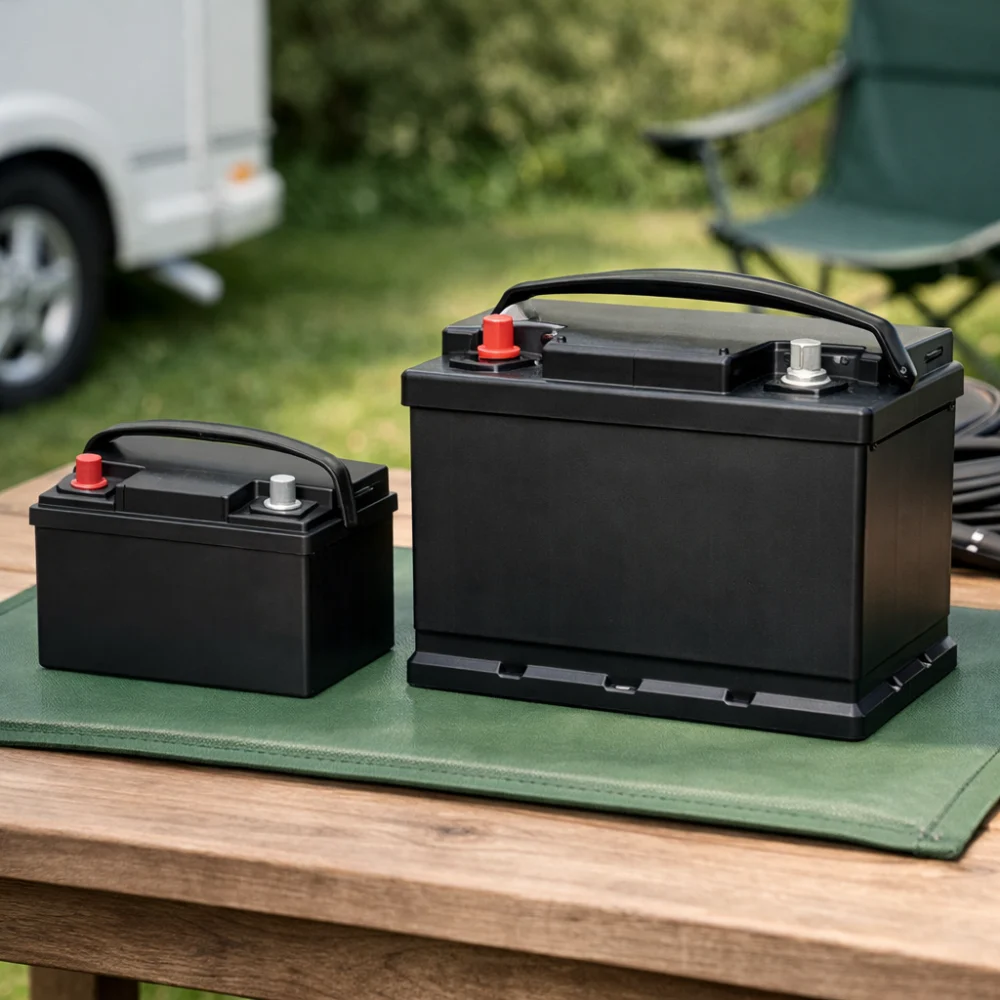
- General-purpose leisure batteries suit many campers who want a straightforward power source for light to moderate use.
- Higher-capacity batteries may suit longer stays or heavier electrical demand, but they can be bulkier and heavier.
- Lightweight or more advanced battery types may appeal to buyers who value easier handling or different charging characteristics, provided the rest of the setup is suitable.
The limitation is that no one variant suits every camping style. The best option depends on how much power you need, how you recharge and how much space or weight you can accommodate.
Which battery suits which kind of camper?
| Buyer need | What usually matters most | Why |
|---|---|---|
| Weekend camper | Simple setup, manageable size and enough capacity for short trips | Short stays usually do not require the largest battery available |
| Longer off-grid stays | Higher capacity, reliable charging plan and good fit with the rest of the power system | Longer use places more demand on stored energy |
| Weight-sensitive setup | Lower weight, easier handling and practical dimensions | Portability can matter as much as raw capacity |
| Replacement buyer | Compatibility with existing charger, terminals and installation space | A replacement needs to fit the current setup cleanly |
| New camper power setup | Battery type, charging method and future flexibility | It is easier to choose once than to work around a mismatch later |
Common mistakes to avoid
- Choosing on capacity alone. A large battery can still be the wrong fit if it is too heavy or difficult to charge.
- Ignoring dimensions. A battery may look suitable until you check the space where it needs to go.
- Assuming all chargers will suit all batteries. Charging compatibility matters, especially if you are replacing an older battery.
- Overlooking terminals and cabling. Small connection differences can create unnecessary installation problems.
- Buying more battery than you need. Extra capacity only helps if you will actually use it.
Safety and suitability checks before you buy
Camping leisure batteries are straightforward to shop for, but they still need to suit the intended use. Check that the battery is appropriate for your vehicle, caravan or campsite setup, and make sure you understand any handling, charging or storage guidance on the product page. If you are changing battery type, confirm that the rest of the system is suitable rather than assuming everything will match automatically.
Care, storage and lifespan considerations
Battery care affects value over time, so it is worth thinking about ownership as well as purchase. Some batteries may need more attention in storage or charging than others, and keeping to the product guidance can make them easier to live with. If the battery will be stored between trips, consider how easy it is to keep in good condition when not in use.
It is also sensible to think about access for cleaning terminals, checking connections and moving the battery safely when needed. These practical details can matter just as much as the headline specification.
How to compare options efficiently
- Work out what you power most often and how long you need it to last.
- Decide which battery type fits your charging method and level of maintenance.
- Check weight, size and terminal layout against your available space and cabling.
- Compare the trade-offs between capacity, portability and convenience.
- Read the individual product page carefully before making the final choice.
Camping leisure battery checklist
- Does the battery suit your camping style and typical power use?
- Is the battery type compatible with your charging setup?
- Will the size and weight work in the space you have?
- Do the terminals and connections match your cabling?
- Have you checked any care or storage guidance?
- Have you compared the likely trade-offs rather than focusing on one figure?
Frequently asked questions
What is a camping leisure battery used for?
It stores power for camping and off-grid use, such as lighting, pumps and charging small devices. The exact use depends on the battery and the rest of the setup, but the main idea is to provide power away from mains electricity.
How do I know what capacity I need?
Start with what you plan to run and how long you usually camp. Short weekend trips often need less than longer off-grid stays, and it is usually better to match real usage than to guess at the largest available option.
Is a heavier battery always better?
No. A heavier battery may offer more stored energy, but it can also be harder to move and fit. The right balance depends on how much power you need and how portable the battery has to be.
Can I replace my current battery with a different type?
Sometimes, but it is important to check charging compatibility, dimensions and connection type first. A replacement that looks similar on paper may still need different handling or charging arrangements.
Do I need special charging equipment?
That depends on the battery type and the system you already have. Before buying, check whether your current charger, solar setup or charging method is suitable for the battery you are considering.
What matters more: capacity or fit?
Both matter, but fit is often the first practical test. A battery only helps if it can be installed safely and used in the space available, and then capacity can be compared within that shortlist.
How should I store a leisure battery between trips?
Follow the product guidance for storage and charging. In general, buyers should think about keeping the battery in suitable condition between trips rather than leaving it unchecked for long periods.
More Camping Leisure Batteries
See all 314 Camping Leisure Batteries →


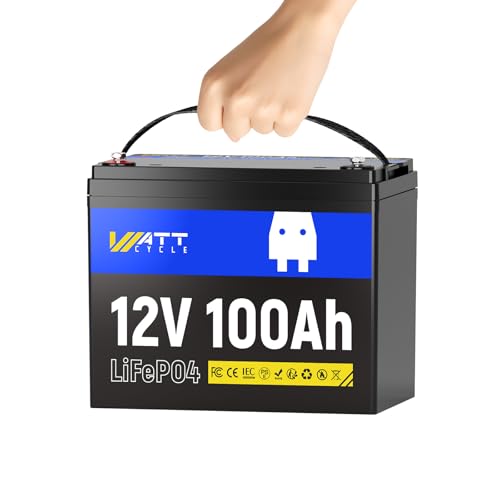

As an Amazon Associate we earn from qualifying purchases.


