

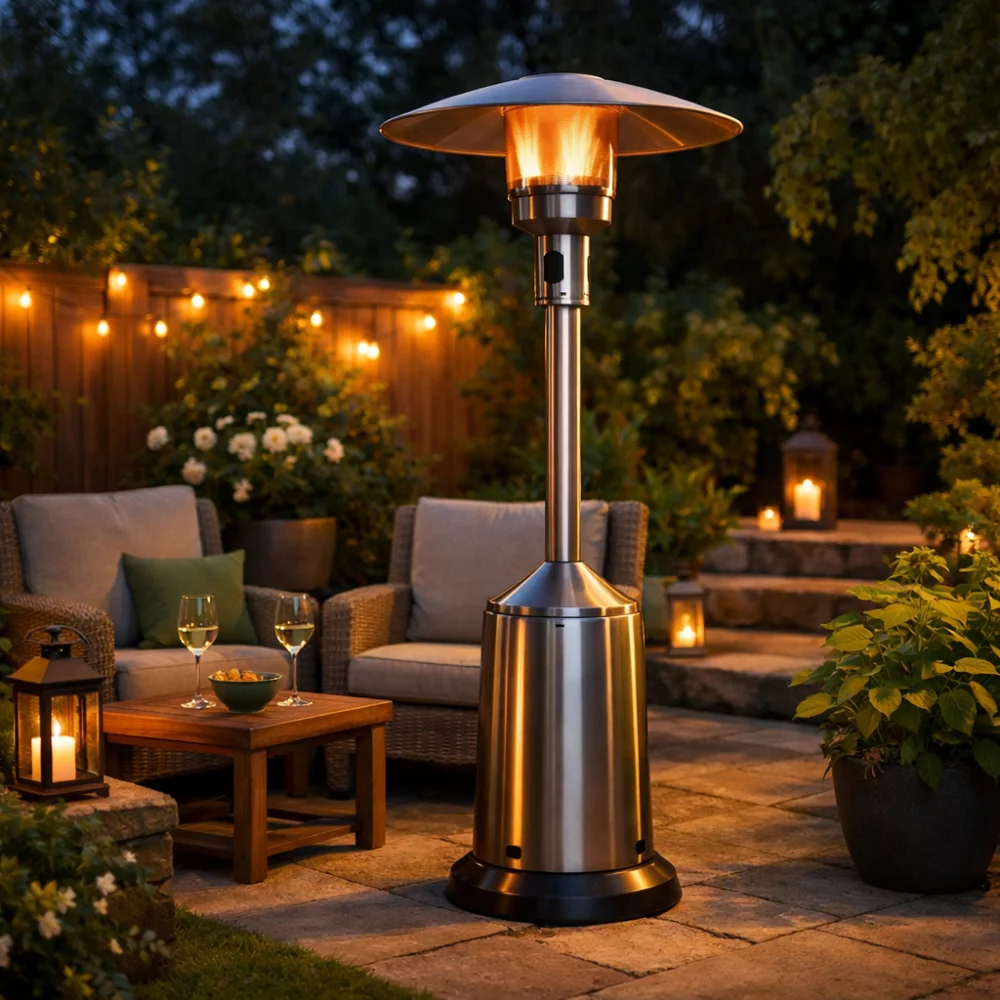

Garden heaters are a practical way to extend time outdoors when the temperature drops, but the right choice depends on where you plan to use it, how much space you have and how much effort you want to put into setup and upkeep.
Some buyers want a compact heater for a small patio or balcony, while others need a freestanding option for occasional entertaining or a more permanent wall-mounted solution. The main challenge is matching the heat source and format to the space, rather than choosing on appearance alone.
This guide explains the key differences to look for so you can compare options sensibly and avoid paying for features that will not suit your garden.
Compare Garden Heaters


As an Amazon Associate we earn from qualifying purchases.
What should you look for in a garden heater?
The best starting point is the place where the heater will be used. Consider whether you need something portable, fixed in one position or suitable for a covered seating area, then compare the heat source, size and control options. A heater that suits a sheltered dining corner may not be ideal for an open patio, and a larger unit is not always the most practical choice.
Specifications vary by model, so always check the individual product page before buying.
| Feature | What it means | Why it matters | What to check |
|---|---|---|---|
| Heat source | How the heater produces warmth, such as electric or gas. | It affects convenience, running style and where the heater can be used. | Choose the type that suits your space, access to power and preferred setup. |
| Form factor | Whether the heater is freestanding, wall-mounted or designed for another fixed position. | It affects footprint, flexibility and how easily the heater fits your layout. | Measure the intended area and think about storage or permanent placement. |
| Heat output and coverage | How much warmth the unit is intended to provide and how widely it spreads. | It helps determine whether the heater is suitable for one seating area or a larger gathering. | Match the heater to the size of the area and how close people will sit to it. |
| Controls and settings | How the heater is adjusted during use. | Simple controls can make the heater easier to live with and adapt to changing conditions. | Look for controls that feel convenient for your routine, such as a remote or multiple settings if offered. |
| Placement and installation | How the heater is positioned and whether it needs mounting or assembly. | It affects convenience, flexibility and whether the unit suits a temporary or fixed setup. | Check the installation requirements and the space needed around the heater. |
| Portability | How easy it is to move the heater between locations. | Useful if you use different seating areas or want to store it away. | Consider weight, base design and whether the heater is intended to stay in one place. |
Key decision criteria explained
Heat source
Garden heaters commonly fall into broad heat-source choices, each with different practical trade-offs. Electric models are often chosen for convenience and straightforward use, while gas-powered options may appeal to buyers who want a different type of outdoor heating setup. The right choice depends less on the label and more on where you can place it, how you plan to use it and how much set-up you are comfortable managing.
Fixed or portable
A fixed heater suits a regular seating area and can feel tidier in use, especially if you want the same spot warmed each time. Portable designs are more flexible if you rearrange furniture, use different parts of the garden or prefer to store the heater when not needed. The trade-off is usually between convenience and flexibility.
Coverage and siting
Think about the part of the garden you are actually trying to warm rather than the whole outdoor area. Heat is most useful when it is directed where people sit, so a compact dining corner may need a different style from a larger patio gathering space. Positioning also matters: a sheltered spot may feel very different from an open one even with the same heater.
Controls and usability
Simple controls can make a garden heater easier to use regularly, especially if you want to adjust warmth without walking over to the unit every time. Features such as multiple settings or remote control can add convenience, but only if they genuinely fit your routine. It is worth checking whether the controls are easy to reach and understand before buying.
Garden heater types and variants
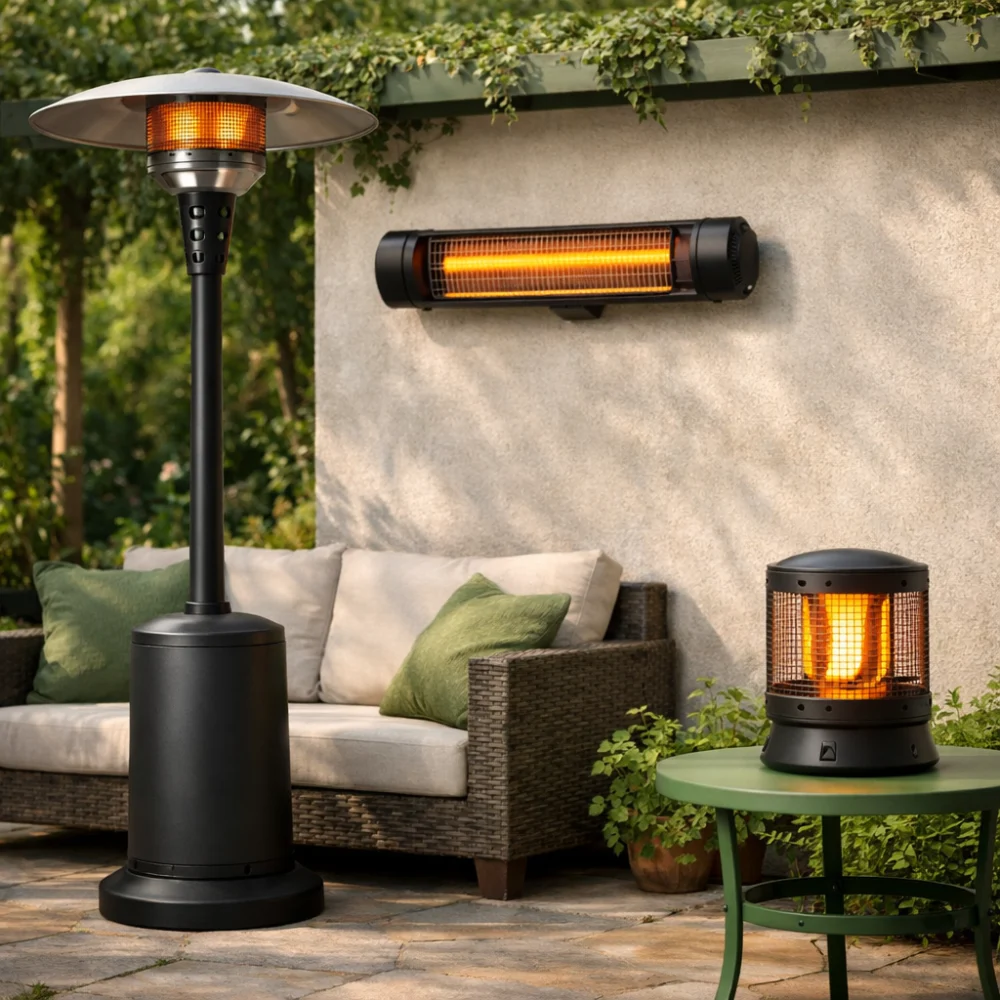
The main variation in this category is the style of heater and how it is intended to be used. Freestanding heaters suit flexible placement and can be moved more easily, while wall-mounted designs save floor space and work well in more fixed seating areas. There are also compact heaters designed for smaller outdoor spaces, which can be useful when footprint is limited.
One style is not automatically better than another. A large freestanding heater may feel more adaptable, but a wall-mounted unit can be more convenient if you know exactly where you want the warmth to be directed. The limitation of any one type is usually a trade-off between flexibility, footprint and how permanent the installation feels.
Which type suits different buyers?
| Buyer need | What to prioritise | Why it helps |
|---|---|---|
| Small patio or balcony | Compact footprint and straightforward positioning | Space is limited, so a bulky unit may be awkward. |
| Regular entertaining | Coverage that suits the seating area and easy adjustment | Guests may move around, so flexibility matters. |
| Fixed seating zone | Wall-mounted or otherwise stable placement | It keeps the heater in the right place without taking floor space. |
| Occasional use | Portable design and simple storage | You may prefer to bring it out only when needed. |
| Low-fuss setup | Simple controls and a placement style that fits your routine | The heater is more likely to be used if it is easy to live with. |
Common mistakes to avoid
- Choosing on looks alone. A heater needs to suit the space and use pattern first; appearance comes after practicality.
- Ignoring placement. A unit that is too large, too fixed or awkward to position may be less useful than a simpler design.
- Overestimating how much area it will warm. Outdoor heat is localised, so it is wise to focus on the main sitting area rather than expecting whole-garden coverage.
- Forgetting storage. If the heater will not stay outside year-round, think about where it will be kept when not in use.
Safety and suitability considerations
Garden heaters are outdoor products, so it is important to match them to the intended setting and follow the product information closely. Check clearances, placement requirements and any notes about sheltered or open-air use before you buy. If you are unsure whether a heater suits your space, read the individual product page carefully and confirm the details that matter to your setup.
Care, storage and long-term ownership
Long-term satisfaction often comes down to how easy the heater is to maintain and store. Some units will need more attention than others, especially if they are moved often or kept outside between uses. Consider how you will protect it from weather exposure, where it will be stored and whether any parts or consumables affect ongoing use. Specifications vary by model, so always check the individual product page before buying.
How to compare options efficiently
- Start with the space you want to heat and the way you use it.
- Decide whether you need a portable, freestanding or fixed heater.
- Compare the heat source, placement needs and control options.
- Check the likely trade-offs for storage, installation and flexibility.
- Read the individual product page for the details that matter most to your setup.
Summary buyer checklist
- Is the heater suitable for your patio, garden or seating area?
- Does the format fit your available space?
- Will the heat source suit your preferred setup?
- Are the controls and adjustment options practical for regular use?
- Can you store or position it where you need to?
- Have you checked the individual product page for model-specific details?
Frequently asked questions
How do I choose the right garden heater size?
Start with the area where people will actually sit, not the full garden. A heater that suits a compact corner may be more practical than a larger unit that is difficult to place. Think about how close the seating will be to the heater and whether the layout is fixed or likely to change.
Are freestanding heaters better than wall-mounted ones?
Neither is always better. Freestanding heaters are usually more flexible, while wall-mounted options can save floor space and feel neater in a fixed seating area. The right choice depends on whether you value portability or a more permanent setup.
What is the main difference between electric and gas garden heaters?
The biggest difference is how they are used in practice. Electric heaters are often chosen for convenience, while gas heaters may suit buyers who want a different kind of outdoor heating arrangement. Consider where the heater will sit, what power or fuel access you have and how much handling you want.
Do I need a heater with multiple settings?
Not always, but multiple settings can make a heater more adaptable if the weather or number of people changes. If you usually use the same seating area in similar conditions, a simpler model may be enough. The most useful setup is the one you will actually use comfortably.
Can one garden heater warm a whole patio?
That depends on the size and layout of the patio, but it is better to think in terms of warming people in a particular area. Outdoor heating is usually localised, so a single unit may be ideal for a seating zone but less effective for a much larger space. Check the product information with your intended use in mind.
What should I check before buying for a covered area?
Look at the product page for guidance on placement and intended use, and make sure the heater suits the conditions where it will be installed. A covered area can change how a heater feels in use, so it is worth confirming suitability rather than assuming all models behave the same way.
More Garden Heaters
See all 214 Garden Heaters →



As an Amazon Associate we earn from qualifying purchases.


