
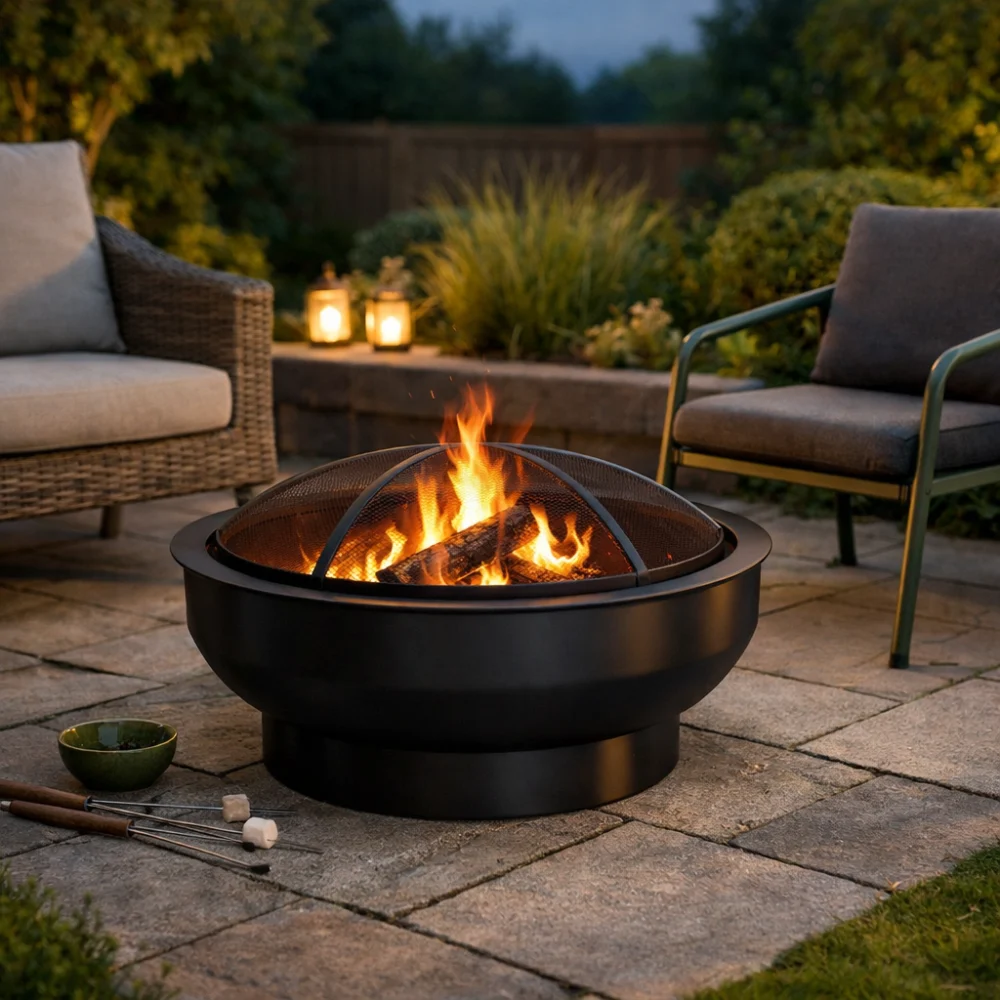
Garden fire pits can turn an outdoor space into somewhere you can sit a little longer and enjoy cooler evenings. They are also a practical purchase, because the right choice depends on where you will place it, how much heat you want and whether you prefer a simple focal point or a model with extra functions.
This guide is for buyers comparing fire pits for occasional social use, family gatherings or a more permanent garden feature. It focuses on the decisions that are easiest to get wrong at category level, before you narrow things down to an individual product.
Because styles vary widely, it helps to think about space, fuel type, portability and how much cleanup you want to manage. Specifications vary by model, so always check the individual product page before buying.
What should you look for in a garden fire pit?
The best starting point is the way you plan to use it. A simple fire pit may suit occasional warmth and atmosphere, while a larger or more enclosed design may feel better for regular entertaining. The main trade-off is often between ease of use, heat focus, visual style and how much effort you want to spend on setup and maintenance.
Choose the size and style that fit your space first, then compare practical details such as base design, any safety accessories, and whether the fire pit is meant to be moved or kept in one place.
| Feature | What it means | Why it matters | What to check |
|---|---|---|---|
| Size and footprint | The overall space the fire pit occupies in the garden | It affects where you can place it and how comfortably people can sit around it | Measure the intended area and check the product dimensions |
| Material and build | The construction used for the bowl, frame or outer body | It influences appearance, weight and how substantial the fire pit feels | Read the product description for the main materials and construction style |
| Fuel approach | Whether the fire pit is designed for wood, charcoal or another fuel format | It changes the atmosphere, upkeep and how you prepare the fire | Confirm the intended fuel type on the individual listing |
| Portability | How easy it is to move or reposition | Useful if you want flexibility or need to store it away after use | Look for weight cues, handles or a more compact design |
| Extras and accessories | Added features such as screens, pokers, grills or storage space | These can add convenience, but also add complexity | Check exactly what is included rather than assuming accessories come with it |
Key decision criteria explained
Size and placement
Fire pits range from compact designs to larger statement pieces. A compact model may be easier to place and store, while a bigger one may suit a more open seating area. Think about clear space around the unit, how many people you usually host and whether the fire pit will sit on one spot or be moved between uses.
Material and appearance
Material affects both the look and the day-to-day feel of the product. Metal fire pits often have a more traditional open look, while other designs may feel more decorative or architectural. The practical question is not only how it looks, but how easy it will be for you to handle, position and maintain.
Fuel and upkeep
Different fire pits are built with different fuel preferences in mind, and that choice affects both use and cleaning. A simpler open design may be easy to understand, while a model with added cooking or containment features can involve more parts to keep in order. Check what fuel the product is intended for and whether any accessories are essential or optional.
Accessories and added functions
Some fire pits are straightforward warmth-and-atmosphere products, while others may include extras such as a grill or spark screen. These additions can be useful if you want more than a basic bowl, but they can also make the product heavier, busier or more involved to use. Choose extras only if you are confident you will use them.
Types of garden fire pit
Within this category, the main differences are usually about shape, openness and added features rather than radically different product families.
- Open bowl fire pits: straightforward designs that focus on atmosphere and heat. They can suit buyers who want a simple centrepiece and do not need many extras.
- Fire pits with screens or guards: these may feel more contained and are often chosen by buyers who want an added layer of reassurance around sparks or embers.
- Fire pits with cooking features: these are for people who want occasional grilling as well as warmth. They are only worth considering if you are happy with the extra cleaning and setup they may involve.
- Fire pits with storage or integrated bases: these can be attractive if you want a more substantial look or a place to keep fuel nearby, but they may be less portable.
Which fire pit suits your needs?
| Buyer need | Features to prioritise | Why |
|---|---|---|
| Occasional social use | Straightforward design, manageable size, easy setup | You may care more about convenience and atmosphere than extra functions |
| Regular entertaining | Stable build, comfortable footprint, useful accessories | A more substantial model can feel better suited to repeated use |
| Small patio or compact garden | Smaller footprint, easy repositioning, simple storage | Space constraints make size and portability especially important |
| Cooking as well as warmth | Compatible grill features and enough working space around the fire | Extra functions only help if the design is intended for them |
| Low-fuss ownership | Simple construction, fewer detachable parts, easy cleaning | Fewer extras usually mean less to assemble and maintain |
Common mistakes to avoid
- Choosing by appearance alone: a fire pit that looks right may still be awkward for your space or too involved for the way you want to use it.
- Overlooking footprint: a larger model can dominate a seating area or leave too little room around it.
- Assuming accessories are included: screens, pokers and grill parts are not always part of the package, so check the listing carefully.
- Ignoring maintenance: more enclosed or feature-rich designs can require more cleaning and storage planning.
- Buying for a use you will not repeat: if you only want occasional warmth, a complex multi-function model may be more than you need.
Safety and suitability checks
Garden fire pits are outdoor products, so the main buying decision is whether the design suits your space and your intended use. Check the product information for any intended fuel type, included accessories and any guidance that affects where and how the fire pit should be used. It is also sensible to think about ground conditions, nearby seating and whether you want a more open or more contained design.
If you are unsure about a model, favour the simpler option and read the individual product details closely. The safest choice is usually the one that matches your space, your experience and the level of upkeep you are willing to manage.
Maintenance, storage and lifespan considerations
Fire pits are easier to live with when you plan for cleaning and storage before you buy. Open designs are often simpler to clear out after use, while models with screens, grates or other fitted parts may need a little more attention. If you do not want the product left outside all the time, consider whether it is practical to move or cover.
Material choice also affects how much care you may need to think about over time. A heavier, more substantial design may feel better in use but be less convenient to move. A lighter model may be easier to store, but you should still check that it feels stable enough for the space you have in mind.
How to compare options efficiently
- Start with the space you have and decide where the fire pit would realistically sit.
- Choose the broad style that fits your use, whether that is a simple fire feature or one with extra functions.
- Compare the practical details that matter most: size, material, fuel type and portability.
- Check what is included with the product rather than assuming accessories come as standard.
- Read the individual product page for the exact specification and any usage notes before you buy.
Summary buyer decision checklist
- Does the fire pit fit the space you have available?
- Is the style suited to occasional use, regular entertaining or cooking?
- Do you know which fuel type the product is designed for?
- Are any accessories included, or will they need to be bought separately?
- Will the design be easy enough for you to clean, move or store?
- Have you checked the individual product page for the exact specification?
Frequently asked questions
What is the main difference between a simple fire pit and one with extras?
A simple fire pit is usually chosen for atmosphere and warmth with less fuss. A model with extras may add convenience or extra uses, but it can also mean more cleaning and more parts to think about. Choose extras only if they suit the way you plan to use the product.
Is a bigger fire pit always better?
Not necessarily. A bigger design may suit a larger seating area, but it can be harder to position and may feel excessive for a small patio. The right size is the one that fits your space and your typical gathering, not the one that looks largest.
Should I choose a fire pit with a screen or guard?
That depends on how contained you want the fire to feel and whether you want an added feature in the design. Some buyers prefer the simpler look of an open bowl, while others value the extra structure. Check the product details to see exactly what the guard does and whether it is included.
Can I use a fire pit for cooking?
Only if the product is designed for that purpose and the listing confirms the relevant features. Some fire pits are for heat and ambience only, while others include grill elements or similar accessories. Do not assume cooking suitability from the shape alone.
What should I check before placing one in the garden?
Check the available space, the intended fuel type and any guidance about accessories or placement. It also helps to think about how close the fire pit will be to seating and how easy it will be to move or store. Specifications vary by model, so always check the individual product page before buying.
How much maintenance does a garden fire pit need?
That varies by design and how often you use it. Simpler models are usually easier to clean and store, while added features can mean more care. If low maintenance matters to you, favour a straightforward construction with fewer detachable parts.

