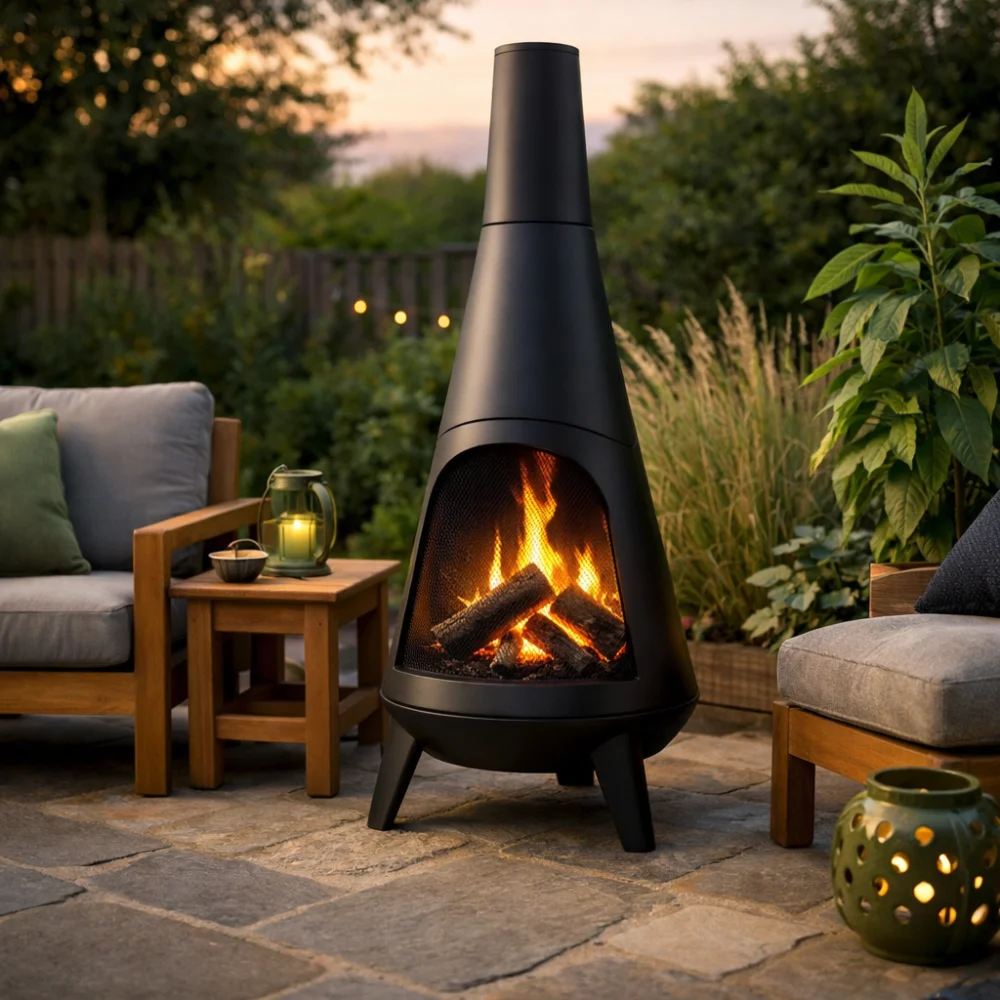
Garden chimeneas are a popular way to add a contained fire feature to a patio, terrace or sheltered outdoor seating area. They can be chosen for warmth, atmosphere and, in some cases, light cooking, but the right choice depends on how you plan to use it and where it will sit.
If you are comparing chimeneas for the first time, it helps to focus on shape, material, size and how much smoke control or heat direction you want. That makes the choice much easier than trying to compare every decorative detail.
This guide covers the practical buying questions: what a chimenea is, what different styles suit, what to check on the individual product page and which trade-offs matter most.
What should you look for in a garden chimenea?
The best starting point is to decide where it will go and what you want it to do. A chimenea can be primarily decorative, used for ambience and warmth, or chosen with occasional cooking in mind, but those uses do not always overlap neatly. The main trade-off is usually between traditional looks, robust construction and convenience of handling.
Specifications vary by model, so always check the individual product page before buying.
| Feature | What It Means | Why It Matters | What To Check |
|---|---|---|---|
| Material | The body is often made from clay, steel or another metal | Affects appearance, weight, handling and the feel of the product | Material description, whether it is intended for outdoor use and any care notes |
| Size and footprint | How much space the chimenea takes up | Important for patios, smaller gardens and storage | Overall dimensions and the space needed around it |
| Style of opening | How the fire chamber and opening are shaped | Influences how the product looks and how the heat is directed | Design details and whether it matches the intended use |
| Cooking suitability | Whether the product is designed for grilling or simply as a heater | Some buyers want occasional cooking, others only want a fire feature | Any stated cooking function and what accessories are included |
| Covering and storage needs | Whether the chimenea may need protection when not in use | Helps preserve appearance and reduce weather exposure | Care guidance and whether a cover is recommended |
Main decision criteria
Material and feel
Material often shapes the whole buying decision. Clay-style chimeneas are usually chosen for a more traditional look, while metal versions may appeal if you want a different aesthetic or a design that feels easier to handle. The trade-off is that the look you prefer may not be the most convenient option for storage or moving.
Size and placement
Think about both the footprint on the ground and the clearance around the chimenea. A compact model may suit a smaller patio, while a larger one may feel more balanced in a bigger seating area. Also consider access for moving it in and out of storage.
Heat and use intention
Some buyers mainly want atmosphere and a focal point, while others want a practical source of warmth. A chimenea’s shape can help direct heat, but the actual experience will vary with the model, fuel and surroundings. If you want occasional cooking, make sure the product is specifically described that way rather than assuming every chimenea is suitable.
Weather exposure and upkeep
Outdoor fire features are exposed to moisture, soot and general wear, so the amount of care matters. If you expect to leave the chimenea outside for long periods, check whether protective covering, seasonal storage or regular cleaning is recommended. A simpler finish may be easier to maintain, but it may not deliver the look you want.
Types and variants you may see
Garden chimeneas are usually compared by construction and style rather than by highly technical features. That makes visual preference important, but it should not be the only factor.
- Traditional clay-style chimeneas: Often chosen for a classic garden look and a more decorative feel. They may suit buyers who value appearance first, but they can be less practical to move or store.
- Metal chimeneas: Often preferred for a more robust or contemporary look. They may be easier to position, but the finish and overall style vary widely.
- Chimeneas with cooking features: Suitable for buyers who want occasional grilling as well as a fire feature. The limitation is that cooking capability is model-specific and should not be assumed.
- Accessory-led purchases: Some buyers mainly need a cover or protective add-on for an existing chimenea. In that case, fit and size compatibility matter more than style.
Which chimenea suits which buyer?
| Buyer need | What usually matters most | Why | What to prioritise |
|---|---|---|---|
| Small patio or limited storage | Compact footprint and manageable weight | Space and handling are the main constraints | Overall dimensions, clearance and ease of moving |
| Decorative focal point | Shape, finish and traditional styling | The chimenea may be as much about appearance as function | Material, finish and visual design |
| Warmth for seating areas | Practical fire chamber and directed heat | Comfort around the seating space matters more than ornament | Opening shape, size and stated purpose |
| Occasional cooking | Explicit cooking suitability | Not every chimenea is designed for food use | Product description and any included accessories |
| Seasonal use with storage | Covering and weather protection | Stored or covered items may last better and stay cleaner | Care guidance and matching cover size |
Common mistakes to avoid
- Choosing by looks alone: A striking finish is useful, but it should still suit your space and intended use.
- Assuming every chimenea can cook: If grilling matters, check that cooking use is explicitly stated.
- Ignoring size and clearance: A product can seem manageable online but feel large once placed on a patio.
- Overlooking storage: If the chimenea will spend time outdoors, think about covering and weather exposure from the start.
- Not checking the material description carefully: Some buyers want a traditional look, while others want something easier to handle or maintain.
Safety and suitability
Choose a chimenea only for the outdoor space it is meant to serve, and make sure the model suits the way you plan to use it. Check the individual product page for any guidance on placement, materials and intended use, especially if you want to use it for cooking or leave it outside for long periods. Keep in mind that decorative style does not tell you everything about suitability or care.
Maintenance, storage and lifespan considerations
Most chimeneas benefit from simple regular care, especially if they are exposed to the weather. Cleaning, covering and storing properly when not in use can help reduce visible wear and keep the product looking better for longer. If you are buying a chimenea to stay outdoors, consider whether a cover is practical and whether you have a dry place to store it off-season.
How to compare options efficiently
- Decide whether you want atmosphere, warmth, occasional cooking or mainly decoration.
- Check the size and shape against your available outdoor space.
- Compare the material and finish for the look and handling you prefer.
- Look for any stated cooking suitability, cover requirements or care notes.
- Read the individual product page to confirm the details that matter most to you.
Summary buyer checklist
- Have I chosen a chimenea for the right purpose?
- Will the size suit my patio or garden area?
- Does the material match the look and upkeep I want?
- Do I need a cooking-capable design or just a fire feature?
- Will I need a cover or storage space?
- Have I checked the individual product page for the details that matter most?
Frequently asked questions
What is the main advantage of a chimenea over an open fire feature?
A chimenea usually gives a more contained fire experience and a stronger decorative focal point. Many buyers like the way it channels the fire into a distinct shape rather than leaving the fire fully open. The right choice depends on whether you value style, heat direction or cooking use most.
Are chimeneas mainly decorative or practical?
They can be either, depending on the model and how you plan to use them. Some buyers want a garden feature with visual appeal, while others want a source of warmth for outdoor seating. If practicality matters most, check the description carefully rather than relying on appearance alone.
Do all chimeneas suit cooking?
No. Cooking capability is model-specific and should be stated clearly on the product page if it is intended. If you want to grill or cook occasionally, make sure that is part of the product’s design rather than an assumption.
Which material is easiest to live with?
There is no single answer because it depends on whether you value appearance, weight or maintenance. A traditional clay-style model may suit a certain look, while metal may be chosen for a different balance of handling and style. Check the product page for material and care information before deciding.
Do I need a cover for a garden chimenea?
A cover is often worth considering if the chimenea will be exposed to the weather. It can help reduce dirt and weathering when the product is not in use. If you are buying one, check the size carefully so it suits the model.
What should I measure before buying?
Measure the area where it will sit and think about the space around it as well as the footprint itself. You may also want to consider where it will be stored when not in use. That helps avoid choosing a product that feels awkward to position or protect.
Can a chimenea be a good choice for a small garden?
Yes, if you choose a size that fits the space comfortably and leaves enough room around it. In smaller gardens, compact dimensions and manageable handling usually matter more than decorative extras. Always check the product dimensions before deciding.