

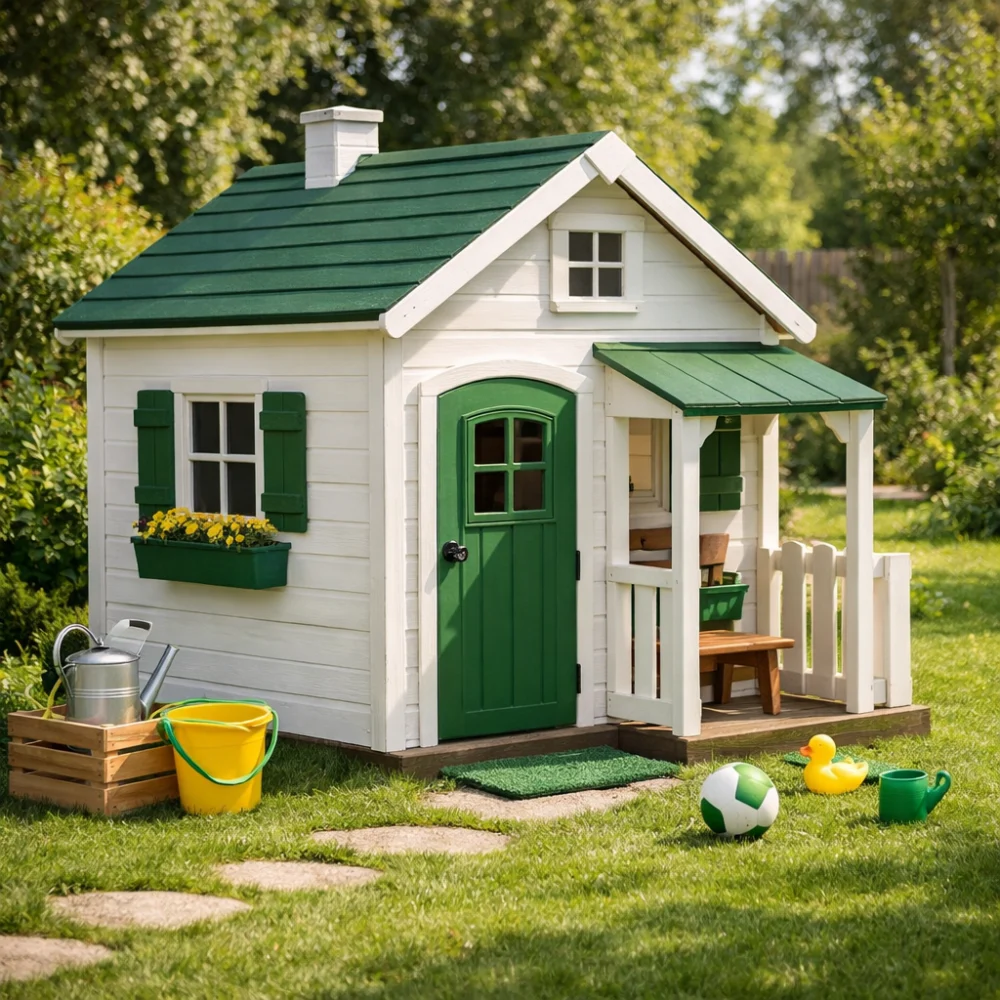

Outdoor playhouses can turn a garden corner into a place for imaginative play, quiet time and make-believe games. The choice can feel broad because playhouses vary in size, style, material and how they are meant to be used.
This guide helps you compare the options in a sensible way. It focuses on what affects day-to-day use, where the trade-offs usually are and which checks matter before you decide.
Because playhouses are bought for children of different ages and for different gardens, the right choice is usually about fit rather than features alone. A compact plastic house may suit one family, while a larger timber design may suit another.
Compare Outdoor Playhouses


As an Amazon Associate we earn from qualifying purchases.
What should you look for first in an outdoor playhouse?
Start with the available space, the child’s age and the kind of play you want to encourage. Then compare material, size, access, weather exposure and whether you want a simple hideaway or a more detailed play setting. The main trade-off is usually between convenience and permanence: lighter, simpler playhouses are easier to place, while larger or more substantial designs may feel more settled in the garden.
Specifications vary by model, so always check the individual product page before buying.
| Feature | What it means | Why it matters | What to check |
|---|---|---|---|
| Size and footprint | The amount of floor space and headroom the playhouse needs | It affects where the playhouse can sit and how comfortably children can use it | Measure the garden area and compare the stated dimensions with clear space around it |
| Material | Commonly plastic or timber, depending on the design | Material influences appearance, upkeep and how the playhouse weathers outdoors | Check the product page for the material type and any care notes |
| Access and layout | Door openings, windows, serving hatches or play features | These shape how children enter, interact and use the space | Look for the style of opening and whether it suits the age and play pattern |
| Assembly and installation | How much putting together or site preparation may be involved | It affects convenience, time and whether the chosen spot is suitable | Review assembly notes, required clearances and any ground preparation guidance |
| Weather exposure | How the playhouse may cope with being kept outdoors | Outdoor use brings questions about shelter, stability and storage over time | Check whether the design is intended for outdoor placement and whether cover or maintenance is recommended |
Key decision criteria
Space and placement
The first practical question is where the playhouse will sit. A model that looks manageable in a picture may still need more room than expected once you allow for access, surrounding play space and any path children will use to reach it. If your garden is compact, a simpler footprint is often easier to live with than a bigger structure that crowds everything else.
Material and upkeep
Material affects both appearance and maintenance. Plastic-style playhouses are often chosen for straightforward cleaning and lighter visual impact, while timber designs can feel more traditional and may need more attention to keep them looking tidy outdoors. The better choice depends on whether you want minimal upkeep or are happy to do a little more care for the look you prefer.
Age and style of play
Think about how the child will actually use it. Younger children may be content with a small den-style space, while slightly older children may enjoy extra features such as a serving window or a more detailed “house” layout. A more elaborate design can support imaginative role play, but it is not always necessary if the main aim is simple outdoor fun.
Access and comfort
Door height, window openings and internal space can all affect how welcoming the playhouse feels. A child who is expected to use it regularly will usually do better with an opening that is easy to move through and a layout that does not feel cramped. For shared use, it is worth thinking about whether the design allows more than one child to play comfortably at once.
Common types of outdoor playhouse
Simple playhouse or den
This is the most straightforward style: a compact shelter-like play space with a basic house shape. It suits buyers who want a clear, easy-to-understand play item without too much bulk. The main limitation is that it may offer less room for role play features.
House-style playhouse with extra details
These designs add features such as windows, shutters, counters or themed spaces. They can feel more engaging for children who like pretend shop, café or home play. The trade-off is that more detail can mean a larger footprint and more to assess before buying.
Timber-style garden playhouse
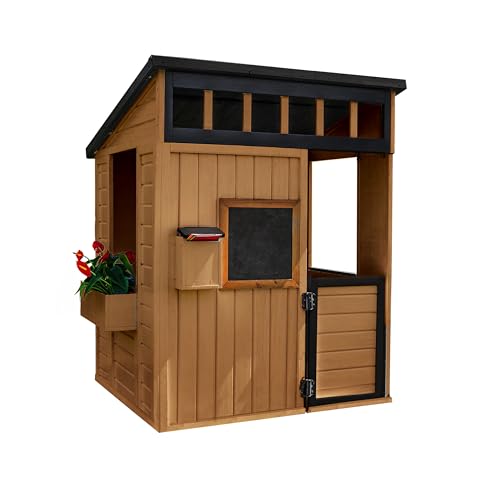
A timber-style design often appeals to buyers who want a more natural look in the garden. It can sit well in a permanent family space and may feel more like a small outdoor room. The drawback is that you may need to think more carefully about upkeep and weather exposure.
Lightweight plastic playhouse
Plastic models are often chosen for ease of cleaning and simpler placement. They can be a practical option for families who want something less demanding to maintain or move. Their limitation is that they may not suit every garden style or every buyer’s preference for appearance.
Which playhouse suits which buyer?
| Buyer need | What tends to help | Why |
|---|---|---|
| Small garden | Compact footprint and simple layout | It is easier to place without taking over the space |
| Low-maintenance choice | Easy-clean surfaces and straightforward design | It reduces the amount of ongoing care |
| Imaginative role play | Windows, counters or themed details | These features can make pretend play more engaging |
| More permanent garden feature | Substantial construction and a style that suits the setting | It may feel more settled as part of the garden layout |
| Shared play between siblings | More generous internal space | It is easier for more than one child to use it together |
Common mistakes and misunderstandings
Choosing by appearance alone. A playhouse can look ideal in a photo but still be awkward for the space you have. Checking the footprint, height and access needs usually prevents disappointment.
Assuming all outdoor playhouses need the same upkeep. Different materials and finishes can have very different maintenance expectations. It is better to check what care the individual product page suggests than to assume they are all similar.
Forgetting about the ground below it. A playhouse is only as practical as the surface it sits on. Make sure the intended location is suitable and that there is enough room to use it safely and comfortably.
Overlooking how the child plays. A highly detailed design is not always a better choice if the child prefers simple, open-ended play. The best option is the one that matches how the space will actually be used.
Safety and suitability caveats
Outdoor playhouses should be chosen with the child’s age, ability and supervision needs in mind. It is also sensible to check the product page for any guidance on assembly, outdoor positioning and recommended use. If a playhouse is intended to stay outside, think about whether the location is sheltered enough and whether you are happy with the maintenance that may follow.
Maintenance, storage and lifespan considerations
How long a playhouse stays looking and working well depends on its material, the weather exposure it gets and how much care you are prepared to give it. Some buyers will be happy with occasional cleaning and inspection, while others may want a design that needs very little attention. If the playhouse will be left outdoors all year, it is worth considering how easy it would be to clean, cover or reposition if needed.
How to compare options efficiently
- Work out where the playhouse will go and how much room you can spare.
- Decide whether you want a simple den, a more detailed house-style design or something more traditional.
- Compare the material, layout and any special features that affect everyday use.
- Check the practical details on the individual product page, including assembly and care notes.
- Choose the option that fits the space, the child’s play style and the upkeep you are willing to handle.
Summary buyer decision checklist
- Have you measured the available space, including room around the playhouse?
- Does the material suit the look and upkeep level you want?
- Is the style right for the child’s age and preferred kind of play?
- Have you checked access, internal space and any special features?
- Are you happy with the assembly, placement and care requirements?
- Does the product page give enough detail to judge suitability?
Frequently asked questions
Are outdoor playhouses suitable for small gardens?
Yes, provided you choose a compact design and leave enough surrounding space for access and play. In a small garden, the footprint matters more than the visual style, because an oversized playhouse can make the whole area feel crowded.
Should I choose plastic or timber?
That depends on whether you value easy upkeep or a more traditional look. Plastic is often easier to clean, while timber may feel more like a permanent garden feature. The better choice is the one that fits both your style preference and your willingness to maintain it.
Do playhouses need assembly?
Many outdoor playhouses do involve some assembly, but the amount varies by model. It is worth checking the product page for the expected setup, the tools required and any guidance about where it should be installed.
Can more than one child use a playhouse?
Sometimes, but comfort depends on the internal space and the design. If siblings will share it, look for a size that allows them to move and play without it feeling cramped.
What matters most when buying for imaginative play?
Features that support role play, such as windows, counters or themed details, can make a difference. Just as important is a layout that feels easy to enter and use, because children often return more often to spaces that feel natural and comfortable.
How much maintenance will a playhouse need?
That varies by material and finish. Some designs will only need basic cleaning, while others may need more regular care if they are left outdoors. Specifications vary by model, so always check the individual product page before buying.
What should I check before placing one in the garden?
Confirm the footprint, make sure the ground is suitable and think about how the playhouse will sit in relation to paths, planting and other garden features. It is also sensible to check whether the product has any specific placement or care guidance.
More Outdoor Playhouses
See all 219 Outdoor Playhouses →



As an Amazon Associate we earn from qualifying purchases.


