Trampolines are a popular garden purchase for active family play, casual exercise and outdoor fun. The right choice depends less on a single headline feature and more on how the trampoline will be used, who will use it and how much space you have available.
This guide helps you compare the main types and features without getting lost in minor details. It focuses on the decisions that affect fit, comfort, convenience and day-to-day suitability.
If you are buying for children, the main questions are usually about size, enclosure style and how much supervision the space allows. If you want one for mixed family use, you may care more about build feel, access and how easy it is to keep in good condition.
What should I look for in a trampoline?
Start with the space you have, the people who will use it and the level of enclosure and access you want. A bigger trampoline may feel more versatile, but it also needs more garden space and can be harder to position well. Shape, frame style and included accessories then help you narrow the choice to a practical option.
Specifications vary by model, so always check the individual product page before buying.
| Feature | What It Means | Why It Matters | What To Check |
|---|---|---|---|
| Size | The overall footprint and jumping area | Determines how much space it uses and how roomy it feels | Measure the garden area and leave clear space around the trampoline |
| Shape | Round, rectangular or another layout | Affects the feel of the bounce and how the mat is used | Choose the shape that suits the intended users and available space |
| Enclosure | Netting or other barrier around the jumping area | Helps define how contained the jumping space feels | Check how the enclosure attaches and how the entrance is arranged |
| Frame and padding | The supporting structure and protective edging | Influences stability, comfort and how exposed the springs or frame feel | Look for clear product information about the frame and protective pads |
| Ladder and access | How users get on and off the trampoline | Important for younger users and everyday convenience | Check whether a ladder is included and whether access suits the intended users |
| Included extras | Accessory items supplied with the trampoline | Can improve convenience but should not distract from the core build | Confirm exactly what is included on the product page |
Which details matter most when choosing one?
Size and garden fit
Trampoline size affects both play value and placement. A compact model may suit a smaller garden or a space shared with other outdoor furniture, while a larger one may feel more comfortable for family use. Remember to allow for the full footprint and practical access around it, not just the jumping area itself.
Shape and bounce feel
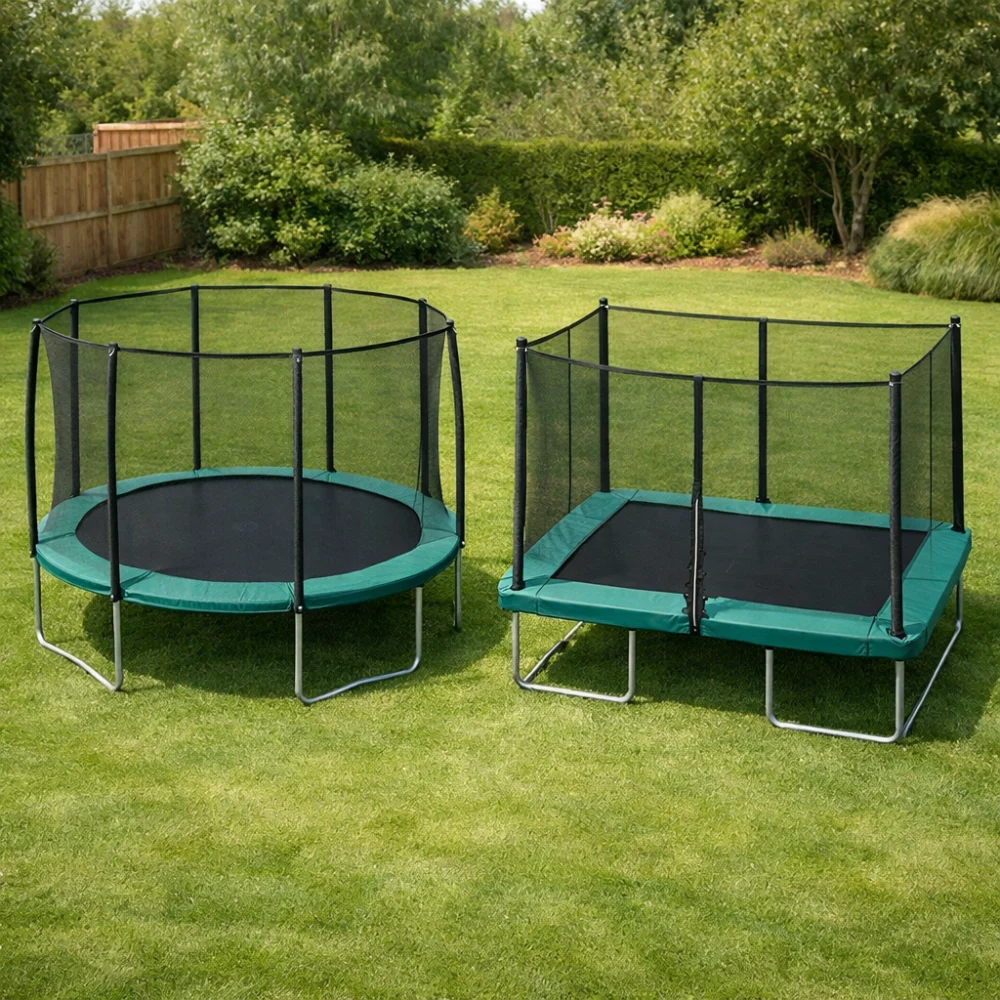
Shape is worth paying attention to because it changes how the trampoline is used. Round models are common for general family use, while other shapes may appeal to buyers looking for a different feel or layout. The important point is to match the shape to the space and the users, rather than choosing by appearance alone.
Enclosure and access
An enclosure is one of the first features many buyers look for because it helps define the usable space. Check how the net closes, where the entrance sits and whether the whole setup looks easy to use day to day. A trampoline that feels easy to get on and off is often more satisfying in regular family use.
Frame quality and protective padding
The frame, mat and edge padding affect the overall impression of sturdiness and comfort. If the product page gives clear detail about the frame and protective cover, that usually makes comparison easier. Where information is limited, compare the product description carefully and avoid assuming that two models are built the same way.
What types of trampoline are available?
There are a few common ways trampolines differ, even within the same category:
- Round trampolines are a familiar choice for general garden play and are often easy to place in a typical outdoor space.
- Rectangular trampolines may appeal to buyers who want a different bounce layout or a more structured shape.
- Models with a safety enclosure suit families who want a more contained jumping area.
- Sets with ladders or accessory extras can be convenient if you want a more complete package from the outset.
Do not assume that a longer accessory list means a better trampoline overall. The core structure and fit for your garden matter more than add-ons.
How do different buyers compare options?
| Buyer need | What to prioritise | Why it helps |
|---|---|---|
| Smaller garden | Compact footprint and sensible access | Makes it easier to place without crowding the rest of the garden |
| Family play | Clear enclosure details and comfortable access | Supports frequent everyday use |
| Mixed ages | Size, enclosure and frame information that is easy to compare | Helps the trampoline suit a wider range of users |
| Gift purchase | Included essentials and simple setup expectations | Reduces surprises when the trampoline arrives |
| Upgrade from a smaller model | Better fit, access and overall build information | Helps the new purchase feel like a real step up |
Common mistakes to avoid
- Choosing by diameter alone. The total footprint, enclosure and safe placement space matter too.
- Overlooking access. A trampoline can be awkward to use if the entrance or ladder arrangement does not suit the users.
- Focusing only on extras. Accessories are useful, but the frame, mat and enclosure are more important.
- Assuming all models feel the same. Shape and build details can change the overall experience noticeably.
Safety and suitability checks
Trampolines are intended for outdoor recreational use, so suitability depends on the users, the space and the way the product is installed and used. Check that the trampoline matches the age and confidence of the people who will use it, and make sure the garden area can accommodate it without crowding. If supervision is important for your household, choose a model with straightforward access and an enclosure you understand clearly from the product page.
For any trampoline, it is sensible to read the individual product information carefully before buying and to keep within the intended use described by the seller.
Maintenance, storage and ownership considerations
A trampoline is an outdoor item, so ownership is not just about the purchase itself. You may need to think about cleaning, seasonal care and where it will sit in the garden when not in use. If a model includes multiple parts or accessories, check how easy those items are to handle and store together.
Simple, clear product information is especially helpful here. If care or storage details are important to you, compare those before deciding rather than assuming every model will be equally easy to manage.
How should I compare trampoline options efficiently?
- Start with the garden space available and the users you have in mind.
- Decide whether you want a round or another shape, then narrow by overall size.
- Compare the enclosure, access and frame details on each product page.
- Check what is included so you know whether you are buying a basic setup or a fuller set.
- Read the individual product description closely and choose the model whose trade-offs suit your household.
Trampoline buyer checklist
- Have I measured the available garden space properly?
- Does the shape suit the way I expect it to be used?
- Is the enclosure style clear and easy to understand?
- Will the access arrangement work for the intended users?
- Have I checked what is included with the trampoline?
- Have I read the individual product page for any model-specific details?
Frequently asked questions
What size trampoline should I buy?
The right size depends on the space you have and how many people may use it. A smaller model can work well in a compact garden, while a larger one may feel more comfortable for regular family use. Measure carefully and leave practical room around the trampoline, not just for the mat itself.
Is a safety enclosure worth having?
For many buyers, an enclosure is a useful feature because it creates a more defined jumping area. It is especially relevant if children will use the trampoline regularly. Check how the enclosure is fitted and how the entrance works, rather than assuming all nets behave the same way.
Should I choose a round or rectangular trampoline?
Round models are a familiar all-round choice for garden use, while other shapes may suit different preferences or spaces. The best option depends on layout, intended use and how the trampoline will feel in your garden. Shape is worth comparing, but it should be considered alongside size and access.
Do accessories make a trampoline better?
Accessories can be convenient, especially if you want a more complete package. However, they should not distract you from the main decision, which is how well the trampoline fits your space and users. Always compare the core structure first.
What should I check on the product page before buying?
Focus on the size, shape, enclosure details, access arrangement and what is included. If the product page gives clear information about the frame and protective padding, that is also helpful. When in doubt, compare the exact model details rather than relying on the category alone.
Can one trampoline suit both children and adults?
Some models may be suitable for mixed family use, but suitability depends on the specific product and the information given for that model. It is better to check the product page carefully than to assume a trampoline will suit everyone in the household. The intended users should guide the size and design you choose.