


Garden hoes are simple hand tools, but the right choice depends on the job you want to do and how you prefer to work. Some are aimed mainly at slicing weeds just below the surface, while others are better for breaking soil, shaping rows or working in tighter spaces.
If you are comparing hoes for the first time, it helps to think about handle length, head shape, weight and the kind of ground you will use it on. A tool that feels comfortable in the shop can still be awkward once you are working for more than a few minutes, so practical fit matters as much as appearance.
Specifications vary by model, so always check the individual product page before buying.
Compare Garden Hoes

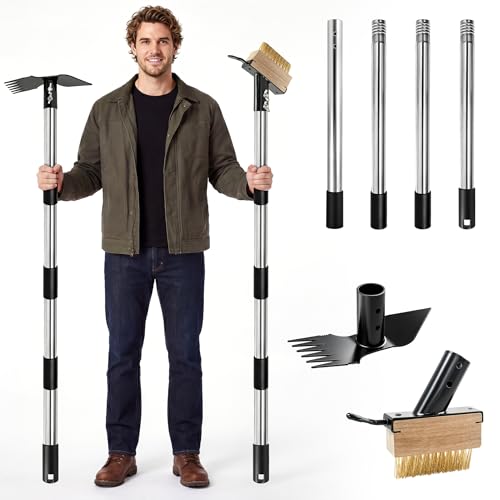


As an Amazon Associate we earn from qualifying purchases.
What should you look for in a garden hoe?
The starting point is the task: light weeding, regular bed maintenance, digging-in, or moving soil in a more forceful way. From there, compare the head shape and handle length first, then look at material, weight and grip. The main trade-off is usually between precision and leverage: smaller, lighter hoes are easier to control, while longer or heavier tools can cover more ground or work tougher soil with less bending.
| Feature | What it means | Why it matters | What to check |
|---|---|---|---|
| Head shape | The form of the hoe blade or tines | It determines whether the tool is better for slicing weeds, digging, or loosening soil | Match the shape to your main task rather than choosing on looks alone |
| Handle length | How long the shaft is | It affects reach, posture and control | Consider whether you want to work upright, kneel more often, or use the tool in narrow beds |
| Weight and balance | How heavy the hoe feels and where that weight sits | It changes fatigue, accuracy and how easily the tool swings or pulls through soil | Look for a feel that suits the amount of time you expect to use it |
| Handle material | The shaft material and grip feel | It can influence comfort, maintenance and how the tool handles in use | Check whether the handle description suggests a finish or shape you are likely to find comfortable |
| Head material | The material used for the working end | It affects durability, maintenance and how the tool copes with repeated use | Read the product page for the stated material and any care notes |
Which hoe style suits the job?
Long-handled hoes
These suit gardeners who want to work standing up and cover larger borders or rows without constant bending. They are a practical choice for routine weeding and general maintenance, but they may feel less precise in very tight spaces.
Short-handled or hand hoes
These are useful for closer work in raised beds, containers or crowded planting areas. They give more control at short range, although they usually ask more from your knees, back or crouching position.
Weeding-focused hoes
These are shaped to skim through the top layer of soil and sever young weeds. They are often the simplest option for regular upkeep, but they are less suitable if you need to move a lot of soil.
Digging or soil-working hoes
These are made for heavier cultivation tasks and can be more versatile where the ground needs loosening as well as weeding. The compromise is that they can be more tiring to use for light, repeated trimming work.
How do you compare one hoe with another?
Start with the bed size and the type of weeds or soil you are dealing with. Then compare how much reach and leverage each tool offers, because that affects both comfort and speed. After that, check the head shape and material, since those two points usually decide whether the hoe is best for fine surface work or more demanding cultivation.
If you prefer a tool that does several jobs, look for a balanced middle ground rather than the most specialised shape. If you already know your garden is mainly narrow beds, pots or close planting, a smaller tool may be a better fit even if it looks less substantial.
What kind of buyer is each hoe better for?
| Buyer need | Better fit | Reason |
|---|---|---|
| Regular border maintenance | Long-handled weeding hoe | Helps you work upright and cover ground efficiently |
| Raised beds or containers | Short-handled hoe | Gives closer control in smaller spaces |
| New weeds in loose soil | Light weeding hoe | Useful when the main job is shallow cutting rather than digging |
| Heavier cultivation | Digging-style hoe | Better suited to breaking and moving more soil |
| Limited storage space | Simple single-purpose hoe | Usually easier to keep than a larger, more specialised tool |
Common mistakes to avoid
- Choosing a hoe for its shape alone without checking whether it matches the main task.
- Overlooking handle length, then finding the tool forces an awkward working position.
- Assuming a heavier hoe will always be better, when lighter tools can be easier for regular weeding.
- Buying for broad versatility when the garden actually needs a more focused tool for narrow beds or close planting.
Safety and suitability checks
Garden hoes are straightforward tools, but it is still sensible to check that the size and style suit the intended user and the space available. If several people will use the same tool, look for a design that feels manageable for the shortest or least experienced user. For any model, check the individual product page for the exact head style, handle length and material before deciding.
Care, storage and everyday ownership
Simple care can make a hoe easier to keep in good condition. Wipe off soil after use, store it somewhere dry and check whether the handle or head has any care notes from the manufacturer. A tool that is easy to clean and store is often the more practical choice if you garden regularly.
How can you compare options efficiently?
- Decide whether your main need is weeding, digging, loosening soil or close-up bed work.
- Choose the general hoe style that fits that job.
- Compare handle length, balance and head shape.
- Check the materials and any care information on the product page.
- Confirm that the size and feel suit the person who will use it most often.
Summary buyer decision checklist
- Have I chosen the hoe style that matches my main garden task?
- Is the handle length suitable for the way I want to work?
- Does the head shape suit weeding, digging or light soil work?
- Will the weight and balance feel manageable over repeated use?
- Have I checked the product page for the exact materials and dimensions?
- Is the tool a sensible fit for the beds, borders or containers I plan to use it in?
Frequently asked questions
What is a garden hoe mainly used for?
A garden hoe is usually used for weeding, loosening soil and general bed maintenance. Different hoe shapes lean more towards slicing weeds or moving soil, so the exact job depends on the design.
Is a longer handle always better?
Not necessarily. A longer handle can make it easier to work standing up and reach more ground, but a shorter tool may be better where space is tight or where you want closer control.
Which hoe is best for weeds?
A hoe designed for shallow cutting is often the most practical for routine weeding. It is most useful when weeds are small and you want to skim just under the soil surface.
Do I need a heavy hoe for hard soil?
Heavier tools can help with tougher ground, but extra weight is not always an advantage. The better choice depends on how much force you want the tool to provide and how long you will be using it.
Can one hoe do every garden job?
Some hoes are fairly versatile, but many are better at one task than another. It is usually wiser to choose the style that suits your main jobs rather than expecting one tool to cover everything equally well.
What should I check before buying online?
Look at the head shape, handle length, materials and any size information on the individual product page. That gives you a better idea of comfort and suitability than a short title alone.
More Garden Hoes
See all 295 Garden Hoes →


As an Amazon Associate we earn from qualifying purchases.


