

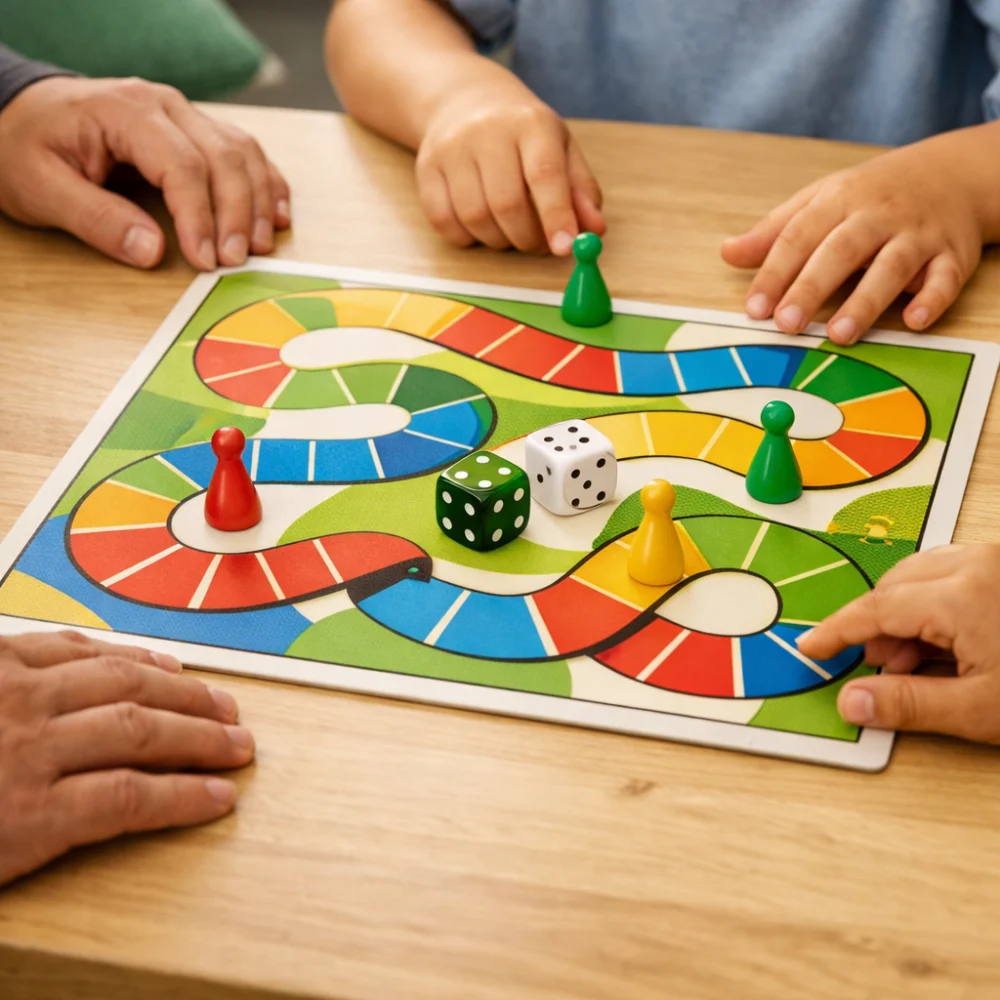
Choosing a board game as a gift is easier when you start with the people who will play it together. A game that suits one household might not work as well for another if the players differ in age, patience, group size or appetite for rules and strategy.
This guide focuses on the decisions that help narrow the options: play style, player count, complexity, session length and practical details such as components and storage. Check the information for the specific game before buying, as these details can differ considerably.
What should you look for in a board game?
Start with the group that is most likely to play: consider how many people usually join, whether they prefer cooperation or competition, and how much time they want to spend learning rules. Look for clear guidance about the intended players and the game’s setup and play. A familiar, straightforward format may be easier to bring out regularly, while a more involved game can suit a group that enjoys learning and planning. Specifications vary by model, so always check the individual product page before buying.
Compare the main buying factors
| Feature | What it means | Why it matters | What to check |
|---|---|---|---|
| Player count | The number of people the game is designed for | A game may be a poor fit if the usual group is too small or too large | Minimum and maximum players, and whether the game supports the group you have in mind |
| Play style | How players interact, such as cooperating, competing, answering questions or taking turns | The group’s preferred style affects whether a game feels engaging | The description of the objective and how players take part |
| Rules and complexity | How much there is to learn before and during play | More involved rules may suit experienced players but can be harder to introduce to a mixed group | Any guidance about learning the game, and whether the instructions are included |
| Age guidance | The intended age guidance provided for the particular game | It can help you assess whether the theme and gameplay are suitable for the recipient | The stated guidance and any notes about small components or adult involvement |
| Session length | How long a typical game may take, where the product information gives an indication | A shorter or longer session may fit different occasions and attention spans | Any stated play-time guidance, remembering that actual sessions can vary |
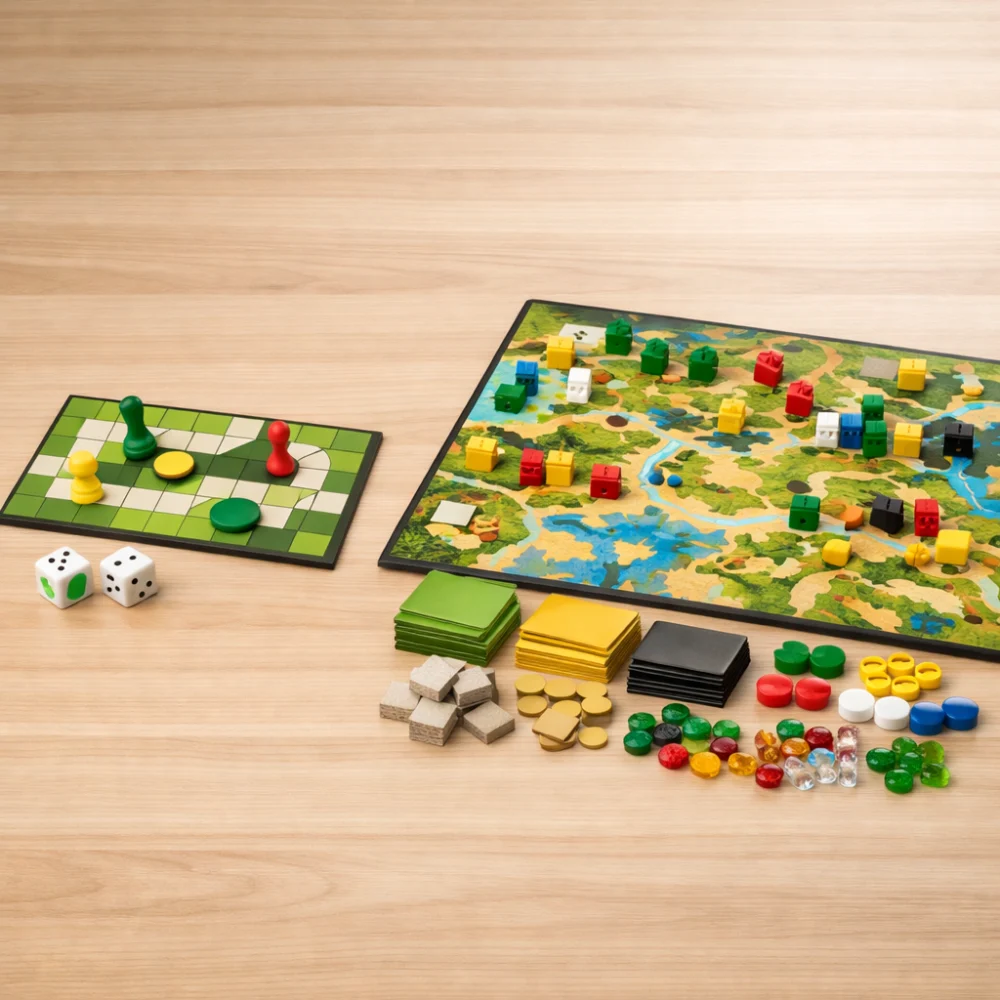
| Components and storage | What is included and how the game is packed away | Component types and box size can affect handling and storage at home | The included contents and whether the box can be stored where you plan to keep it |
Decisions that make the biggest difference
Match the game to the group
Think about the people who will actually sit down to play, rather than choosing only for the recipient. Check the stated player count against the usual group, and consider whether the game still works for the smaller gatherings that are likely. Some games are designed around individual turns, while others ask players to work together or interact frequently; the product description can help you see which style is intended.
Choose a suitable level of complexity
Rules can be a major part of the experience. A simpler structure may be easier to explain to people who do not often play board games, while a game with more decisions and rules may appeal to players who enjoy planning. Look for descriptions of gameplay and any learning guidance, rather than assuming that a familiar theme means the rules will be simple.
Consider the session and occasion
A game for an occasional family gathering may need to suit people with different interests and limited time. For regular game nights, the group may welcome more depth or replayable decisions. If the product gives a typical playing-time estimate, treat it as guidance rather than a guarantee: player pace and familiarity with the rules can affect how long a session takes.
Check the actual contents
Game titles and broad descriptions do not always make clear what is in the box. Read the product details for the listed components, instructions and any additional items needed to play. If it is an expansion rather than a standalone game, confirm which base game or edition it is intended to work with before choosing it as a gift.
Common board game types
These broad styles can help you decide what to look for; individual games may combine more than one.
- Cooperative games: Players work towards a shared objective. They may suit groups that enjoy discussing choices, though they are not the right fit for everyone who prefers direct competition.
- Competitive family games: Players pursue individual goals, often with turns or shared decisions. They can suit mixed gatherings, but the pace and complexity still need to match the group.
- Party and word games: These often focus on quick prompts, guessing or creative responses. They may work well for lively groups, while quieter players may prefer a less performative format.
- Strategy and planning games: Players make choices that can build over a session. These may suit people who like thinking ahead, but can ask more of new or younger players.
- Classic or familiar formats: Recognisable styles can be easier to introduce to a group. Check the specific rules and components, as a familiar name or format does not establish how a particular version plays.
Choosing for different needs
For a gift, try to balance the recipient’s interests with the people who may join them. A game aimed at one player’s tastes may see less use if the household prefers a different style, so consider the likely group as well as the person receiving it.
- For younger or less experienced players: Look for clear age guidance, straightforward gameplay descriptions and rules that seem manageable for the group. Check component details where they are provided.
- For a mixed-age group: Consider whether the central activity can involve everyone and whether the game’s stated guidance fits the youngest intended player. An adult may need to help explain rules, depending on the game and group.
- For regular game nights: Compare the player count, interaction style and level of decision-making with what the group already enjoys. A different format can add variety, but only if it suits the group’s preferences.
- For a small or changing group: Check the listed player range and think about how often the number of players will vary. Do not assume a game supports a particular group size unless its product information says so.
- For a compact home or gift bag: Check the box dimensions if stated and consider where it will be stored. Component count alone does not tell you how much space the packaged game takes up.
Common buying mistakes
- Choosing by theme alone: A theme may catch someone’s interest, but it does not explain the rules or interaction. Read the gameplay description as well.
- Assuming “family” means suitable for every age: Intended ages and interests vary. Check the specific age guidance and consider who will be playing together.
- Ignoring the usual group size: The listed player range is an important fit check. Compare it with the number of people who are likely to join, not just the largest possible gathering.
- Assuming every game is quick to learn or play: A title or picture is not a reliable guide to complexity or session length. Look for explicit information and consider how familiar the group is with this kind of game.
- Buying an expansion without checking compatibility: An expansion may depend on a particular base game or edition. Confirm the stated requirements before choosing it.
Safety and suitability
Use the product’s age guidance and component information to judge whether a game is suitable for its intended players. If young children will be present, check for notes about small parts and consider whether the game is intended to be played with adult involvement. Themes and levels of reading, counting or decision-making can also affect suitability, even when the physical components seem appropriate.
Ownership, care and storage
Before buying, consider whether you have a suitable place to keep the box and its components together. Check the listed contents and packaging details if these matter for your storage space or gifting plans. Follow any care or storage information supplied with the particular game; do not assume that components from different games need the same handling.
A practical buying process
- Identify who is most likely to play and how many people usually join.
- Choose the style of play the group is most likely to enjoy, such as cooperation, competition, wordplay or strategy.
- Narrow the options by checking age guidance, rules complexity and any stated session-time information.
- Compare the listed components, instructions and storage details where relevant.
- Read the individual product information for suitability, included contents and any compatibility requirements.
Board game buyer checklist
- Does the stated player count suit the usual group?
- Does the play style match the recipient and the people likely to join?
- Is the age guidance appropriate for the intended players?
- Do the rules and expected session seem suitable for the group?
- Have you checked the listed contents, instructions and any expansion requirements?
- Will the packaged game fit your storage or gifting plans?
Frequently asked questions
How do I choose a board game as a gift?
Start with the recipient’s interests, then consider who is likely to play with them. Check the stated player count, age guidance and style of play, and read the product information for the specific game.
Is a board game suitable for a mixed-age group?
It depends on the game and the players. Check the age guidance and gameplay description, and consider whether the youngest intended player can take part with the group.
How important is the listed player count?
It is a useful way to rule out games that do not fit your usual group size. If the number of players often changes, check the full stated range rather than assuming the game works equally well for every group.
What should I check before buying a board game expansion?
Look for the named base game or edition that the expansion requires, and confirm that you have access to it. Do not assume that similarly themed or titled games are compatible.
Can I judge game length from a product listing?
Use any stated playing-time guidance as an estimate. How quickly a game moves can depend on the players and how familiar they are with its rules.


