

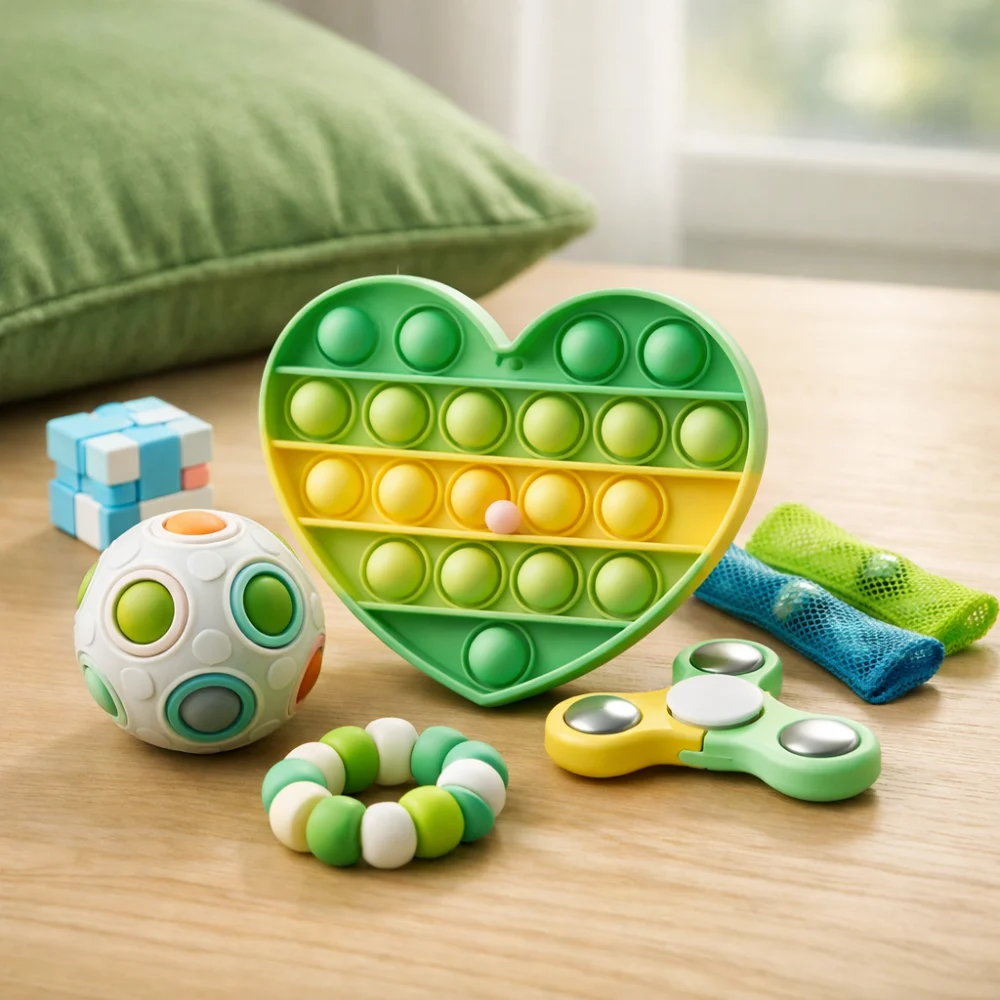
Fidget toys are small play objects designed to be handled or manipulated, with different styles offering different kinds of movement and tactile interaction. The right choice depends on what the person enjoys using and where they expect to use it.
This guide focuses on choosing between fidget toy styles, rather than assuming one type suits everyone. For a gift, consider the recipient’s age and preferences, whether sound or small parts may be an issue, and how easy the toy will be to carry and store.
Which fidget toy should you choose?
Start with the kind of interaction the user is likely to enjoy: spinning, pressing, twisting, linking or handling a tactile shape. Consider whether the toy will be used somewhere quiet or shared, since movement and sound can affect how suitable it feels in that setting. A compact single toy may be easier to carry, while a set can offer more variety but may include pieces that are easier to misplace. Check the individual product information for what is included and any age or suitability guidance.
Compare the main buying factors
| Feature | What it means | Why it matters | What to check |
|---|---|---|---|
| Interaction style | The way the toy is handled, such as spinning, pressing, twisting or linking pieces. | A familiar or enjoyable action is more likely to suit the user than choosing by appearance alone. | Look for a clear description of how the toy moves or is manipulated. |
| Sound | Some actions may be audible; others may be described as quiet. | Sound can matter in shared spaces or quiet settings. | Check the product description and do not assume a toy is silent unless this is stated. |
| Size and portability | The overall size and whether the toy is a single item or includes several pieces. | A portable option may be convenient to carry, while small pieces can be easier to lose. | Check dimensions if supplied and consider where it will be kept. |
| Single item or set | A product may offer one style or several different toys or components. | A set can provide variety, but the user may prefer one straightforward interaction. | Check the listed contents rather than relying on the product title alone. |
| Suitability information | Guidance about intended users and any relevant small parts or components. | Fidget toys are not automatically suitable for every age or situation. | Read the individual product’s age and safety information. |
What to consider before buying
Choose an interaction the user will enjoy
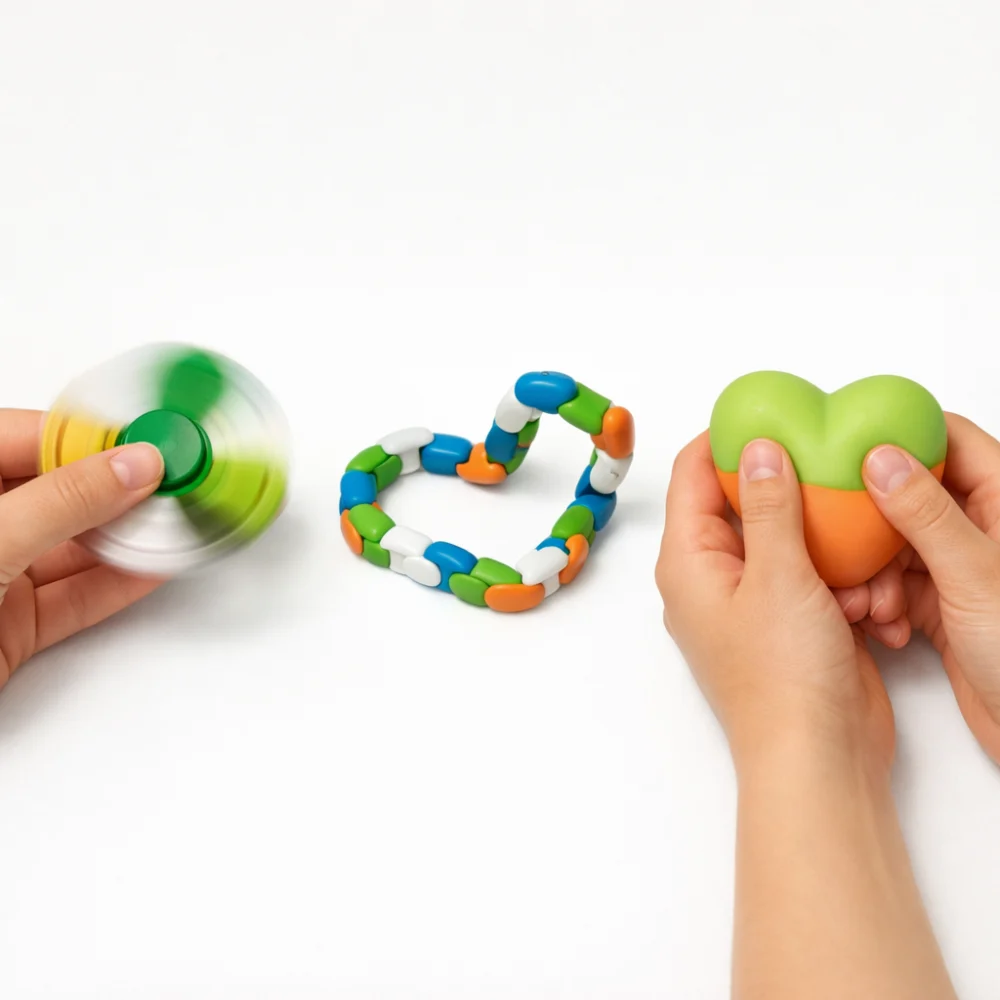
Think about whether the recipient prefers a repeated movement, a changing shape or several different tactile actions. A spinner centres on rotation, while a linked or flexible toy can be moved into different positions. A cube or tactile shape may offer a different feel in the hand. Specifications vary by model, so always check the individual product page before buying.
Think about where it will be used
A toy that makes clicking or snapping sounds may be less suitable for a quiet room than one described as quiet. That description can vary between products, so check the product information rather than judging by the category or appearance. Also consider whether the toy will be used at home, carried in a bag or shared with others.
Check what is included and how it is handled
Sets can combine different interaction styles, but more pieces may mean more to keep track of. A single toy may be simpler to store, though it offers less variety. Look at the stated contents, overall dimensions where provided, and whether any components are small or detachable.
Common fidget toy types
Fidget toys can vary in their movement and feel. Spinners are handled by rotating them; cubes and other multi-action designs may offer several ways to interact; and linked or tangle-style toys can be repositioned. Sensory stones and similar shapes are intended to be handled, while magnetic designs use magnetic components. Sets may combine more than one type. The exact actions and contents differ, so use the individual description to confirm what a particular option offers.
Choose for the user and setting
| Need | What may suit | Trade-off to consider |
|---|---|---|
| A first fidget toy | A simple style with an interaction the user already enjoys. | A more elaborate set may offer options but can make the choice less straightforward. |
| Use in a quiet shared space | A product whose information clearly describes its sound level or quiet use. | Descriptions can differ, so do not assume that every pressing or moving toy is silent. |
| Variety in one purchase | A set with clearly listed different types or actions. | More pieces may require more storage and can be easier to misplace. |
| Easy carrying | A compact option, after checking its dimensions and whether it has separate pieces. | Very small items may be unsuitable for some users or settings. |
Common buying mistakes
- Choosing by appearance alone: A colourful design does not explain how a toy feels or moves. Check the interaction style and contents.
- Assuming every fidget toy is quiet: Some actions may make sound. Look for relevant product information if noise matters.
- Assuming a set is automatically better value or more suitable: Extra pieces are useful only if the recipient wants variety and can keep them together.
- Overlooking size and small components: Check dimensions and suitability details, particularly if the toy will be carried or used by a young child.
Safety and suitability
Check the product’s intended age and suitability information, and consider whether its size and components fit the person who will use it. Take particular care with small or magnetic components around young children or anyone likely to put objects in their mouth. A fidget toy is a play item, not a guaranteed aid for concentration or wellbeing.
Care and storage
Care requirements depend on the individual design. Follow any cleaning or care information supplied with the product, and do not assume every toy can be washed. Keeping sets and loose pieces together can make them easier to find and help avoid losing components.
A simple buying process
- Decide who the toy is for and where it is likely to be used.
- Choose an interaction style the user may enjoy, such as spinning, pressing, twisting or handling a tactile shape.
- Decide whether one toy or a set is a better fit for the need.
- Compare sound, size and listed contents where these details matter.
- Read the individual product information for suitability, care and any relevant component details.
Buyer checklist
- Does the interaction style suit the intended user?
- Could sound matter in the place where it will be used?
- Are the size and number of pieces practical?
- Are the contents and any small or magnetic components clearly described?
- Have you checked the individual product’s suitability and care information?
Frequently asked questions
What is a fidget toy?
It is a toy designed to be handled or manipulated, with styles that may spin, press, twist, link or offer a tactile shape. The specific interaction depends on the design.
How do I choose a fidget toy for a child?
Start with the child’s interests and the setting where the toy will be used. Check the individual product’s age and suitability information, including details about small components.
Are fidget toys quiet?
Not necessarily. Some actions can make sound, so check the product description if quiet use is important.
Is a fidget toy set better than one toy?
A set may offer more than one interaction style, while a single toy can be simpler to carry and keep track of. The better fit depends on whether the user wants variety and how the pieces will be stored.
Do fidget toys improve concentration?
People may enjoy using them, but a toy cannot be assumed to improve concentration or produce a particular outcome. Choose based on the user’s preferences and the product’s suitability information.
How should a fidget toy be cleaned?
Follow the care information provided for that particular product. Materials and designs differ, so do not assume a cleaning method is suitable for every toy.


