

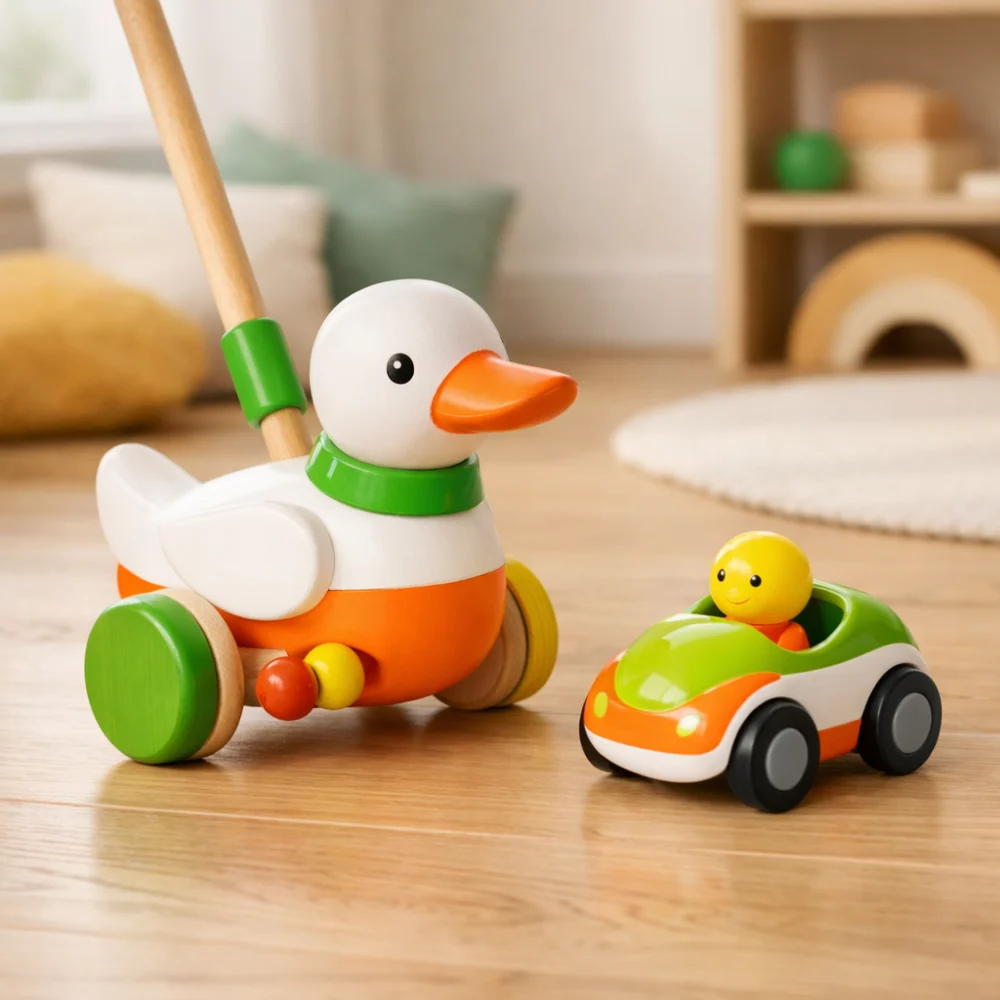
Push toys cover a range of toys that a child moves by pushing, pressing or guiding them along. The right choice depends on the kind of play you have in mind, the child’s current interests and abilities, and whether the toy will be used at home or elsewhere.
Some options focus on simple movement, while others add features such as play activities or a toy-walker format. Compare how each one is intended to be used rather than assuming that every push toy offers the same experience.
Which push toy is the best fit?
Start with the way the toy moves: a push-along, a press-and-go toy or a walker-style option can suit different kinds of play. Then consider the child’s age and abilities against the manufacturer’s guidance, along with the space and surfaces where the toy will be used. Extra activities may add interest but can also make a toy larger or more involved. Check the individual product information for its intended use, contents and care guidance before deciding.
Compare the important buying factors
| Feature | What it means | Why it matters | What to check |
|---|---|---|---|
| Movement style | The toy may be pushed along, moved by a press-and-go action, or designed in a walker-style format. | Different movement styles invite different kinds of play and may suit different abilities. | Read how the product is intended to move and be handled. |
| Play features | Some toys focus on movement; others include additional activities or play elements. | Extra features may hold interest, but are not essential for every child. | Check what is included and whether the activities match the child’s interests. |
| Size and storage | The overall form affects where the toy can be used and put away. | A toy that fits the available space is easier to accommodate. | Check product dimensions and consider the space available at home. |
| Intended age and suitability | Manufacturer guidance describes the intended user and any relevant limitations. | A toy needs to suit the child’s abilities and stage of play. | Read the stated age guidance, warnings and product description. |
| Care requirements | Cleaning and upkeep guidance can differ between products. | Care needs may affect whether the toy is practical for your household. | Look for the product’s cleaning and care instructions. |
What to consider before you choose
Movement and handling
Think about whether the child is likely to enjoy pushing a toy along, setting a small toy in motion, or engaging with a walker-style toy. These are different play experiences, so do not treat them as interchangeable. Check the product description for how it is handled and whether that seems suitable for the intended user.
Play features and complexity
A simple moving toy may be a straightforward choice when the main appeal is making it travel. A toy with added activities may offer more to explore, but extra features can also mean more parts to understand or keep track of. Consider whether those activities are likely to be used, rather than choosing on feature count alone.
Space and setting
Consider where the toy will be played with and stored. A larger walker-style toy may need more room than a small push-along toy, while the usable space and surface can affect whether a particular form is practical. Check dimensions and the manufacturer’s intended-use information rather than assuming a toy will suit every setting.
Contents and care
Check what comes with the toy and whether any pieces need to be kept together. Care instructions also vary; follow the guidance provided for the specific product. Specifications vary by model, so always check the individual product page before buying.
Common types of push toys
- Push-along toys: Moved along by pushing or guiding the toy. They may suit children who enjoy moving a toy through play, but the size and handling style still need to fit the child and available space.
- Press-and-go toys: Small toys designed around a press or push action to set them moving. They can suit simple, hands-on play, though buyers should check the intended age guidance and any small-part information.
- Activity-focused push toys: Combine movement with additional play elements. These may suit children who enjoy exploring more than one feature, but the added activities may not be useful to every buyer.
- Walker-style toys: Designed with a form that can be pushed along while moving. Check the manufacturer’s description carefully; the format alone does not establish that a toy is appropriate for every child or use.
Choosing for different needs
| If you want… | Consider | Check before choosing |
|---|---|---|
| A simple moving toy | A push-along or press-and-go style with a clear, easy-to-understand play idea. | How it is moved, its size and the intended age guidance. |
| More than one kind of play | An option with additional activities as well as movement. | Which features are included and whether they suit the child’s interests. |
| A gift for a child whose abilities you are unsure of | A product with clear descriptions and manufacturer guidance. | Age guidance, warnings, dimensions and intended use; ask the parent or carer if needed. |
| A toy for a limited space | A compact form that is practical to put away. | Product dimensions and the space needed for play and storage. |
Mistakes and misunderstandings to avoid
- Assuming all push toys work alike: Movement styles differ. Check the description to understand how the toy is meant to be handled.
- Choosing by extra features alone: More activities do not automatically make a toy a better fit. Focus on the play the child is likely to enjoy.
- Treating a walker-style toy as universally suitable: The format does not establish suitability. Check the manufacturer’s guidance for the individual product and child.
- Forgetting about space: A toy may be appealing but awkward to use or store. Check its dimensions before choosing.
- Assuming care is the same for every toy: Cleaning requirements vary. Read the product’s own care information.
Safety and suitability
Use the manufacturer’s age guidance, warnings and intended-use information when deciding whether a push toy is suitable. Consider the child’s abilities and the way the toy is designed to be handled. For toys with small pieces or additional play elements, check the product information and ensure it is appropriate for the intended user.
Care and storage
Care needs depend on the particular toy. Check whether the product information gives cleaning guidance or identifies pieces that should be stored together. Consider where the toy will be kept, especially if it has a larger form or several components.
A practical way to choose
- Decide whether the main purpose is pushing a toy along, setting a toy in motion or combining movement with other play.
- Narrow the choice to a style that suits the child’s interests and abilities.
- Compare the movement style, play features, size and care needs.
- Weigh any extra features against practical considerations such as storage and likely use.
- Read the individual product information, including age guidance, warnings, contents and dimensions.
Push toy buyer checklist
- Does the movement style suit the play you have in mind?
- Is the product’s intended use and age guidance appropriate?
- Are the play features relevant to the child’s interests?
- Will the toy fit the available play and storage space?
- Have you checked what is included, plus any warnings and care guidance?
Frequently asked questions
What counts as a push toy?
It is a broad term for toys designed to be moved by pushing, guiding or a related push action. The exact play style varies, so check each product description rather than relying on the category name alone.
Are push toys and push-and-go toys the same?
Not necessarily. A push-and-go toy is one style that uses a push or press action to set the toy moving, while push toys can also include other formats, such as push-along or walker-style toys.
How do I choose a push toy as a gift?
Start with the child’s interests and the way they are likely to play with the toy. If you are unsure about suitability, check the manufacturer’s age guidance and ask a parent or carer about the child’s needs.
Are walker-style push toys suitable for every child?
No single format is suitable for every child or situation. Check the individual product’s intended use and guidance, and consider the child’s abilities before choosing.
What should I check about cleaning a push toy?
Cleaning guidance depends on the product. Look for care instructions on its individual product information and follow those directions.


