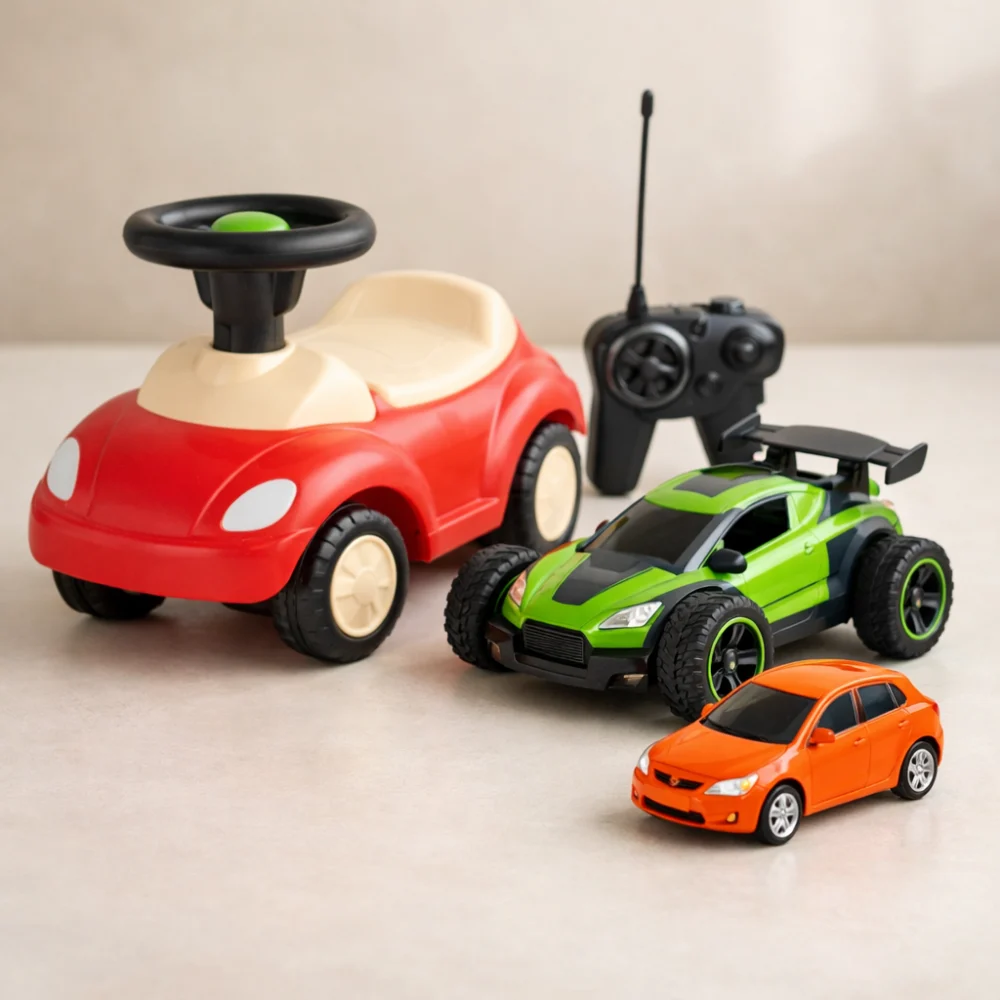
Toy vehicles range from small cars for imaginative play and collecting to remote-control toys and larger ride-on models. The right choice depends on the child’s interests, the kind of play you have in mind and the space available.
This guide focuses on choosing between those types and checking the details that can affect suitability. Features and requirements differ between models, so use the individual product information to confirm what is included and how a particular toy is intended to be used.
What should you look for in a toy vehicle?
Start with the way it will be played with: hands-on imaginative play, collecting, remote control or riding. Then consider the child’s suitability, the available play space and any practical requirements such as batteries or storage. A simpler vehicle may be easy to pick up and play with, while a more feature-rich type can involve extra components or setup to consider.
Compare the main buying factors
| Factor | What it means | Why it matters | What to check |
|---|---|---|---|
| Play style | Whether the vehicle is for imaginative play, collecting, remote control or riding. | Different types suit different interests and settings. | Look for the intended use and any stated play features on the individual product page. |
| Size and scale | The vehicle’s stated dimensions or scale, where provided. | A toy that looks small in a picture may take up more room than expected, or may not suit the intended play setup. | Check dimensions and scale information; scale alone does not tell you the exact size. |
| Control and movement | How the vehicle is moved, such as by hand, pull-back action or remote control. | The control style affects how much space and involvement play may require. | Confirm what controls are included and whether any additional requirements are stated. |
| Power needs | Whether a model uses batteries or another stated power source. | Power requirements can affect ongoing use and storage. | Check whether batteries are included, what type is specified and any charging information. |
| Suitability and components | Who the product is intended for and what parts are supplied. | Small components or more involved controls may not suit every child or household. | Read the stated suitability guidance, contents and any relevant warnings. |
How to choose: the details that matter most
Match the vehicle to the kind of play
For imaginative play, a straightforward miniature vehicle may be enough; a set can offer several vehicles for play or collecting. Remote-control models add a control element and may need more open space. A ride-on is a larger choice, so consider where it could be used and stored before deciding.
Check size rather than relying on pictures
Product images can make a vehicle’s size difficult to judge. Check stated dimensions when available, particularly for ride-ons, larger models or toys intended to fit a play area. If a scale is given for a miniature vehicle, treat it as a comparison with a real vehicle rather than a substitute for the toy’s actual dimensions.
Understand what is included
Sets and powered toys can differ in their included vehicles, controls, batteries and other components. Check the product description for the contents and any additional requirements before buying. Do not assume that separately owned vehicles or accessories will work with a particular toy unless compatibility is explicitly stated.
Consider play space and storage
A small vehicle may be easy to put away, while a larger or remote-control model may need more room. Think about the likely play setting and where all parts can be stored between uses. For ride-ons, check the stated dimensions and intended use against the space available.
Specifications vary by model, so always check the individual product page before buying.
Types of toy vehicles
Miniature cars and multi-vehicle sets: These can suit imaginative play or collecting, with sets offering more than one vehicle. Check the size, number of items stated and whether the intended play involves any particular accessories.
Pull-back vehicles: These use a simple movement style that may suit quick, hands-on play. Check the product description for how the toy is intended to move and any suitability guidance.
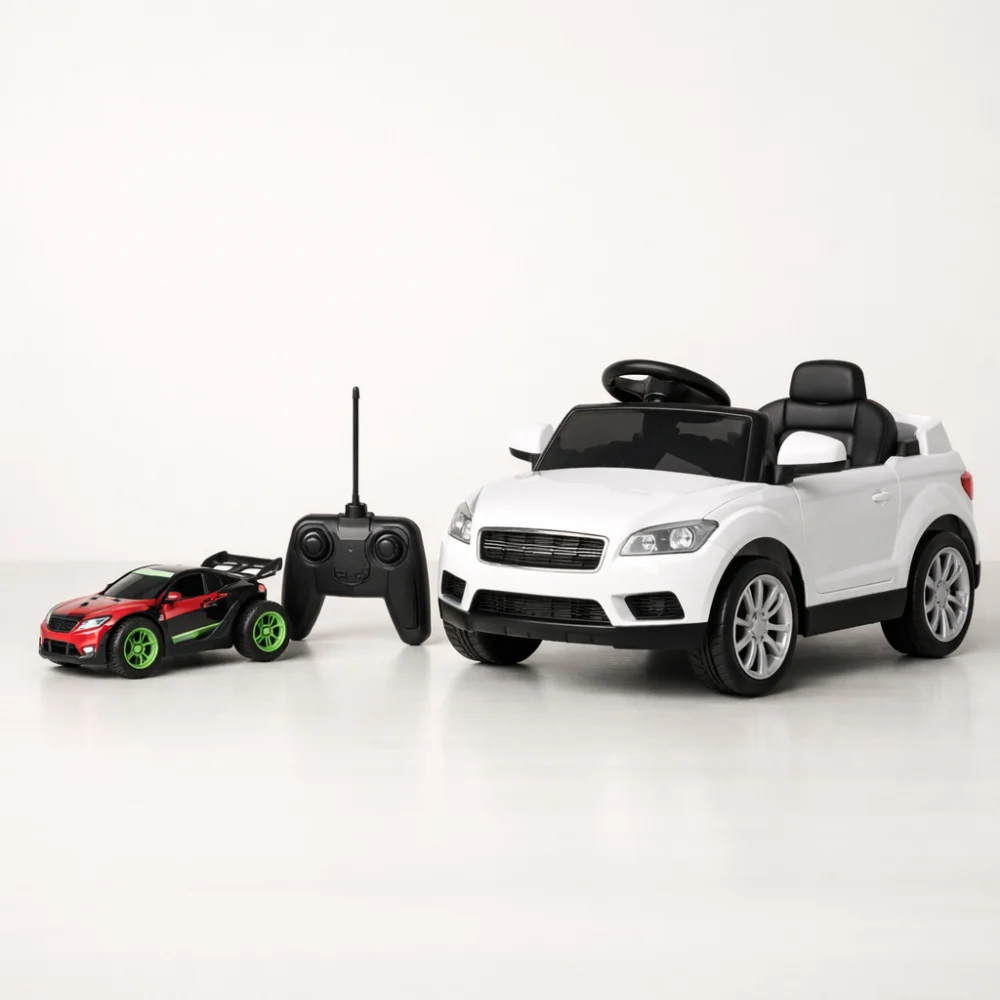
Remote-control vehicles: These suit children interested in controlling a vehicle during play. They may need more room than a small hand-moved toy, and it is worth checking the supplied controls and power requirements.
Ride-on vehicles: These are larger toys intended for a different kind of play. Their size and intended use make dimensions, suitability guidance, available space and storage especially important checks.
Choose for the child and setting
- For collecting or imaginative scenes: Consider miniature vehicles or a set, checking their dimensions and the stated contents.
- For hands-on movement: A pull-back or hand-moved toy may fit the intended play; check the product details for its movement style.
- For active control: A remote-control vehicle may be a better fit if there is suitable play space and the child is comfortable with its controls.
- For riding: Consider a ride-on only after checking its stated suitability, size and intended setting, along with where it can be kept.
Common buying mistakes
- Choosing by appearance alone: A vehicle can look appealing in a picture but be the wrong size or play style. Check dimensions and intended use.
- Assuming scale gives the exact size: Scale is a ratio, not a measurement of the toy itself. Look for stated dimensions too.
- Overlooking power requirements: Do not assume batteries or charging equipment are included. Check the product information for what is supplied and required.
- Expecting compatibility: Similar-looking vehicles, controls or accessories are not necessarily compatible. Look for an explicit compatibility statement.
- Underestimating storage needs: A larger vehicle or a set with multiple parts may need more room than a single miniature toy.
Safety and suitability
Check the manufacturer’s stated age or suitability guidance, warnings and any notes about small parts before choosing. For powered, remote-control or ride-on toys, read the individual product information about intended use and supervision. Suitability depends on the specific model and the child, so do not infer it from appearance alone.
Care, power and storage
Care needs depend on the toy’s materials and design; follow the product’s own care information rather than assuming every vehicle can be cleaned in the same way. For powered toys, check the stated battery or charging requirements and how the power components should be stored. Keep sets together where practical so smaller components are less likely to become separated.
A simple buying process
- Decide whether the toy is for collecting, imaginative play, remote control or riding.
- Narrow the choice by the child’s interests and the space available for play and storage.
- Compare dimensions, controls, included components and any stated power needs.
- Check suitability guidance, warnings and compatibility claims where relevant.
- Read the individual product information to confirm the details of the specific model.
Toy vehicle buyer checklist
- Does the play style suit the child and intended setting?
- Have you checked the actual dimensions, not just an image or scale?
- Are the stated controls, vehicles and other components included?
- Are battery or charging needs clear, including what is supplied?
- Have you checked suitability guidance, warnings and any compatibility information?
- Is there enough space to use and store the vehicle?
Frequently asked questions
Which type of toy vehicle should I choose?
Choose according to the play the child enjoys: miniature vehicles for collecting or imaginative scenes, a pull-back toy for simple movement, remote control for hands-on control, or a ride-on for riding play. Check the specific product’s suitability and requirements before deciding.
Does a stated scale tell me how big the toy is?
Not exactly. Scale describes the model in proportion to a real vehicle, but the toy’s dimensions are the most direct way to judge how much space it will take up. Check both details when they are provided.
Are batteries included with powered toy vehicles?
That depends on the individual model. Check its product information for whether batteries are included, the stated power requirements and any charging details.
Will a toy vehicle work with accessories or controls from another one?
Do not assume so, even if the products look similar. Use only compatibility information explicitly given for the particular vehicle and accessory.
What should I check before choosing a ride-on vehicle?
Look at the stated dimensions, intended use and suitability guidance, then consider whether the available space and storage suit its size. Follow any product-specific warnings and instructions.