
Men's Walking Trousers and Shorts
Men’s Walking Trousers and Shorts for Hiking, Trails and Outdoor Adventures
Men’s Walking Trousers and Shorts are designed to provide comfortable movement and practical protection for countryside walks, woodland trails, hill routes, travel and longer hikes. Compared with ordinary casual clothing, walking garments may use lighter, quicker-drying or stretch fabrics that are better suited to active outdoor use and changing conditions.
The category includes lightweight walking trousers, stretch hiking trousers, convertible zip-off designs, weather-resistant options and men’s walking shorts for warmer conditions. When comparing products, consider waist size, leg length, fit, fabric weight, stretch, breathability, drying speed, pocket layout, reinforcement and weather resistance where listed. Shorts offer greater ventilation, while full-length trousers provide more coverage from sun, vegetation and insects.
The right choice depends on the season, terrain and intensity of your walks. Explore Men’s Walking Trousers and Shorts at YPC to compare practical options for hiking, travel and everyday outdoor use.
-

Men's Convertible Walking Trousers179 Products
-
Men's Hiking and Walking Trousers426 Products
-
Men's Insulated Trousers122 Products
-
Men's Lightweight Walking Trousers75 Products
-
Men's Shorts420 Products
-
Men's Softshell Trousers97 Products
-
Men's Waterproof Trousers218 Products




How to Choose Men’s Walking Trousers and Shorts
Men’s Walking Trousers and Shorts are designed to provide freedom of movement, practical storage and suitable protection for outdoor walking. They can be used for everything from relaxed countryside strolls and dog walking to hill hiking, travel and longer days on the trail.
Choosing between trousers and shorts is only the first decision. Fabric weight, stretch, drying speed, fit, pocket design, weather resistance and leg length can all affect comfort considerably once you have been walking for several hours.
A heavy pair of trousers may feel reassuring in cool conditions but unnecessarily warm in summer. Lightweight shorts can be ideal on a hot, dry trail but provide little protection from nettles, brambles or biting insects. Convertible trousers can offer useful flexibility, although the zip sections and additional seams may not suit everyone.
When comparing Men’s Walking Trousers and Shorts, consider:
- Waist size
- Leg length
- Overall fit
- Rise
- Fabric weight
- Stretch
- Breathability
- Drying speed
- Water resistance where listed
- Wind resistance
- Reinforced areas
- Pocket position
- Pocket closures
- Belt loops
- Integrated belts where listed
- Adjustable hems
- Convertible zip-off legs
- Seasonal use
- Terrain
- Walking intensity
- Backpack compatibility
The most suitable garment should allow you to move naturally without feeling restrictive, excessively loose or unnecessarily warm.
Main Types of Men’s Walking Trousers and Shorts
The category can include several different styles designed around season, terrain and preferred fit.
Men’s Lightweight Walking Trousers
Lightweight walking trousers are particularly useful during:
- Spring
- Summer
- Warm holidays
- Fast hiking
- Travel
They often use thin synthetic fabrics designed to provide:
- Breathability
- Low weight
- Faster drying
A lightweight fabric can feel significantly more comfortable than denim or heavy cotton during warm-weather walking.
Potential limitations can include:
- Less warmth
- Reduced resistance to rough vegetation
- Less durability on abrasive terrain
depending on the product.
Men’s Midweight Walking Trousers
Midweight trousers can provide a useful balance for general UK walking.
They may suit:
- Spring
- Autumn
- Cooler summer days
- Mild winter conditions
They can offer more protection from wind and vegetation than very light summer trousers while remaining comfortable during active walking.
Men’s Winter Walking Trousers
Winter walking trousers may use:
- Heavier fabrics
- Brushed inner surfaces
- Wind-resistant materials
- Water-resistant finishes
where listed.
They can provide additional warmth for colder conditions.
Some walkers prefer ordinary walking trousers combined with thermal leggings rather than dedicated winter trousers because this offers more layering flexibility.
Men’s Stretch Walking Trousers
Stretch trousers are designed to move more easily with the body.
They can be useful when:
- Taking large uphill steps
- Negotiating stiles
- Scrambling over uncomplicated rocky sections
- Bending or kneeling
- Walking quickly
Stretch may come from:
- Elastane
- Mechanical fabric construction
- Dedicated stretch panels
Check how much stretch is actually provided.
Men’s Softshell Walking Trousers
Softshell trousers generally prioritise:
- Stretch
- Wind resistance
- Breathability
- Durability
They can suit:
- Hill walking
- Cooler conditions
- Exposed routes
Some may offer light water resistance, but they should not automatically be considered waterproof.
Men’s Waterproof Walking Trousers
Some trousers are designed as fully waterproof outer garments.
Others are ordinary walking trousers with a water-resistant surface finish.
These are not the same.
Waterproof walking trousers may use:
- Waterproof membranes
- Coated fabrics
- Taped seams
where listed.
They can provide protection during rain but may feel warmer and less breathable during active use.
Men’s Waterproof Overtrousers
Overtrousers are designed to be worn over normal walking trousers.
They can be carried in a backpack and added when conditions deteriorate.
Useful features may include:
- Side zips
- Wide ankle openings
- Elasticated waist
- Adjustable cuffs
If you expect to put them on while wearing walking boots, check whether the leg openings are large enough.
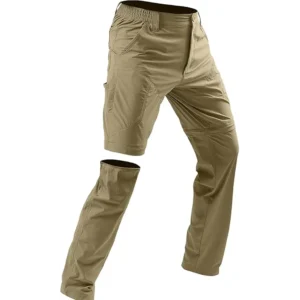
Men’s Convertible Walking Trousers
Convertible trousers use zips to remove the lower legs and create shorts.
They can be useful when:
- A cool morning becomes warm
- Weather changes during a long walk
- Travelling in variable climates
Potential advantages include:
- Two clothing options in one
- Less need to carry separate shorts
- Flexible temperature management
Potential limitations include:
- Additional seams
- Zips around the leg
- Slightly increased weight
Some people barely notice the leg zips, while others find them uncomfortable.
Men’s Zip-Off Hiking Trousers
Zip-off trousers are another name often used for convertible designs.
Check whether:
- Legs remove completely
- Zips are colour coded
- Left and right lower sections are identifiable
This can make reattachment easier.
Men’s Walking Shorts
Walking shorts are designed for active outdoor use in warmer weather.
Compared with casual shorts, they may offer:
- Stretch
- Quick-drying fabric
- Secure pockets
- Durable construction
They can suit:
- Summer hikes
- Travel
- Campsites
- Dry countryside paths
Men’s Long Walking Shorts
Longer shorts may sit close to or just above the knee.
They can provide slightly more protection while still allowing good airflow.
Men’s Shorter Hiking Shorts
Shorter styles can maximise ventilation and freedom of movement.
They provide less coverage from:
- Sun
- Vegetation
- Insects
Men’s Cargo-Style Walking Shorts
Cargo-style shorts may provide several pockets.
These can be useful for carrying small items, but heavily loaded pockets can:
- Swing while walking
- Pull the waistband down
- Feel uncomfortable
A backpack may be more suitable for heavier equipment.
Men’s Walking Trousers Versus Ordinary Trousers
Walking trousers are generally designed for movement and outdoor conditions.
Compared with casual trousers, they may provide:
- More stretch
- Quicker drying
- Lower weight
- Better pocket security
- Greater freedom of movement
Ordinary chinos or jeans may be adequate for a short dry walk but can become uncomfortable on longer or wetter routes.
Men’s Walking Trousers Versus Jeans
Jeans are durable and familiar but have limitations for hiking.
When wet, denim can become:
- Heavy
- Cold
- Slow to dry
- Restrictive
Walking trousers often use lighter fabrics that handle active outdoor use more effectively.
For a short countryside stroll in dry weather, jeans may be fine.
For a long hill walk in uncertain weather, purpose-designed walking trousers are generally more practical.
Men’s Walking Shorts Versus Casual Shorts
Casual shorts may work for easy summer walks.
Walking shorts can provide additional features such as:
- Stretch
- Secure zipped pockets
- Quick-drying fabrics
- Reinforced areas
These become more useful as walks become longer or terrain becomes rougher.
Trousers Versus Shorts for Hiking
Choose Walking Trousers If You Want
- More leg coverage
- Protection from vegetation
- Greater warmth
- Reduced sun exposure
- More protection from insects
Choose Walking Shorts If You Want
- Greater ventilation
- Lower weight
- More freedom around the lower leg
- Warm-weather comfort
The right choice depends on conditions.
Choosing the Correct Waist Size
Walking trousers should sit securely without feeling restrictive.
Check the manufacturer’s waist measurements.
Do not rely entirely on your normal jeans size because brands can vary.
A waistband that is too tight can become uncomfortable when:
- Sitting
- Bending
- Walking uphill
- Wearing a backpack hip belt
A waistband that is too loose can move during walking.
Integrated Belts
Some walking trousers include an integrated belt.
This can be convenient because:
- No separate belt is required
- Adjustment can be made during the day
Check whether the buckle sits comfortably beneath a backpack hip belt.
Belt Loops
Traditional belt loops allow you to use your own belt.
Consider belt width.
A very thick buckle can become uncomfortable beneath a backpack.
Elasticated Waistbands
Part-elasticated waistbands can accommodate movement and minor changes in fit.
They may suit:
- Long hikes
- Travel
- Everyday outdoor wear
Drawcord Waists
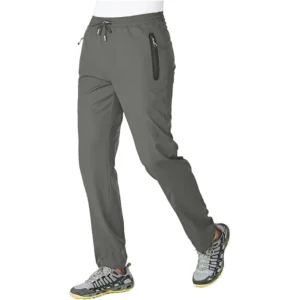
Some lightweight trousers or shorts use a drawcord.
This reduces bulk.
Check that the cord can be secured reliably.
Choosing the Correct Leg Length
Walking trouser length matters because excess fabric can:
- Drag through mud
- Catch beneath boots
- Become wet
- Fray
Trousers that are too short can leave a large gap above the footwear.
Sizes may be offered as:
- Short
- Regular
- Long
where available.
Use the stated inside-leg measurement where provided.
How Walking Trousers Should Sit Over Boots
The trouser hem should generally overlap the top of walking shoes or boots enough to provide practical coverage without dragging.
The ideal length depends on:
- Boot height
- Trouser cut
- Gaiter use
Adjustable Trouser Hems
Some trousers include:
- Drawcords
- Press studs
- Hook-and-loop adjustment
at the ankle.
These can help reduce loose fabric.
Do not tighten hems so much that they restrict circulation.
Ankle Zips
Some walking trousers include zips near the lower leg.
These can help the trousers fit over larger boots.
They may also improve ventilation.
Articulated Knees
Articulated knees use shaped seams or panels to follow the bent-leg position.
They can improve movement during:
- Climbing steps
- Scrambling
- Steep walking
Gusseted Crotches
A gusseted construction adds extra fabric shaping between the legs.
This can improve:
- Mobility
- Comfort
- Durability
during large movements.
Men’s Walking Trouser Fit
Different fits suit different users.
Slim Fit
Potential advantages:
- Less loose fabric
- Modern appearance
- Reduced flapping
Potential limitations:
- Less layering room
- Can restrict movement if stretch is limited
Regular Fit
Provides a balanced amount of space.
This is a versatile option for many walkers.
Relaxed Fit
Provides additional room around:
- Thighs
- Seat
This may suit larger builds or walkers who prefer loose clothing.
Too much loose fabric can catch on vegetation.
Thigh Fit
Walk up stairs or take a large step when assessing fit.
The trousers should not pull tightly across:
- Thighs
- Seat
Seat Fit
The rear should allow comfortable:
- Bending
- Sitting
- Squatting
without the waistband pulling excessively downwards.
Men’s Walking Trousers for Larger Builds
Look for:
- Extended waist sizes
- Stretch fabric
- Adjustable waist
- Multiple leg lengths
Actual measurements are more useful than generic labels.
Stretch Fabric
Stretch improves movement.
Two-Way Stretch
Moves mainly in one direction.
Four-Way Stretch
Provides movement both horizontally and vertically where specifically stated.
Not every stretch garment uses four-way material.
Fabric Materials
Men’s Walking Trousers and Shorts commonly use:
- Nylon
- Polyester
- Elastane blends
- Mixed synthetic fabrics
These can offer a balance of:
- Low weight
- Durability
- Stretch
- Drying speed
Nylon Walking Trousers
Nylon can offer:
- Good abrasion resistance
- Low weight
- Fast drying
Performance depends on fabric construction.
Polyester Walking Trousers
Polyester can provide:
- Durability
- Quick drying
- Shape retention
Elastane Blends
Elastane adds stretch.
A small percentage can make a noticeable difference to movement.
Cotton Blends
Some walking trousers combine cotton with synthetic fibres.
Potential advantages can include:
- Comfortable feel
- Casual appearance
Potential limitations can include:
- Slower drying than fully synthetic fabrics
Check the composition.
Breathability
Breathability becomes important during:
- Warm weather
- Uphill walking
- Fast hiking
Light fabrics generally allow more heat to escape.
Wind-resistant or waterproof trousers may feel warmer.
Ventilation Zips
Some walking trousers include thigh vents.
Opening these can release heat.
Check whether they use:
- Mesh backing
- Open ventilation
where listed.
Quick-Drying Fabrics
Fast drying is useful after:
- Rain
- Sweat
- Washing while travelling
Drying speed depends on:
- Fabric thickness
- Humidity
- Airflow
Water-Resistant Walking Trousers
Some trousers use a durable water-repellent surface treatment.
This may help water bead during:
- Light showers
- Wet grass
- Brief drizzle
It should not be confused with full waterproofing.
Waterproof Walking Trousers
Waterproof designs provide more rain protection where specified.
They may be less breathable.
For many walkers, ordinary trousers plus separate waterproof overtrousers provide greater flexibility.
Wind Resistance
Wind-resistant trousers can improve comfort on:
- Exposed hills
- Moorland
- Winter walks
- Coastal routes
Heavier softshell fabrics often provide more wind protection.
Reinforced Knees
Reinforcement may improve durability during:
- Scrambling
- Kneeling
- Rough terrain
It can also add weight and reduce breathability.
Reinforced Seat
A stronger seat area can be useful for:
- Resting on rocks
- Rough surfaces
- Frequent outdoor use
Abrasion Resistance
Rough terrain can damage thin fabric.
More durable trousers may be preferable for:
- Scrambling
- Bramble-covered paths
- Rocky routes
Pocket Design
Pockets are one of the most practical features.
Common types include:
- Hand pockets
- Thigh pockets
- Rear pockets
- Cargo pockets
Zipped Pockets
Zips can keep items secure.
They can be useful for:
- Keys
- Phone
- Wallet
during active walking.
Open Hand Pockets
Open pockets provide easy access but may allow items to fall out on steep terrain.
Thigh Pockets
Thigh pockets can be useful beneath a backpack hip belt.
They may hold:
- Map
- Phone
- Snacks
depending on dimensions.
Cargo Pockets
Cargo pockets offer more storage.
Avoid overloading them with heavy items.
Rear Pockets
Rear pockets can be uncomfortable under a backpack hip belt.
Check positioning.
Phone Pockets
Some products include dedicated phone pockets.
Check the actual dimensions, particularly for larger smartphones.
Security Pockets
A hidden or zipped security pocket can be useful for:
- Travel
- Keys
- Small valuables
Pocket Placement and Backpacks
A backpack hip belt may cover:
- Waist pockets
- Front pockets
Thigh pockets often remain accessible.
Men’s Walking Trousers for Spring
Spring conditions can vary from:
- Cool mornings
- Rain
- Mud
- Warm afternoons
Midweight trousers with some stretch and quick-drying performance can be useful.
Men’s Walking Trousers for Summer
Summer priorities often include:
- Lightweight fabric
- Breathability
- Quick drying
Convertible trousers provide extra versatility.
Men’s Walking Shorts for Summer
Walking shorts are particularly useful in hot weather.
Consider:
- Sun exposure
- Insects
- Vegetation
before choosing them for every route.
Men’s Walking Trousers for Autumn
Autumn can bring:
- Cooler temperatures
- Rain
- Wet vegetation
Midweight or softshell trousers may be suitable.
Men’s Walking Trousers for Winter
Winter options may include:
- Heavier walking trousers
- Softshell trousers
- Standard trousers over thermal leggings
Carry waterproof overtrousers where rain or snow is possible.
Men’s Walking Trousers for Hot Weather
Choose:
- Lightweight fabric
- Pale colours where preferred
- Ventilation
- Relaxed movement
Long lightweight trousers can protect from sun while remaining cooler than heavy fabrics.
Men’s Walking Trousers for Cold Weather
Look for:
- Wind resistance
- Heavier fabric
- Room for thermal leggings
Do not make the fit so tight that layering restricts movement.
Men’s Walking Trousers for Wet Weather
Water-resistant trousers can handle brief moisture.
For prolonged rain, use:
- Waterproof trousers
- Waterproof overtrousers
where suitable.
Men’s Walking Trousers for Windy Conditions
Softshell or denser woven trousers may provide more wind protection.
Men’s Walking Trousers for Snow
Cold snowy conditions may require:
- Winter trousers
- Thermal base layer
- Waterproof outer protection
Technical mountain routes can require more specialised equipment.
Men’s Walking Trousers for Countryside Paths
For straightforward paths, lightweight or midweight trousers are usually practical.
Look for:
- Comfort
- Pockets
- Quick drying
Men’s Walking Shorts for Countryside Walks
Shorts can work well on dry summer footpaths.
Watch for:
- Nettles
- Thistles
- Ticks
on overgrown sections.
Men’s Walking Trousers for Woodland
Woodland trails can involve:
- Mud
- Wet leaves
- Brambles
- Tree roots
A durable full-length trouser can provide useful leg protection.
Men’s Walking Trousers for Hill Walking
Hill walking benefits from:
- Stretch
- Wind resistance
- Secure pockets
- Quick drying
Carry waterproof overtrousers where required.
Men’s Walking Trousers for Moorland
Moorland can involve:
- Heather
- Bog
- Strong wind
- Wet vegetation
Long trousers are generally more practical than shorts.
Men’s Walking Shorts for Hills
Shorts can still work on dry summer hill routes.
Consider how exposed the legs will be to:
- Sun
- Rock
- Vegetation
Men’s Walking Trousers for Coastal Routes
Coastal paths can be windy and exposed.
Salt spray may also contact clothing.
Wash garments according to the care label after significant salt exposure.
Men’s Walking Trousers for Mountain Routes
Mountain walking can involve rapidly changing conditions.
Choose clothing appropriate to:
- Wind
- Temperature
- Rain
and carry waterproof protection where necessary.
Men’s Walking Trousers for Long-Distance Hiking
Long-distance hikers often prioritise:
- Comfort
- Low weight
- Fast drying
- Secure pockets
Small areas of rubbing can become significant after many hours.
Men’s Walking Shorts for Long-Distance Hiking
Shorts can reduce heat in warm climates.
Test the waistband and inner-leg seams before using them on multi-day routes.
Men’s Walking Trousers for Backpacking
Backpack hip belts can interact with the waistband.
Check that:
- Buckles
- Belts
- Thick seams
do not create pressure.
Men’s Walking Trousers for Dog Walking
Dog walkers may value:
- Easy-clean fabric
- Water resistance
- Multiple pockets
- Durable construction
Pockets can be useful for:
- Waste bags
- Keys
- Phone
Men’s Walking Shorts for Dog Walking
Shorts can suit warm, dry summer walks.
For muddy or overgrown routes, trousers may be more practical.
Men’s Walking Trousers for Travel
Walking trousers can be useful travel clothing because many are:
- Lightweight
- Quick drying
- Comfortable
Some styles look understated enough for:
- Sightseeing
- Restaurants
- Travel days
Men’s Walking Shorts for Travel
Walking shorts can work for both:
- Sightseeing
- Light hiking
in warm destinations.
Secure pockets can be particularly useful when travelling.
Men’s Walking Trousers for Camping
Trousers can protect from:
- Insects
- Cool evenings
- Vegetation
Convertible trousers can be useful around campsites.
Men’s Walking Trousers for Everyday Outdoor Use
Walking trousers can also suit:
- Gardening
- Outdoor events
- Commuting
- Casual use
A less technical design may work well across several situations.
Men’s Walking Trousers for Older Walkers
Older walkers may value:
- Stretch
- Easy waist adjustment
- Lightweight fabrics
- Secure pockets
Needs vary by person.
Men’s Walking Trousers and Walking Boots
Trouser length should work with the footwear.
High boots may require a slightly different hem length than low trail shoes.
Men’s Walking Trousers and Trail Shoes
Low footwear exposes more ankle.
Check that the trouser hem does not drag.
Men’s Walking Trousers and Walking Sandals
Lightweight trousers can work well with walking sandals in:
- Warm climates
- Travel
- Easy summer walks
Men’s Walking Trousers and Gaiters
Gaiters are normally worn over trousers.
Check that the hem fits comfortably inside.
Avoid excessive bunching.
Men’s Walking Trousers and Waterproof Overtrousers
The walking trouser should fit comfortably beneath the waterproof layer.
Very bulky cargo trousers may feel restrictive under close-fitting overtrousers.
Men’s Walking Trousers and Base Layers
Thermal leggings can be worn beneath trousers for additional warmth.
Check that:
- Waistbands do not overlap uncomfortably
- Leg fit remains unrestricted
Men’s Walking Shorts and Base Layers
Some walkers wear lightweight tights beneath shorts in cooler weather.
This provides stretch and warmth while retaining the pocket layout of shorts.
Men’s Walking Trousers and Backpacks
A hip belt sits across the waistband.
Check that:
- Belt buckle
- Buttons
- Pocket zips
do not create pressure.
Choosing Trousers for a Heavy Backpack
With a heavier pack, waistband comfort becomes particularly important.
A flat front closure may feel better beneath a hip belt than a bulky buckle.
Men’s Walking Trousers and Harnesses
If clothing will also be used for climbing or scrambling with a harness, check:
- Pocket access
- Waist bulk
- Fit
General walking trousers should not automatically be treated as technical climbing clothing.
Managing Heat in Walking Trousers
During warm weather:
- Open vents
- Roll cuffs where appropriate
- Convert zip-off trousers into shorts
Avoid excessive overheating.
Managing Cold in Walking Trousers
Add:
- Thermal leggings
- Waterproof overtrousers
where needed.
Windproof layers can provide a significant warmth benefit.
Managing Rain
Light showers may bead from water-resistant finishes.
For sustained rain, switch to proper waterproof protection.
Managing Mud
Synthetic walking fabrics are often easier to clean than heavy cotton.
Allow mud to dry where appropriate before brushing.
Men’s Walking Trousers and Sun Protection
Full-length trousers provide physical coverage from sunlight.
Some garments include a stated UPF rating where tested.
Do not assume all fabrics provide equal sun protection.
Men’s Walking Shorts and Sun Protection
Shorts leave:
- Knees
- Lower legs
exposed.
Apply suitable sunscreen where required.
Men’s Walking Trousers and Ticks
Long trousers can reduce exposed skin in areas where ticks are present.
Consider tucking trousers into socks or gaiters where appropriate.
Check yourself after walking.
Men’s Walking Shorts and Ticks
Shorts leave more skin exposed.
Take extra precautions in:
- Long grass
- Woodland
- Moorland
Men’s Walking Trousers and Insects
Long trousers can provide some protection from biting insects.
Thin fabrics may still allow bites through.
Men’s Walking Trousers and Nettles
Full-length trousers provide more coverage than shorts.
Thicker fabrics provide more protection than very light materials.
Men’s Walking Trousers and Brambles
Durable fabric can reduce snagging.
Thin stretch trousers may be more vulnerable.
Men’s Walking Trousers and Scrambling
Stretch and articulated knees can help with large movements.
Check fabric durability around:
- Knees
- Seat
Men’s Walking Shorts and Scrambling
Shorts provide freedom but expose skin to:
- Rock
- Scratches
Long trousers may be more appropriate.
Washing Men’s Walking Trousers and Shorts
Always follow the garment care label.
Before washing:
- Empty pockets.
- Close zips.
- Fasten hook-and-loop sections.
- Remove belts where instructed.
- Check the recommended temperature.
Washing Synthetic Walking Trousers
Synthetic garments often wash easily.
Avoid excessive heat.
Check whether fabric conditioner is allowed.
Washing Stretch Walking Trousers
High heat can damage elastane.
Use the temperature stated on the care label.
Washing Softshell Trousers
Softshell fabrics may include:
- Stretch
- Water-repellent finishes
Use suitable detergent.
Washing Waterproof Walking Trousers
Technical waterproof fabrics may require specialist cleaning products.
Ordinary fabric conditioner can affect some waterproof finishes.
Fabric Conditioner
Do not automatically use fabric conditioner.
It may interfere with:
- Moisture management
- Water resistance
- Technical coatings
where relevant.
Removing Mud Before Washing
Brush away heavy dried mud.
This reduces dirt entering the washing machine.
Cleaning Pockets
Check pockets for:
- Stones
- Leaves
- Paper
- Dog-waste bags
before washing.
Cleaning Zips
Mud can collect in pocket and leg zips.
Brush gently.
Do not force a dirty zip.
Drying Men’s Walking Trousers and Shorts
Most lightweight synthetic garments dry relatively quickly.
Follow the care label.
Possible methods include:
- Air drying
- Low tumble drying
where permitted.
Avoiding High Heat
High temperatures can damage:
- Stretch fibres
- Waterproof membranes
- Water-repellent treatments
Air Drying
Hang trousers somewhere with good airflow.
Open pockets and zips where helpful.
Tumble Drying
Only tumble dry where the care label permits it.
Some water-resistant garments may benefit from controlled heat to reactivate surface treatments.
Reproofing Walking Trousers
Some water-resistant trousers can be reproofed.
Use only a product compatible with the fabric.
Reproofing can restore surface water beading but does not turn ordinary trousers into fully waterproof garments.
Spray-On Reproofing
Spray treatments can be applied to the outer surface.
Use in a ventilated area.
Wash-In Reproofing
Some garments may accept wash-in treatment.
Check whether it is appropriate for the fabric and lining.
Waterproofing Spray Safety
Keep sprays away from:
- Flames
- Children
- Pets
Avoid inhaling mist.
Storing Men’s Walking Trousers and Shorts
Store garments:
- Clean
- Dry
- Away from damp
Empty pockets first.
Seasonal Storage
Before long-term storage:
- Wash if necessary.
- Dry fully.
- Repair damage.
- Fold or hang appropriately.
Storing Convertible Trousers
Keep removable leg sections with the trousers.
A labelled storage bag can help prevent one section becoming lost.
Packing Walking Trousers for Travel
Lightweight walking trousers can often be rolled or folded compactly.
Avoid packing them while damp.
Packing Convertible Trousers
Keep both lower legs together.
If one section is lost, the garment can no longer function as full trousers.
Repairing Men’s Walking Trousers
Small damage may be repairable.
Possible repairs include:
- Small tears
- Loose seams
- Broken zip pulls
- Buttons
Technical waterproof or stretch fabrics may require compatible repair methods.
Repair Patches
Some synthetic trousers can be repaired with suitable fabric patches.
Check compatibility.
Repairing Torn Knees
A professional repair may be more durable for larger tears.
Repairing Pockets
A torn pocket should be repaired before carrying valuables.
Zip Repairs
Pocket or convertible-leg zips may be repairable.
If a zip fails completely, professional replacement may be possible.
Replacing Buttons
Standard waistband buttons can sometimes be replaced easily.
Ensure the attachment is secure.
When to Replace Men’s Walking Trousers and Shorts
Consider replacement when:
- Fabric is extensively torn
- Seams repeatedly fail
- Stretch has deteriorated
- Zips cannot be repaired
- Waterproof performance is structurally compromised
- Fit has changed significantly
Cosmetic wear alone may not require replacement.
Common Men’s Walking Trouser Problems
The Waist Feels Tight Under My Backpack
The waistband or belt buckle may be too bulky.
Try:
- Adjusting the belt
- Using a flatter belt
- Different trouser design
The Trousers Restrict My Knees
Look for:
- More stretch
- Articulated knees
- Different fit
The Trousers Are Too Hot
Choose:
- Lighter fabric
- Ventilated design
- Shorts
for warm conditions.
The Trousers Are Too Cold
Use:
- Thermal leggings
- Wind-resistant trousers
where appropriate.
The Legs Drag on the Ground
Choose a shorter leg length or adjust the hem where possible.
The Shorts Ride Up
The cut may not suit your leg shape or movement.
Try a longer or differently shaped design.
The Pockets Bounce While Walking
Avoid carrying heavy items in loose cargo pockets.
Transfer them to the backpack.
Water Soaks Into the Fabric
A water-resistant finish may have worn.
Clean and reproof where appropriate.
For heavy rain, use waterproof trousers.
The Zip-Off Legs Are Difficult to Reattach
Check:
- Left and right markings
- Zip alignment
- Dirt in the teeth
Do not force the zip.
The Fabric Is Pilling
Repeated friction from:
- Backpack
- Seat
- Inner thighs
may cause pilling.
Follow care guidance.
Men’s Walking Shorts Problems
Shorts Chafe Between the Legs
Possible causes include:
- Incorrect fit
- Fabric seams
- Perspiration
Try a different cut or suitable base-layer shorts.
Pockets Feel Too Heavy
Carry fewer items.
A backpack provides more stable storage.
Legs Burn in the Sun
Use appropriate sunscreen or switch to lightweight trousers.
Insects Are a Problem
Use long trousers where exposure is significant.
Men’s Walking Trousers and Safety
Walking trousers provide ordinary clothing protection only.
They should not be treated as specialist:
- Cut-resistant PPE
- Chainsaw trousers
- Fire-resistant clothing
- Chemical protection
- Motorcycle protective clothing
unless specifically designed and certified.
Fire and Camping Stove Safety
Synthetic trousers can melt or burn near heat.
Keep loose fabric away from:
- Open fires
- Camping stoves
- Gas burners
Bramble and Thorn Protection
Walking trousers can provide some coverage, but ordinary fabric is not puncture-proof.
Move carefully through dense vegetation.
Water and River Crossings
Quick-drying trousers do not make deep or fast-flowing water safe.
Do not attempt dangerous crossings because clothing will dry quickly afterwards.
High-Visibility Considerations
Bright colours may make walkers easier to see.
This is useful near roads.
Ordinary bright walking trousers are not automatically certified high-visibility workwear.
Children and Household Safety
Store:
- Reproofing products
- Repair adhesives
away from children.
Loose belts and detached toggles should also be kept safely.
Pets and Walking Clothing
Dogs may chew:
- Belts
- Toggles
- Drawcords
Store clothing and care products securely.
Skin Sensitivity
Some fabrics, treatments or detergents can irritate skin.
Stop use if persistent:
- Rash
- Itching
- Burning
develops.
Fragrance Sensitivity
Laundry and reproofing products may contain fragrance.
Choose fragrance-free alternatives where appropriate.
Men’s Walking Trousers and Body Shape
No single cut suits every body.
Try different:
- Waist shapes
- Thigh widths
- Leg tapers
- Rise
where available.
Comfort matters more than choosing a particular fashionable fit.
Low-Rise Walking Trousers
Lower-rise designs sit lower on the waist.
Check compatibility with backpack hip belts.
Mid-Rise Walking Trousers
A mid-rise fit is common and can provide comfortable general use.
Higher-Rise Walking Trousers
Higher waist designs may provide additional coverage.
Check how they sit beneath a backpack.
Choosing Men’s Walking Shorts by Length
Longer Shorts
Provide:
- More thigh coverage
- More sun protection
Shorter Shorts
Provide:
- More ventilation
- Greater freedom
Choose according to climate and preference.
Choosing Men’s Walking Shorts by Pocket Layout
If carrying a phone or wallet, secure zipped pockets are useful.
Avoid overloaded side pockets.
Convertible Trousers Versus Separate Shorts
Convertible Trousers
Potential advantages:
- One garment
- Easy adaptation
- Saves packing space
Potential limitations:
- Zip seams
- Extra hardware
Separate Trousers and Shorts
Potential advantages:
- Better dedicated fit
- No leg zips
Potential limitations:
- More items to carry
Lightweight Versus Midweight Walking Trousers
Lightweight
Best suited to:
- Summer
- Travel
- Fast hiking
Midweight
Best suited to:
- General UK walking
- Spring
- Autumn
Softshell Versus Lightweight Walking Trousers
Softshell
Potential advantages:
- Wind resistance
- Stretch
- Durability
Potential limitations:
- Warmer
- Heavier
Lightweight
Potential advantages:
- Breathability
- Low weight
- Quick drying
Potential limitations:
- Less warmth
- Less protection
Water-Resistant Versus Waterproof Trousers
Water Resistant
Suitable for:
- Brief showers
- Wet grass
Waterproof
Suitable for:
- Sustained rain
Check specific product claims.
Walking Trousers Versus Waterproof Overtrousers
Many walkers use ordinary trousers for most of the route and carry waterproof overtrousers.
This provides:
- Better breathability in dry conditions
- Reliable rain protection when needed
Walking Shorts Versus Convertible Trousers
Shorts are simpler and often lighter.
Convertible trousers provide more flexibility during changing weather.
Men’s Walking Trousers for Beginners
For a first pair, prioritise:
- Comfortable fit.
- Stretch.
- Quick-drying fabric.
- Secure pockets.
- Suitable weight for your normal season.
A midweight pair can suit a wide range of UK walks.
Men’s Walking Shorts for Beginners
Look for:
- Comfortable waistband
- Secure pockets
- Stretch
- Appropriate length
Use them mainly on warm, dry routes until you understand where more leg protection is useful.
Men’s Walking Trousers for Regular Hikers
Regular hikers may benefit from having:
- Lightweight summer trousers
- Midweight general-use trousers
- Winter or softshell trousers
This provides better seasonal flexibility.
Men’s Walking Shorts for Regular Hikers
A good pair of walking shorts can be useful for:
- Hot weather
- Travel
- Faster hiking
Men’s Walking Trousers for Experienced Hikers
Experienced walkers may compare:
- Fabric density
- Stretch direction
- Reinforcement
- Pocket position
- Weight
- Ventilation
Personal experience usually determines which features are worthwhile.
Building a Summer Walking Clothing System
A typical summer combination may include:
- Lightweight Men’s Walking Trousers and Shorts
- Technical T-shirt
- Walking socks
- Packable waterproof jacket
- Sun hat
Building a Spring Walking Clothing System
A spring combination may include:
- Midweight walking trousers
- Base layer
- Fleece
- Waterproof jacket
Building an Autumn Walking Clothing System
A practical setup may include:
- Midweight trousers
- Base layer
- Fleece
- Waterproof shell
- Waterproof overtrousers
Building a Winter Walking Clothing System
A colder setup may include:
- Thermal leggings
- Winter or softshell walking trousers
- Waterproof overtrousers where needed
- Warm upper-body layers
Building a Travel Clothing System
For travel, convertible trousers can provide:
- Full-length trousers
- Shorts
within one garment.
Quick-drying fabrics are particularly useful where laundry facilities are limited.
Environmental Considerations
Good care can extend the useful life of Men’s Walking Trousers and Shorts.
Useful habits include:
- Washing only when needed
- Following care instructions
- Repairing small tears
- Maintaining zips
- Reproofing suitable garments
Repair Versus Replacement
Repair can be worthwhile for:
- Torn pockets
- Small fabric damage
- Broken buttons
- Some zip faults
Replacement may be necessary if:
- Fabric has widespread deterioration
- Major seams fail
- Fit is no longer suitable
Recycling and Disposal
Walking trousers may contain mixtures of:
- Nylon
- Polyester
- Elastane
- Metal zips
- Plastic fasteners
Mixed construction can make recycling difficult.
Check local textile collection options.
Avoiding Unnecessary Clothing Purchases
A versatile pair of trousers can cover many conditions.
Convertible designs can further reduce the number of separate garments needed for travel.
Choose based on your actual walking rather than buying highly specialised items you rarely use.
Useful Related Products
Products commonly used alongside Men’s Walking Trousers and Shorts may include:
- Men’s Walking Clothing
- Men’s Walking Jackets
- Men’s Windproof Jackets
- Men’s Packable Jackets
- Men’s Hiking Gilets and Bodywarmers
- Men’s Base Layers
- Men’s Fleeces
- Men’s Waterproof Trousers
- Walking Socks
- Hiking Footwear
- Mens Hiking Footwear
- Men’s Trail Shoes
- Men’s Walking Sandals
- Walking Poles
- Hiking Backpacks
- Gaiters
The trousers or shorts should work as part of your complete clothing system, with footwear, weather protection and layering chosen for the route and conditions.
Why Buy Men’s Walking Trousers and Shorts from YPC?
At YPC, we understand active lifestyles and the need for practical products that work in real use.
Our Men’s Walking Trousers and Shorts category helps customers compare lightweight, stretch, convertible, softshell and weather-resistant trousers alongside practical walking shorts for warmer conditions. Review sizes, leg lengths, fabrics, stretch, pocket layouts, drying speed and weather protection to find clothing suited to countryside walking, hiking, travel and longer outdoor routes.
Frequently Asked Questions
Are Men’s Walking Trousers and Shorts better than ordinary casual clothing for hiking?
They are generally more suitable for longer or more demanding walks because many designs use stretch, lightweight and quicker-drying fabrics with secure outdoor-oriented pockets. Ordinary trousers or shorts may still be adequate for short walks in mild, dry conditions.
Should I choose walking trousers or shorts for summer hiking?
Shorts provide maximum ventilation in warm weather, while lightweight trousers provide more protection from sun, ticks, nettles and brambles. The right choice depends on the temperature, terrain and how exposed the route is.
What are convertible walking trousers?
Convertible trousers have removable lower-leg sections, allowing them to change from full-length trousers into shorts. They can be useful for changing temperatures or travel, but check whether the zip seams feel comfortable and whether the legs are easy to remove and refit.
Should men’s walking trousers be tight or loose?
They should provide enough room for natural movement without excessive loose fabric. Stretch fabrics can allow a relatively close fit, but the trousers should not restrict the thighs, knees, seat or waist when climbing, bending or taking large steps.
Are water-resistant walking trousers waterproof?
Not necessarily. Water-resistant fabrics may cope with brief showers and wet grass, while fully waterproof trousers are designed for more sustained rain. Check the exact product information and carry waterproof over trousers when prolonged wet weather is possible.
 Getting ready for Summer? View our Home and Garden Products

Heading outdoors this winter? Take a look at our Outdoor Clothing.